Hard Water and Chloramines Are Quietly Draining Orlando Homeowners — Here's What to Do About It
From Floridan Aquifer chemistry to vacation rental wear schedules, a neighborhood-by-neighborhood guide to water treatment in Central Florida.

From Floridan Aquifer chemistry to vacation rental wear schedules, a neighborhood-by-neighborhood guide to water treatment in Central Florida.
Why Orlando’s Tap Water Is a Filter’s Worst Enemy
Pull up OUC’s most recent Consumer Confidence Report and you’ll find water hardness readings that make plumbers wince. Across much of Orange County, tap water tests between 180 and 300 milligrams per liter of calcium and magnesium carbonate — 10 to 17 grains per gallon, well into what water treatment professionals classify as “very hard.” Orange County Utilities, which serves unincorporated county areas and portions of the eastern suburbs, reports similarly elevated numbers in its annual water quality data.
Central Florida sits atop the Floridan Aquifer System, one of the most productive in the world. Water passes through layers of porous limestone and dolomite, picking up minerals the whole way down. Every gallon that comes out of your tap in Windermere, Apopka, or east of the 417 has traveled through rock, and it carries the evidence.
The consequences are tangible and expensive. Scale accumulates inside water heaters, reducing efficiency and shortening service life. It deposits on showerheads, inside dishwashers, and along washing machine inlet valves. For filter cartridges specifically, hard water means dramatically shortened service life — a sediment cartridge rated for six months under average conditions may clog in six weeks in a high-hardness home near Sanford or St. Cloud. Homeowners running whole-house filtration who haven’t adjusted their replacement schedules to local conditions are running fouled cartridges for months longer than they should be. Most don’t realize it until something stops working.
The Chloramine Problem Most Filters Miss
Hardness is the obvious issue. Here’s the one that catches people off guard.
OUC and several other regional utilities disinfect using chloramines — a compound formed by combining chlorine with ammonia — rather than free chlorine. The shift is common among larger utilities nationwide and reduces the formation of certain disinfection byproducts. From a public health standpoint, it’s a defensible trade-off. From a filtration standpoint, it creates a real problem.
Standard activated carbon block filters — the kind sold at every Home Depot and Lowe’s in the metro, and the type that comes stock in most whole-house or under-sink systems — remove free chlorine well enough. They remove chloramines much less effectively. The chemistry is different enough that a homeowner wondering why their water still tastes or smells off despite a recent cartridge swap is almost certainly dealing with chloramine, not a failed filter. I’ve fielded this exact complaint from residents who’d replaced cartridges twice trying to solve it.
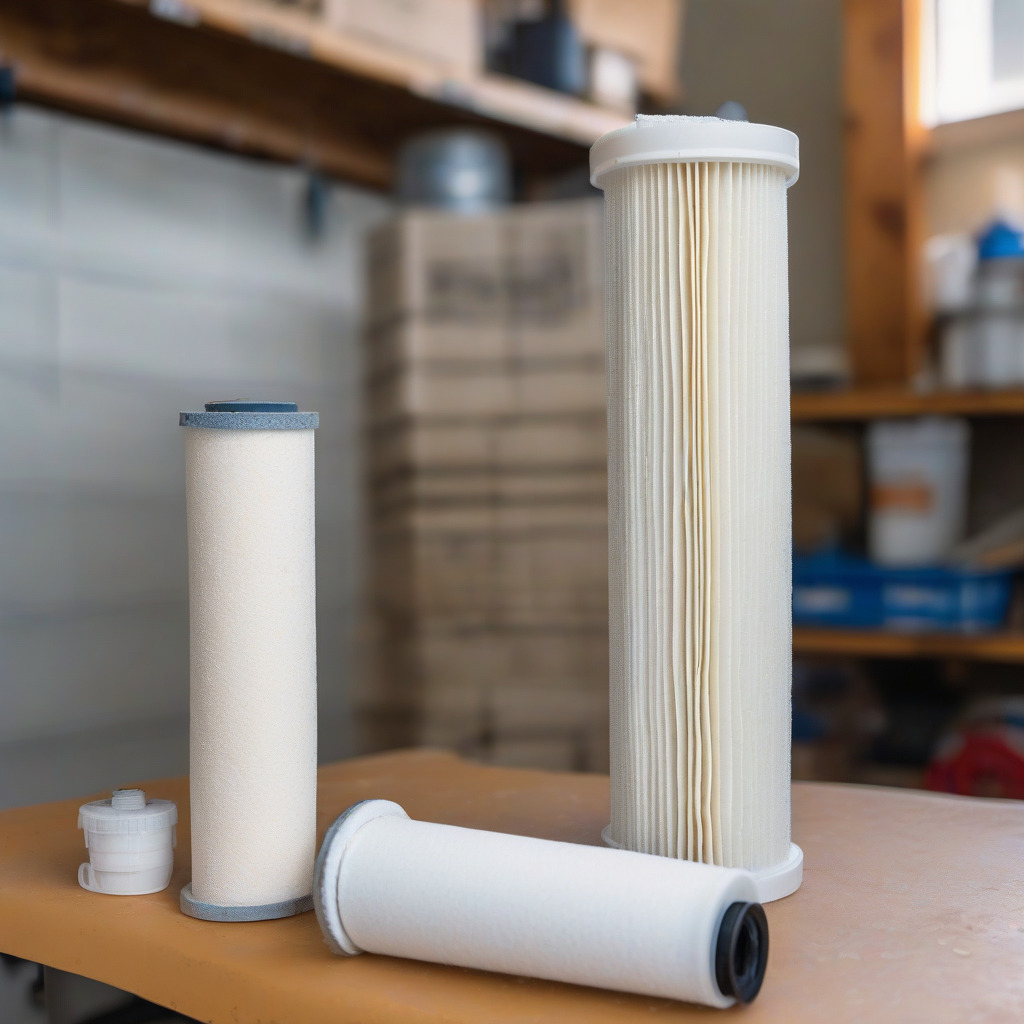
The fix is catalytic carbon — a processed form of activated carbon with a modified surface structure that breaks down chloramine molecules more effectively. Catalytic carbon cartridges are available through water treatment dealers and online suppliers, though not consistently stocked at big-box stores. That’s genuinely frustrating given how many OUC customers are out there. Ionex Water, an Orlando-based water treatment supplier, stocks Water Filter Replacement options specifically rated for chloramine reduction — the kind of product detail that matters when you’re served by OUC and trying to solve a taste or odor problem that a standard carbon cartridge won’t fix. If you’re sourcing cartridges elsewhere, check that they specifically list chloramine reduction on the spec sheet, not just chlorine.
Your Replacement Schedule Depends on Your Neighborhood
Manufacturer timelines — typically six months for carbon cartridges, 12 months for RO membranes — are calibrated for average U.S. water conditions. Orlando’s conditions are not average. Not close.
Lake Nona and Southeast Orange County sit at one end. Build-out here is recent, plumbing is newer, and OUC service is consistent. Water hardness runs toward the high end of the county range, but new construction often comes pre-plumbed for softener installation, and homeowners who’ve put in whole-house softener-plus-filtration systems in the past few years are generally tracking closer to manufacturer-suggested schedules. That said, the ongoing development in this corridor means sediment events during heavy rain can spike unexpectedly. Don’t get complacent.
Winter Park and College Park are a different story. A significant share of the housing stock dates to the 1950s through 1970s, with copper supply lines that have accumulated decades of scale. Hard water pushing through already-restricted pipes accelerates sediment loading in downstream filters. Plan sediment cartridge replacement every two to three months rather than every six — and have your pipes inspected periodically for internal scale that no filter will address. The charm of an old Winter Park bungalow does not extend to its plumbing.
Apopka and Ocoee include a meaningful number of homes on private wells rather than municipal service. Well water in this part of Central Florida often carries elevated iron — sometimes above the EPA’s secondary standard of 0.3 mg/L — along with hydrogen sulfide (the rotten-egg smell; you know it immediately if you’ve ever encountered it) and occasional turbidity. These households need filtration designed for iron removal and sulfur oxidation, not just hardness reduction. Sediment cartridges may need monthly checks during and after heavy rain, when surface water infiltration into shallow wells increases sharply. Much of western Orange and Lake counties operates under similar conditions.
The Kissimmee and International Drive vacation rental corridor is its own category, covered below. For replacement scheduling: quarterly is the starting point, not the ceiling.
What Orlando Homeowners Actually Pay
Sediment cartridges (whole-house, 10-inch standard) run $20–$60 for DIY installation at a big-box store or online supplier. A local service call for a single replacement typically costs $75–$150, cartridge and labor included. Many dealers offer annual service contracts that reduce the per-visit price — worth asking about if you’ve got a whole-house system.
Carbon block or catalytic carbon cartridges run $40–$120 for DIY, depending on size and media type. Service-included replacement through a dealer runs $80–$140 per visit. RO membranes for under-sink systems — the most common residential install in Orlando — typically cost $50–$150 for the membrane alone. A full RO service covering pre- and post-filters runs $150–$300 through a local water treatment company.
Whole-house salt-based ion exchange softener installation costs $800–$2,500 in the Orlando market, depending on grain capacity and equipment tier. A licensed plumber needs to handle this. Salt delivery subscriptions from Central Florida dealers typically run $30–$60 monthly, depending on salt type and distance.
Culligan of Orlando and independent licensed plumbing contractors who handle softener work are the right places to verify current pricing directly. Big-box stores on Orange Blossom Trail and Semoran Boulevard stock cartridges and salt but don’t provide installation or system assessment.
Resin Beds, Brine Tanks, and the Maintenance Costs Nobody Warns You About
The purchase price of a water softener is the beginning, not the end. Dealers don’t always dwell on this, and they should.
Resin bed replacement is the sleeper cost. The ion exchange resin inside a softener has a finite lifespan, and Central Florida’s high-hardness, high-throughput conditions shorten it. Chloramines in the water supply can degrade resin over time — a carbon pre-filter ahead of the softener mitigates this. Resin replacement runs $200–$500 depending on tank size and labor. Most homeowners don’t know they need it until they notice their soft water isn’t soft anymore. The diagnostic check: Is soap lathering normally? Is scale returning on fixtures? Is the brine tank functioning but the softness still gone? Degraded resin is the likely culprit.
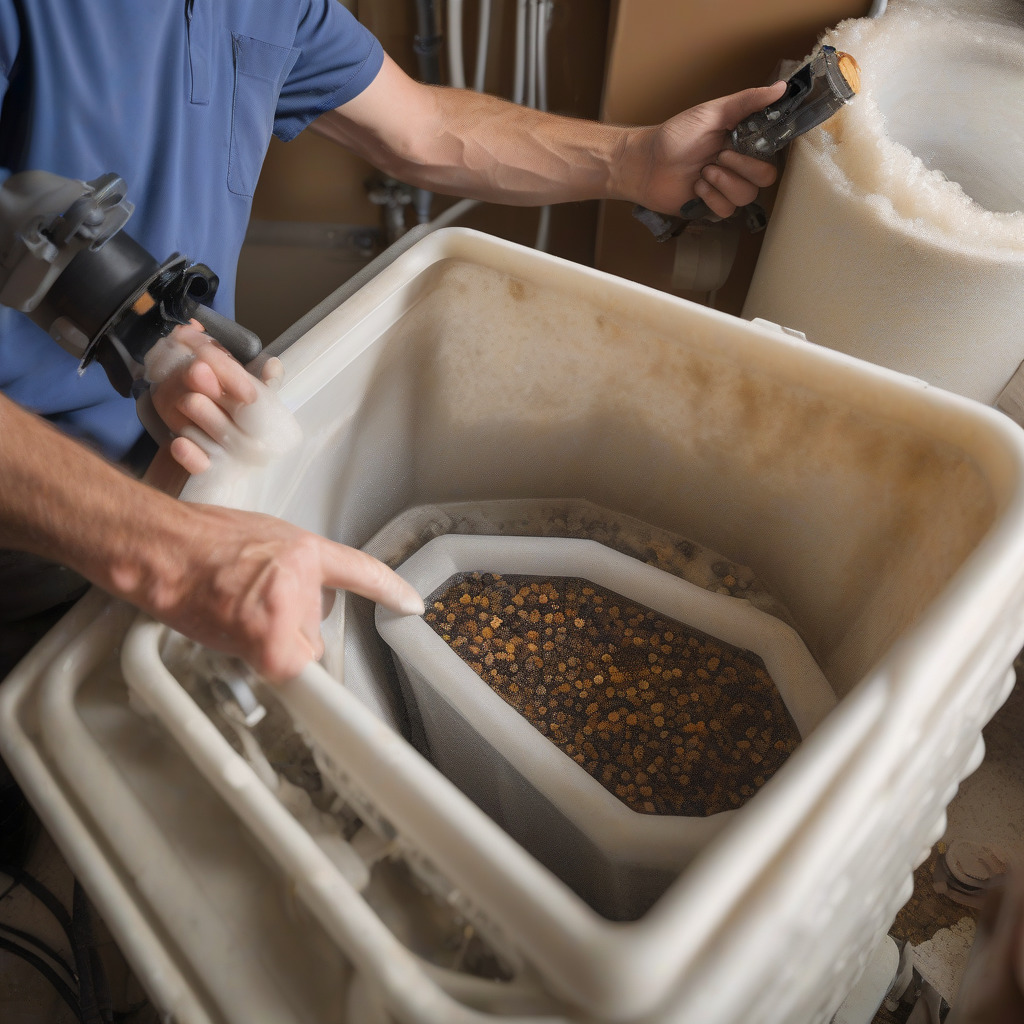
Salt bridging — a hardened crust forming in the brine tank that prevents salt from dissolving into the regeneration cycle — happens everywhere, but Central Florida’s humidity accelerates it. The symptom is a brine tank that looks full and still isn’t producing soft water, which is maddening to diagnose if you’ve never seen it before. Break up the bridge manually with a broom handle. Switch to pellet salt to reduce recurrence. Check the brine tank every time you refill it, especially during summer.
Algae and biofilm growth in filter housings is a genuine risk in Florida’s heat — and the one that surprises people most. A clear or semi-translucent filter housing sitting in a garage that hits 90 degrees in summer is an invitation for biological growth inside stagnant water. Opaque housings help. Sanitizing filter housings with dilute bleach at every cartridge swap prevents the problem — a five-minute step that almost no one is doing, and one that almost never appears in the owner’s manual.
Vacation Rental Owners Have a Different Problem Entirely
Greater Orlando has tens of thousands of active short-term rental listings, concentrated around Disney World in Kissimmee and Clermont, along International Drive, and along the US-192 corridor into Osceola County. These properties have water use patterns that standard residential filtration schedules aren’t built for.
A vacation home with high annual occupancy and weekly guest turnover runs dishwashers, showers, and laundry on something close to a commercial cycle. A sediment cartridge that might last a homeowner six months will foul in 60 to 90 days in this context. Quarterly full filter service — sediment, carbon, and RO membrane check — is the operational baseline for active short-term rentals. Treating it as optional is how you end up replacing appliances early.
Documentation matters more than most rental owners realize. A log of filter replacement dates, softener service, and water quality tests is meaningful evidence in a damage dispute or insurance claim. Water damage from failed inlet valves or appliance scaling is expensive; documented quarterly maintenance shows you were managing the property properly. If you’ve ever tried to file a claim without that paper trail, you already know why it matters.
Local water treatment companies working in the Kissimmee and I-Drive corridors have started offering quarterly service contracts specifically for short-term rental operators — a visit every three months covering cartridges, a brine tank check, and a basic hardness test. If you own vacation property in this market and you’re not on one of these contracts, you’re under-maintaining the system, and the appliances will eventually make that point for you.
Condos, HOAs, and the Whole-House Install You May Not Be Allowed to Do
A meaningful share of Orlando residents lives in buildings where they control less of the plumbing than they assume. Downtown condos, the Thornton Park corridor, the Milk District, and many mid-rise developments along South Orange Avenue have shared water supply infrastructure. Installing a whole-house softener in one of these units isn’t just complicated — in most cases, condo documents prohibit it without HOA approval, because the work touches shared systems. Before purchasing in one of these buildings, what Orlando condo buyers must check before making an offer includes shared-system restrictions that affect what you can install.
Point-of-use systems are the practical alternative. An under-sink reverse osmosis unit for drinking and cooking water handles the most critical use cases. Renters and owners alike can deploy a countertop filter without board permission. A solid four-stage under-sink RO system addresses hardness and chloramine at the point of use. Shower filters address some chloramine and hardness-related skin and hair complaints — they’re useful but not a substitute for full treatment, and it’s worth being honest about that.
Condo residents who want to push for building-wide filtration have a legitimate case to make. Water treatment that protects building plumbing and HVAC is an asset protection argument, not just a personal preference. Some Orange County HOAs have moved toward community softeners serving entire subdivisions, and that framing — protect the infrastructure, protect property values — lands better at a board meeting than “I don’t like my water.”
Permits, Purple Pipes, and What Florida Law Does and Doesn’t Restrict
Florida hasn’t banned salt-based water softeners, unlike parts of California and several Texas counties where brine discharge concerns have prompted local restrictions. Orange County has no such prohibition.
A full water treatment system installation requires a permit in Orange County. A whole-house softener, a whole-house filtration unit plumbed into the main line, or an RO system plumbed to dedicated fixtures all constitute plumbing work subject to permitting and inspection when they involve modifications to the water supply system. Cartridge replacements in an existing housing don’t require permits. If a contractor tells you a full softener installation doesn’t need a permit in Orange County, verify that with the county directly before work begins.
One source of confusion specific to Orlando involves the purple pipes. Much of Central Florida’s post-2000 subdivision development was built with dual water systems — potable water for indoor use, reclaimed water for irrigation, identified by the purple-colored pipes required by law. Your softener and filters treat only the potable supply. The two systems have no interaction. You don’t need to think about the purple pipes when replacing a cartridge or adding filtration, but you should know they exist and are entirely separate when scheduling any plumbing work. The number of homeowners who’ve confused the two is not zero.
Who Services Orlando and How They Compare to Big-Box
Culligan of Orlando is the largest national brand operating locally. They offer equipment sales, rental programs (which lower upfront cost at the expense of long-term total — run the numbers before you commit), and service contracts for residential and commercial accounts. The rental model can make sense for short-term rental operators who want predictable service costs without capital outlay. Verify their current service area before scheduling.
Kinetico and RainSoft operate through local dealer networks. Their equipment is mid-to-premium tier, and both lean on dealer-provided ongoing service as a selling point. Independent licensed water treatment contractors — plumbing companies that hold the required state licensing for water treatment installation — are often the most price-competitive for straightforward installs. The tradeoff: ongoing service is less structured, and you’re scheduling individually rather than on a contract. For homeowners who can handle their own cartridge swaps, using an independent contractor for the initial install and managing maintenance yourself is the cheapest reasonable path. It’s probably what I’d do.
Home Depot and Lowe’s — the locations on Orange Blossom Trail and on Semoran Boulevard are among the largest in the metro — stock a workable selection of replacement cartridges, salt, and entry-level whole-house housings. They’re fine for cartridge pickup and salt. They’re not equipped to assess your local water conditions or design a system for your house, and they know it.
When Orlando’s Climate Should Trigger a Filter Check
Central Florida’s weather provides a decent maintenance calendar if you use it. In our home & property coverage, this kind of seasonal, Florida-specific guidance is what we try to deliver — practical scheduling grounded in local conditions rather than manufacturer averages.
May to early June is the window for a full filter inspection before rainy season hits. June through September brings the heaviest rainfall in the area, increased sediment loading in municipal supply intakes, and — especially for well owners — greater risk of surface water infiltration. A fresh sediment cartridge going into July makes more sense than trying to diagnose a clogged system mid-summer. Check the brine tank and salt level before the humidity peak accelerates bridging.
September and October — the back half of hurricane season — warrant a post-storm check for anyone on well water. Elevated humidity through this period also justifies a brine tank inspection for softener owners.
November is when snowbird and vacation rental occupancy picks up in Kissimmee, Celebration, and the retirement communities to the south and southwest. If you own property that’s been lightly used through summer, check the filter before peak occupancy starts. You don’t want to open the busy season with a cartridge that’s been sitting stagnant in a hot garage since April.
March and April mark the end of peak short-term rental season — a natural point for the annual full-system service. RO membrane check, resin performance test, sediment cartridge replacement. Get it done before summer occupancy picks back up.
One practical upside of Florida’s climate: outdoor filter installations are viable year-round, freeze protection isn’t a concern, and a January service call is no more complicated than one in July. There’s no seasonal excuse for deferring maintenance here — which is, admittedly, one of the shorter lists of things Florida weather has going for it.