Hard Water Is Costing Orlando Homeowners More Than They Realize — Here's the Local Picture
From aquifer chemistry to permitting rules to neighborhood-by-neighborhood variation, here's the local picture competing generic guides leave out.

From aquifer chemistry to permitting rules to neighborhood-by-neighborhood variation, here’s the local picture competing generic guides leave out.
Orlando’s Water Is Genuinely Hard — And the Aquifer Is Why
Orlando’s hard water isn’t a rumor or a marketing exaggeration. It’s a measurable condition with a specific geologic cause, and understanding that cause explains why no amount of wishful thinking — or a single under-sink filter — makes it go away.
Central Florida sits atop the Floridan Aquifer, one of the most productive aquifer systems in the world and the primary drinking water source for most of the metro area. Water moving through porous limestone and dolostone dissolves calcium and magnesium carbonates over millions of years. By the time that water reaches a treatment plant and enters your pipes, those minerals are along for the ride and they’re not leaving.
OUC and Orange County Utilities Consumer Confidence Reports show finished water hardness across the metro running roughly 10 to 15 grains per gallon, depending on service area and season. Pull the current CCR from your specific utility to confirm — the reports update annually. That hardness flows into your water heater, dishwasher, showerheads, and coffee maker largely intact. Municipal treatment does not remove it.
What Hard Water Actually Costs an Orlando Homeowner
The conversation about hard water usually stalls at aesthetics: spotty glasses, dry skin, flat hair. Those complaints are real, but they miss the financial argument for treatment by a significant margin.
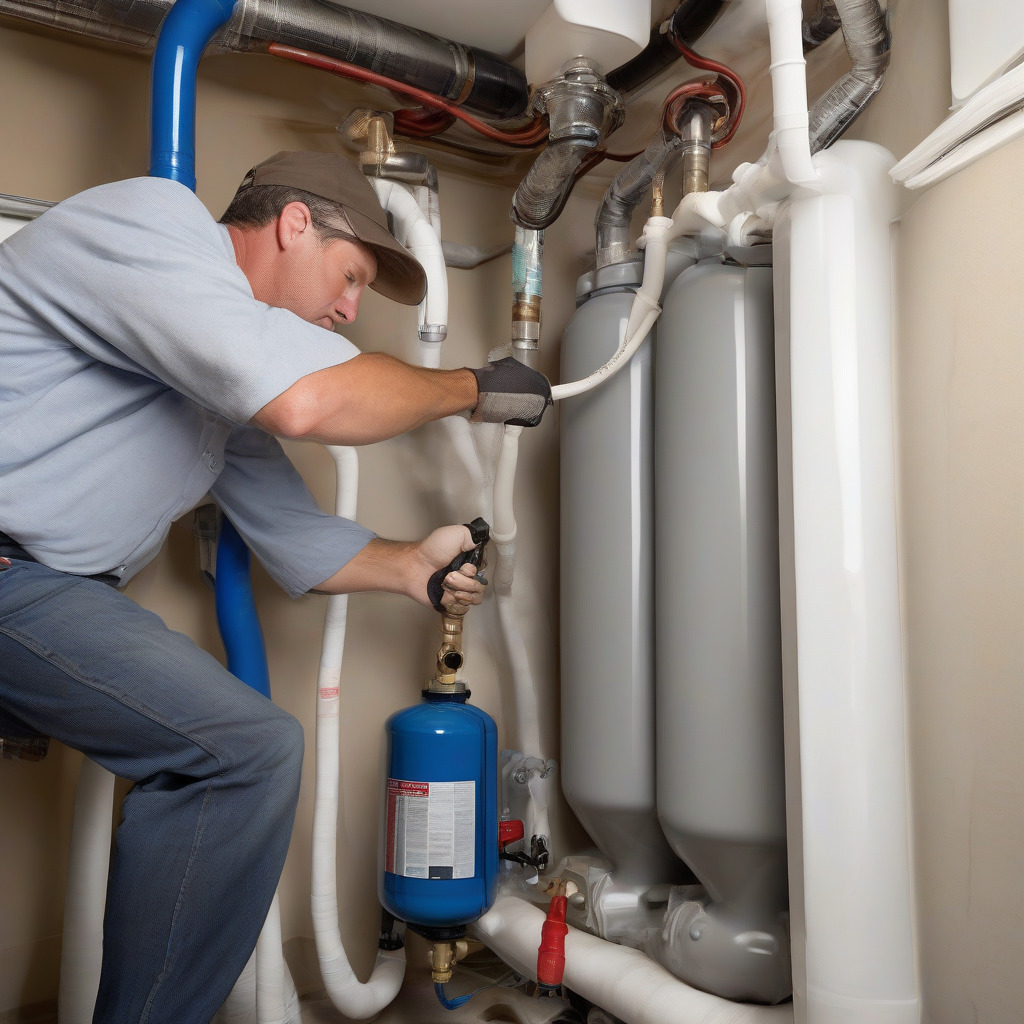
Scale from calcium and magnesium carbonate deposits is the primary threat to plumbing and appliances. Tankless water heaters have become standard in new Central Florida construction over the past decade, driven by energy codes and the enthusiasm for high-efficiency building in communities like Lake Nona, Horizon West, and the newer Osceola County developments. Tankless units are efficient precisely because water flows across a heat exchanger rather than sitting in a tank — but that heat exchanger is also an ideal surface for scale. Manufacturers routinely recommend annual descaling for tankless units in hard-water markets. So: you bought an expensive, efficient appliance, and now you have to maintain it aggressively every year. Nobody puts that in the builder’s brochure.
Dishwashers, washing machines, and refrigerator ice makers face the same problem. Mineral buildup constricts passages, strains valves and seals, and shortens the lifespan manufacturers actually rated the equipment for. Fixture damage adds cosmetic and resale considerations: pitting on chrome, staining on porcelain, scaling on shower glass all matter when you list the house.
For homeowners running investment properties or short-term rentals — a substantial slice of the Orlando housing market, as anyone who’s driven through Kissimmee lately already knows — appliance replacement cycles and guest complaints about water quality both hit revenue directly. A water heater replacement in a vacation rental might run $1,500 to $2,500. If that unit fails at five years instead of nine, the math shifts fast toward preventive treatment spending. For a broader look at what major home systems are actually costing Central Florida owners right now, what Orlando homeowners are actually paying for a new roof in 2026 illustrates how quickly deferred maintenance compounds across a portfolio.
Your Neighborhood Shapes Your Water Problem
“Orlando water” is not a single product. Where your water originates — and what it picks up along the way — varies significantly by address. This is the part most generic water guides ignore, which is exactly why they’re useless for anyone who actually lives here.
OUC serves core Orlando and some adjacent areas from Floridan Aquifer wells treated at OUC facilities. The hardness range above applies here. The disinfectant is chloramine rather than free chlorine (more on that shortly), and TDS tends to run moderately elevated.
Orange County Utilities covers large portions of unincorporated Orange County, including parts of the Dr. Phillips corridor, south Orange County, and the tourist district adjacent areas. OCU draws from similar aquifer sources and produces comparably hard water, but the specific treatment chemistry and infrastructure age differ from OUC’s in ways that matter when you’re selecting filtration equipment.
Private well users are a different situation entirely. Apopka, Christmas, eastern Orange County, and rural Osceola County have significant populations on wells. Those households receive no municipal treatment and face a wider range of problems: hardness in the same 10–15 GPG range, frequently accompanied by elevated iron that leaves rust stains on fixtures and laundry, hydrogen sulfide producing a sulfur odor, and — in some eastern Orange and Osceola County properties — tannins from organic matter that turn water a faint tea color. Each of those problems requires different equipment. A household dealing with all three needs a system designed to address them in sequence. One piece of equipment and a lot of optimism doesn’t cut it.
Lake Nona, with its concentration of new construction and a mix of OUC and Orange County Utilities service, presents the tankless water heater scale problem in concentrated form: new, expensive equipment sitting vulnerable from day one. Windermere and the Butler Chain area include both municipal and private well properties, and older homes there sometimes show the cumulative effects of decades of untreated hard water — sometimes dramatically. Horizon West, one of the fastest-growing master-planned corridors in Florida, sits in Orange County Utilities territory and adds HOA compliance to any equipment decision. Downtown Orlando is almost entirely OUC service and presents the hard water plus chloramine profile that most frequently drives residents toward softening and carbon filtration together.
A water treatment company that asks only “how hard is your water?” is missing half the diagnostic picture.
Beyond Hardness: What Else Is in Orlando’s Tap Water
OUC and most Central Florida municipal systems use chloramines as their disinfectant, preferred over free chlorine because chloramines hold up better in distribution systems. They also require different filtration equipment to remove. Standard activated carbon is far less effective against chloramines than against free chlorine; catalytic carbon — a different form of the material — is what actually works. If you’ve bought a decent pitcher filter, used it faithfully, and still found your tap water tasting flat and chemical, this is probably why. Any water treatment company operating in OUC territory should bring up chloramines immediately. If the salesperson isn’t discussing them, press on it.
Elevated TDS accompanies the hardness signature across most of the metro. TDS measures all dissolved mineral content and contributes to the flat or minerally taste residents associate with tap water and the residue left on cookware and glass.
Hydrogen sulfide shows up in a meaningful portion of South Orange County and Osceola County properties — both on wells and on some municipal connections drawing from deeper aquifer zones. The sulfur odor is distinctive and hard to ignore, and it also accelerates corrosion in plumbing. That’s the tell that the water warrants a full panel test rather than a single-issue fix.
Iron in well water varies by location and depth but, where it’s present, degrades equipment performance and needs to be part of the system design — not an afterthought. The treatment stack a Lake Nona homeowner needs looks genuinely different from what a Christmas-area well owner needs, which looks different again from what a downtown Orlando renter with a leased unit needs. That’s not marketing language. It’s just true.
Salt Softener, Salt-Free System, or Reverse Osmosis — What the Difference Actually Means
The product category is genuinely confusing, partly because manufacturers market aggressively across all of them and the terminology is inconsistent enough to be almost deliberately misleading.
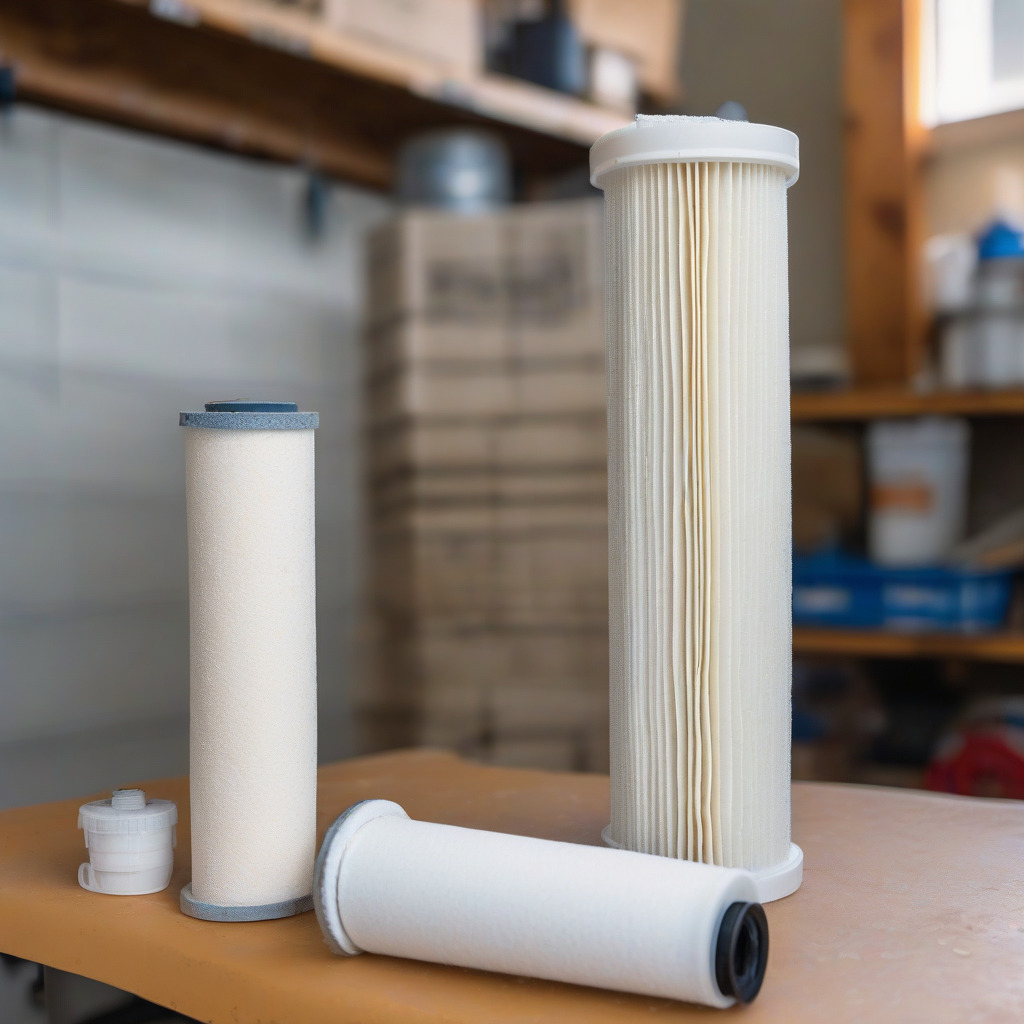
Ion-exchange salt-based softeners use water passing through a resin bed that swaps calcium and magnesium ions for sodium ions, producing water that won’t form scale. The resin recharges periodically using a salt-brine solution, flushing captured minerals down the drain. These systems actually soften water. Not condition it, not reduce hardness tendency — they chemically alter the water so it no longer contains the ions that cause scale. For households running tankless heaters and multiple appliances in the 10–15 GPG hardness range, this is the most proven approach. The downsides: the added sodium raises concerns for residents on sodium-restricted diets (the amounts are modest, but ask your doctor), and salt discharge draws environmental scrutiny in Florida — which matters for the permitting section below.
Salt-free conditioning systems — often marketed as “template-assisted crystallization” or TAC systems — work differently. They don’t remove calcium and magnesium but alter the minerals’ structure so they’re less likely to adhere to surfaces and form scale. Your water tests hard after treatment because it still is hard. But the hardness behaves differently. These systems have real advantages in Florida: no salt discharge, no wastewater, no electricity, minimal maintenance. They’re a reasonable choice for households primarily concerned with protecting appliances and pipes rather than the skin and lather experience that true soft water provides. They’re not a scam. They’re also not a softener, regardless of how they’re sometimes pitched.
Under-sink reverse osmosis pushes water through a semipermeable membrane under pressure, removing the vast majority of dissolved minerals, chloramines, and other contaminants. An RO unit under the kitchen sink produces genuinely excellent drinking and cooking water — better than most bottled water, and significantly cheaper per gallon within a couple of years. What it doesn’t do is protect your water heater or dishwasher, because only the water at that one faucet gets treated. It’s a point-of-consumption solution, not a whole-home one.
Whole-home RO scales membrane technology to treat all water entering the house. It works, and it produces very clean water throughout the plumbing system. It also costs significantly more and generates concentrate wastewater. For well users with severe contamination or households with specific health requirements, it may be the right answer. For the typical Orlando homeowner dealing with hardness and chloramines, it’s more system than the problem requires.
Florida’s Regulatory Environment: What Orlando Buyers Must Check Before Installing
Most water treatment guides skip this section. Skipping it can create real problems.
Florida has a documented history of scrutiny toward salt-based softeners, driven by concerns about sodium chloride discharge entering the reclaimed water system and ultimately reaching the state’s springs and aquifer recharge zones. Orange, Seminole, and Lake counties have each weighed in at various points. There’s no statewide ban on salt softeners currently, but the regulatory conversation has never fully closed. Local restrictions remain possible. Anyone considering a salt-based system should verify the current status with Orange County Environmental Protection or their municipality before purchasing — not after the equipment is already in the garage.
Orange County also requires building permits for plumbing modifications, including softener installations that involve cutting into supply lines. The permit fee typically runs $75 to $150, and the work must be done by a licensed contractor. An installer who offers to skip the permit “to save you money” is leaving you with unpermitted work on your plumbing — the kind of thing that surfaces during home sales or insurance claims, at the worst possible moment.
HOA rules in master-planned communities add a third layer. Horizon West, Baldwin Park, and Laureate Park in Lake Nona all have standards that can govern equipment installation and discharge line placement. Some HOAs require advance approval for anything affecting the home’s exterior or utility connections. A five-minute call to the HOA management company before signing a contract is not paranoid; it’s basic due diligence.
What Equipment Costs in the Orlando Market
Salt-based whole-home softeners, installed with permitting, run roughly $1,200 to $3,500 in this market. The range reflects system capacity, brand tier, and whether the installer bundles a service contract. Salt-free TAC systems tend to run $1,500 to $4,500 installed, reflecting higher equipment cost and variability in system sizing.
Under-sink reverse osmosis runs $300 to $800 installed for a quality multi-stage system with catalytic carbon appropriate for chloramine removal. Premium systems with remineralization stages run higher. Whole-home RO starts around $5,000 and can reach $15,000 or more for larger homes or complex well-water applications.
Ongoing costs matter as much as the purchase price. A salt softener for a typical Orlando household will consume roughly two 40-pound bags of salt monthly, at $8 to $15 per bag at local hardware stores — call it $15 to $40 a month in salt alone. That’s not nothing, but run it against the cost of a premature water heater replacement and it’s not hard to justify. Salt-free and RO systems have lower recurring costs but require media replacement on manufacturer schedules. Get current local quotes; installation costs shift with labor and materials.
Orlando-Specific Maintenance Realities
Salt bridging — a hardened crust forming in the brine tank that stops regeneration — happens everywhere, but Orlando’s ambient humidity accelerates it. Homeowners who check the brine tank infrequently may go months with a non-regenerating softener before noticing hard water symptoms creeping back. By then you’ve been running untreated water through your appliances long enough to undo some of what you paid for. Check the tank. It takes two minutes.
Seasonal water quality shifts are real. The June through September rainy season increases aquifer recharge rates, which can temporarily alter mineral concentrations at the tap. Resident complaints about water tasting or behaving differently during heavy rainfall track with dilution effects on aquifer chemistry and blending ratio changes at treatment facilities. If your water has seemed off this summer, that’s probably not your imagination.
Orlando’s large population of part-year residents — seasonal homeowners, short-term rental investors, households that travel for extended stretches — faces a distinct maintenance challenge that doesn’t come up in national guides at all. A softener sitting idle for several months can develop severe salt bridging, and the system may need a full cycle flush before producing properly treated water again. Owners of frequently vacant properties should either arrange periodic manual regeneration or ask about equipment with remote monitoring. Any installer serving the tourist-corridor markets deals with this regularly. Ask them how they handle it before you sign.
How to Evaluate a Water Treatment Company in Central Florida
The Orlando metro has no shortage of water treatment companies — national franchise operations, regional chains, and family-owned businesses that have been serving specific neighborhoods for a long time. The difference between them isn’t always obvious until after the install.
Look for NSF International certification on equipment and WQA (Water Quality Association) credentials for the company or its technicians. These mean something: third-party testing, verified performance claims. Ask the salesperson directly what disinfectant OUC uses and how that affects their equipment recommendation. A blank or generic answer tells you everything you need to know. A company that understands OUC’s chloramine chemistry, can speak to the Floridan Aquifer’s specific mineral profile, and knows Orange County’s permitting requirements is working from local knowledge. One running a national script is not.
Any installer cutting into supply lines should hold appropriate contractor licensure and should pull the Orange County permit without you having to ask. If they don’t mention it, ask. A legitimate Water Purification Company should also test your water before recommending equipment — a comprehensive panel, not just a hardness strip. A company that quotes a system before testing your water is selling product, not diagnosing a problem. For well users, that panel needs to include iron, hydrogen sulfide, pH, TDS, bacteria, and tannins in addition to hardness.
Get service contract terms in writing: what’s covered, for how long, and — this sounds paranoid until it happens — what becomes of the contract if the company is acquired or closes. In a franchise-heavy market, that question is not academic. Ask for references from customers with a comparable situation: same utility, similar household size, similar complaints. A company with real local roots should produce those without hesitation. Decisions like these fit squarely into our home & property coverage of the local contractor and infrastructure questions Central Florida owners face most often.
The Orlando water treatment market includes excellent local operators and operators who are primarily moving boxes. The tell is usually this: does the company treat a water test as a selling prop, or as diagnostic information? And does the system they’re recommending actually match what comes out of your specific pipes?
CityDesk Orlando covers the business and infrastructure stories that affect Central Florida residents. Equipment pricing and regulatory details in this article should be verified with local suppliers and Orange County agencies, as costs and ordinance status change.