How to Harden Your Orlando Home Before Hurricane Season
Impact windows vs. shutters, generator permits, the $10,000 grant, and what a wind mitigation inspection will tell you before you spend a dollar

How to Harden Your Orlando Home Before Hurricane Season
Impact windows vs. shutters, generator permits, the $10,000 grant, and what a wind mitigation inspection will tell you before you spend a dollar
Hurricane season starts June 1. If you own a home in Orange County and haven’t moved on hardening yet, you’re not behind — but you’re close. Impact window installation calendars are filling. Orange County’s permit queue runs several weeks. The state grant that could cover up to $10,000 of your costs draws from appropriated funds that don’t roll over year to year.
This guide is written for Orange County homeowners who want concrete information: what hardening costs locally, what permits you actually need, which improvements move your insurance premium, and how to avoid the unlicensed contractors who reappear every spring.
Why This Is Now a Financial Calculation, Not Just a Weather Decision
Orlando doesn’t get the same coastal attention as Fort Myers or Tampa, and a lot of inland homeowners have internalized that as safety. It isn’t. Hurricane Charley tracked directly through Orange County in 2004, causing sustained structural damage in Pine Hills and Conway. Irma hit the county with tropical-force winds in 2017, stripping roofing in Eatonville, Azalea Park, and Lockhart. Ian crossed the state in 2022 and still had enough energy to cause widespread tree and structural damage through central Orlando neighborhoods — $109 billion in statewide damage from a storm most people thought would miss them.
The insurance market has made hardening a dollars-and-cents issue whether homeowners wanted it that way or not. After Ian, multiple private carriers went insolvent or stopped writing Florida policies entirely. Citizens Property Insurance now covers a disproportionate share of Orange County homes, with rates that have increased in each of the last three legislative sessions. Wind mitigation discounts reduce your premium directly and make your home more attractive to the private carriers who might otherwise refuse to quote it at all.
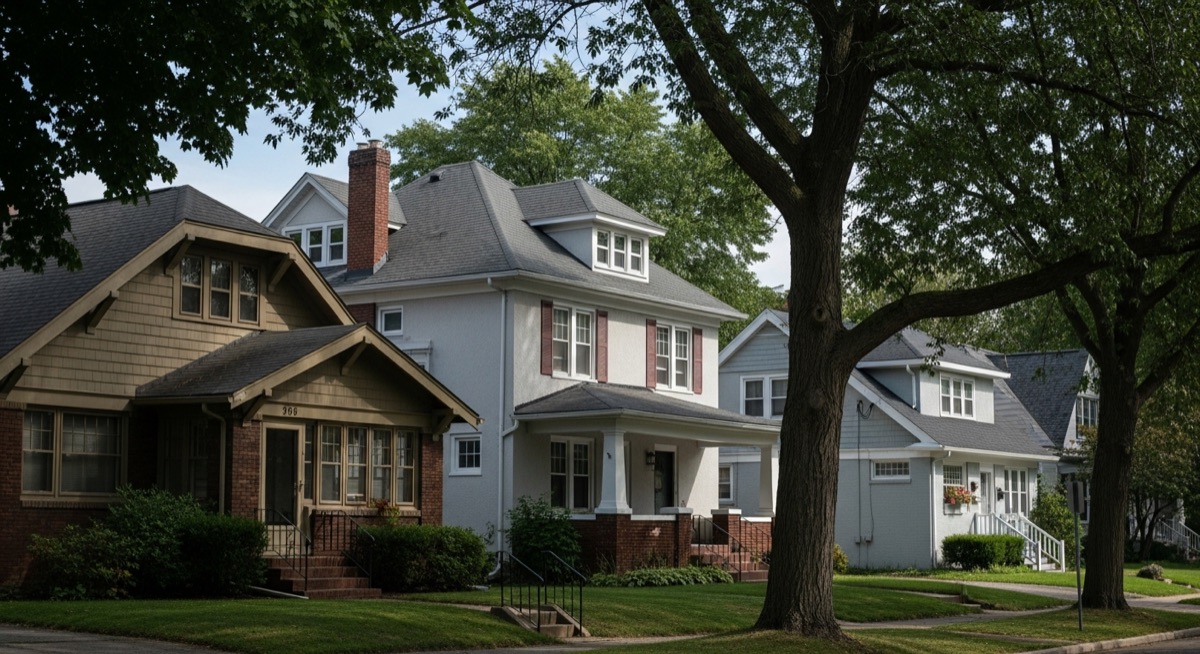
Pre-1994 neighborhoods carry compounded risk. Pine Hills, Azalea Park, Conway, Lockhart, and Eatonville have weaker original construction codes, aging roof systems, and an insurer pool that has contracted specifically around those homes. Higher wind risk and fewer insurance options at once — that’s a bad combination to sit on.
Start Here: Which Improvements to Make First When Budget Is Limited
The most useful frame for prioritizing is which improvements earn the most actuarial weight on Florida’s wind mitigation inspection form, OIR-B1-1802 — the document your insurer uses to calculate your discounts. Understanding that form before you spend money prevents you from paying for things your insurer barely notices. It’s tedious to think about, but it’s the difference between spending $15,000 strategically and spending it on the wrong thing.
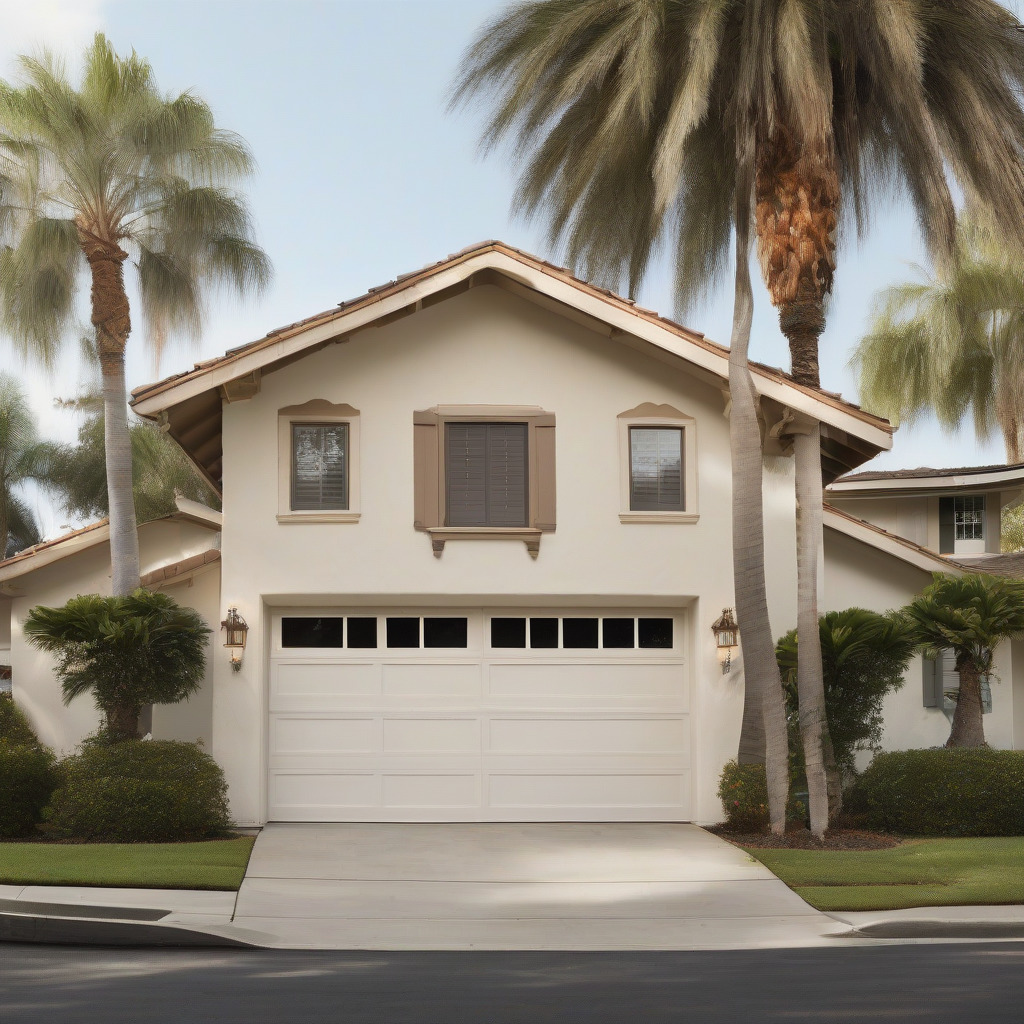
Garage door. The most common catastrophic failure point in residential wind events, and the cheapest significant fix on this list. A garage door that blows in under pressure creates a sudden change in interior air pressure that can lift the roof deck. Retrofitting an existing door with a bracing kit certified to 130 mph runs roughly $100–$300 in parts and labor. Replacing it outright with a wind-rated unit runs $1,500–$4,000 installed for a standard two-car door. For pre-1994 homes, this is the first call to make.
Roof deck re-nailing. Homes built before 1994 were commonly constructed with stapled roof decking — a practice phased out after Hurricane Andrew because staples have dramatically lower uplift resistance than ring-shank nails. Re-nailing a deck on a 1,500-square-foot Orange County home typically runs $1,500–$3,500, performed by a licensed roofing contractor working from inside the attic. It moves the “roof deck attachment” line on the OIR form and can produce real premium savings on its own.
Roof-to-wall connections. Pre-1994 homes often have toenail connections — basic nail-through-angle framing with minimal uplift resistance. Retrofitting hurricane straps or clips runs $800–$2,500 depending on attic accessibility and framing configuration. An inspector must document what you have before and after to verify the rating change on the OIR form.
Opening protection. Windows, doors, and the garage door together constitute opening protection — the OIR category carrying the largest single discount for most Orange County policyholders. This is also the most expensive item on this list, which is why knowing what you currently have matters before committing to the cost. More on this in the next section. As part of our home & property coverage, we’ve ranked the highest-impact moves by dollar savings — useful context before you commit to a sequence.
Roof covering. If your roof is within a few years of replacement anyway, replacing it with a system that earns a “superior” OIR rating is worth timing strategically. Replacing a roof purely for mitigation credit when it has significant remaining life rarely pencils out against the annual discount. Don’t let a contractor talk you into that math.
Impact-rated entry doors. A reinforced fiberglass or steel entry door rated to 130 mph closes a genuine structural vulnerability and contributes to the opening protection category insurers weight heavily.
Impact Windows vs. Hurricane Shutters: The Trade-offs and Local Price Ranges
This is where most Orange County homeowners spend the most time — and where I’ve seen the most confusion. It deserves more than a checklist.
Impact windows are laminated-glass units that replace your existing windows entirely. Protection is passive and always-on — no deployment required. They reduce UV exposure, improve energy efficiency, and qualify for the maximum opening protection credit on the OIR form. For a typical 1,500-square-foot home with 12–15 standard windows, get actual quotes from local installers: Window World of Orlando, Eco Choice Windows & Doors, Southern Showcase, and dealers carrying CGI-brand windows are all active in this market. Call two or three. Pricing shifts enough with material costs and installer backlog that any number from six months ago is stale.
One rule applies regardless of which path you choose: any impact-rated window or shutter installed in Orange County must carry a Florida Product Approval Number (FL#) issued through the Florida Building Commission. Before signing any contract, ask for the specific FL# of the product they plan to install and verify it at floridabuilding.org. Orange County sits in a 130 mph wind speed zone under ASCE 7-22; the product’s approval must cover that design pressure.
Hurricane shutters are the alternative. Aluminum accordion shutters fold beside the window and close with a pull — roughly $15–$25 per square foot installed for standard openings. Motorized roll-downs, housed above the opening and operated electrically, run $25–$45 per square foot and deploy fastest but cost the most. Aluminum panel shutters, stored in a garage and bolted into tracks before a storm, run $7–$12 per square foot in materials plus track installation labor. Cheapest upfront, but they require you to actually install them before each storm. If you’ve ever tried to hang aluminum panels at 11 p.m. while a storm track shifts, you know why that matters.
Here’s the honest call: shutters protect openings at lower upfront cost, but they require you to be present, physically capable, and ready to deploy on short notice. Impact glass doesn’t. It protects whether you’re home or not, whether the storm shifts overnight or not. For homeowners who travel, are older, or rent to tenants, that passivity has real value. Both options, properly documented on the OIR form, qualify for opening protection credit — though the specific credit amount varies by carrier and policy.
Do You Need a Permit? Orange County’s Rules on Windows and Generators
Replacing windows with impact-rated units requires a building permit in Orange County regardless of whether the opening size is changing. The submittal package includes a completed permit application, the FL# and corresponding product approval document, a site plan or opening schedule identifying affected windows, and contractor license verification. Orange County processes permits through its Accela-based online portal at the Building Division website. Standard review times for residential window replacements currently run two to three weeks — inspections are scheduled separately after the permit issues.
The contractor you hire should pull this permit. If they tell you a permit isn’t required, or suggest you pull it yourself to save money, walk away.
A permanently installed standby generator — hardwired to your electrical panel and running on natural gas or propane — requires an electrical permit, a mechanical permit, and either a natural gas or LP gas permit depending on fuel source. The package includes a load calculation, the generator’s specification sheet, a site plan showing placement, and setback documentation. Orange County’s setbacks vary by fuel type and generator size. Inspection stages include rough-in electrical, gas line pressure test, and final inspection. Total permit fees currently run approximately $150–$400 depending on scope.
A portable generator doesn’t require a permit. Connecting one to your home’s electrical system does. An interlock kit or manual transfer switch, installed by a licensed electrician under an electrical permit, is the legal path. Backfeeding a panel through a dryer outlet with a makeshift cord is illegal and can kill utility workers restoring power on your street. People still do it. Don’t.
Unpermitted work carries real consequences. Unpermitted window or generator installations can complicate or void insurance claims involving the exact opening or system at issue, and they have to be disclosed — and often resolved — during a home sale. Verify any contractor’s license at myfloridalicense.com before work begins.
How Hardening Affects Your Insurance Premium
Florida law requires insurers to provide discounts for wind mitigation features documented on the OIR-B1-1802 form. The form evaluates six attributes: roof shape, roof deck attachment, roof-to-wall connections, roof covering, opening protection, and secondary water resistance. Each earns a rating. The ratings feed a discount calculation specific to your insurer’s filed rate schedule.
Opening protection typically generates the largest single discount for Orange County policyholders — the wind portion of your premium can drop 15–45% depending on carrier and home characteristics. That range is wide because the answer genuinely varies: some carriers weight roof deck attachment more heavily, others emphasize roof-to-wall connections. Citizens’ discount schedule is publicly filed through the Florida Office of Insurance Regulation. Private carriers weight attributes differently and don’t publish the same way. For a deeper look at how wind mitigation credits interact with premium variation across Orlando zip codes, the savings calculations by improvement type are worth reviewing before you finalize your project sequence.
If your home has already been inspected, request the OIR-B1-1802 form from your insurer or the inspector who performed it. That document is yours. To understand what savings are available under your specific policy, talk to an independent insurance agent who writes in the Florida market and can pull your carrier’s current wind mitigation discount schedule. The Professional Insurance Agents of Florida (PIA Florida) and the Florida Association of Insurance Agents (FAIA) both have Orlando members who can do that.
The Wind Mitigation Inspection: Do This Before You Call Anyone Else
Schedule a wind mitigation inspection before you call a single window installer or request a generator quote. This is the diagnostic step — the one that tells you which OIR attributes your home already earns credit for and which improvements will actually change your score and your premium. Skipping it and going straight to a sales appointment is how homeowners spend $15,000 on the wrong thing.
A standalone inspection in Orange County costs $75–$200, or $150–$250 bundled with a four-point inspection your insurer may require separately. The inspector spends 45–90 minutes on site, accesses your attic to document roof-to-wall connections and deck fastening, measures roof geometry, and verifies existing opening protection. Under Florida law, wind mitigation inspections must be performed by a licensed general contractor, building contractor, home inspector, architect, engineer, or building official — verify credentials at myfloridalicense.com before booking.
If your home doesn’t have an attic hatch, you may need one cut before the inspection can be completed. The report is valid for five years and transfers if you sell the home.
Any contractor quoting you hardening work should be able to tell you which OIR attribute their improvement addresses. If they hesitate on that question, that’s information.
The $10,000 State Grant Most Orange County Homeowners Haven’t Applied For
Florida’s My Safe Florida Home Program provides matching grants for hurricane hardening improvements: for every dollar you spend, the state contributes two, up to a $10,000 maximum. A $15,000 impact window project could cost you $5,000 out of pocket. The program is real, it’s been funded again, and most homeowners I’ve talked to have never heard of it.
To qualify, the home must be your primary residence with a valid homestead exemption. Income and home value limits apply and have shifted in recent legislative sessions. Current eligibility details are at the My Safe Florida Home Program or by calling 1-866-513-6734. Covered improvements include opening protection (impact windows, impact doors, shutters), roof deck attachment upgrades, and roof-to-wall connection improvements.
The program also provides a free wind mitigation inspection as part of the application process. For homeowners who aren’t sure where to start, applying before committing to any project is a reasonable first move — you get a professional assessment of your house and preserve eligibility for the grant at the same time.
Funding is appropriated annually and prior rounds have run out before year-end. Applications submitted in April and May process faster than ones submitted in late June, when demand spikes and the backlog builds. Apply at myfloridacfo.com/mysafefloridahome. The application is online and not complicated, but the funding is first-come, first-served.
Why April and May Are the Months to Act
This isn’t manufactured urgency. Impact window installations require permits. Permit review runs two to three weeks. After issuance, inspections must be scheduled — and inspection availability tightens as contractor activity picks up in late spring. The My Safe Florida Home application backlog builds as June approaches.
Get a wind mitigation inspection scheduled this week if you haven’t had one. Call two or three installers and ask specifically how far out their calendars are running right now — not what they typically run, but right now. Apply to the grant program if you meet eligibility criteria. Get permit submittals moving before the queue compounds.
The gap between acting in April and waiting until June is the difference between a hardened home before season and an explanation to your insurer after.
Questions to Ask Before You Sign Anything
The weeks before hurricane season reliably produce unlicensed contractors offering fast, cheap work. You’ve probably already gotten a flyer. Here’s what to ask before signing anything.
Verify the license before the meeting ends. Go to myfloridalicense.com, enter the contractor’s name or license number, and confirm it’s active and in the correct category for the work being performed. A business card is not verification.
Confirm the contractor will pull the permit. Under Florida law, the licensed contractor is responsible for pulling it. Any contractor who asks you to pull it yourself, says it isn’t needed, or offers to handle it later is a serious red flag.
Ask for the Florida Product Approval Number before signing. Get the specific FL# for the product they plan to install and verify it at floridabuilding.org. Confirm the approval covers 130 mph design pressure.
Request certificates of general liability insurance and workers’ compensation. Certificates, not verbal assurances. An injury on your property by an uninsured worker creates personal liability for you.
Get the OIR form notation in writing. Ask the contractor to specify in the contract which OIR-B1-1802 attribute the installation addresses and what rating you should expect on your next wind mitigation inspection. A reputable installer knows this answer immediately.
Check the DBPR complaint history. An active license isn’t necessarily a clean one. The database includes complaint and disciplinary history.
Hurricane hardening isn’t one decision. It’s a sequence of decisions that interact with your budget, your home’s construction vintage, your current insurance policy, and a state funding program that most Orange County homeowners have never applied for. Start with the wind mitigation inspection. Understand what your home already has. Apply for the grant. Move before the installation backlog closes your timeline.
June 1 is a hard date. The calendar for acting before it is shorter than it looks.
CityDesk Orlando covers local business, development, and policy for Orange County residents. For permit questions, contact the Orange County Building Division at orangecountyfl.net/PermitsLicensing or 407-836-5550. For My Safe Florida Home Program inquiries: myfloridacfo.com/mysafefloridahome or 1-866-513-6734.