Orlando's Hard Water Is Quietly Draining Your Wallet — Here's What to Do About It
Central Florida sits on top of one of the most productive freshwater aquifers in the world. That same geology is quietly destroying water heaters, staining grout, and inflating detergent bills acro…

Central Florida sits on top of one of the most productive freshwater aquifers in the world. That same geology is quietly destroying water heaters, staining grout, and inflating detergent bills across the metro. Most Orlando homeowners know their water tastes a little off or leaves spots on the shower door. Very few understand what’s actually happening chemically — or what it’s costing them.
This piece covers the local science, the regulations, realistic local pricing, and the questions worth asking before you sign anything.
The Limestone Problem Under Your Feet
Orlando draws its drinking water from the Floridan Aquifer System, a massive limestone formation stretching across most of the Florida peninsula. As rainwater percolates through that limestone over decades, it picks up dissolved calcium and magnesium — the minerals that define water hardness. This isn’t a utility problem or a treatment failure. It’s geology.
Orange County Utilities and Orlando Utilities Commission both classify their service areas as moderately to very hard. Pull the most recent Consumer Confidence Report for your specific utility — each is required by the EPA to publish one annually, and they’re posted on utility websites. Those numbers give you the actual hardness figure for your service zone, which is the only reliable baseline for sizing a treatment system.
How Hard Is Your Water, Specifically?
Hardness isn’t uniform across the metro, and the variation matters when you’re trying to size a treatment system or decide whether you need one at all.
Within OUC’s service territory — the City of Orlando and parts of surrounding Orange County — hardness runs consistently in the moderately hard to hard range. But residents on smaller utilities see meaningfully different numbers. Apopka, Ocoee, and Winter Garden operate their own water systems and draw from slightly different parts of the aquifer; hardness in those systems can push higher in certain zones. Don’t assume OUC’s figures apply to you.
The bigger outlier is well-water territory. Unincorporated east Orange County — the Christmas area corridor in particular — sits in a belt where private residential wells are still common. That water often carries elevated iron and hydrogen sulfide alongside hardness, which changes the treatment math significantly. Elevated iron stains laundry orange-brown and leaves rust rings in toilet bowls; hydrogen sulfide produces the rotten-egg smell that well-water homeowners in that area recognize immediately. If you’ve ever walked into a house out there and thought something smelled wrong, that’s almost certainly it. A simple water softener won’t touch either problem.
Lake Nona deserves a separate note. Newer construction in that planned development sometimes includes water treatment pre-plumbing or whole-house filtration infrastructure installed by the builder. Buyers may already have equipment sitting in their garage or utility closet — never activated, never serviced, possibly unknown to them entirely. If you’re a Lake Nona homeowner who hasn’t gone poking around in your mechanical room, it’s worth doing.
What Hard Water Is Actually Doing to Your Home
Scale buildup — calcium carbonate deposits that form when hard water is heated — is the primary mechanical problem. Inside a conventional tank water heater, scale accumulates on the heating element and at the bottom of the tank, forcing the unit to work harder to transfer heat through the mineral layer. Equipment lifespan drops. In a market where replacement and labor aren’t cheap, those costs compound.
Tankless water heaters are even more vulnerable. Increasingly common in newer Central Florida construction, they have narrow heat exchanger passages that concentrate scale buildup in ways that can void manufacturer warranties and require periodic descaling service in hard-water markets. Contractors who’ve descaled a neglected tankless unit in an Orlando home describe it as genuinely unpleasant work — you’d rather not be standing there when the calcium flushes out.
Beyond water heaters, the casualties add up. Dishwasher interiors cloud and spot. Washing machine seals degrade faster. Faucet aerators clog. Low-flow showerheads are particularly susceptible because their small orifices restrict the flow that would otherwise carry scale through. You’ll notice this first when your morning shower shifts from a normal stream to something closer to a gentle drizzle over the course of a year or two. It happens slowly enough that most people just accept it.
The laundry and cleaning effects are more immediate. Hard water interferes with soap chemistry, requiring more product to get the same result. Soap scum on shower walls, stiff towels straight out of the dryer, whites that look grayer after a wash — that’s hard water’s direct interference with cleaning chemistry, not cheap detergent or old fixtures.
Salt-Based, Salt-Free, or Filtration — and Why the Distinction Matters Here
The water treatment marketing universe is cluttered with terminology the industry uses inconsistently. Here’s an honest attempt to sort it out.
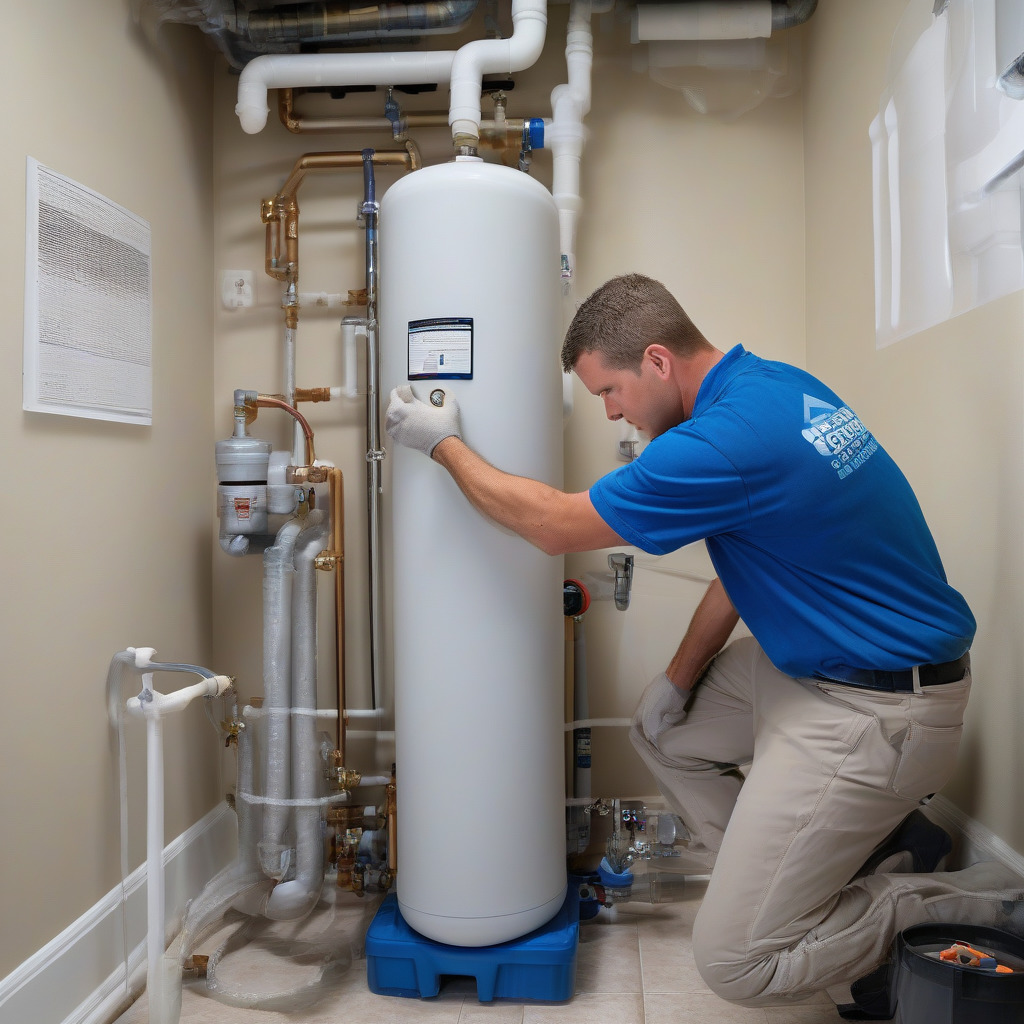
A true water softener uses ion exchange: hard water passes through a resin bed where calcium and magnesium ions are swapped for sodium ions, producing genuinely soft water. The resin is periodically recharged by flushing it with a salt brine solution, which is then discharged to drain. This is the technology with the longest track record, the most independent research behind it, and NSF/ANSI Standard 44 as its certification benchmark. It works. Full stop.
Salt-free systems — often marketed as “water conditioners” or “descalers” — use a process called template-assisted crystallization (TAC) to change the form of calcium and magnesium without removing them. The minerals stay in the water but convert to a crystalline structure that’s less likely to adhere to surfaces. A water hardness test will still show the same mineral content. They do reduce scale accumulation in pipes and appliances, they produce no brine waste, and they require no salt. The purist argument about whether this counts as “real” softening tends to miss the point: for homeowners on septic systems, it’s often the smarter choice regardless of what you call it.
For most municipal-water homes in Orlando proper, a salt-based system sized correctly for household usage delivers the most complete solution. But a significant number of homes in unincorporated Orange County, Osceola County, and parts of Seminole County are on septic. Florida DEP guidance and several county-level rules have moved against high-salt brine discharge into septic systems, with legitimate concerns about drain field biology and groundwater effects in shallow-aquifer zones. If your home is on septic, a salt-free conditioner or a demand-initiated regeneration softener — one that regenerates based on actual usage rather than a timer — deserves serious discussion with a contractor who understands the difference. Not just someone trying to close a sale.
Whole-house carbon or sediment filtration is a separate category entirely. It addresses taste, odor, chlorine byproducts, and particulates. Not hardness. Many homeowners conflate it with softening. A filtration-only system will not stop scale buildup, no matter how expensive the equipment. Ionex Water LLC, an Orlando-based Water Treatment Supplier, carries equipment across all three categories and can run comparative assessments based on your specific source water — a useful starting point for homeowners who want to understand what their water actually needs before committing to a system type.
Whole-house carbon or sediment filtration is a separate category entirely. It addresses taste, odor, chlorine byproducts, and particulates. Not hardness. Many homeowners conflate it with softening. A filtration-only system will not stop scale buildup, no matter how expensive the equipment.
The Permit Question Nobody Is Answering
This is the section most water treatment marketing skips entirely, and it has real consequences.
In Orange County, any water treatment installation involving modifications to a home’s plumbing requires a permit from the Orange County Building Division. Bypass valves, main supply connections, brine drain routing — all of it requires permitting. The contractor you hire needs to be a licensed plumbing contractor in Florida (verifiable at myfloridalicense.com), needs to pull the permit before work begins, and the installation needs to pass inspection. Some dealers will tell you a permit isn’t required for their particular system or installation method. That may occasionally be true for a point-of-use under-sink filter that doesn’t touch the plumbing, but it is not true for whole-house softener installations.
Unpermitted work creates two downstream problems. First, it can complicate insurance claims. If a brine line fails and causes water damage, an insurer investigating the claim will ask whether the installation was permitted. Second, it surfaces at closing. Real estate attorneys and home inspectors in the Orlando market are increasingly flagging unpermitted water treatment installations — particularly as the short-term rental market has pushed more investor-owned properties with unpermitted equipment through the transaction pipeline.
HOA restrictions add another layer. Celebration has equipment placement rules that affect where a brine tank can go and whether certain equipment is permissible in a garage or utility area. Lake Nona’s sub-associations have similar provisions. Baldwin Park has HOA rules covering exterior modifications. None of this is necessarily prohibitive, but you need to check before installation, not after.
What It Should Cost — Local Numbers
These figures reflect current Orlando-market conditions as of mid-2025. Verify them against actual dealer quotes, because pricing shifts with salt commodity costs, equipment lead times, and labor rates.
A mid-range salt-based softener for a standard municipal-water home typically runs around $2,000 to $2,500 installed in the Orlando market, permit included. Budget higher — closer to $3,500 — if your home has complicated plumbing access or you’re being quoted a premium brand.
Well-water installations cost substantially more. Combining a softener with an iron filter for east Orange County well-water conditions — the Christmas area being the obvious example — usually starts around $4,000 and can easily reach $6,000 or more if hydrogen sulfide treatment is required. These systems involve multiple equipment stages and different piping configurations. They’re not municipal installs.
Salt-free conditioners run less, partly because they don’t require the plumbing complexity of a brine drain. Figure $1,200 to $2,200 installed for a municipal-water application.
Dealers increasingly offer monthly salt service plans — delivery plus periodic system checks — for homeowners who’d rather not haul bags from a big-box retailer. In the local market, expect $35 to $55 per month. Some dealers bundle this into a lease-to-own model that converts a $2,000 purchase into a monthly payment that costs more over five years but requires less cash at signing. Whether that trade-off makes sense depends on your situation. Just go in knowing the total cost before you sign.
Before any of these numbers mean anything, pay for an independent water test from a Florida-certified laboratory. Not a free in-home test from the company trying to sell you equipment — those tests have a way of confirming that you need whatever the company sells. An independent panel from a certified lab runs $75 to $150 in the Orlando area and gives you a factual baseline for hardness, iron, pH, and anything else relevant to system selection. The Florida Department of Health maintains a list of certified drinking water labs. This single step eliminates most of the sales theater.
When Demand Spikes — and Why Timing Matters
Two seasonal patterns compress lead times in ways that national water treatment content never mentions.
The first is post-hurricane demand. When a significant storm causes well contamination — surge intrusion, flooding that compromises well casings, or debris damaging above-grade equipment — demand for installation and emergency filtration surges across the metro within days. If you’re in well-water territory, address your treatment infrastructure before storm season, which means before June. After Hurricane Ian, well-water areas in Osceola County saw waiting lists stretching into November. That’s not when you want to be starting your research.
The second pattern is the short-term rental cycle. The International Drive corridor and the Kissimmee vacation rental belt along US-192 see concentrated property maintenance activity in September and October, when operators service properties between summer and holiday high seasons. More rental managers are now installing or servicing water softeners specifically to protect dishwashers, washing machines, and water heaters from the high-turnover use that burns through appliances faster than owner-occupied homes. That creates real contractor demand pressure in the fall that lengthens residential scheduling across the market.
Spring and early summer offer better timing for competitive bids and reasonable scheduling. Fall is a gamble.
National Franchise vs. Independent Dealer
The honest answer: go independent if you can find a good one, and verify that you have.
National brands — Culligan, Kinetico, and EcoWater all have active dealer presence in Central Florida — offer real advantages in service infrastructure. Technicians trained on a specific equipment line, longer manufacturer-backed warranties, and a company that will still exist in five years when something needs fixing. The trade-off is price. A franchise model supports larger overhead, and that shows in quotes. Expect to pay 15 to 25 percent more than a comparable independent installation.
A well-established independent with years in the Orlando market, a local physical address, and licensed plumbers on staff is often excellent — and meaningfully cheaper. The risk is that quality varies considerably. A new operator with a cargo van and wholesale equipment is a different proposition. The way you distinguish between them: check references, ask directly how many installations they’ve completed in the past three years, and verify their Florida plumbing license before you have any further conversation. Go to myfloridalicense.com, search under “Contractor” and then “Plumbing,” and confirm the license is active with no disciplinary history.
Two baseline standards apply regardless of who you hire. Any salt-based softener should carry NSF/ANSI Standard 44 certification — the independent testing standard that confirms the system actually performs as claimed for hardness reduction. Ask for the documentation, not a verbal claim. And verify the license. Every time.
Questions to Ask Before You Commit
These work as a screening tool. A dealer who deflects or goes vague on any of them is telling you something.
1. Will you test my water independently, or are you relying on your own in-home test?
An in-home test run by the selling dealer is not an independent baseline. Ask whether they’ll accept results from a certified third-party lab you’ve already used, or whether they insist on their own testing as a precondition of the quote.
2. Is the system NSF/ANSI 44 certified?
For salt-based softeners, this is the relevant certification. Ask for the documentation.
3. Who pulls the permit, and is the permit fee in your quote?
This question immediately separates contractors who operate correctly from those who skip the permit process. The right answer: the contractor pulls the permit, fee included or clearly itemized.
4. What is your plan for brine disposal, and have you confirmed I’m not on septic?
A contractor installing a salt-based system on a septic-connected home without discussing brine discharge is cutting a corner. The answer should include a specific discussion of your drain connection and, if applicable, guidance on system selection appropriate for septic households.
5. What are the full terms of the service agreement?
If a salt plan is part of the proposal, ask about contract length, what triggers a price increase, what’s covered in a service call versus billed separately, and what happens if you cancel. Some agreements are month-to-month. Others carry multi-year terms with early termination fees. Know which one you’re signing before you sign it.
6. What is the warranty, and who backs it?
Distinguish between the manufacturer’s warranty and the dealer’s service warranty. For independent operators, ask directly what happens to service coverage if the company closes. It’s a legitimate question.
Hard water in Orlando isn’t a niche problem for households with unusually sensitive appliances. It’s a baseline condition of the local water supply, and the costs accumulate slowly enough that most residents have calibrated to them without recognizing the cause. The grayer whites, the sluggish showerhead, the water heater that died two years early — it’s easy to chalk those up to bad luck or cheap fixtures. Usually it isn’t.
For more local coverage, explore our Home & Property section.