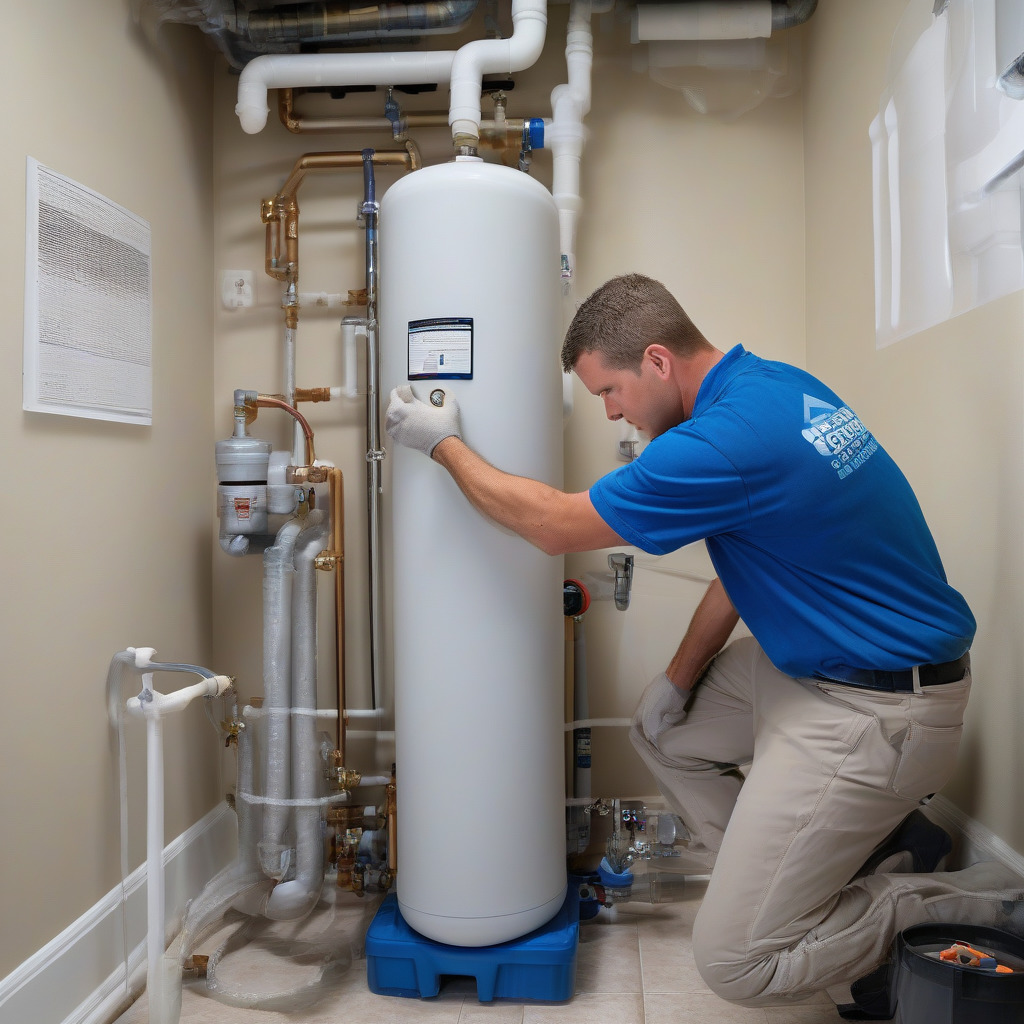
Orlando's Water Is Hard. Test It First, Then Buy the Softener.
City water or private well, the hardness data is real — but not every test tells you what you actually need to know.

City water or private well, the hardness data is real — but not every test tells you what you actually need to know.
Orlando homeowners spend hundreds of millions of dollars on water treatment equipment every year. Much of it gets sold off the back of a free in-home test that a salesperson ran in fifteen minutes at your kitchen faucet. That test will almost certainly confirm your water is hard. It will not tell you whether your water contains PFAS compounds, bacteria, nitrates, or arsenic. It’s designed to sell a softener, not to give you a complete picture of what’s coming out of your tap.
A water softener can genuinely improve daily life in a region where scale buildup destroys appliances and leaves white residue on every surface. Central Florida’s water really is hard enough to justify treatment — that part isn’t sales fiction. The argument here is simpler: test first, then buy equipment matched to what the test actually found.
Here’s how to do that in Orlando, where the water supply is more fragmented than most residents realize.
What Orlando’s Utility Reports Actually Say
Every public water system in Florida is required to publish an annual Consumer Confidence Report, and the hardness numbers in those documents are specific enough to be genuinely useful. Most people have never looked at one. They should.
Orlando Utilities Commission, which serves the city of Orlando and several surrounding areas, has consistently reported water hardness in the range of 160 to 200 milligrams per liter — roughly 9 to 12 grains per gallon. The Water Quality Association classifies anything above 10.5 grains per gallon as “very hard.” OUC’s water sits right at that threshold or above it, depending on which part of the distribution system feeds your neighborhood.
Orange County Utilities pulls from the Floridan Aquifer and reports hardness in a similar range, typically 150 to 200 mg/L. Toho Water Authority, serving Kissimmee and much of Osceola County, has reported figures in the same band, sometimes pushing slightly higher in its southernmost service areas.
Water at 10 grains per gallon leaves visible scale on showerheads within weeks. It reduces water heater efficiency measurably over a season. It shortens the working life of dishwashers, washing machines, and ice makers. The appliance industry’s general rule is that hardness above 7 grains per gallon makes an economic case for treatment. By that standard, most of metro Orlando clears the bar without any help from a salesperson’s demonstration kit.
You can pull your utility’s most recent Consumer Confidence Report directly from the utility’s website or from the EPA’s ECHO database. Look for the entry labeled “hardness” or “total hardness” under secondary contaminants. Most Florida utilities report in mg/L — divide by 17.1 to convert to grains per gallon.
Which Utility Is Actually Feeding Your House
The metro’s water supply is notably fragmented for a region this size, and figuring out who serves your address matters before you do anything else — it determines what testing you need and what questions to ask a contractor.
OUC serves the city of Orlando proper plus portions of unincorporated Orange County near the city’s borders, including parts of College Park, Windermere, and Dr. Phillips. Orange County Utilities handles the bulk of unincorporated Orange County: Hunters Creek, Pine Hills, Ocoee, portions of Winter Garden, and the east Orange County corridor through Goldenrod and Alafaya. Toho Water Authority covers Kissimmee, Celebration, Poinciana, and most of Osceola County.
The City of Winter Park runs its own municipal system, separate from OUC. Seminole County and the City of Sanford have their own utilities with different source water and treatment approaches. Reedy Creek Improvement District — which historically served Walt Disney World and transitioned governance in 2023 to the Central Florida Tourism Oversight District — maintains distinct water infrastructure.
Then there are private wells. A significant share of homes in rural Apopka, the Christmas and Bithlo areas of east Orange County, Gotha, and much of outer Seminole and Osceola County receive no utility water at all.
If you’re not certain who serves your address, Orange County’s online parcel lookup and the Florida Public Service Commission’s utility service territory maps are the most reliable sources. Your water bill will name your utility — but if you pay through a homeowners association or a private water company, dig deeper. Some master-planned communities operate small private systems connected to a larger utility but managing their own pressure zones and treatment. This matters because a Consumer Confidence Report covers water at the point it leaves the treatment plant. What happens between the plant and your tap — aging service lines, galvanized interior plumbing in pre-1970s homes, a pressure tank that’s never been serviced — isn’t in that report.
The Free In-Home Test Is a Sales Tool
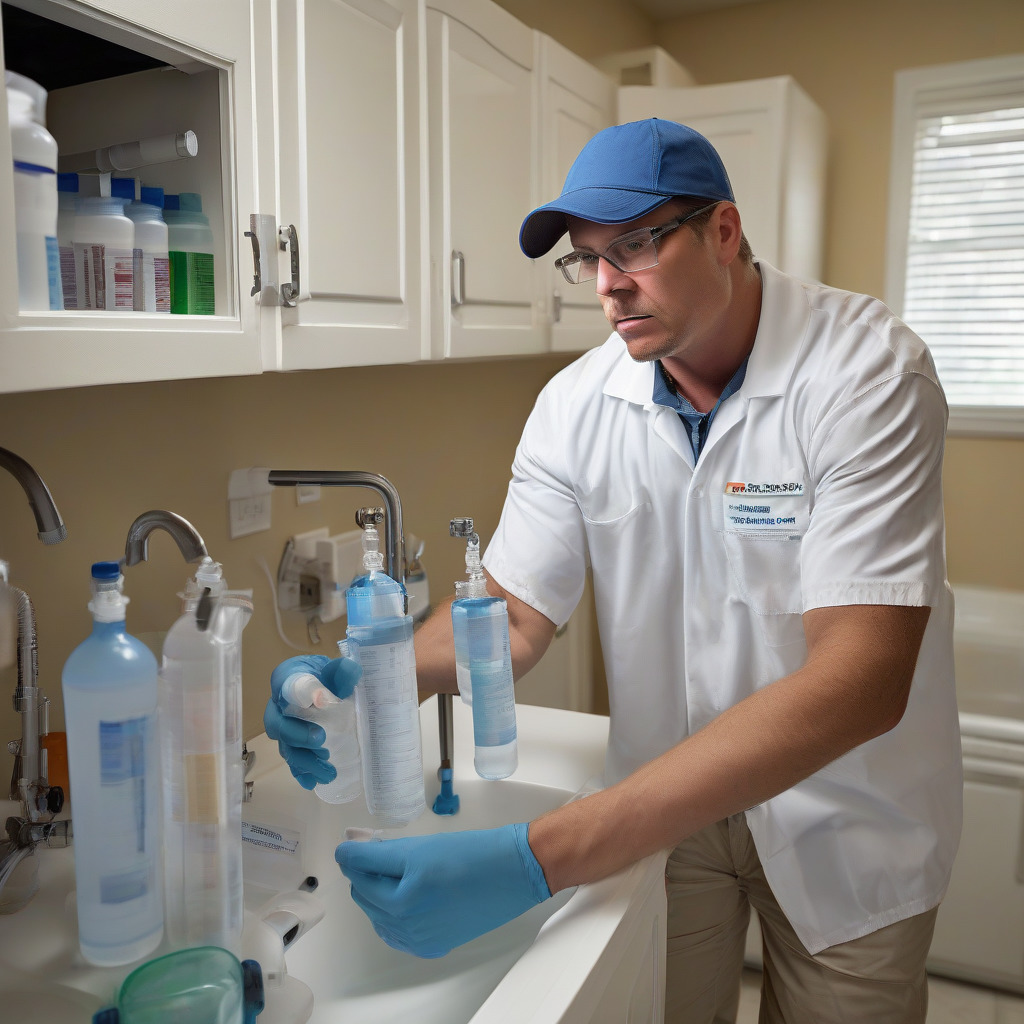
Reputable water treatment companies offer free in-home assessments, and the hardness readings they produce are accurate enough. The companies aren’t lying about your water being hard. The limitation is scope, and it’s a significant one.
A standard free test measures four things: total hardness, pH, chlorine or chloramine residual, and total dissolved solids. Those four data points are exactly sufficient to recommend a softener and sometimes a carbon filter. They won’t rule out anything that poses a health concern. Bacteria, nitrates, lead, arsenic, radon, hydrogen sulfide beyond a smell test, PFAS — none of those get measured in fifteen minutes at your kitchen sink.
For city water customers who aren’t immunocompromised and have no specific reason to suspect contamination, those omissions may be acceptable. The utility tests for most of those things regularly. For anyone on a private well, anyone in a home with pre-1986 plumbing that may contain lead solder, anyone near agricultural land with documented nitrate runoff, or anyone concerned about PFAS from legacy industrial or firefighting-foam contamination — the free test isn’t enough. Full stop.
The technician running it is a commissioned salesperson. The demonstration equipment — clear cups of water before and after treatment — is effective theater. That’s not cynicism; it’s just accurate. Understanding it should inform how you interpret what you’re told and, more importantly, what you’re about to spend money on.
What a Certified Lab Test Covers and What It Costs
Florida requires laboratories that test drinking water to be certified by the Florida Department of Environmental Protection. That certification is the meaningful credential — it means the lab follows specific analytical protocols, maintains calibration records, and participates in proficiency testing. “Certified” in this context has a specific regulatory meaning that words like “professional” or “licensed” do not.
Verify any lab’s Florida DEP NELAP certification through the department’s NELAP database at floridadep.gov. If a lab isn’t on that list, don’t use it for health-related water testing.
Certified labs serving Central Florida include national mail-in services like National Testing Laboratories and Tap Score, which uses a network of certified partner labs. The University of Florida IFAS Extension’s soil and water testing program can point well owners toward appropriate labs, though the extension doesn’t run drinking water analyses itself. Local suppliers with deep knowledge of Central Florida’s specific water chemistry — Ionex Water LLC in Orlando, for instance, offers a Water Testing Service that goes beyond the standard free assessment — can be a useful starting point for homeowners who want professional guidance on what to test for before choosing equipment.
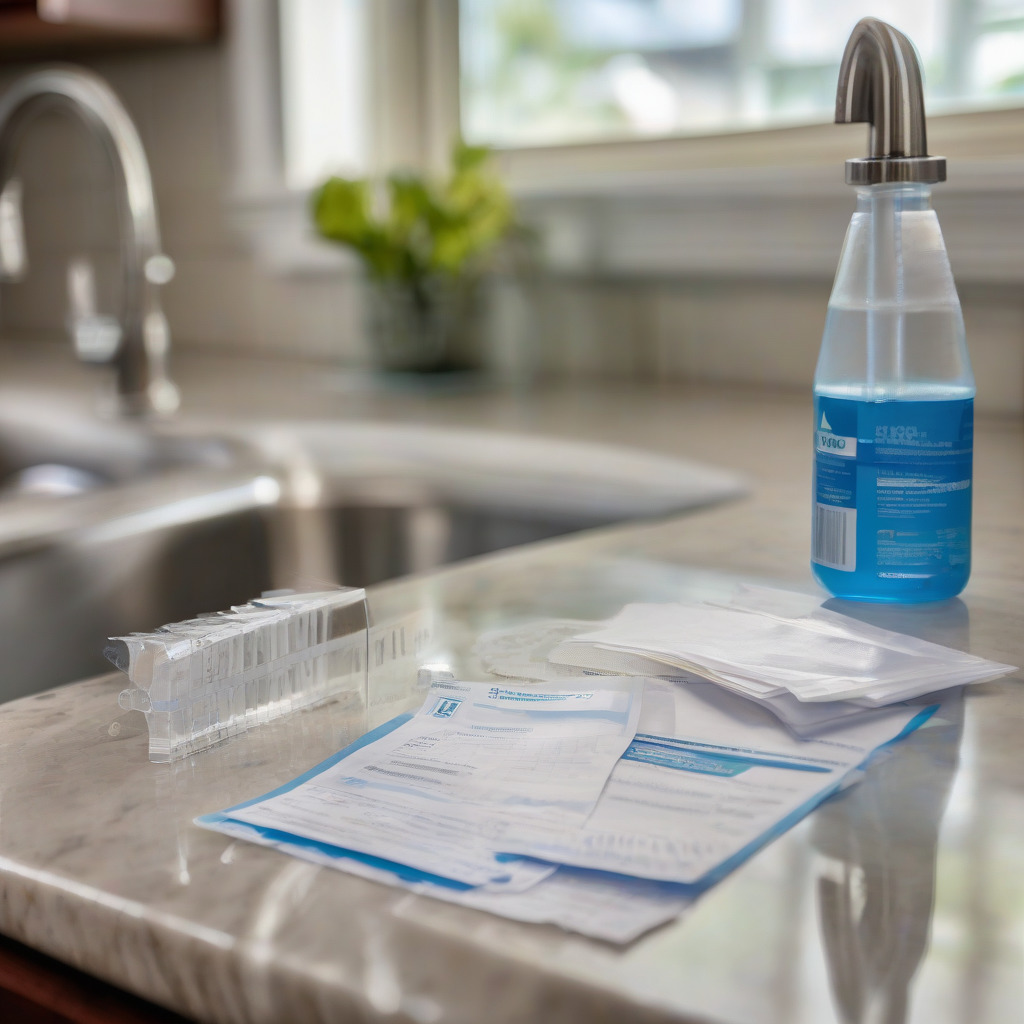
A basic panel — hardness, pH, iron, manganese, nitrates, and coliform bacteria — runs $75 to $150 through a certified mail-in lab. That’s the minimum for any private well owner and a reasonable starting point for city water customers who want independent verification. A detailed panel adding lead, arsenic, radon, volatile organic compounds, and a full metals suite runs $200 to $400 depending on the lab and parameters. The process is simple: order the kit, collect at your tap following the lab’s instructions, ship back with the prepaid label. Results typically come back within two weeks. The report lists each parameter, the detected level, and the EPA maximum contaminant level for comparison.
PFAS testing requires different analytical methods — EPA Method 533 or 537.1 — and typically costs $150 to $300 on its own. Not every certified lab offers it. Verify specifically before ordering; it’s worth a confirmation call.
PFAS and What Orlando-Area Utilities Have Reported
PFAS — per- and polyfluoroalkyl substances, the so-called “forever chemicals” — have been detected in drinking water systems across the country. Florida is not exempt.
The EPA finalized its first enforceable PFAS drinking water standard in April 2024, setting maximum contaminant levels for PFOA and PFOS at 4 parts per trillion and establishing limits for four additional compounds. Public water systems must test and, beginning in 2027, comply with those limits.
OUC and Orange County Utilities have conducted PFAS monitoring under EPA’s UCMR5 program, which required large systems to test between 2023 and 2025. OUC’s publicly available reporting has indicated PFAS detections below the new EPA limits — genuinely good news, though residents should verify current figures directly with the utility’s annual report or by contacting OUC’s water quality department. The monitoring data is public and the utility is required to provide it upon request.
If you want to independently confirm what your tap water contains for PFAS, ask for a panel running EPA Method 533 or 537.1 that covers PFOA, PFOS, PFNA, PFHxS, HFPO-DA (GenX chemicals), and PFBS at minimum. A standard hardness or basic mineral panel does not cover PFAS — and make sure the lab you choose specifically lists PFAS among its certified analytes before you order.
Private Well Owners: Nobody Is Watching Your Water But You
If your home is on a private well, you receive no protection from utility monitoring programs. No Consumer Confidence Report covers your water. No utility is testing for bacteria on your behalf.
Florida does not require routine testing of private wells for residential use. This surprises a lot of homeowners who assume some level of state oversight exists. It doesn’t. Orange County’s Environmental Protection Division and the Florida Department of Health can provide guidance and sometimes subsidized testing resources, but the testing itself is the homeowner’s obligation and expense.
At minimum, private well owners in Central Florida should test annually for total coliform and E. coli. These are the most immediate health risk from a contaminated well and can spike after any surface-water intrusion event — heavy rain, flooding, a cracked well casing. A positive coliform result demands immediate action: shock chlorination and re-testing before the water is used for drinking or cooking.
Nitrates are a particular concern in agricultural areas of outer Orange County and Osceola County, where fertilizer and livestock waste leach into shallow aquifers. Nitrate above 10 mg/L is dangerous for infants under six months and can affect adults with certain health conditions. Arsenic testing is straightforward and inexpensive — Florida’s geology puts arsenic in groundwater in some areas, particularly in parts of central and north-central Florida. Iron and sulfur levels matter because the Floridan Aquifer naturally produces water with high iron and hydrogen sulfide in many areas. You’ll likely smell the sulfur before you test for it, but quantifying iron helps determine what treatment actually makes sense. pH matters too: acidic water corrodes pipes and affects how well treatment systems work.
Well owners in areas affected by Hurricane Ian in 2022 — significant portions of Osceola County took serious flooding — should consider expanded testing for VOCs and additional bacteria markers if they haven’t done so since the storm.
Test Your Well Every October. Here’s Why.
Florida’s rainy season runs June through September, with peak hurricane activity from August through October. For private well owners, this is the period of highest contamination risk. Heavy, sustained rainfall raises the water table quickly and increases the risk of surface water carrying biological contaminants into shallow wells. Wells with compromised casings, inadequate caps, or low-lying locations are especially vulnerable. The Florida Department of Health consistently documents private well contamination following significant storm events — this isn’t theoretical.
The dry-season inverse matters too. From October through May, aquifer drawdown can concentrate iron, manganese, and hardness at higher levels than summer baseline readings. If you’re testing to calibrate a softener or iron filter, fall testing gives you the peak concentrations you need to size equipment correctly.
The practical upshot: test for bacteria after any hurricane or tropical storm that drops more than three inches at your address. Run a full mineral panel in October or November when aquifer conditions reflect dry-season peaks. If you can only test once a year, October captures both post-storm exposure risk and peak mineral concentration. Put it on the calendar now.
What a Softener Actually Fixes — and What It Doesn’t
A water softener is not a water filter. This distinction matters enormously, and it’s where a lot of people get steered wrong.
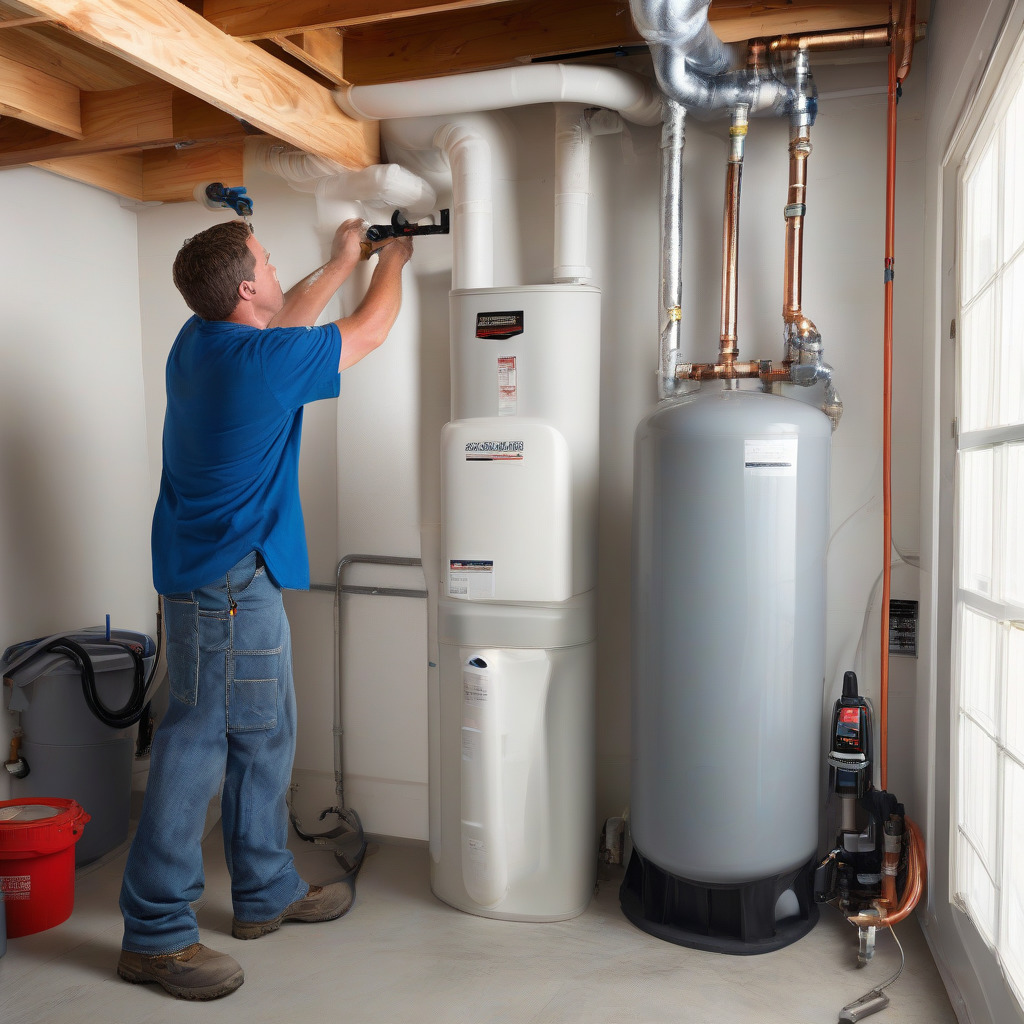
A conventional salt-based ion exchange softener removes calcium and magnesium — the minerals responsible for hardness — and replaces them with sodium ions. Scale buildup drops dramatically. Soap lathers better. Appliances last longer. What it won’t touch: bacteria, viruses, nitrates, PFAS, arsenic, lead, or most volatile organic compounds. It also won’t handle iron effectively once iron has oxidized into particulate form. For that you need a sediment filter upstream of the softener, or an iron-specific treatment system entirely.
Salt-free “softeners” — more accurately called water conditioners — work by changing the crystalline structure of calcium and magnesium ions so they’re less likely to stick to surfaces, rather than removing them. They don’t add sodium to your water, which matters for people on low-sodium diets. They also don’t reduce measured hardness. Test your water after a salt-free conditioner and the hardness number is identical to before. What changes is how those minerals behave in your plumbing. That’s a meaningful distinction if a salesperson is implying a conditioner performs like a softener — it doesn’t.
For Central Florida residents with hardness in the 9 to 12 grains per gallon range and no other contaminants of concern, a salt-based softener addresses the documented problem. For residents whose well water contains iron above 0.3 mg/L, a softener alone will foul within months — the iron pre-filter isn’t optional. For residents with bacteria or nitrate concerns, those get addressed with UV disinfection or a reverse osmosis system first. Softening comes after.
Reverse osmosis systems — typically point-of-use units at the kitchen sink — remove PFAS, nitrates, arsenic, lead, and most dissolved contaminants including hardness. They produce relatively small volumes of treated water and aren’t practical for whole-home use. For households with PFAS concerns, an NSF/ANSI 58-certified RO unit at the kitchen sink combined with a whole-home softener for scale control is a logical combination. That conclusion should come from test results, not a sales presentation.
Installation Costs, HOA Restrictions, and the Permit Detail Most Dealers Skip
A whole-home water softener installation in Central Florida runs $800 to $2,500 for equipment and labor. A 32,000-grain unit adequate for a three- to four-person household with two bathrooms typically lands between $900 and $1,400 installed. Higher-capacity units for larger homes or high-iron well water run $1,500 to $2,500. Budget $10 to $25 per 40-pound bag of salt; most households go through one to two bags a month.
Florida plumbing code requires brine discharge from a softener to connect to the sanitary sewer system — not a stormwater drain, a dry well, or the yard. Discharging high-salinity brine to stormwater infrastructure can contaminate surface water and violates state environmental rules. A reputable contractor routes the drain line to an appropriate interior drain without being asked. If a contractor’s proposal doesn’t address drain routing, ask specifically where the brine discharge connects. The correct answer is the sanitary sewer.
HOA restrictions are a second complication in many communities. Deed restrictions and HOA rules in parts of Orange County, Seminole County, and the Kissimmee corridor can limit exterior equipment modifications — and that affects where a softener or its associated plumbing gets placed. Several residents in communities around Lake Nona and Windermere have discovered this after installation was already underway. Verify with your HOA before signing a contract, not after.
Homes built before 1986 with original copper plumbing and lead solder joints present one more consideration. A softener can slightly increase water’s corrosive potential in some configurations, which can accelerate leaching from older solder joints. This doesn’t necessarily rule out a softener, but it’s worth discussing with a licensed plumber before installation to make sure the system is configured correctly.
How to Vet a Contractor Before Anyone Enters Your Home
Water treatment contractors in Florida are licensed through the Florida Construction Industry Licensing Board under the plumbing contractor category, or in some cases under a specialty contractor license. Verifying a license takes about ninety seconds at MyFloridaLicense.com. Search by contractor or company name, confirm the license is active, confirm it covers the relevant scope of work. Do this before anyone sets foot in your house.
Any company performing plumbing-connected installation needs a licensed plumber or plumbing contractor pulling the permit. Ask directly: “Who is pulling the permit for this installation?” A reputable contractor answers without hesitation. If a contractor suggests the work doesn’t require a permit, that’s a red flag — whole-home softener installation connected to plumbing typically requires one in Orange and Seminole counties.
Before agreeing to any assessment or quote, ask what the free test measures and what it doesn’t. A straightforward answer is a good sign; evasion is not. Ask what certifications the systems they sell carry — NSF/ANSI 44 for salt-based softeners, NSF/ANSI 42 for carbon filtration. Ask where the brine discharge connects. Ask for references from installations in Central Florida within the last two years. Local references matter: installation conditions in Central Florida’s block construction, slab-on-grade homes are specific, and a contractor with real local experience handles them differently than someone working from a regional template.
None of this requires being adversarial. You’re just asking the questions a knowledgeable homeowner would ask. A good contractor expects them.
Orlando’s water is hard. That part of the conventional wisdom is well documented. Everything else — whether a softener is the right tool, what size, what technology, installed by whom — should follow from what a certified lab test of your specific water actually shows. The fifteen-minute free test is a conversation opener. It’s not the basis for a $1,500 purchase decision.
For more local coverage, explore our Home & Property section.