The Hidden Cost That Changes Every Calculation: Insurance by Zip
Florida's homeowners insurance market partially stabilized following the 2022–2024 wave of carrier exits, but "stabilization" is relative — and honestly, it's a generous word for what's happened he…


The Hidden Cost That Changes Every Calculation: Insurance by Zip
Florida’s homeowners insurance market partially stabilized following the 2022–2024 wave of carrier exits, but “stabilization” is relative — and honestly, it’s a generous word for what’s happened here. Citizens Property Insurance, the state-run insurer of last resort, now covers nearly one in four Florida homeowners, a historic high that exposes how thoroughly the private market has fragmented. What makes this crisis uneven across the state is less discussed but equally consequential: your zip code determines not just your premium, but whether you can get coverage at all.
The gap between insurable and uninsurable neighborhoods has hardened into geography-based exclusion. In some Orange County zip codes, private insurers remain available with reasonable rates. In others, Citizens is effectively your only option, and the cost reflects that captive market. For home sellers, buyers, investors, and anyone calculating the true cost of ownership, zip code has become the first variable — sometimes the deciding one.
Market Reality by Geography
Winter Park and Windermere homeowners, particularly in established neighborhoods with lower claims histories, still attract multiple private carriers. Quotes come back within days. Agents shop five or six companies. In those areas, getting priced out of Citizens is possible, even easy.
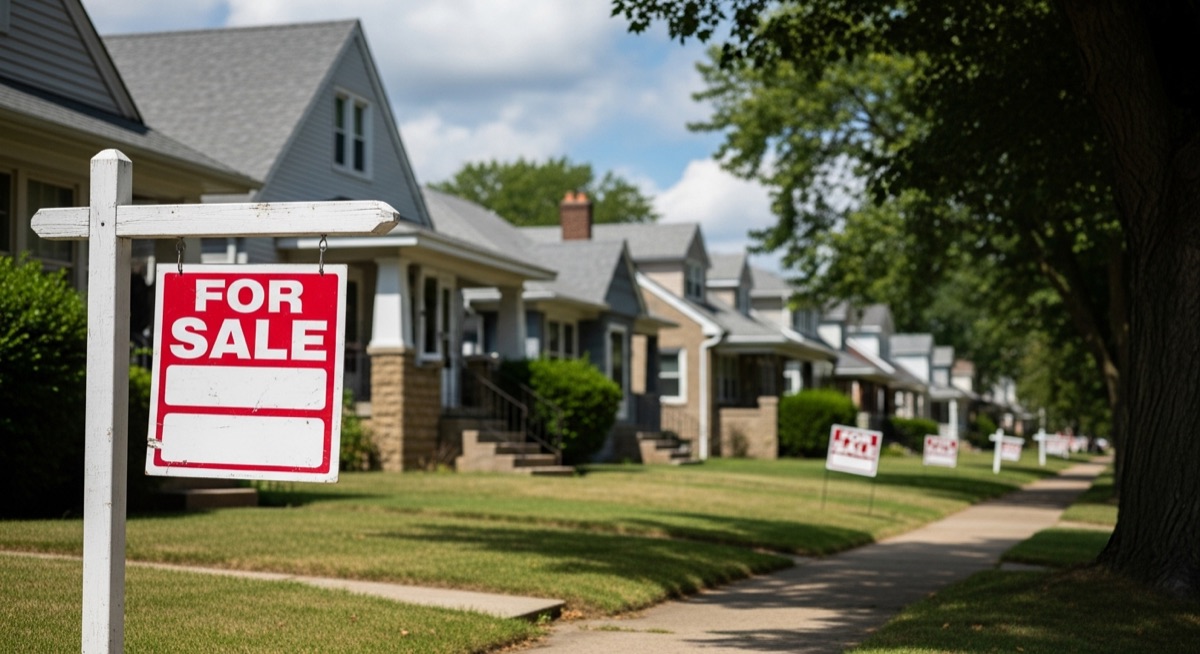
Head south or west into the I-4 corridor zip codes around Davenport, Haines City, and the unincorporated Orange County subdivisions that exploded during the 2010s building boom, and the picture inverts entirely. Universal Insurance, FedNat, Heritage, Avatar — carriers that once covered central Florida have either exited the market or stopped accepting new customers. A homeowner in a zip code flagged for coastal exposure or high claim frequency finds themselves with one choice: Citizens, at rates that have climbed 40 percent in two years. Forty percent. In two years.
The insurance industry’s underwriting algorithms have become extraordinarily detailed. They’re not sorting by broad county boundaries anymore. Individual zip codes, sometimes even census tracts, are scored for wind risk, claim history, construction density, and proximity to known loss clusters. A neighborhood two miles away can experience entirely different market access based on historical weather patterns in that specific area. If that sounds overly precise, it isn’t — it’s just invisible to most buyers until they’re already under contract.
How Zip Code Affects Closing Dates and Resale Value
For real estate professionals in the region, insurance availability now shapes deal timelines in ways that would have seemed strange five years ago. A buyer in a favorable zip code gets a binder approval within a week. Their mortgage contingency clears. The deal moves forward.
The same buyer in an unfavorable zip code waits for Citizens underwriting, which is slower and more restrictive about non-standard properties. Older roofs trigger additional scrutiny. Homes within one mile of water, regardless of actual flood risk, face extended review. Closing dates slip 30, 60, sometimes 90 days — and anyone who’s tried to explain a 90-day delay to a motivated seller knows how those conversations end.
This uncertainty has material cost. Sellers price lower in zip codes where insurance availability is visibly constrained. Appraisers now include insurance availability as a neighborhood characteristic in valuation reports. A three-bedroom home in College Park moves faster and commands a higher price than an identical home on Poinciana Boulevard, partly because the mortgage lender and the buyer both know insurance won’t kill the deal. The Poinciana Boulevard property carries the implicit cost of insurance friction in its offering price. It’s not on the listing sheet. It’s in the number.
For investment properties, the calculus is harsher. A small rental operator analyzing returns must now reserve for the possibility that Citizens covers the property permanently, that rates increase annually, and that private options may never return. In some zip codes, insurance cost alone — in many cases $150 to $200 a month more than five years ago — collapses return projections below acceptable margins. Investors don’t acquire in those areas. That’s not pessimism; that’s arithmetic.
The Citizens Backstop and Its Limits
Citizens Property Insurance has absorbed roughly 440,000 new policyholders since 2022. Its reserves, while technically adequate under state law, are built on the premise that catastrophic hurricane years are rare. A major hit — a Category 4 or 5 storm making direct landfall on Tampa or Miami — could trigger surcharges on all Citizens policyholders statewide, including those in low-risk zip codes. That systemic risk creates an undercurrent of anxiety that private insurers can exploit, and they know it.
Progressive, already dominant in homeowners insurance statewide, has been selective. It remains present in most of Orange County, but not uniformly. State Farm, which exited new business in 2023, still manages existing policies; as those expire, those customers shift to Citizens. Each exit narrows the middle of the market, and homeowners are left choosing between one to three carriers deemed acceptable — or Citizens.
The Insurance Information Institute estimates that Florida homeowners in the most constrained zip codes are effectively subsidizing stability for those in preferred areas. Citizens’ cost structure spreads risk across the entire state, which means a homeowner in Winter Park’s low-risk suburbs contributes to covering losses in higher-risk coastal or claim-heavy areas. The system works until it doesn’t — until a single year’s losses exceed expectations and rates spike statewide. I genuinely don’t know how you price that tail risk into a purchase decision, but more and more buyers are trying.
What Agents Are Actually Doing About It
Requesting an insurance quote before making an offer has become routine. Some buyers now ask for insurance documentation as early as a title search. That already sounds quaint to agents who’ve been burned — the sharper ones are pulling zip code loss data before a showing.
Agents in less-favored zip codes have developed workarounds. Some counsel buyers to prepay annual Citizens premiums as part of negotiation strategy, locking in known costs. Others recommend closing in phases when dealing with properties on Citizens’ borderline. And some have simply stopped showing homes in the most insurance-constrained areas to out-of-state buyers who assume Florida insurance works like insurance in Ohio or Colorado. It doesn’t. The whole assumption is wrong.
The Florida Insurance Guaranty Association, the state mechanism for claims payouts when an insurer fails, has processed more claims in the past three years than in the previous decade combined. Claims get paid eventually — but often after delays. For a homeowner carrying a mortgage, delayed claims mean delayed repairs, extended contractor timelines, and deferred occupancy. There’s something particularly grinding about that outcome: the insurer failed, the state backstop eventually comes through, and you’re still the one living in a partially repaired house while it all sorts itself out.
The Structural Problem Nobody Wants to Fix
Here’s what’s actually happening: Florida’s homeowners insurance market is price-controlled below true market rates at the bottom — which is what makes Citizens attractive — and effectively abandoned at the top, where private insurers have walked away from entire geographies rather than price the risk honestly. That wedge keeps the market fractured and probably keeps it that way for a long time.
Zip codes with better loss experience stay insurable at profitable rates. Zip codes with higher claim frequency get abandoned by private capital, which drives more business to Citizens, which spreads risk statewide, which keeps the private market from coming back. It’s a rational set of individual decisions that produces an outcome no one would have designed on purpose.
Until premiums across the state move significantly higher — which would be deeply painful for existing homeowners — or until a major catastrophe forces a full recalibration, the geography of insurance access stays uneven. Nobody in Tallahassee is going to say that plainly, but the data says it for them.
For anyone buying or holding property in central Florida, the broader picture of Orlando housing market conditions and where negotiating room actually is underscores why insurance costs are no longer a footnote to a purchase decision. And for buyers who’ve already found their zip code workable, what it actually costs to hire movers in Orlando this summer is the next number worth pinning down early. Get the insurance quote first. Before the offer. It is not a formality. In a market where carrier capacity is this constrained and risk assessments are this granular, the zip code doesn’t just influence the deal. For a growing number of properties in this region, it ends it.