What Orlando Homeowners Should Know Before Buying a Whole-House Water Filtration System
Orlando's water is not the same as the water running through homes in Atlanta, Chicago, or Phoenix. The national guides that dominate search results weren't written with this market in mind. They d…


Orlando’s water is not the same as the water running through homes in Atlanta, Chicago, or Phoenix. The national guides that dominate search results weren’t written with this market in mind. They don’t mention chloramines. They don’t flag septic system conflicts. They don’t explain why the neighborhood you live in changes the equipment decision. This piece does.
Orlando’s Water Is Harder Than Most Residents Realize
Before any equipment conversation begins, understand what Orlando-area water actually contains. The numbers are publicly available in each utility’s annual Consumer Confidence Report—the federally mandated document water providers publish every year—and they tell a consistent story.
Water hardness across the Orlando metro generally falls between 120 and 180 mg/L, classified as hard to very hard. OUC, Orange County Utilities, and Kissimmee Utility Authority each publish their own figures annually. Check the most recent Consumer Confidence Report for your specific utility for current numbers. The national average hardness is roughly 60 mg/L. Orlando homeowners routinely work with water carrying two to three times the mineral load of a typical American household. You feel it. Your appliances feel it.
Hard water is primarily a calcium and magnesium problem. Those minerals won’t make you sick. But they deposit scale inside water heaters, shortening a unit’s lifespan and dragging down efficiency. They coat dishwashers, washing machines, and ice makers. They leave white film on shower glass and spotted residue on dishes. They reduce how well soap and shampoo lather, so households burn through more product than they should. None of this is invisible or theoretical—residents who’ve lived in Orlando for years and then visited homes in softer-water markets describe an immediate difference. The water just feels different in your hands.
This baseline problem is what whole-house water treatment addresses. But hardness is only part of the picture.
Softener vs. Filter: A Distinction That Actually Matters Here
This is where a lot of Orlando homeowners spend money and come away frustrated. The terms “water softener” and “water filter” are not interchangeable, and confusing them is an easy way to spend several thousand dollars solving the wrong problem.
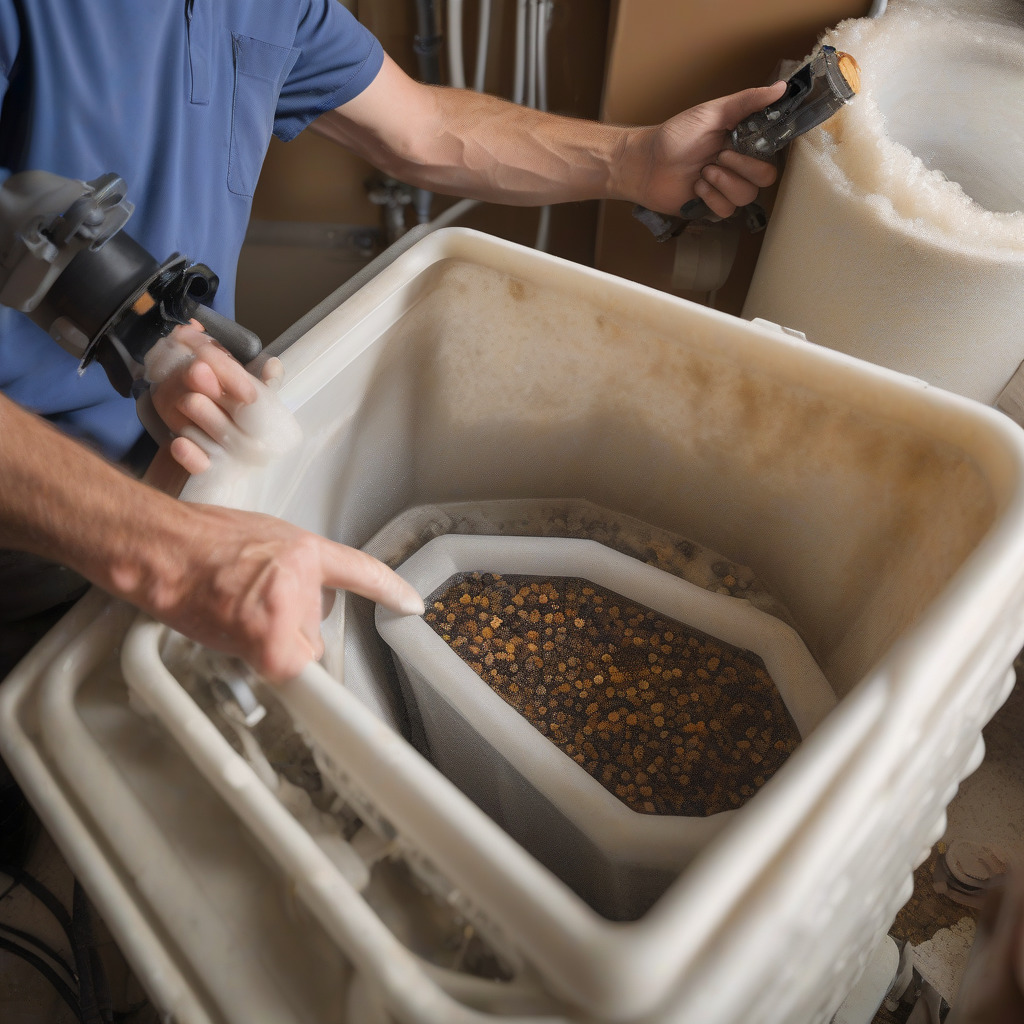
A water softener addresses hardness through ion exchange resin. Sodium ions swap for calcium and magnesium ions as water passes through a resin tank, removing the minerals responsible for scale and soap scum. The result is soft water that’s gentler on appliances and easier to lather with. What a softener does not do: remove chloramines, chlorine, sediment, volatile organic compounds, or anything else affecting taste, odor, or chemical content.
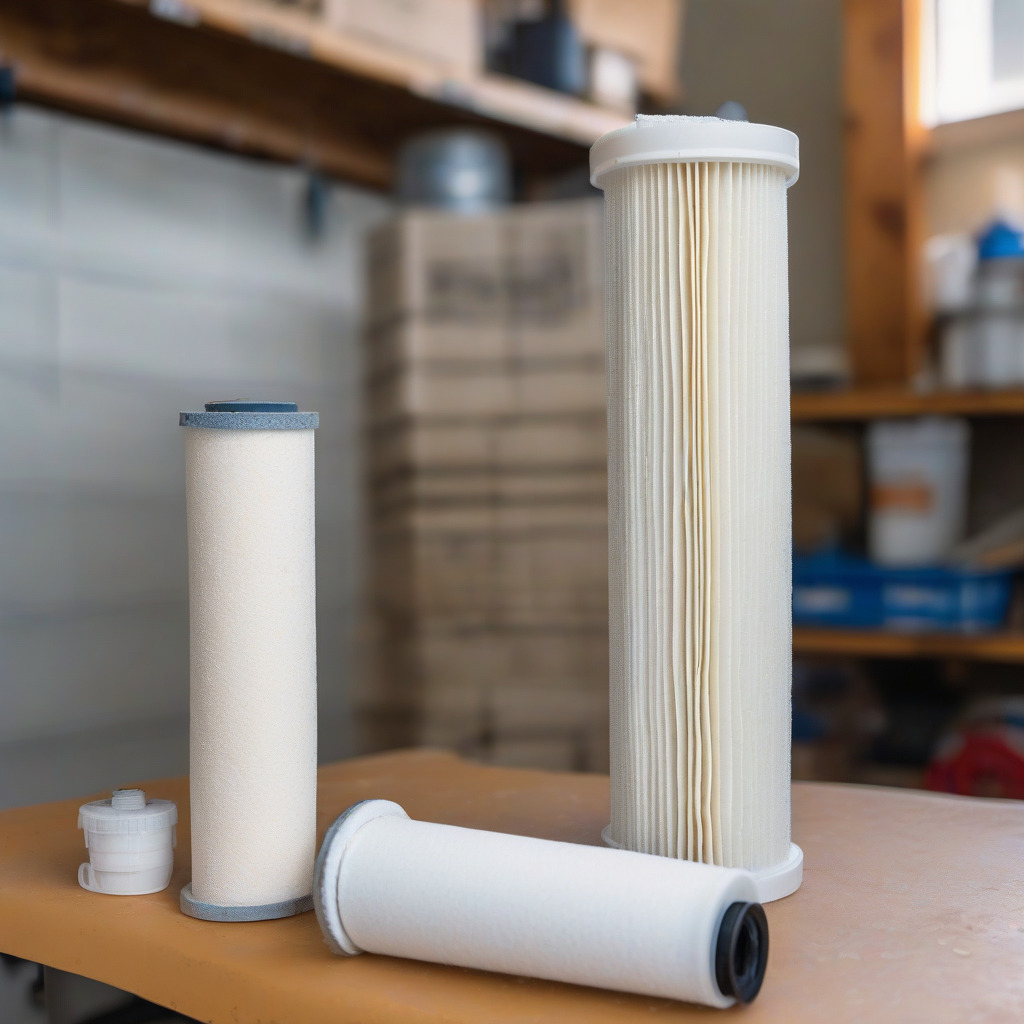
A whole-house filter works differently. Depending on its media and configuration, it can handle sediment, chlorine, chloramines, hydrogen sulfide, iron, and tannins. It does not remove calcium and magnesium. Your water will still be hard after passing through even a sophisticated filter, unless the system specifically includes a softening stage.
Many Orlando homeowners actually need both. A softener handles hardness. A filter handles disinfectant byproducts and taste issues. Vendors don’t always volunteer this. When evaluating a quote, the first question should be: what exactly are we treating, and does this system address each of those things? Local suppliers such as Ionex Water LLC that specialize in Whole House Water Filtration for the Orlando market typically configure systems as softener-plus-filter combinations for exactly this reason.
OUC Switched to Chloramines and Most Filters Won’t Touch Them
This is the single most important piece of locally specific information that almost no national water filtration guide covers. It directly affects every OUC customer in the city, and it’s genuinely baffling how rarely it comes up.
OUC uses chloramines—a compound of chlorine and ammonia—as its primary disinfectant rather than free chlorine. Chloramines are more stable and persist longer in the distribution system, which helps maintain water safety between the treatment plant and your tap. OUC has disclosed this in its Consumer Confidence Reports for years.
Here’s the problem: standard activated carbon filters, which is what most whole-house filter systems use, are largely ineffective against chloramines. Activated carbon handles free chlorine reasonably well through adsorption. Chloramines require something different. The media that actually works is catalytic carbon—a modified form with a different surface structure that chemically breaks down chloramine molecules rather than simply trapping them.
Buy a whole-house filtration system with standard activated carbon because you want to address taste and odor, and if your water comes from OUC, you may spend several thousand dollars and notice almost nothing. The filter will do relatively little to the compound that’s actually creating the problem. This distinction rarely appears on dealer websites. It’s almost never mentioned in the national roundups that rank systems by brand.
Before signing any quote, ask the vendor directly: “What disinfectant does my utility use, and does your system’s media address it?” If they don’t know the answer to the first question, that tells you something important about how they’re operating.
Your Neighborhood’s Water Source Changes the Equation
Orlando isn’t a single water market. Where you live within the metro affects what’s in your water and what equipment makes sense—sometimes dramatically.
Lake Nona grew fast enough that homes built in the 2010s often came with builder-grade softeners. Residents report needing to upgrade within five to seven years. If you bought in one of those communities, you may be inheriting a softener that’s technically functional but underperforming. The question isn’t always whether to buy a system—sometimes it’s whether to service or replace what’s already there.
Conway and College Park are older neighborhoods. Much of their housing stock, built before 1990, has galvanized steel or copper pipe. Galvanized pipe can leach iron and rust particles, which a whole-house sediment pre-filter should address before that water reaches a softener or carbon filter. Copper is generally less problematic but can be affected by low-pH water over time.
Apopka has had documented water quality concerns in parts of its service area tied to its history as a center for fern-farming operations—an industry that left agricultural chemicals in the groundwater in ways that are still being sorted out. Filtration demand there runs notably higher than in the core city. Check current groundwater status through the Florida Department of Environmental Protection before selecting equipment. Don’t just take a vendor’s word for it.
Osceola County and the rural Orange County fringe include a significant number of properties on well water. Well water in this region frequently contains hydrogen sulfide (the rotten-egg smell), iron, and hardness that can exceed even municipal numbers. Well customers face an entirely different problem set: no chloramines, but potentially serious iron and sulfur that require oxidizing filters or aeration systems, not standard carbon media.
Celebration and Champions Gate are master-planned communities near Disney with HOA governing documents that may restrict exterior equipment placement or pipe routing. A traditional salt-based softener with a brine discharge line and visible tank installation may require HOA approval—or in some cases, run into outright restrictions. Confirm this before you purchase. HOA approval processes can take weeks, and you don’t want to be sitting on equipment you can’t install.
The Septic System Problem Salt-Based Softeners Create
If your home is on a septic system, understand a specific regulatory and practical problem before you buy anything. A meaningful number of homes in the Orange County fringe, Osceola County, and parts of Seminole County rely on septic, and this is where homeowners get into real trouble.
Salt-based softeners regenerate their resin by flushing it with a brine solution. That brine—heavily salted water carrying the calcium and magnesium that was removed from your household water—has to go somewhere. In a home on municipal sewer, it goes into the wastewater system. In a home on septic, it goes into the tank. The bacteria responsible for breaking down solids in a septic tank are sensitive to salinity. Repeated brine discharge can impair that microbial population, reduce treatment effectiveness, and contribute to drain field failure. Drain field failure is one of the most expensive residential plumbing repairs a homeowner can face—often $10,000 or more, and not always covered by homeowner’s insurance.
Orange County has raised concerns about brine discharge to septic systems, and individual lot permits may include specific language about wastewater introduction. If you’re on septic, contact your county environmental health office before installing a salt-based system. Don’t rely on a vendor’s assurance that “it’ll be fine.”
This is one reason salt-free template-assisted crystallization (TAC) systems have gained real traction in the Florida market. Sometimes marketed as “salt-free water conditioners” or “water descalers,” these systems don’t remove calcium and magnesium. Instead, they cause those minerals to form microscopic crystals that pass through plumbing without adhering to surfaces. No brine regeneration. No salt. No high-sodium discharge. The result isn’t technically “soft” water in the ion-exchange sense, but it significantly reduces scale formation and works fine with septic systems. For homeowners on septic who need scale control, TAC is the more sensible starting point.
What It Actually Costs in Orlando
National guides cite ranges like “$300 to $3,000” for water filtration systems. That’s accurate the way “a car costs between $2,000 and $200,000” is accurate—technically true and practically useless. Here’s what the numbers actually look like in this market.
A salt-based ion exchange softener, installed, runs $1,500 to $4,500. The lower end is a basic single-tank unit with standard resin in a straightforward location. The upper end reflects higher-capacity systems, dual-tank configurations for households with high demand, or installations with complications—tight space, copper repipe work, or outdoor enclosure requirements.
Combination softener-plus-filter systems, installed, cost $3,000 to $7,000 and up. This is the configuration most Orlando homeowners with city water and no septic will actually need: a softening stage paired with a catalytic carbon filter for chloramines and a sediment pre-filter. The wide range reflects system quality, tank sizing for household flow rate, and who’s doing the installation. Don’t anchor to the low end unless you’ve confirmed the system is appropriately sized for your household’s actual water use.
Salt-free TAC conditioners, installed, run $2,000 to $5,000. They’re generally a simpler installation than a salt-based system since there’s no drain line for brine discharge, but equipment costs for quality TAC media aren’t significantly lower than traditional softeners.
Annual maintenance runs $200 to $600 depending on system type—salt delivery, media replacement, resin cleaning. This cost is real and consistently undersold at the point of purchase. Get it in writing before you sign anything, because a system that costs $4,000 to install and $600 a year to maintain looks different over ten years than the installation figure alone suggests.
Local plumber labor rates in the Orlando metro run $85 to $150 per hour for licensed work, with a minimum service call. Expect a half-day to full-day installation for a typical combination system.
Permit fees through the City of Orlando or Orange County Building Division are typically $75 to $150 for a plumbing permit covering water treatment equipment. This varies by jurisdiction. Osceola County and surrounding jurisdictions have their own fee schedules.
Pull the permit. This isn’t optional or a formality. Skipping it is a mistake that surfaces at the worst possible moment—during a home sale, when your insurer investigates a water damage claim, or when the contractor who did the unpermitted work is unreachable. And they are always unreachable.
Why Licensing Matters More in Florida Than You’d Think
Florida has a persistent problem with unlicensed contractor activity. The state’s construction boom, its large seasonal population, and the complexity of its licensing structure create conditions where homeowners regularly hire people who present themselves as contractors but aren’t. Water treatment is not immune.
For water treatment equipment installation, the relevant credential is a Florida State Certified Plumbing Contractor license, issued through the Department of Business and Professional Regulation (DBPR). Not a county registration. Not a “certification” from a water treatment equipment brand. Not something a general handyman holds. A DBPR-licensed plumbing contractor has passed state examinations, carries required insurance, and faces disciplinary action if their work is deficient.
You can verify any contractor’s license status in about two minutes at myfloridalicense.com. Search the contractor’s name or business name before you sign anything. If they’re not in the system, stop the conversation.
Florida’s home insurance market is scrutinizing unpermitted work more aggressively than it was five years ago. A water damage claim involving a system installed by an unlicensed contractor without a permit can give an insurer grounds to dispute coverage. When you sell, a buyer’s inspector will ask about permits for major system installations. Unpermitted work requires either retroactive permitting, disclosure, or price negotiation. None of those outcomes is better than pulling the permit at the start.
Hurricane Season, Snowbirds, and When to Actually Buy
Orlando’s water treatment market has two demand spikes that affect pricing and lead times. Neither appears in any national buyer’s guide.
The first is hurricane season. After any significant storm that prompts boil-water notices—and the 2024 season, with Helene and Milton hitting Florida in quick succession, was a sharp reminder of how fast municipal water systems can be disrupted—filtration equipment sells out fast. Whole-house system backlogs of two to four weeks are common after a major storm. Installers get booked out further. If you’re purchasing partly as infrastructure resilience, buying in the immediate aftermath of a storm is the worst possible time. You’ll pay more, wait longer, and get less attention from an installer stretched across a dozen emergency calls.
The second spike hits in September and October, when Orlando’s part-time population returns. Retirees and seasonal residents who spent the summer elsewhere come back in force, deferring home maintenance through the heat and wanting systems serviced, replaced, or installed before they’re in residence full-time. Installers feel this every year without fail.
Late spring or early summer is typically the best window to buy. After the snowbird departure, before hurricane season peaks. Better pricing, better availability, more installer attention. Schedule annual maintenance on existing systems before the fall rush.
Questions to Ask Before You Sign a Quote
Ask which disinfectant your utility uses, and whether the system’s media handles it. If you’re an OUC customer and the vendor doesn’t know that OUC uses chloramines—or doesn’t know what media removes chloramines—find a different vendor. That’s a basic piece of local knowledge and there’s no excuse for not having it.
Ask whether your property is on septic, and get a direct answer about what that means for system selection. A vendor who waves away the concern is not serving your interests.
Confirm the installer is DBPR-licensed and will pull a permit. Ask for their license number. Verify it yourself at myfloridalicense.com. Ask them to confirm the permit gets pulled before installation begins, and ask who schedules the inspection.
Get the full maintenance cost in writing. Annual salt delivery, media replacement schedules, resin cleaning—whatever your specific system requires, document it in the quote.
Ask what’s in your neighborhood’s most recent Consumer Confidence Report. OUC, Orange County Utilities, and KUA publish these annually and post them on their websites. The report gives you your actual hardness number, which disinfectant your utility uses, and what other parameters were measured. A vendor recommending equipment without having looked at this document for your service area is working from generic assumptions. That’s not a small gap. That’s the whole job.
Consumer Confidence Reports for OUC, Orange County Utilities, and KUA are available directly on each utility’s website. Florida contractor license verification: myfloridalicense.com. Orange County Building Division permit information: ocfl.net. City of Orlando permitting: orlando.gov.
For more local coverage, explore our Home & Property section.