What Orlando Homeowners Should Know Before Installing an Iron Filter
Iron doesn't announce itself the way a burst pipe does. It shows up as a rust ring inside your toilet bowl, an orange streak down the driveway where the sprinkler hits the concrete, water that smel…


Iron doesn’t announce itself the way a burst pipe does. It shows up as a rust ring inside your toilet bowl, an orange streak down the driveway where the sprinkler hits the concrete, water that smells faintly of metal when you run the tap first thing in the morning. By the time most Central Florida homeowners start looking for answers, they’ve already scrubbed the same stain three times and replaced a water-using appliance prematurely.
The solutions exist and they work. But the market is full of oversimplification, mismatched products, and contractors who’ll install whatever earns the best margin. Here’s an honest local framework before anyone shows up with a quote sheet.
Why Iron Is a Bigger Problem in Central Florida Than Most Residents Realize
The Floridan Aquifer supplies private wells across much of Central Florida, and it contains iron and manganese naturally. Both metals exist in dissolved form because the limestone geology that makes the aquifer productive also creates reducing conditions underground. Iron stays in a soluble, colorless ferrous state until water hits oxygen. Your well water can run clear from the tap and still fail a basic iron test — which surprises a lot of people who assumed that orange water would look orange coming out of the ground.
The EPA’s secondary maximum contaminant level for iron is 0.3 milligrams per liter. This isn’t a health standard. Iron at elevated levels isn’t an acute threat for most adults, but above 0.3 mg/L you can expect staining, taste problems, and faster corrosion in fixtures and appliances. Many private wells in the Floridan Aquifer region test well above that threshold. Some wells in central Osceola County run five to ten times higher. That’s not a borderline situation.
Geography matters more than most sellers will tell you. The pockets of Orange County that rely on private wells rather than OUC municipal service — Christmas, Bithlo, and Wedgefield to the east; parts of unincorporated Windermere and the western rural fringe — tend to have the worst iron concentrations. There’s no treatment step between the aquifer and the tap. Residents in those areas are effectively running a small water utility on their property, and most of them weren’t told that when they moved in.
Christmas alone has had persistent documented complaints to the county tracing directly to elevated iron and manganese. They go largely unaddressed because no public water system exists there to regulate or treat the supply. The problem is well-documented; the accountability is essentially nowhere.
You Don’t Have to Be on a Well to Have an Iron Problem
Municipal customers in Orlando often assume that because OUC treats the water, iron is someone else’s problem. That assumption is frequently wrong.
OUC’s water leaves its treatment facilities in compliance with EPA standards. What happens between the plant and your faucet depends partly on what the pipes carrying it are made of. Homes in Parramore, College Park, Colonialtown, and the Ivanhoe District — where a significant share of the housing stock predates 1970 — often still have galvanized steel supply lines inside the house or connecting from the street. Galvanized pipe corrodes from the inside out. As it deteriorates, it leaches iron directly into water that was clean when it crossed your property line.
The symptom profile differs from well water iron. Staining and discoloration are usually worse after water sits in the pipes overnight. The first few seconds of morning flow may run noticeably more orange or metallic than water drawn later in the day — that’s iron accumulated in standing water inside corroding pipe walls. If you live on one of these older streets and the problem is worst in the morning, corroding interior plumbing is the likely culprit, not high iron in the municipal supply. Worth knowing before you spend money on the wrong fix.
OUC publishes an Annual Water Quality Report on its website, broken down by service area, showing baseline iron at the point of distribution. It doesn’t tell you what’s happening inside your home’s pipes. If you live in a pre-1970 house in the OUC service area, test at the tap, not at the utility’s monitoring point. You can also call OUC’s customer service line at 407-423-9111 and ask about the age of the distribution line serving your specific address. They have records, and those records sometimes clarify a lot.
Iron Filter or Water Softener: The Confusion That’s Costing People Money
Walk into any big-box home improvement store in the Orlando metro and you’ll find water softeners marketed in ways that imply they handle iron. Some do, partially, under specific conditions. The confusion between softeners and iron filters is widespread and consistently expensive.
A water softener addresses hardness — calcium and magnesium ions that cause scale buildup in pipes and fixtures. It works through ion exchange: hard minerals swap places with sodium ions in a resin bed, and the system periodically flushes with salt brine to recharge. A softener can incidentally reduce low concentrations of dissolved ferrous iron, but it is not designed for iron removal. Push it beyond that incidental capacity and the resin bed fouls with rust. If you have more than 2 mg/L of iron, a softener alone won’t solve the problem. It’ll just get clogged faster — and then you’re looking at a repair bill on top of a staining problem that never went away.
An iron filter oxidizes ferrous iron into ferric iron, then traps and backwashes out the resulting particles. Different mechanism, different problem.
Central Florida well water commonly presents with significant iron and hardness, often with elevated manganese alongside. The EPA’s secondary level for manganese is 0.05 mg/L; it produces black or dark brown discoloration rather than orange rust and requires its own removal conditions. The practical upshot is that many well owners in Christmas, Wedgefield, or western Orange County actually need staged treatment: an iron and manganese filter first, then a softener for hardness. As we’ve noted in our home & property coverage, equipment mismatches like this are among the most common and avoidable mistakes Central Florida homeowners make.
Buying one system and hoping it covers both jobs is how homeowners end up calling a second contractor six months later, out another $1,500, with a staining problem that never fully went away. It’s a common sequence of events.
Which Type of Iron Filter Actually Works for Florida Well Water
Three main technologies are commonly installed in the Central Florida market.
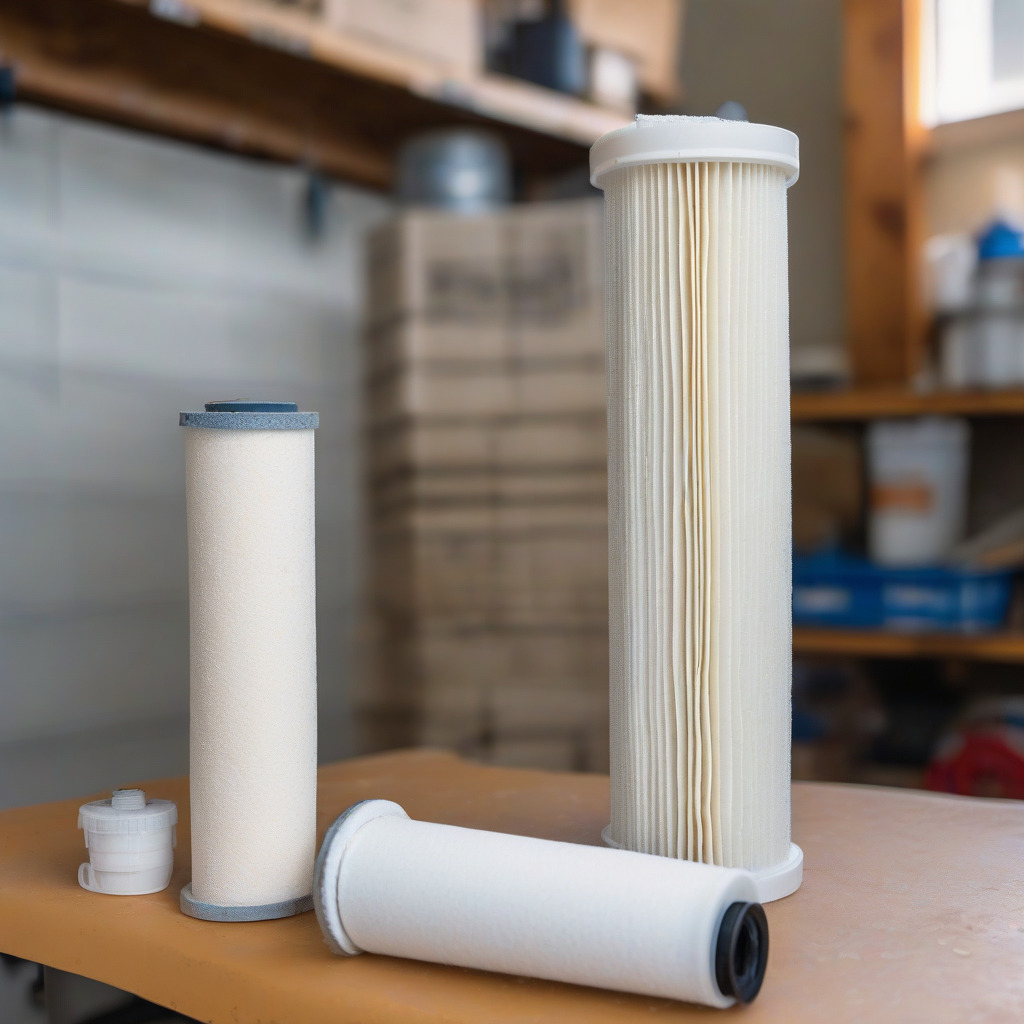
Air injection oxidation systems maintain an air pocket at the top of the treatment tank to oxidize dissolved iron before it contacts the filter media. Water passes through the air pocket, iron converts to particulate form, and the media bed traps the particles. The system regenerates through an air purge and backwash cycle, with no added chemicals — no potassium permanganate, no chlorine injection. For homeowners already managing well maintenance complexity, that simplicity matters. If you’re on a private well in Wedgefield, you’ve probably got enough to keep track of. The tradeoff: these systems work best at moderate to high iron concentrations. Very low iron levels can leave the system cycling unnecessarily.
Birm media filters use granular media that catalyzes iron oxidation. Lower cost, mechanically simpler — and a poor fit for most of Central Florida. Birm requires water dissolved oxygen and pH within specific ranges. Floridan Aquifer water often runs low in dissolved oxygen and can have pH that shifts seasonally, particularly during the summer rainy season when aquifer recharge affects groundwater chemistry. Most experienced contractors in this market won’t recommend birm for local wells, though you’ll still encounter dealers who sell them to customers who haven’t been told why it’s a bad match.
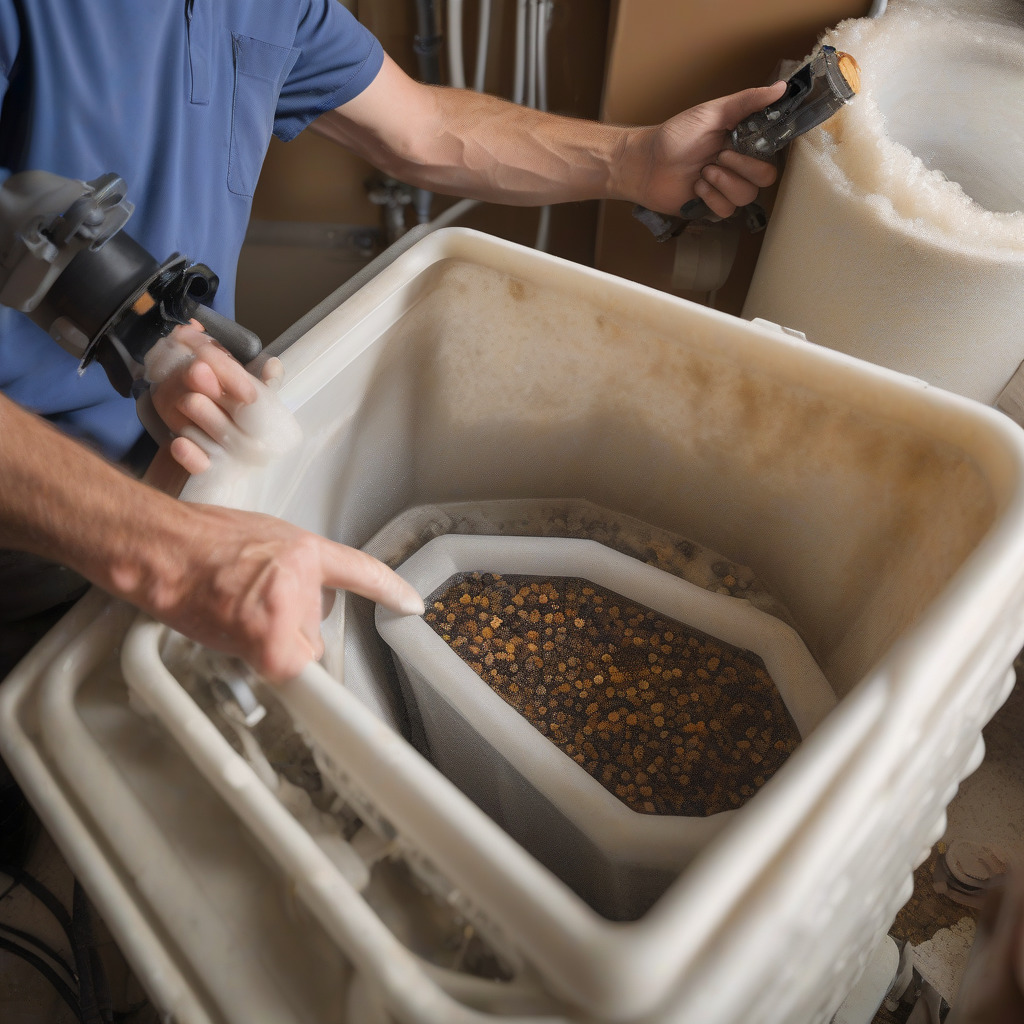
Greensand-plus filters use a synthetic manganese-coated media that catalyzes oxidation and removes iron and manganese. The synthetic version has largely replaced traditional greensand in professional installations because it handles a wider pH range and doesn’t require continuous potassium permanganate regeneration. For wells with significant manganese — common throughout the Floridan Aquifer — greensand-plus is often the most reliable single-media choice. Ionex Water LLC, an Orlando-based water treatment supplier, provides detailed guidance on evaluating these options through its Iron Filter Installation resources, which cover system sizing and media selection relative to local water conditions. The media lasts roughly five to seven years before needing replacement, which is worth factoring into long-term cost before you sign anything.
One often-skipped detail: tank material. Florida’s humidity accelerates corrosion on filter housings and bypass valves, particularly in outdoor utility installations where most well equipment lives. Most residential iron filter tanks are fiberglass-lined composite, which is appropriate for this climate. Confirm that’s what any contractor is quoting. Ask about the warranty on the tank specifically, not just the internal components.
What Permits and Licenses You Need and What Happens If You Skip Them
Florida Chapter 489 requires anyone performing plumbing work for compensation to hold a licensed plumbing contractor’s license from the Florida Department of Business and Professional Regulation. Installing a whole-house iron filter means connecting to your home’s main water supply line. That’s a plumbing installation, not an appliance swap, regardless of how any salesperson frames it.
Before work begins, confirm whether a permit is required for your specific scope by contacting the Orange County Building Division at 407-836-5550. A licensed contractor should handle permit applications as part of the job. If a contractor tells you permits aren’t necessary for a full-system installation connecting to your main line, that’s a warning sign. Walk away, or at minimum get it in writing — because you’re the one who owns the house.
Unpermitted plumbing work creates real problems when you sell. Home insurers sometimes deny water damage claims tied to unpermitted plumbing alterations. Title companies will flag unpermitted work as a defect that needs clearing before closing. Neither situation is fun to deal with mid-transaction.
HOA restrictions add another layer in the master-planned communities that define much of the Orlando suburban market. In Lake Nona, Horizon West, and similar developments, exterior equipment placement is often governed by community guidelines — what’s visible from the street, where utility equipment can sit relative to setback lines, what exterior finishes are allowed. A brine tank in your garage utility room is usually fine. A system along the foundation in a spot visible from the street may require architectural review board approval. Check before you commit to a placement. Moving a system after installation costs more than getting approval beforehand.
What Iron Filter Installation Actually Costs in the Orlando Metro
Equipment for residential iron filter systems runs roughly $400 to $1,500 depending on type and capacity. Air injection systems with digital control heads sit at the upper end. Basic greensand configurations can be sourced cheaper, though sizing still matters — an undersized unit that can’t keep pace with your household’s demand is money wasted.
Central Florida plumbing labor runs approximately $85 to $150 per hour. A standard installation — shutting off the main, cutting into the supply line, setting and connecting the tank, running the drain line for backwash, commissioning the control head — typically takes three to six hours. Older homes with cramped utility rooms or pre-existing corrosion that needs remediation push toward the higher end or past it.
All-in, a single iron filter system professionally installed typically costs $800 to $2,500. The spread reflects the difference between a basic system on a straightforward installation in a newer home and a sized air injection system with a digital control head in an older property requiring additional plumbing work.
Combination iron filter plus softener systems run $2,000 to $5,000 installed, sometimes higher. A contractor doing both at once may negotiate a package discount, though that’s not guaranteed.
Get at least three quotes. Ask each contractor to itemize equipment and labor separately, and confirm whether the quote includes permitting. Any quote that lumps everything together without line-item detail is harder to evaluate — and it obscures what you’re actually paying for.
Renting vs. Buying: An Option Most Orlando Dealers Won’t Volunteer
Several Central Florida water treatment dealers offer rent-to-own or monthly lease arrangements on iron filter and softener systems. Culligan operates this model locally; some independent contractors do as well. Monthly costs typically run $30 to $60 for a single system, with combination setups priced higher. After a set lease period — commonly five years — you own the equipment.
The appeal is real in certain situations. Homeowners uncertain about their long-term plans may reasonably prefer lower upfront commitment. Lease arrangements typically include service and maintenance, which removes an ongoing responsibility from the homeowner’s plate. If the media in your greensand-plus filter needs replacement in year four, the lease holder handles it.
Read the contract terms carefully before signing. What’s the total cost over the full contract term compared to buying outright? What are the early termination provisions? Who owns the equipment if you sell the home, and what disclosure obligations does that create at closing? Some lease agreements create encumbrances on the property that surface during a real estate transaction — sometimes complicating deals in ways sellers genuinely didn’t anticipate. In a market where Orlando-area home sales turn over as quickly as they do, this comes up more than dealers mention.
Dealers who lead with the lease option sometimes benefit from it more than the customer does over five years. For homeowners with uncertain tenure or low comfort with maintenance responsibility, it can still be the right call. But run the full numbers, and run them in the room with the dealer before you sign. If they’re reluctant to do that exercise with you, that tells you something.
How to Find and Vet a Legitimate Local Installer
The Orlando metro has three distinct tiers of installer.
National franchise operations — Culligan of Orlando among them — offer branded continuity, financing options, and in-house service departments. Their pricing reflects that overhead, and their recommendations are limited to their own equipment lines. For homeowners who want a single point of accountability for installation, maintenance, and service, there’s genuine value in that. You’re paying for it, but it’s not nothing.
Independent contractors and water treatment specialists are concentrated in Apopka, Sanford, and the Kissimmee corridor, reflecting the well-water density in those parts of the metro. Many are small and owner-operated, which can mean more direct expertise and more competitive pricing. It also means more variability. Some independents carry a broader equipment range than franchises, which lets them match a system to your actual water chemistry rather than their product catalog. A few of the longer-established shops have deeper local knowledge than any franchise rep. But the range is wide, and the only way to know which kind you’re dealing with is to ask questions and check the license.
Big-box retailers sell iron filter equipment but typically don’t provide licensed plumbing installation. Their installation referral networks vary in quality. Buying a unit at Home Depot and finding your own installer is possible, but you’re managing two relationships and accepting that equipment issues fall outside the installer’s responsibility. It can work. It’s more friction.
Verify any contractor’s Florida plumbing license before signing anything. The Florida DBPR license lookup tool at myfloridalicense.com lets you search by business or individual name, confirm the license is current, and check for disciplinary history. It takes four minutes. Make it routine.
Seasonal Factors Orlando Homeowners Should Plan Around
Orlando’s rainy season runs June through September and affects private well water quality in ways that rarely come up in sales conversations. Heavy rainfall events can temporarily alter iron and manganese concentrations as the water table rises and mobilizes iron-bearing sediments, shifting the dissolved oxygen balance in ways that push more iron into your water.
If your well tests borderline in the dry season, test again after a sustained wet-season rain period before finalizing your system size. A system sized for dry-season water may be undersized for summer conditions — and when it starts struggling, you’ll think the filter isn’t working when the real issue is that the water chemistry shifted. That misdiagnosis can send you chasing the wrong problem for months.
Post-hurricane well contamination is a more acute concern. Surface flooding, debris intrusion, and pressure changes from nearby infrastructure damage can contaminate even properly cased wells. Any whole-house iron filter system should include a three-valve bypass so that if you need to shock-chlorinate a contaminated well after a storm, you can isolate the filter media from the chlorine treatment. Chlorine will destroy most iron filter media if it passes through at treatment concentrations. In Central Florida, the next hurricane is a matter of when, not if. Make sure the bypass is on the quote sheet. Homeowners who want to think through how to prepare your Orlando small business for hurricane season will find that the same planning discipline applies on the residential side — document your systems, know your bypass procedures, and have a post-storm checklist ready before the storm arrives.
If your property sits vacant for extended periods, iron bacteria deserve specific attention. They feed on dissolved iron and build rust-colored slime in pipes and filter media, thriving in stagnant conditions. A filter that hasn’t been backwashing during a long vacancy can develop iron bacteria colonization in the media bed — which then contaminates the water supply when service resumes. It’s as unpleasant as it sounds. Before leaving a seasonal property for more than a few weeks, ask your installer about precautions. These typically include a manual backwash before departure and sanitization upon return.
Before You Call Anyone: Get Your Water Tested First
None of the decisions above can be made well without a current water test. A surprising number of homeowners contact water treatment contractors having never tested their water, then receive equipment recommendations based on generic assumptions about their area’s water chemistry. That’s how you end up with a system sized for your neighbor’s problem, not yours.
The Florida Department of Health recommends private well owners test annually. The Orange County Health Department can refer you to state-certified testing laboratories. Certified labs provide results with chain-of-custody documentation, which matters if you’re buying or selling a home or making a warranty claim. A big-box store test kit won’t carry that weight.
For iron filter decisions, test for: total iron, ferrous iron, manganese, pH, and hardness. Add hydrogen sulfide if you notice any sulfur smell, since some filter systems affect sulfide differently than iron. Basic panels covering these parameters from a certified lab typically run $50 to $150. That’s a small spend relative to buying the wrong system.
Orange County has periodically offered subsidized or free well water testing through its Environmental Protection Division and Health Department. Availability changes based on funding cycles, but it’s worth a call before paying out of pocket — especially if you’re in Bithlo or Christmas, where the county has documented the problem and occasionally provides resources to address it.
Bring your test results to every contractor conversation. Any professional worth hiring will use your specific numbers to size and select a system. Anyone who recommends equipment without asking to see a water test is selling you a product. The difference is usually obvious within the first five minutes.