What Florida's PIP Repeal Actually Means for Orlando Drivers Now
The $10,000 no-fault floor that automatically covered your medical bills after any crash is gone. Here's what the law requires now, what it doesn't, and why the gap matters most on Orlando's roads …


The $10,000 no-fault floor that automatically covered your medical bills after any crash is gone. Here’s what the law requires now, what it doesn’t, and why the gap matters most on Orlando’s roads this summer.
If you search “Florida PIP insurance” right now, most of the results describe a law that no longer exists. They’ll explain the $10,000 personal injury protection floor, the 14-day treatment window, the emergency medical condition threshold that determined whether you got the full benefit or only $2,500. They’re describing a system Florida ran for more than 50 years and officially ended on January 1, 2025.
That’s not a minor technicality. If an uninsured driver rear-ends you on I-4 near the SR-408 interchange this August, whether your own insurance covers a single dollar of your medical bills now turns on a coverage decision most Orlando drivers made without understanding what they were agreeing to. The legal ground shifted. Most people have no idea.
Here’s what actually changed, what the law requires today, and what you need to check before you get back on the road.
What Florida Repealed and When
Florida’s no-fault personal injury protection system started in 1971. The core promise was straightforward: regardless of who caused a crash, your own auto policy paid your initial medical bills up to $10,000, no fault determination required, no lawsuit necessary to access the money. That requirement lived in Florida Statute 627.736 for more than five decades.
The legislature voted to scrap it through HB 837, which Governor DeSantis signed in March 2023. That date is where a lot of the confusion starts. HB 837 made several changes to Florida civil litigation — comparative fault rules, attorney fee structures — that took effect almost immediately. But the actual repeal of the no-fault PIP mandate was set on a delayed trigger: January 1, 2025, giving insurers and the Florida Department of Highway Safety and Motor Vehicles time to restructure coverage requirements.
Any Orlando driver whose policy renewed before that date without a deliberate review may be carrying a coverage structure designed around a mandate that has since expired. That’s a real problem, and more common than insurers would probably like to admit.
Florida moved from a no-fault system — where your own insurance covered your own injuries regardless of who caused the crash — to a traditional tort framework, where the at-fault driver’s bodily injury liability is the primary source of payment for victims. That shift sounds technical. The consequences are not.
What Florida Law Requires You to Carry Today
Under the old system, Florida required every registered vehicle to carry $10,000 in PIP and $10,000 in property damage liability. Bodily injury liability — the coverage that pays other people’s medical bills when you’re at fault — was not required for most drivers. That was one of the stranger features of the old framework, and Florida was genuinely unusual on that point.
Under the law in effect today, the mandatory minimums shift to $25,000 in bodily injury liability per person and $50,000 per accident, plus $10,000 in property damage liability. These figures come from Florida Statute 627.7276 and FLHSMV guidance on the PIP transition.
If you cause a crash that injures two people, your bodily injury liability covers up to $25,000 per injured person, capped at $50,000 total for the accident. Bills that exceed those amounts can follow you personally. For anyone who owned assets and was somehow carrying a policy with zero bodily injury coverage under the old rules, that was always a vulnerability. The new minimums help — partially.
But they don’t fix the problem on your own side of the ledger. PIP paid your bills. Bodily injury liability pays the other driver’s bills when you’re at fault. If someone else hits you, your medical costs depend entirely on their coverage — or on coverage you purchased specifically to protect yourself when the at-fault driver has nothing. That coverage is called uninsured/underinsured motorist coverage, and it’s the most consequential piece of this whole conversation for Orlando drivers. We track developments like this across our Orlando automotive coverage, where Florida-specific policy changes get covered as they affect local drivers.
If an Uninsured Driver Hits You on I-4, What Covers Your Bills
Here’s the scenario: southbound I-4, approaching the SR-408 interchange, Tuesday afternoon in July. An uninsured driver rear-ends you. Whiplash. A possible concussion. A near-certain emergency room visit and imaging costs that will clear several thousand dollars before anyone asks about follow-up care.
Under the law that governed Florida for 50 years, your own PIP activated immediately. First-party, no-fault, automatic. The other driver’s insurance status was irrelevant to your initial medical coverage. Ten thousand dollars wasn’t much, but it was something, and it was yours without a fight.
Under the law in effect since January 1, 2025, that floor is gone. If the driver who hit you is uninsured, their bodily injury coverage pays nothing — because they have none. Your own bodily injury liability pays nothing — because it only covers injuries you cause to others. Your property damage liability fixes their car, not your body. Your medical bills are covered by your own policy only if you purchased uninsured motorist coverage. In Florida, you’re allowed to decline it in writing. A significant number of Orlando drivers have done exactly that, often without clearly understanding what they signed away.
The numbers behind this aren’t academic. Insurance Research Council data puts Florida’s uninsured motorist rate at roughly 20.4 percent — about one in five drivers carrying nothing. FDOT District 5 data consistently places I-4 through the Orlando metro among the highest-crash-frequency corridors in the state. Put those two facts together and the uninsured driver scenario isn’t a remote hypothetical. It’s a Tuesday.
What Uninsured and Underinsured Motorist Coverage Actually Does
Uninsured motorist (UM) and underinsured motorist (UIM) coverage are first-party products — they run through your own policy, not the other driver’s. When the driver who caused your crash has no insurance or not enough to cover your damages, your UM/UIM pays the gap up to the limits you purchased.
Florida Statute 627.727 requires insurers to offer UM/UIM to every policyholder. It does not require drivers to accept it. Declining requires a written waiver — a signature on a form that many drivers sign at policy inception without understanding what they’re giving up.
Under the old PIP system, that waiver was at least a calculated trade-off. You still had $10,000 in first-party PIP as a baseline for your own medical bills. The waiver mainly exposed you on the gap above that floor. Under the current system, waiving UM/UIM means a collision with an uninsured driver leaves your medical bills entirely uncovered by anything in your own policy. No baseline. No floor. Nothing.
For actual UM/UIM pricing in Orlando’s current market, you need to call your insurer or an independent broker — national comparison engines haven’t kept up with how significantly the Florida market has repriced since January 2025. Ask what adding UM/UIM at your preferred limits costs at your next renewal. Ask what stacking across multiple vehicles on your policy would add. The arithmetic between that premium and a five-figure emergency room bill is not a close call.
On stacking: Florida allows drivers who insure multiple vehicles to stack their UM/UIM limits, applying coverage across all vehicles for higher effective protection. It costs more. It’s worth asking about. If you drive two cars on one policy, have your broker run both numbers.
Why Orlando Specifically
The statewide picture is bad enough. Orlando’s geography makes it worse, and in ways that generic Florida insurance advice never addresses.
The SR-528 Beachline between Orlando International Airport and International Drive is one of the heaviest concentrations of rental cars and out-of-state drivers in the country. Rental companies carry their own liability coverage, but whether a given renter purchased supplemental protection is something you cannot assess from behind your steering wheel. The corridor also moves heavy volumes of international visitors, some traveling with insurance products that may not engage with a Florida auto claim the way a domestic UM/UIM claim would.
US-192 and US-27 through Kissimmee and the theme park belt carry the same dynamics in a different configuration — tourist volume, international travelers, drivers who arrived with a foreign license and no U.S. auto policy.
Orange Blossom Trail through Orange and Osceola counties is a different problem. It runs through dense commercial and residential neighborhoods where uninsured rates among daily commuters are elevated well above the statewide average. Less tourist exposure, more chronic uninsured exposure.
And then there’s the seasonal surge — spring break, Memorial Day, the summer tourist peak running through August, the holiday stretch from Thanksgiving through New Year’s. That’s when the people who don’t know that the I-4/SR-408 interchange backs up at 4:30 p.m., or that the Beachline narrows before the airport, flood onto every one of these roads at once. They drive distracted, they drive rentals, and statistically a meaningful share of them drive without insurance.
Nobody writing a statewide explainer has a reason to flag any of this. An Orlando driver trying to assess their actual exposure is not facing a generic Florida problem.
The 14-Day Rule Isn’t What It Was
This applies directly to anyone who has heard — from a friend, from attorney advertisements, from prior coverage on this site — that you have “14 days to seek treatment” after a car crash. That advice was accurate under the PIP system. It does not mean the same thing now.
Under the former no-fault statute, the 14-day window was a hard statutory requirement. FL Statute 627.736 required that you seek initial medical treatment within 14 days of the accident to access your PIP benefits at all. Whether your treating provider determined you had an emergency medical condition within that window determined whether you received the full $10,000 or only $2,500. Miss the window entirely and you forfeited the first-party coverage. That clock, that threshold, that trigger — gone.
Under the bodily injury and tort framework now in effect, your medical documentation still matters. A lot, actually. It will be central evidence in any personal injury claim against an at-fault driver, and gaps in treatment history are exactly what defense counsel uses to argue that injuries were minor or unrelated to the crash. But there’s no statutory date that cuts off your right to seek care. The test is the evidentiary standard for a tort claim — the quality, consistency, and continuity of your medical record from the date of injury forward.
Seek treatment promptly. Document everything. Don’t treat “making the 14-day window” as the governing test. It isn’t anymore.
If you’ve read prior coverage on this site about the first 14 days after a crash, treat it as PIP-era guidance. The advice to get seen quickly remains sound. The legal mechanism it was tied to has changed entirely.
What to Actually Do Right Now
Pull your declarations page — the summary at the front of your auto policy, usually one or two pages, listing coverage types and limits in plain columns. You’re looking for four things.
Bodily injury liability. Should read at least $25,000/$50,000. If your policy renewed before January 1, 2025 and you didn’t actively adjust coverage, call your insurer and confirm it was updated to meet the new minimums. Don’t assume it was.
Property damage liability. The $10,000 requirement didn’t change, but confirm it’s there.
Uninsured/underinsured motorist coverage. This line either shows coverage limits or a waiver notation. If it shows a waiver, call your insurer today. Depending on your carrier and policy terms, you may be able to add UM/UIM at renewal or sometimes mid-term. This is the line that matters most under the current law, and it’s the one most likely to be missing.
PIP or MedPay. PIP is no longer required but some carriers offered it as an optional endorsement during the transition, so it may be present. Medical payments coverage (MedPay) is a separate first-party product that covers your own medical bills regardless of fault — not a statutory replacement for PIP, but it functions similarly for out-of-pocket costs and may be worth adding if your policy doesn’t include it.
Call your insurer directly — not a national comparison website. Ask one specific question: was my policy restructured for the January 1, 2025 changes, or did it renew on its prior terms? A policy that renewed in November 2024 on a 12-month term may not have been proactively updated. You need a direct answer.
For an independent assessment, Orlando has a solid independent broker market along the Colonial Drive corridor through Orange County and along Semoran Boulevard through Casselberry and the 436 strip into Seminole County. Independent brokers access multiple carriers and can run current comparison quotes. Ask them to run UM/UIM pricing with and without stacking.
For regulatory questions and carrier rate filings, the Florida Office of Insurance Regulation publishes them at floir.com. For registration and minimum coverage compliance, FLHSMV maintains a FAQ on the PIP transition.
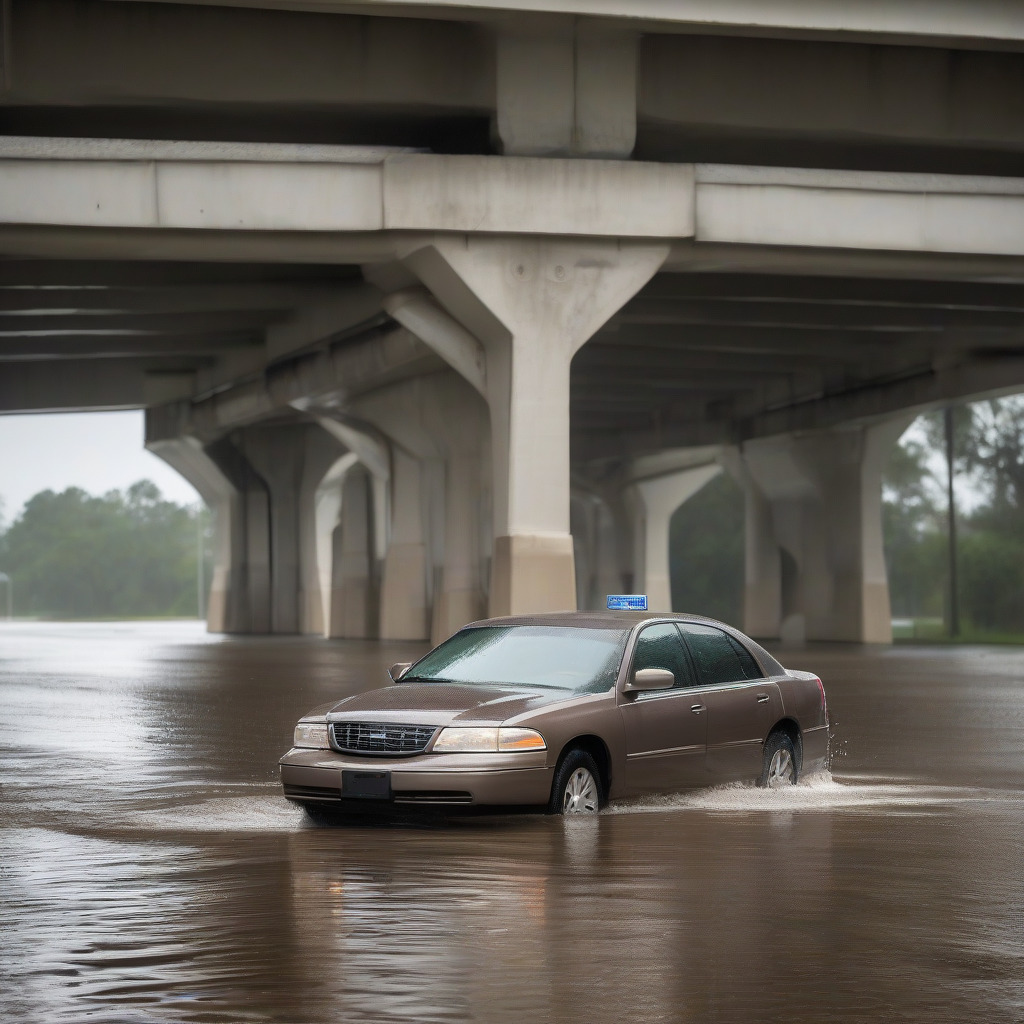
If you’re dealing with a recent crash and aren’t sure how your claim is governed under the new system, the Orange County Bar Association’s referral service can connect you with attorneys actively filing bodily injury claims under the post-January 2025 framework. The shift from a PIP first-party claim to a bodily injury tort claim involves different procedural steps, timelines, and documentation requirements. The person to ask is not a friend who went through a fender-bender in 2022 and “knows how this works.” It isn’t anymore. Orlando drivers navigating storm-related crash scenarios should also review what to do if your car floods during an Orlando storm, since flood damage intersects with the same coverage gaps this article addresses.
Sidebar A: Before and After Florida’s Mandatory Auto Insurance Minimums
| Coverage Element | Before January 1, 2025 | After January 1, 2025 |
|---|---|---|
| Personal Injury Protection (PIP) | $10,000 required — paid your own medical bills, no-fault | No longer required; available as optional endorsement at some carriers |
| Bodily Injury Liability | Not required for most drivers | $25,000 per person / $50,000 per accident required |
| Property Damage Liability | $10,000 required | $10,000 required (unchanged) |
| What covers your medical bills if someone else hits you | PIP activated automatically | UM/UIM — if you purchased it. Nothing if you waived it. |
| Uninsured Motorist Coverage | Optional; waivable in writing | Optional; waivable in writing — but now the only first-party medical backstop you have |
Sidebar B: Four Lines to Find on Your Declarations Page
Bodily Injury Liability (BI) — Two numbers, e.g. $25,000/$50,000. Pays other people’s medical bills when you’re at fault. Required under the new law. Call your insurer if your limits are below $25,000/$50,000.
Property Damage Liability (PDL) — A single number, e.g. $10,000. Pays to repair or replace other vehicles or property when you’re at fault. Required at $10,000 under both the old and new law.
Uninsured/Underinsured Motorist (UM/UIM) — Either shows coverage limits or a waiver notation. This is what covers your medical bills if the driver who hits you has no insurance or not enough. If this line shows a waiver, you have no first-party medical protection under the current law. This is the line.
PIP or MedPay — PIP may appear as an optional endorsement even though it’s no longer legally required. MedPay is a separate optional product. Either covers some of your own injury costs regardless of fault. Neither is mandatory, and many policies issued or renewed after January 2025 won’t include them unless you asked.
Key figures in this article — the January 1, 2025 effective date, the $25,000/$50,000 bodily injury minimums, the 20.4 percent uninsured motorist rate — are drawn from FLHSMV guidance, FL Statute 627.7276, and Insurance Research Council data. Verify current minimums and UM/UIM pricing directly with your carrier or the Florida Office of Insurance Regulation at floir.com. The post-PIP market is still adjusting, and rates from even six months ago may not reflect what’s available now.