How to Appeal Your Orange County Property Tax Assessment Before the Deadline
TRIM notices mail in mid-August and the appeal window closes 25 days later. Homeowners who start pulling comparable sales and documentation now — in July — are the ones who file competitive petitio…

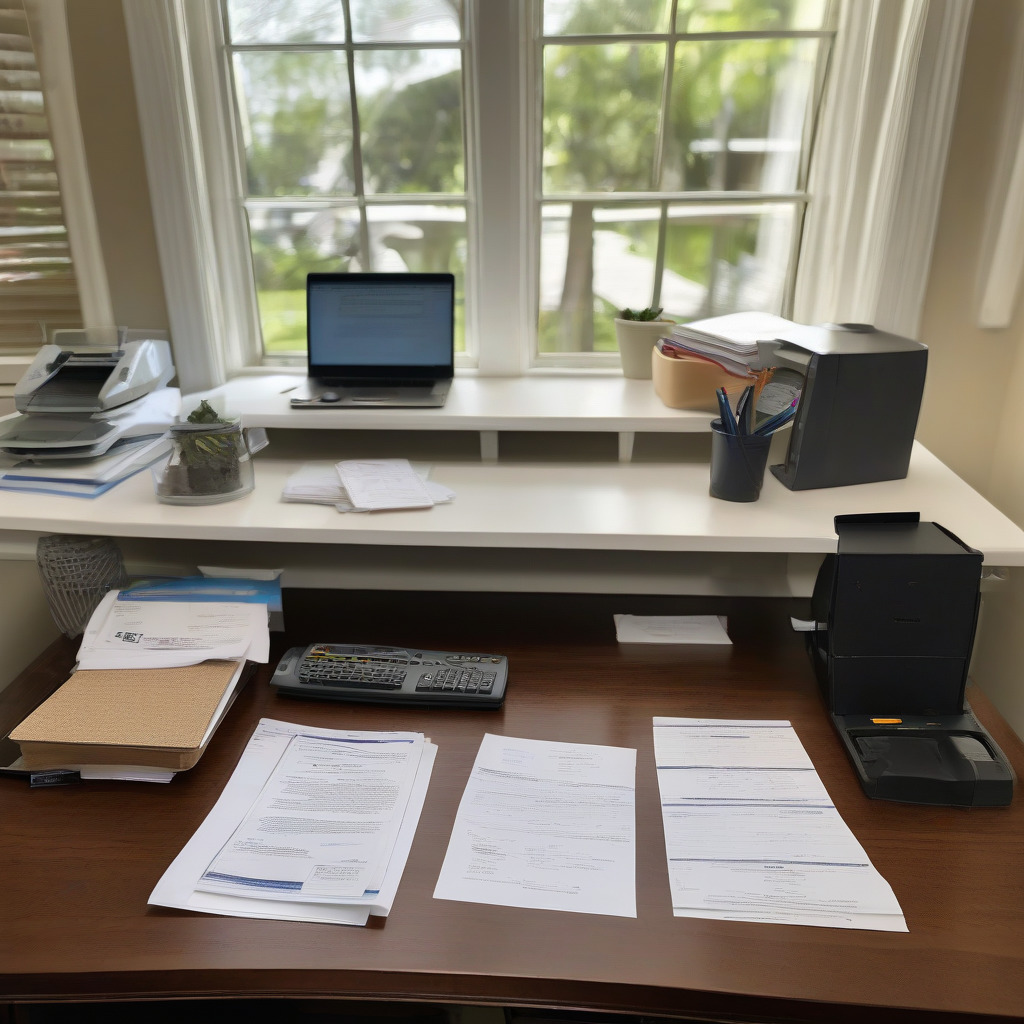
TRIM notices mail in mid-August and the appeal window closes 25 days later. Homeowners who start pulling comparable sales and documentation now — in July — are the ones who file competitive petitions. Here is exactly how to do it.
If you own property in Orange County and your assessed value feels disconnected from what your home would actually sell for today, you have a legal right to challenge it. The process is called a Value Adjustment Board petition. It costs $15 or less to file. You don’t need a lawyer. What you need is enough lead time to build a real case, and that window is right now, in July, before the Truth in Millage notice even arrives.
This guide is written from the taxpayer’s side — not the county’s procedural page, not a law firm’s SEO blog. It’s a practical walkthrough of how Orange County’s appeal process actually works: where to find the evidence, what moves the needle with a special magistrate, what the filing mechanics look like, and whether the math justifies the effort for your specific situation.
What the TRIM Notice Is — and Why the Clock Starts Before You Open It
Every August, the Orange County Property Appraiser mails a Truth in Millage notice to every property owner in the county. It’s not a tax bill. It’s a statement of your property’s assessed value for the upcoming tax year and a projection of what you’ll owe based on proposed millage rates. It also contains the single most consequential sentence most homeowners skip past: the deadline to file a petition with the Value Adjustment Board.
Florida law requires TRIM notices to be mailed by August 24. Orange County historically mails mid-to-late August, which puts the hard petition deadline approximately 25 days later — likely mid-September 2026, though the exact date should be confirmed directly with OCPA. Here’s the detail that catches people every single year: the 25-day window begins on the date the notice is mailed by OCPA, not the date it arrives in your mailbox. If OCPA mails on August 18 and your notice sits in postal transit for four days, you’ve already burned four days of your appeal window before you’ve read a word of it.
Under Florida Statute 194.011, there are no extensions to this deadline. Miss it by a day and you have no VAB remedy for that tax year. Full stop. This is why July preparation matters. Homeowners who pull comps and assemble documentation before the notice arrives are doing the same work — just without the panic of a two-week countdown.
Note to editors: Confirm the exact 2026 TRIM mailing date with OCPA communications before publication. The number is (407) 836-5044. OCPA posts the mailing date on ocpafl.org as it approaches.
Before You File Anything — Check Whether the Save Our Homes Cap Already Protects You
Almost every competing guide skips this, and it matters because it can make an appeal a complete waste of your time.
Florida’s Save Our Homes amendment caps annual increases in the assessed value of a homesteaded property at three percent or the rate of inflation, whichever is lower. A homeowner who bought in 2010 and has kept the homestead exemption active since then may have an assessed value substantially below their market value — in some cases by tens of thousands of dollars. The SOH cap was three percent for the 2024 tax year.
When your TRIM notice arrives, look at two separate lines: Market/Just Value and Assessed Value. If those numbers are meaningfully different — say a $480,000 market value but a $340,000 assessed value — the SOH cap is active and working in your favor. Run the tax calculation on the assessed value, not the market value, before deciding whether to appeal. An appeal that reduces your market value from $520,000 to $480,000 produces zero savings if you’re only paying tax on a capped $340,000. I’ve watched homeowners invest a week of evenings building a case only to realize this at the hearing. Don’t do that.
The homeowners most likely to benefit from an appeal are recent buyers who purchased between 2022 and 2024 at peak prices. When you buy a property in Florida, the SOH cap resets. Your new assessed value is set at or near purchase price, and the cap only accumulates from that point forward. If you paid $550,000 at the 2022 peak and the market in your neighborhood has since pulled back to $490,000, your assessment may legitimately be above current market value with little or no cap cushion underneath it. A $60,000 overvaluation at 18 mills saves you roughly $1,080 per year. Every year.
Downtown and midrise condo owners are an underreported category in Orange County. Insurance costs jumped sharply after 2023. HOA special assessments — structural reserves, elevator systems, roof work — have compressed what buyers will actually pay for individual units. OCPA’s mass appraisal model processes thousands of parcels simultaneously using statistical regression; it may not capture how much these carrying costs have shifted actual resale prices. If you own a downtown condo and closed sales in your building have declined while your assessment held flat or climbed, you probably have a case worth building. For broader context on what Orange County homeowners are carrying in property insurance costs right now, our legal & finance coverage tracks how rising premiums are reshaping the affordability picture for local owners.
The Step Most Homeowners Skip — Request an Informal Review With OCPA First
Before filing a formal VAB petition, Florida law lets you request an informal conference directly with an OCPA appraiser. It’s free. It doesn’t waive your right to petition the VAB afterward.
OCPA’s office is at 200 S. Orange Avenue, Suite 1700. Request a review by calling (407) 836-5044 or through the contact options on ocpafl.org. Do this early — within the first week after your TRIM notice arrives — because requesting the informal review does not pause the petition deadline. If the conference doesn’t resolve your dispute, you still need to file before day 25. The clock does not pause for a callback.
What OCPA appraisers respond to: clear, documented discrepancies between your assessed value and closed comparable sales in your immediate area. Documented physical condition problems — a roof that needs replacement, foundation cracking, water intrusion — supported by repair estimates or inspection reports. Evidence that something specific about your property (unusual lot, highway proximity, non-conforming floor plan) was underweighted by the mass appraisal model.
What they dismiss: “my neighbor’s house looks nicer than mine,” general complaints about taxes being too high, or references to what you paid without accompanying sales data. This conversation needs to happen in the appraiser’s language — comparable sales, adjusted values, condition flags — not as a grievance.
Note to editors: OCPA communications may have data on what percentage of informal reviews in recent cycles resulted in value reductions. Worth requesting directly; it materially affects the cost-benefit calculation for readers.
How to Pull Comparable Sales That Will Actually Hold Up at a Hearing
The core of any successful appeal is comparable sales — closed transactions for similar properties near yours, from the relevant assessment period.
For 2026 assessments, the relevant window is properties that closed between January 1, 2025, and January 1, 2026. OCPA values property as of January 1, 2026, using market data from the prior calendar year. Sales outside this window carry less weight before a special magistrate.
Confirm the exact evidence window with OCPA before publication.
Start with OCPA’s property search tool at ocpafl.org. Search by subdivision, address, or parcel number; results include sale dates, prices, square footage, year built, and bedroom/bath counts. Pull the sales grid for your subdivision and sort by date to isolate 2025 transactions. Cross-reference with the Orange County Comptroller’s deed transfer records at myorangeclerk.com, which logs every deed transfer in the county and lets you search by address, date range, or subdivision.
Zillow and Redfin are useful for identifying candidates, but they’re not acceptable as primary evidence before a special magistrate. Print your exhibits from ocpafl.org and myorangeclerk.com.
Special magistrates look for properties that are genuinely similar. Square footage within roughly 20 percent of yours. Same neighborhood, not just same zip code. Comparable year built, construction type, lot size, bedroom and bathroom count. Condition matters most. If your home has original 1985 finishes and the comp was renovated last year, either acknowledge that difference explicitly or find a better comp. You want at least three solid comparables, ideally five or six. If your assessed value is $520,000 and you can show four closed sales of genuinely similar homes in your subdivision between $470,000 and $490,000 during 2025, that’s a case. If every sale you find closed above $530,000, you don’t have one — and knowing that now, in July, saves you the filing fee and the hearing slot.
Neighborhoods worth close attention, based on the 2021–2023 price run-up and subsequent 2024–2025 softening: Dr. Phillips, Windermere, Baldwin Park, College Park, and the Horizon West/Hamlin new construction corridor. In each of these markets, OCPA’s model may have locked in values near the appreciation peak without fully accounting for the pullback since. If you bought in any of these areas between 2021 and 2024, your assessed value deserves a look before the TRIM notice arrives. For a detailed breakdown of how Dr. Phillips compares to other Orlando submarkets on price, see Lake Nona vs Dr. Phillips: Which Orlando Neighborhood Fits Your Budget.
Filing the Petition — Cost, Forms, and Where to Submit
If the informal review doesn’t resolve things — or if you want to skip it and file directly — you need the DR-486, the statewide petition form from the Florida Department of Revenue. Download it at floridarevenue.com or through the VAB e-filing portal at flvab.com. The form asks you to specify grounds for appeal (for most homeowners, that’s “excessive assessed value”) and to state the value you believe is correct. Confirm with the VAB Clerk whether Orange County requires a county-specific cover sheet in addition to the DR-486.
Florida statute caps the filing fee for a residential homestead petition at $15. Confirm the exact amount with the VAB Clerk before you go; non-homestead and commercial fees can be higher.
Two ways to file. In person: the Orange County VAB Clerk is at the Comptroller’s office at 109 E. Church Street in downtown Orlando — confirm the suite number and hours before you go, as these change. Filing in person gets you a stamped copy of your petition, which matters given that the deadline is absolute. Online: the state’s VAB e-filing portal at flvab.com accepts electronic petitions. If you file electronically, save or print your submission confirmation. The timestamp on that confirmation is your proof of timely filing.
Florida law explicitly permits self-representation before the VAB, and for a standard residential homestead the math almost never supports hiring an attorney. The exception: if you own a rental property, commercial parcel, or any investment holding with meaningful assessed value, a licensed Florida property tax consultant working on contingency may be worth it. They take a percentage of the savings they produce — no upfront cost — and they know the magistrate process in ways that matter at scale. For a single-family homestead, do it yourself.
What Actually Happens at the VAB Hearing
Orange County VAB hearings aren’t in a courtroom before elected officials. They’re conducted by special magistrates — licensed Florida real estate appraisers or attorneys appointed to hear evidence and issue recommended decisions. Hearings typically run 15 to 30 minutes. The setting is professional, not adversarial, but treat it like it is.
The format for 2026 hearings — in-person, phone, or Zoom — should be confirmed with the VAB Clerk as the cycle approaches. Orange County has used all three in recent years.
As the petitioner, you present first. This is an advantage. You set the framing before OCPA’s appraiser responds. The magistrate will ask questions, the OCPA appraiser will respond and present their own evidence, and you may have a brief rebuttal.
Bring your TRIM notice. Bring a one-page summary showing the assessed value, the value you’re claiming, and the dollar difference. Bring printed comparable sales sheets from ocpafl.org — address, sale date, price, square footage, and key characteristics for each comp, with the similarities to your property annotated. A grid comparing your per-square-foot assessment against each comp is exactly the kind of organized numerical presentation magistrates respond to. If you’re relying on condition issues, bring clear photographs. If you have an independent appraisal from a licensed Florida appraiser, bring that too — it’s the single strongest piece of evidence you can walk in with, because it reflects a professional opinion of value under USPAP standards and magistrates treat it accordingly.
What magistrates are not moved by: appeals to fairness, complaints about rising insurance costs without corresponding sales data, or arguments about what you paid for the property. Keep it tight and evidence-forward.
The magistrate doesn’t rule at the hearing. They issue a recommended decision that the full VAB board formally adopts. You’ll receive written notice; if the outcome is in your favor, the corrected assessment flows through to your tax bill.
Is It Worth Appealing? The Millage Math
Orange County’s combined millage rate — county general revenue, school board, St. Johns River Water Management District, and any applicable municipal overlays — runs roughly 17 to 20 mills depending on where in the county you are. One mill is $1 in tax per $1,000 of taxable assessed value.
Confirm the adopted 2025–2026 millage rate with OCPA or the Orange County Tax Collector before publishing specific figures; the rate varies by taxing district.
At 17 mills, a $15,000 reduction in assessed value saves you $255 per year. At 20 mills, $300. Those savings recur every year — the corrected value becomes the new baseline. Against a $15 filing fee, the math is not complicated. If you believe your home is over-assessed by $10,000 or more, the appeal is almost certainly worth filing.
A $30,000 overvaluation — not unusual for buyers who purchased at the 2022–2023 peak in Dr. Phillips or Baldwin Park — saves $510 to $600 per year from a $15 investment. That’s a pretty good return on an afternoon of comp research and a 20-minute hearing.
For rental and commercial holdings, the math scales sharply. A $100,000 reduction on a commercial parcel saves $1,700 to $2,000 annually. At that scale, a contingency consultant is an obvious call.
Your Orange County Property Tax Appeal Contacts and Key Dates
Orange County Property Appraiser (OCPA) 200 S. Orange Avenue, Suite 1700, Orlando, FL 32801 (407) 836-5044 — ocpafl.org For: property search and comparable sales data, informal review requests, general assessment questions
Orange County Value Adjustment Board Clerk Orange County Comptroller’s Office 109 E. Church Street, Orlando, FL 32801 Confirm suite number and office hours directly before visiting For: filing DR-486 petitions in person, fee payment, hearing format confirmation
VAB E-Filing Portal — flvab.com For: filing DR-486 electronically; save your submission confirmation timestamp
Florida Department of Revenue — DR-486 Form — floridarevenue.com For: downloading the current petition form and instructions
Key 2026 Dates
TRIM notice mailing: On or before August 24, 2026 (Florida law); Orange County historically mails mid-to-late August — confirm exact date with OCPA
Informal review request: Within the first week after your TRIM notice arrives; does not extend the petition deadline
VAB petition hard deadline: 25 days from the date OCPA mails the notice — no extensions, no exceptions
Comparable sales evidence window: January 1, 2025 through December 31, 2025 for 2026 assessments — confirm with OCPA
All dates and fees should be confirmed with OCPA and the VAB Clerk before publication. Florida Statute 194.011 controls the deadline, but the exact mailing date determines when day 25 falls.
The OCPA website has all the forms and phone numbers, distributed across PDFs and department subpages in a way that makes them harder to find than they should be. What it doesn’t have is a plain-language explanation of what evidence actually works and whether the appeal is worth your time. Pull your comparables now. If the numbers support a case, you’ll be ready to file within days of your TRIM notice hitting the mailbox — not scrambling in the final 72 hours before a deadline the county has no obligation to remind you about.