What Orlando Homeowners Are Actually Paying to Replace an AC Unit in 2026
We checked Florida's compliance rules, permit requirements, and contractor pricing structures. Here's what you need to know before you sign anything in July.

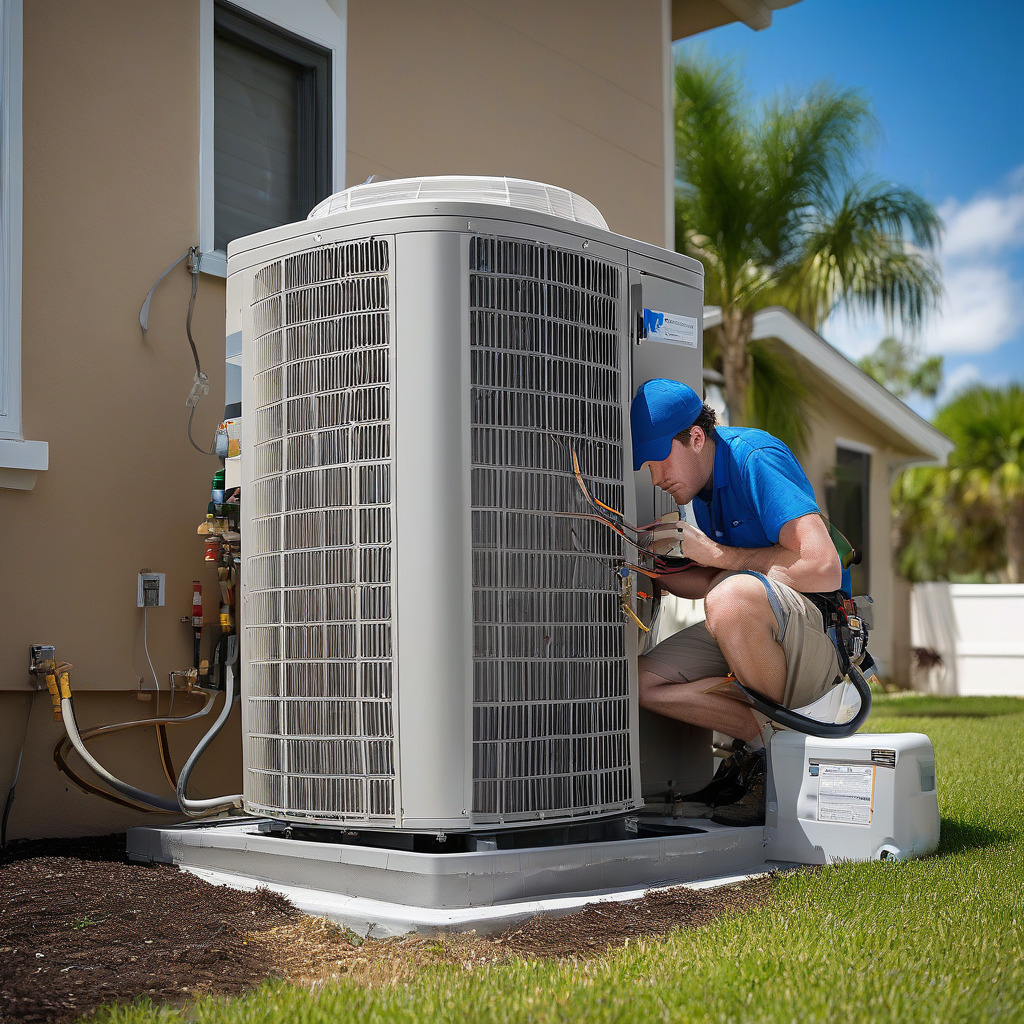
We checked Florida’s compliance rules, permit requirements, and contractor pricing structures. Here’s what you need to know before you sign anything in July.
If your air conditioner died this week, you’re making a major financial decision in the hottest month of the year, probably without power to part of your house, and you’ve almost certainly already done what everyone does: Googled “AC replacement cost” and found a national range of $3,000 to $12,000 that tells you absolutely nothing useful.
That range doesn’t account for Florida’s SEER2 efficiency minimum, Orange County’s permit fees, July labor market conditions, or the specific tonnage your home needs. It’s useless. I’d go further — it’s actively misleading, because it gives you a false sense that you’ve done your research when you really haven’t.
This piece is different. The numbers below reflect what the Orlando market actually looks like in summer 2026.
What an Installed System Costs in Orlando Right Now
Here’s the most direct answer to the question you’re probably trying to answer.
A complete AC replacement in Orlando in July 2026 — outdoor condenser, air handler or furnace coil, refrigerant charge, labor, old-unit disposal, and the required mechanical permit — runs approximately:
- 2.5- to 3-ton system (right for most 1,400–1,600 sq ft homes): $5,500–$8,500
- 4- to 5-ton system (right for most 2,200–2,800 sq ft homes): $8,000–$13,500
Both are for compliant 15 SEER2 split systems. Higher-efficiency variable-speed equipment adds $1,500–$3,500 to either number. These are installed prices — not manufacturer list prices, not stripped-out equipment-only figures.
National aggregator ranges don’t work here because they average Phoenix, Minneapolis, and rural Georgia into one number. Orlando has specific cost drivers: mandatory permits that add a real line item, a SEER2 compliance floor that eliminates some cheaper equipment, and a summer labor market operating under genuine demand pressure.
Where you land within those ranges depends on equipment brand tier, duct condition, attic configuration, and contractor overhead — and, honestly, whether you’re calling in a panic at 4 p.m. on a Saturday or scheduling two weeks out. Those are not the same transaction.
What the Permit Actually Costs — and Why Your Contractor Cannot Skip It
Florida law requires a licensed contractor to pull a mechanical permit for every AC replacement. Homeowners cannot self-permit under Florida Statute 489. A contractor who offers to skip it to “save you money” is asking you to absorb the legal exposure while they pocket the administrative savings. That pitch sounds neighborly. It isn’t.
For work in unincorporated Orange County, permits are issued by Orange County Building Services at 201 S. Rosalind Ave. Call 407-836-5550 and ask for the current 2026 mechanical permit fee on your specific job value before you finalize any quote. The fee schedule is tiered based on declared job value.
Jurisdiction depends on your address. If you live within City of Orlando limits, your permit goes through the City’s building authority, not Orange County. Winter Park, Maitland, and Ocoee each have their own. Your contractor should know which authority covers your street without having to look it up. If they don’t, that’s a problem — this is basic operating knowledge for anyone who works this market regularly.
Confirm your jurisdiction through the Orange County Property Appraiser’s online search tool before you make any calls.
The contractor must hold a state-issued CACO license or equivalent Florida classification. Verify any contractor at myfloridalicense.com — enter the company name or license number and confirm it’s active and not under disciplinary action. Do this before you sign. If the license is inactive or the contractor can’t produce a number, stop.
The permit creates a paper trail that protects you twice: once when the work is inspected, and again when you sell the house and a buyer’s inspector goes looking for records. Unpermitted AC work becomes a real estate transaction problem, and not a small one. Orange County Building Services has pursued enforcement actions on unpermitted mechanical work. The liability follows the property.
SEER2 — What Florida’s Efficiency Floor Means for Your Quote
The minimum efficiency standard for new split-system installations in Florida is 15 SEER2, which took effect January 1, 2023, under the DOE’s regional efficiency standards for the Southeast. That’s the operative compliance floor in 2026.
The SEER/SEER2 distinction matters practically. The two ratings are not interchangeable — SEER2 uses a more rigorous test methodology. A legacy 14 SEER unit is roughly equivalent to 13.4 SEER2, which is below Florida’s current floor. Some contractors were working through legacy 14 SEER inventory after the 2023 rule change. That old stock is largely exhausted now, but if someone is quoting you a suspiciously low price on a “new” system, ask directly: what’s the SEER2 rating of the quoted equipment? You’d be surprised how often that question produces a long pause.
A compliant 15 SEER2 baseline system costs roughly $300–$600 more in raw equipment than a pre-2023 14 SEER unit. That premium is baked into current market pricing. If you’re comparing a 2026 quote to what your neighbor paid in 2021, part of the difference is regulatory, not contractor markup.
The higher-efficiency tier — 17 to 20 SEER2 with variable-speed compressor and air handler — carries a $1,500–$3,500 premium over baseline equipment. In Orlando’s climate, that premium isn’t automatically irrational. The air conditioner runs essentially continuously from May through October, and meaningfully into April and November. Variable-speed equipment also dehumidifies more effectively than single-stage systems, which anyone who’s lived here through August understands immediately.
One thing worth being clear about: a higher SEER2 rating does not offset an incorrectly sized system. Get the sizing right first, then optimize efficiency within that size.
Tonnage and Your Home — What Size System You Actually Need
Two scenarios cover most residential replacements in this market.
Single-story 1,400–1,600 sq ft homes — the block-construction ranches common in Azalea Park, Pine Hills, Conway, and older sections of Altamonte Springs — typically need a 2.5- or 3-ton system. Installed cost: $5,500–$8,500 for compliant 15 SEER2 equipment.
Two-story or high-ceiling 2,200–2,800 sq ft homes, common in Waterford Lakes, Horizon West, Dr. Phillips, and newer sections of Oviedo and Lake Nona, typically need 4- or 5-ton equipment. Cost range: $8,000–$13,500, with the high end reflecting dual-zone configurations or more involved duct work.
Those tonnage figures are starting points, not conclusions. Orlando’s ASHRAE Climate Zone 2A designation — hot-humid — means cooling load calculations run meaningfully higher than the national average. A rough rule of thumb that works fine in a mild climate will undershoot an Orlando home’s actual load.
The correct way to size a replacement system is a Manual J load calculation: square footage, ceiling height, window area and orientation, insulation values, roof color and material, infiltration rates. A contractor proposing a tonnage without performing or reviewing a Manual J is guessing. Ask directly how they arrived at that number. “Well, you’ve got a 1,800 square foot house” is not an answer.
Central Florida construction adds variables that affect both sizing and cost. Tile roofs with radiant heat gain in upper-floor spaces. Second-story return configurations that often need upgrading during a replacement. Older duct systems that have spent years baking in attic heat. If your contractor isn’t asking about duct condition during the quote, that’s a flag — replacing a system on a compromised duct system doesn’t solve the comfort problem, and a contractor who doesn’t surface that is either doing a sloppy assessment or keeping the quote number artificially low.
July vs. October — Is Emergency Pricing Real?
Yes. But the structure is worth understanding, because the gap is more specific than most homeowners fear.
Emergency and same-day service premiums are real and explicit. If your system dies on a Friday evening and you need someone Saturday morning, you’re paying a service call premium before any equipment cost enters the picture. On a full replacement job, contractors who can mobilize a crew within 24–48 hours during peak season price that responsiveness into the quote — they just may not label it that way.
Scheduling leverage disappears in July. In October, a contractor with a multi-week backlog will negotiate to fill the calendar. In July, they have more jobs than crews. That’s not price gouging — it’s market pricing. But it means your ability to push back on a quote is limited when every other AC company in Orlando is booked out the same way.
On high-efficiency units, equipment availability can be a real constraint. Variable-speed inverter-driven systems at the 18–20 SEER2 tier can have lead times if local distributor stock is thin. Baseline 15 SEER2 equipment is well-stocked.
For a homeowner with a struggling but not-yet-dead system, the math looks like this: weigh the potential savings from scheduling in October against the risk of a mid-August failure, when you’ll pay the emergency premium anyway — probably on a weekend. Fall scheduling also allows for more thorough duct work if your ducts need attention. But if you have elderly residents or anyone with a heat-sensitive medical condition in the home, the calculus changes. Waiting probably doesn’t work.
What Contractors Are Actually Quoting — and How to Read the Line Items
When comparing quotes, ask each contractor for identical specifications: system tonnage, SEER2 rating, brand tier, and whether the price includes permit, refrigerant charge, and old-unit disposal. Get this in writing from each one before you compare numbers.
On comparable equipment and specifications, independent local contractors operating under individual CACO licenses typically come in $500–$1,500 below franchise operators in this market. Franchise companies with branded trucks, 24/7 dispatch, and consistent staffing carry higher fixed costs. That’s a structural difference, not a quality signal. Equipment brand, warranty terms, and how thoroughly the contractor assessed your home matter more than whether their truck has a cartoon snowflake on the side.
A legitimate itemized quote shows equipment cost, labor, refrigerant (specified by quantity and type), a disposal fee, and the permit as a separate line. Watch for vague “miscellaneous materials” charges above a few hundred dollars that aren’t explained. Watch for refrigerant charges that seem large relative to the system size — a standard system requires a specified charge, and a tech quoting substantially more should be able to explain that in writing.
Some contractors charge a diagnostic fee for the visit that produces the replacement quote, then credit it against the job if you hire them. Ask upfront.
Financing — Deferred Interest Is Not 0% APR
Most Orlando HVAC contractors offer financing through GreenSky, Synchrony, or Wells Fargo. The promotional terms you’ll hear — “18 months same as cash,” “no interest” for a set period — require a precise understanding before you sign anything.
Deferred interest is not 0% APR. This is the one to underline. In a deferred-interest product, interest accrues on your balance from day one at the full rate. That interest is waived if and only if you pay the entire balance before the promotional period ends. Carry even $1 past the deadline and the full accrued interest from month one hits your balance in a single charge. On a large job, that retroactive charge can be genuinely shocking.
A true 0% APR product charges no interest for the promotional period regardless of payoff timing. These are less common in HVAC financing.
PACE financing (Property Assessed Clean Energy) comes up occasionally in HVAC sales. A PACE lien attaches to the property, not the borrower, and repayment appears on your property tax bill. The lien is senior to most other liens in a sale or refinance, and federal mortgage guidelines have created complications for homeowners with PACE liens trying to sell or refinance. If a contractor starts walking you through PACE paperwork at the kitchen table on a 95-degree afternoon, slow down. Get independent legal or financial review before you sign.
Before signing any financing document, get three answers in writing — on the financing agreement itself, not from the contractor’s sales rep:
- Is this a deferred-interest product or a true 0% APR?
- What interest rate applies if I carry a balance after the promotional period?
- What happens if I miss a payment — does the promotional rate expire immediately?
FPL Rebates and What They’re Actually Worth
Florida Power & Light offers rebates for qualifying high-efficiency AC replacements through its residential energy-efficiency rebate program. Rebates for qualifying central AC units currently run in the range of $50–$200, with higher amounts available for variable-speed and smart thermostat bundles depending on the program year. Check current 2026 amounts and qualifying equipment tiers directly at fpl.com before your installation — program terms change annually.
Customers in Duke Energy Florida’s service territory in parts of Orange County should check Duke’s parallel program.
A rebate in this range on a large installation is real money, but it’s a small fraction of the total project cost. When a contractor leads with the rebate to justify upgrading to a higher-efficiency tier, that’s a sales move. The rebate is a nice bonus. It’s not a financial argument.
How to Know If You’re Being Taken Advantage of on an Emergency Call
These are not hypothetical warning signs. Each one has turned up in real Orlando-area HVAC transactions.
A contractor who doesn’t mention the permit — or actively discourages it to “keep the price down” — is asking you to take on legal and financial exposure that belongs to them. Walk away.
If a contractor quotes a system size without asking about your home’s construction, window area, attic insulation, or floor plan, they’re guessing. Ask how they arrived at that tonnage. If the answer doesn’t involve any actual measurements or load data, you have your answer.
A written itemized quote is not optional. A verbal quote with a “this price expires today” attached is a sales technique, not a real pricing constraint. Equipment costs don’t expire in 24 hours.
Every licensed AC contractor in Florida has a CACO license number. Ask for it. Look it up at myfloridalicense.com before you sign. It takes two minutes on your phone.
If a quote includes a large refrigerant charge without explanation, ask for that explanation in writing. If old-unit disposal appears as a surprise addition mid-job, that’s a problem — it should be itemized and disclosed upfront.
Orange County Building Services (407-836-5550) can confirm whether a permit was pulled for your address, or take a report if a contractor told you work was permitted and it wasn’t. The Florida DBPR complaint process handles contractors operating without a valid license or against whom you have a documented grievance. As one more layer of protection, our home & property coverage tracks contractor licensing issues, permit enforcement, and related cost reporting across the Orlando market.
Before You Sign
An AC replacement in Orlando in July 2026 is a time-pressured purchase. It’s not an unknowable one.
Two steps take less than five minutes and filter out most of the bad actors who work this market in peak season: look up the contractor’s license at myfloridalicense.com, and make sure your written quote includes the permit as a line item.
If the quote falls within the ranges in this piece, comes from a licensed contractor, and includes permit and disposal — that’s a reasonable quote for Orlando right now. Significantly below the floor, ask hard questions about what’s missing. Significantly above the ceiling, get a second quote. The numbers exist. Use them.