What to Know About Pre Purchase Car Inspections in Orlando
What an independent inspection covers that a Carfax report won't — and why buying a used car in Central Florida carries risks buyers in other cities don't face

What to Know About Pre Purchase Car Inspections in Orlando
What an independent inspection covers that a Carfax report won’t — and why buying a used car in Central Florida carries risks buyers in other cities don’t face
If you’re buying a used car in Orlando right now and you’re relying on a Carfax report to protect yourself, you’re using the right tool for the wrong market. Central Florida’s used-car supply is shaped by forces that don’t show up cleanly in VIN history reports: a massive retired rental fleet cycling out of MCO-area operations, a documented post-hurricane pipeline of flood-damaged vehicles that re-title through Florida before resale, and a stretch of I-4 corridor dealerships dense enough that a motivated seller can move a problem car fast before any buyer thinks to ask questions.
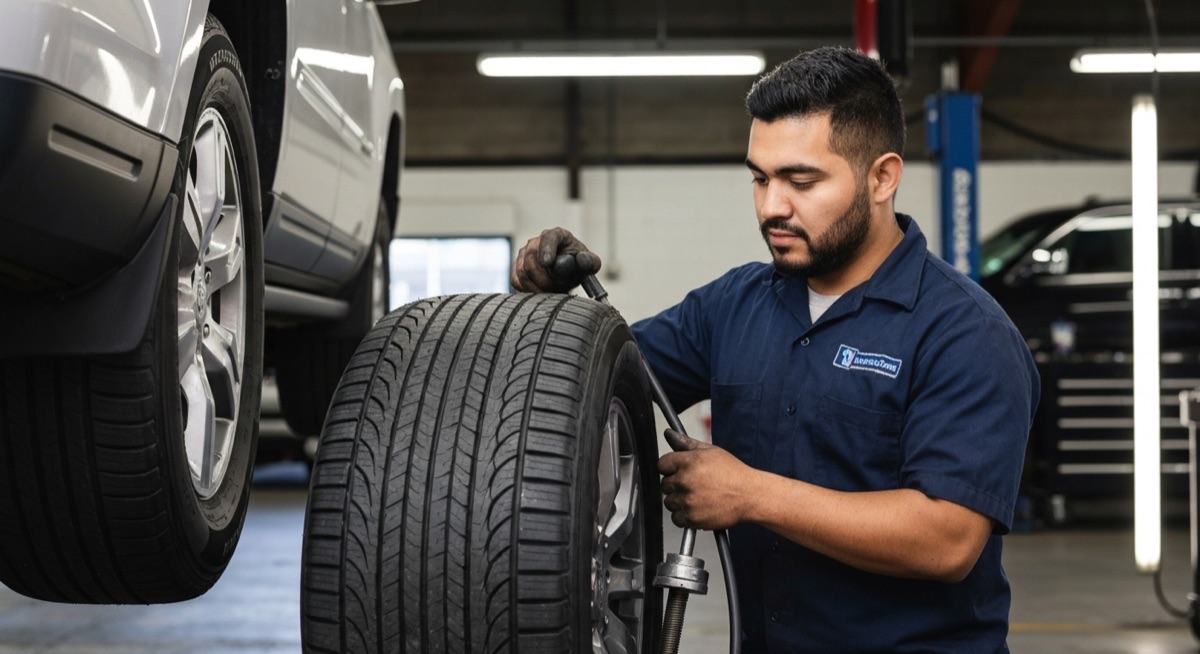
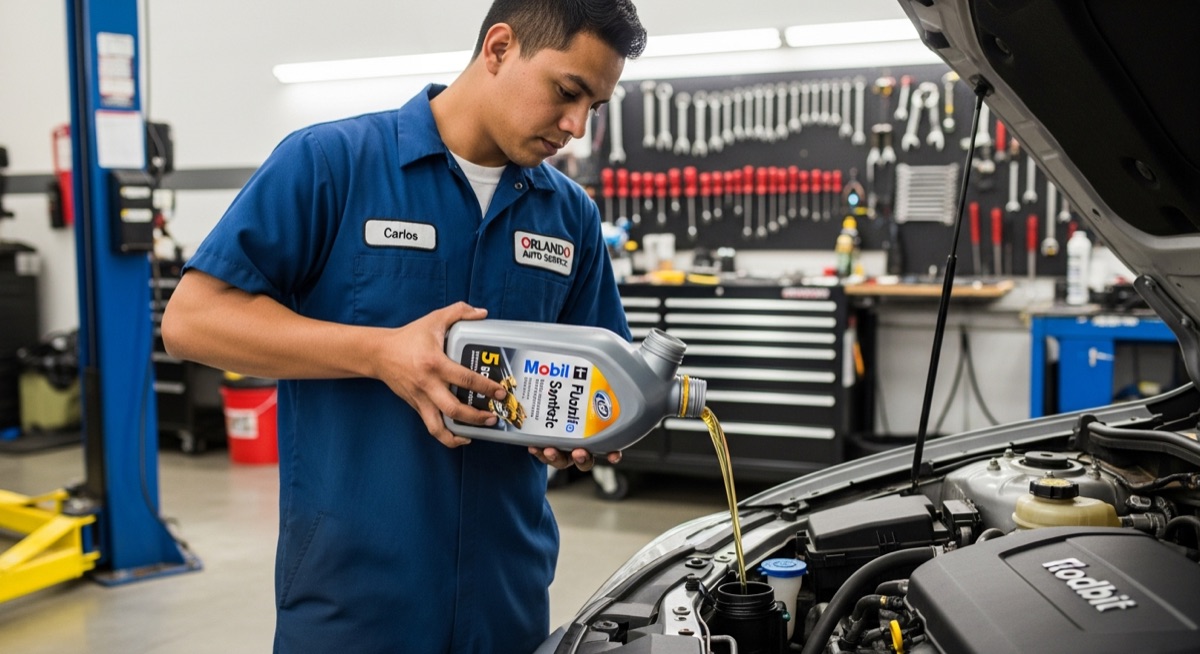
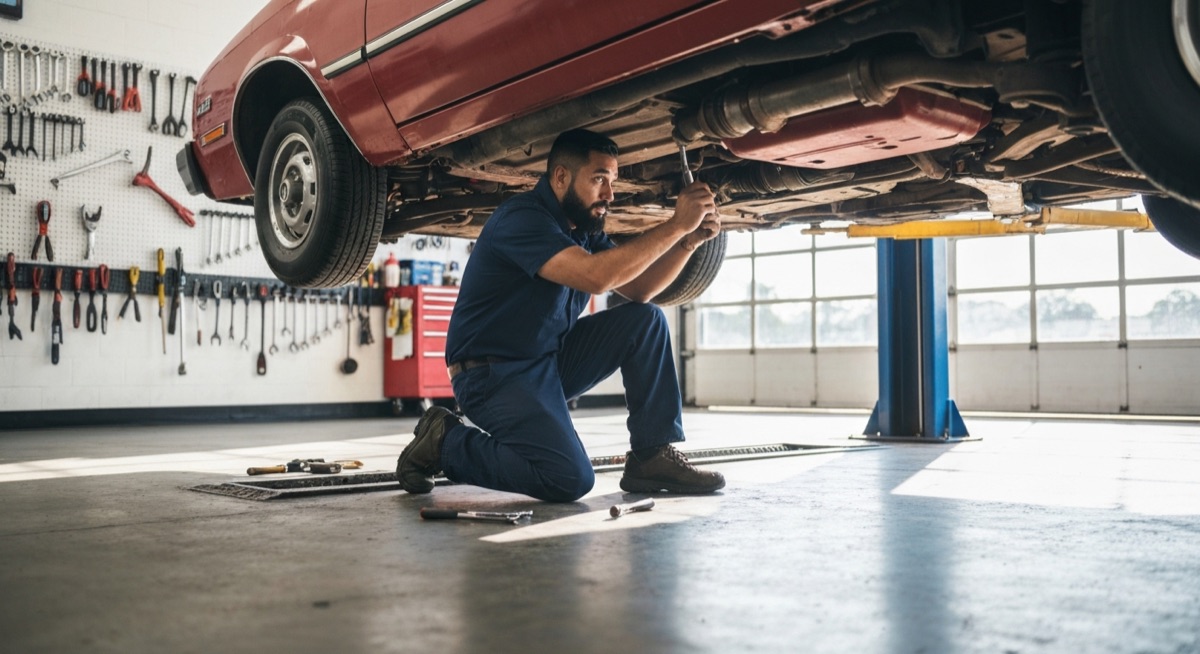
A pre-purchase inspection — you pay an independent mechanic to put someone else’s car on a lift and tell you what’s wrong before you hand over a check — runs between $85 and $140 at most independent shops in Orlando. It’s the single most effective thing a used-car buyer can do in this market, and a significant percentage of buyers skip it entirely. That baffles me every time, given what’s actually circulating here.
This guide covers which independent shops in Orlando will do it, what they charge, how to arrange it whether you’re dealing with a private seller or a CarMax listing, what a mechanic should specifically be looking for in Florida, and what the red flags look like before the car ever gets to a lift.
Why Orlando Is a Harder Used-Car Market Than Most Buyers Realize
Orlando has a used-car supply problem that’s structural, not incidental. The region has one of the country’s highest concentrations of rental car operations — Hertz, Enterprise, Avis, Budget, and National all run large fleets out of MCO and satellite locations — and those fleets cycle out on a regular basis, pushing high-mileage vehicles into the regional wholesale and retail market. Rental cars are maintained on schedule, but they’re also driven hard by unfamiliar drivers who have no particular reason to be gentle. The wear patterns are distinctive in ways that aren’t always visible at a glance.
The more serious problem is the flood-car pipeline. Florida is a preferred titling destination for vehicles totaled by water damage in Gulf Coast storms — most recently hurricanes Ian (2022) and Irma (2017), along with storm seasons that have hit Louisiana, the Florida Panhandle, and the Tampa Bay area. When a car is totaled by an insurer in one state, it receives a salvage or flood title. Title-washing — re-titling a vehicle through states with looser inspection requirements, or cycling it through auction chains until the branded title becomes harder to trace — is well documented. Florida’s titling system has come up repeatedly in investigative reporting as a preferred route for exactly these vehicles.
The calendar matters. Late fall and early winter — November through January — are when post-hurricane flood vehicles start appearing in volume at independent lots and private sales throughout Central Florida. If you’re shopping during that window, you’re shopping at peak risk. Worth knowing before you start scrolling Facebook Marketplace at midnight.
Then there’s the I-4 corridor itself. The stretch from Kissimmee through downtown Orlando to Sanford has one of the densest concentrations of used-car lots in the state, including a significant number of Buy Here Pay Here operations not subject to the same sales practices as franchise dealers. None of this means every car on that corridor is a problem — plenty of legitimate deals get done there every week. It means the odds of encountering a flood car, a former rental with concealed damage, or a vehicle with undisclosed mechanical issues are meaningfully higher here than in markets without this particular combination of factors.
Generic national advice about buying used cars doesn’t account for any of this. This guide does.
Which Independent Orlando Shops Offer Pre-Purchase Inspections
The following shops will inspect a car you bring in that you’re considering buying from a private seller or dealer — meaning they’ll put someone else’s vehicle on their lift before you’ve committed to anything.
Honest-1 Auto Care has multiple Central Florida locations, including Winter Park and Dr. Phillips. Their standard PPI includes a written report with photos, which matters — you want something on paper, not just a verbal summary you’re trying to reconstruct on the drive home. Pricing runs $85–$140; call your nearest location to confirm. Same-day or next-day scheduling is generally available, which makes it practical to use even if a deal is moving quickly.
Christian Brothers Automotive in Oviedo serves the east Orange and Seminole County corridor. They’re accustomed to PPI requests and provide written reports. Pricing is roughly $100–$130. Of the shops on this list, Christian Brothers tends to draw the most consistent word-of-mouth from repeat customers in the area — worth noting if you’re choosing between options.
AAA Central Florida offers PPI through its approved repair network, with member pricing in the $75–$100 range versus $100–$130 for non-members. The inspection is more standardized than what an independent shop provides — it covers major mechanical and safety systems but may not go as deep on Florida-specific wear. Call 407-444-7000 to confirm which locations handle the service directly. If you’re already a AAA member, the pricing makes this an obvious first call.
Midas on East Colonial Drive is convenient for buyers working deals in the east Orlando used-car corridor, which is where a lot of the private-sale action concentrates. Pricing runs $89–$120. Call ahead to confirm a written report is included — don’t assume.
Tuffy Tire & Auto Service has multiple metro-area locations with PPI pricing typically in the $85–$115 range. Turnaround time and written report availability vary by location, so confirm specifics when you book.
One more option worth knowing about: franchise dealer service departments — Toyota of Orlando, Universal Hyundai, and others — have factory diagnostic tooling that an independent shop may not carry. If you’re buying a same-brand used vehicle and there’s a hard-to-read fault code involved, a dealer service lane can sometimes go deeper. That said, a dealer service department is not a substitute for an independent evaluation. There’s a conflict of interest when the entity doing the inspection has a financial relationship with the entity selling the car. Use dealer diagnostics as a supplement, not your primary PPI.
When you call any shop, confirm explicitly that the inspection covers a vehicle you have not yet purchased and that you’ll receive a written report. A verbal walkthrough is not documentation you can use in any subsequent negotiation or dispute.
What an Orlando PPI Should Actually Cover
A standard pre-purchase inspection covers the obvious categories: brakes, tires, fluid levels, suspension, exhaust, body panel alignment, and an OBD-II scan for stored fault codes. In Florida, the bar should be higher. A checklist written for Ohio doesn’t serve you here.
AC system. This is the top priority in this market and frequently treated as an afterthought on generic inspection forms. The AC compressor and refrigerant system in a Florida vehicle runs ten to eleven months a year. In a northern market, it runs four or five. That’s not a minor difference — the accelerated wear is real. The inspection should include an AC performance check under load: Does the system hold pressure? Is the compressor cycling correctly? Are there signs of refrigerant leak? What’s the vent temperature at full cold? Some shops charge extra for this. Ask explicitly when you book. An AC compressor replacement runs $800 to $1,500 parts and labor depending on the vehicle — the question is worth asking upfront.
Heat-accelerated component wear. Florida’s sustained heat accelerates rubber degradation and fluid breakdown in ways that don’t get enough attention. The PPI should include tactile inspection of coolant hoses, belt condition, and a visual and smell check of transmission fluid. Transmission fluid that smells burned in a vehicle with 60,000 miles is a more urgent finding here than it would be in a cooler climate.
Tire sidewalls, not just tread depth. Cars that sit outside in Central Florida — which is most of them — take UV damage to tire sidewalls that doesn’t appear on the tread surface. A vehicle with half the tread depth remaining but visible sidewall cracking needs new tires regardless of mileage. Don’t let anyone talk you out of that.
Undercarriage moisture oxidation. Florida’s humidity accelerates brake line corrosion, exhaust hanger deterioration, and oxidation at frame and subframe mounting points, even without road salt. Cars that moved into Orlando from coastal Florida markets — Tampa, Miami, Jacksonville — may carry additional salt-air exposure on top of that baseline.
Flood damage. This is the non-negotiable item on any Florida PPI checklist.
Door jambs hold waterline marks that are genuinely difficult to clean completely. Mud and silt collect in the spare tire well and trunk floor drain channels — among the hardest areas to clean and, not coincidentally, among the most revealing. The foam underlayment beneath floor carpeting holds moisture and retains mildew smell long after visible surfaces have been shampooed. If the interior smells like a very aggressive air freshener, that’s worth noting.
Electrical connector corrosion is particularly damaging and particularly sneaky. Flood water forces its way into wiring harness connectors and creates corrosion that may not trigger a fault code immediately but will generate electrical failures for the life of the vehicle. A mechanic checking for flood damage should pull accessible connectors — under the dash, under the hood — and look for white or green oxidation inside the housings. The blower motor housing is a reliable place to find debris. Seat track rails corrode from the inside out after flood exposure.
A mechanic with regular Florida used-car experience will run this protocol as standard. Ask specifically whether flood inspection is included or whether you need to request it. Given this market, request it either way.
The Flood Car Problem in Specific Terms
In the weeks after a major Gulf Coast hurricane, insurance companies process total-loss claims on thousands of flooded vehicles. Those vehicles enter the salvage auction system with branded titles. Some go to legitimate rebuilders. Others move through a chain of resales specifically designed to obscure the title history.
Florida has been identified repeatedly — by the National Insurance Crime Bureau, by consumer advocacy organizations, by investigative journalists — as a preferred state for this process. The volume of vehicles moving through its auction and dealer infrastructure makes it possible in a way it isn’t in smaller markets. A flood-titled vehicle from Louisiana or Texas is purchased at salvage auction, transported to Florida, cleaned and detailed, and retitled through a series of transactions that produce a Florida title with no branded designation. It then enters the retail market looking like a clean-title used car.
CARFAX and AutoCheck are useful. Use both — they draw on different databases and sometimes return meaningfully different results. But a vehicle can carry a clean Carfax report and a documented flood history. Those two things are not mutually exclusive. That’s the actual problem.
The FEMA flood-zone geography of Orange County adds another layer. Low-lying areas flood with local storms, not just hurricane events. Vehicles damaged locally may not generate the same volume of total-loss insurance claims as Gulf Coast events, but they enter the same resale pipeline.
Early 2023 saw a spike in flood-damaged vehicles moving into Central Florida retail circulation following Hurricane Ian’s October 2022 landfall. That pattern has repeated after every significant storm season. A vehicle that sustained water damage in October will have dried out superficially by January, but the electrical and mechanical corrosion underneath is still developing. Some of the flood-damaged vehicles that entered Florida’s retail market after Hurricane Irma in 2017 are still generating complaints in independent shop service logs in 2024. Seven years later. That’s the actual timeline buyers are dealing with when they skip the inspection.
How to Arrange a Pre-Purchase Inspection
Private seller. Say this plainly: “Before I commit to buying, I’d like to have an independent mechanic look at the car. I’ll pay for the inspection and arrange the appointment. Are you available to bring it to [shop name] on [date]?” Most legitimate private sellers agree without much fuss. The density of independent shops along the Colonial Drive corridor is a practical advantage — you can offer the seller multiple scheduling options without making the logistics difficult.
A seller who refuses a pre-purchase inspection on a private sale is giving you significant information. The common explanations — “I don’t have time,” “I’ve already got another buyer interested,” “I trust you can see it’s fine” — are not valid reasons to forgo an inspection on a vehicle worth several thousand dollars. Walk away. There are other cars.
Franchise dealers on the I-4 corridor — Toyota of Orlando, Universal Hyundai, the major corridor operations — will typically allow a buyer to take a vehicle off the lot for an independent inspection. There’s usually a deposit or a signed agreement. Call the sales manager directly and ask. Pushback is uncommon at legitimate franchise operations. If a dealer refuses an off-site inspection, treat it like a private seller’s refusal.
Buy Here Pay Here lots on the Kissimmee stretch vary. Some permit inspections; others won’t. A refusal from a BHPH lot is a significant red flag. These operations frequently carry vehicles that franchise dealers have declined to retail, and a “no outside inspection” policy is usually protecting something the seller already knows.
CarMax. You can request a hold while you arrange an off-site inspection, though hold period and deposit requirements vary by location. Call the Semoran Boulevard or South Orange Blossom Trail location directly before you proceed and ask about their current PPI hold policy.
Carvana operates on a 7-day return window that functions as an alternative to traditional PPI arrangements. You take delivery, arrange an inspection within the first few days, and return the vehicle if the findings are serious. The catch: you’ve already completed the purchase transaction before the inspection happens. Given the flood-car risk specific to this market, book the inspection appointment before the car arrives — not after.
Red Flags Before the Car Gets to a Mechanic
A pre-purchase inspection is the second line of defense, not the first.
Same-day closing pressure — “I’ve got three other people looking at it tonight” — is the most reliable behavioral red flag in any market, and it’s especially common on the I-4 corridor where inventory moves fast and sellers know it. Legitimate sellers with clean vehicles don’t need to rush the transaction.
Cash-only insistence on a deal over $2,000 is unusual and worth questioning. A title not in the seller’s name — where the seller explains it belongs to a relative, a friend, or “I bought it at auction and haven’t transferred it yet” — is a serious concern. Purchasing a vehicle on an open title creates legal and registration complications and is a technique used in curbstoning operations. If you’re unsure whether a seller’s title situation is legitimate, reviewing how to identify and avoid notario fraud in Orlando won’t cover the auto context directly, but it illustrates the kinds of document-based deceptions that surface in Florida’s informal transaction markets.
Excessive AC vent wear — discoloration, broken louver tabs, worn surfaces around the controls — is consistent with a vehicle where the AC ran constantly. True of most Florida cars, but pronounced in fleet and rental vehicles. Repainted body panels that don’t match are a sign of prior collision damage. Florida’s sun oxidizes and color-shifts original paint faster than most states, which actually makes repainted panels easier to spot — check panel edges, under the hood lip, and inside the door jambs for overspray or color variation.
Pull both a CARFAX and an AutoCheck. Look specifically for a title issued in another state within the last 18 months (title washing often leaves exactly this trace), odometer discrepancy flags, any notation of “insurance loss,” “salvage,” or “flood,” and any gap in the ownership record. A car with an ownership gap in Louisiana or Texas that appeared in Florida last winter deserves extra scrutiny. Check the number of owners against the vehicle’s age. A four-year-old car with four prior owners has moved through hands quickly, and that question has an answer worth finding out.
What You’re Risking Without One
The math is direct.
A pre-purchase inspection costs $85 to $140. Here’s what it’s designed to catch:
- AC compressor replacement: $800–$1,500
- Transmission rebuild or replacement: $2,500–$5,000
- Flood remediation: $3,000–$10,000+, if the vehicle is remediable at all
That last figure deserves emphasis. A flood-damaged vehicle that was professionally detailed and retitled through a title-washing chain is, in many cases, unrepairable to a reliable standard at any cost. The electrical corrosion that develops over 18 to 24 months after flood exposure causes intermittent failures that are genuinely difficult to diagnose and harder to fix permanently. The $85 to $140 inspection fee buys you a qualified mechanic’s attention and a written report you can use in price negotiation, as grounds to walk away, or as documentation if a dispute arises after the sale. It doesn’t guarantee nothing will ever go wrong — no inspection does. It gives you information you won’t get from a Carfax report, a test drive, or a walk-around in a parking lot.
In a market where a post-hurricane flood car can enter retail circulation with a clean-looking title, the cost-benefit calculation really isn’t complicated.
The Bottom Line for Orlando Buyers
Treat the pre-purchase inspection as a cost of doing business in this specific market. Not as a sign of distrust toward the seller. Not as something you skip if the car looks good. Not as something you do only on older vehicles.
The shops on this list are accustomed to the request. Nobody’s going to look at you sideways for asking.
Call ahead, confirm the shop will inspect a car you don’t yet own, ask explicitly for a written report, and book the appointment before you tell the seller you’re ready to buy. An inspection that surfaces a problem worth thousands of dollars — or identifies a flood-damaged vehicle that shouldn’t be purchased at any price — pays for itself with room to spare.
[Reporter’s note: Confirm current pricing and availability at all listed shops before publication. Pricing ranges above are based on regional market data and require direct confirmation by phone. Verify CarMax hold and return policy terms as of publication date.]