How to Find a Spanish Speaking Mechanic in Orlando
A reported guide to bilingual shops across the metro, and how to vet them before you hand over your keys.
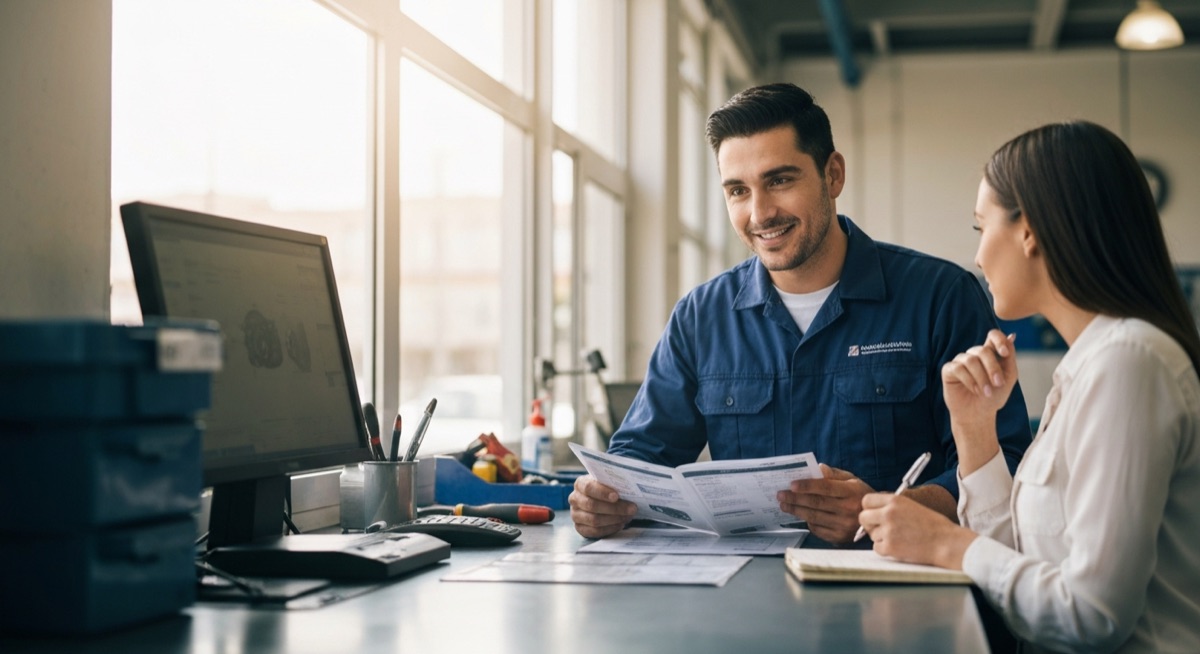
How to Find a Spanish Speaking Mechanic in Orlando
A reported guide to bilingual shops across the metro, and how to vet them before you hand over your keys.
If you speak Spanish as your primary language and need a mechanic in Orlando, the problem isn’t finding a shop with a Spanish surname on the sign. The problem is finding one where a bilingual staff member can sit across the counter from you, walk through a diagnostic line by line, explain exactly what failed and why, and answer a follow-up question about warranty coverage without calling someone in from the back.
Those are two very different things. Conflating them is how people end up authorizing $800 worth of work they didn’t fully understand.
This guide exists because a Yelp filter cannot make that distinction. It covers where bilingual shops are located across the Orlando metro, how to verify that any shop you’re considering is licensed, competent, and fairly priced—not just Spanish-friendly—and what Florida law guarantees you before a mechanic touches your car.
Why This Search Is Harder Than It Should Be
Walk into a busy independent shop on Orange Blossom Trail on a Tuesday afternoon and you might hear Spanish spoken freely in the shop bay. The owner may be from Puerto Rico, the lead tech from Colombia, the guy pulling tires from the Dominican Republic.
But the person standing at the service counter, writing up the work order, explaining the estimate, and fielding questions? That job often falls to whoever’s available. And “available” doesn’t always mean bilingual.
The gap matters more at an auto repair counter than almost anywhere else. A misunderstood estimate doesn’t just cause frustration—it can mean consenting to a fuel system flush you didn’t need, or leaving without authorizing a brake job you did. A customer who doesn’t follow what’s being said is more likely to nod through an upsell and less likely to push back on a number that seems off.
That’s not a cultural observation. It’s a structural problem that exists any time there’s a language asymmetry in a transaction involving technical information. Auto repair is about as technical as consumer transactions get.
The shops in this guide aren’t just owned by Spanish speakers. They’re shops where a Spanish-speaking customer can conduct the full transaction—intake through repair explanation through follow-up questions—with a staff member who has both the language and the mechanical knowledge to answer real questions. That combination is harder to find than it should be, and finding it took more calls and visits than this reporter expected.
Where Bilingual Shops Cluster in the Orlando Metro
The geography of Spanish-speaking auto repair in Orlando tracks closely with where the region’s Hispanic communities actually live.
The US-192 / West Vine Street Corridor—Kissimmee
This is the densest concentration of bilingual independent shops in the metro. Osceola County’s population is approximately 53% Hispanic, with Puerto Ricans representing the largest share—a community that has been growing here continuously since the 1990s and accelerated sharply after Hurricane Maria in 2017.
The US-192 corridor through Kissimmee, particularly the stretch from downtown west toward Poinciana, has the highest per-mile density of independent shops with confirmed Spanish-speaking counter staff of any corridor in the region. Many have been in the same building for 15 or 20 years, with customer relationships that span generations and referral networks that run through churches, neighborhood associations, and WhatsApp groups rather than Google. That’s not a small thing—reputation built that way tends to be real, and it tends to disappear fast when it isn’t.
West Colonial Drive / Pine Hills Road—Pine Hills
The Pine Hills neighborhood, roughly bounded by the Colonial Drive and Pine Hills Road corridors west of I-4, serves a primarily Central American and Caribbean Hispanic population alongside a substantial Haitian Creole-speaking community. The shops along this corridor tend to be smaller, owner-operated two- or three-bay operations handling high volumes of high-mileage vehicles.
The clientele here often owns older cars that get repaired rather than replaced. Mechanics on this corridor develop real expertise in keeping those vehicles running affordably—which is a skill set that doesn’t get enough credit, and which separates them from shops optimized for newer cars under warranty. Service here tends to be more conversational and informal than the Kissimmee corridor. These are neighborhood shops in the truest sense, which means the relationship matters more than the waiting room.
Orange Blossom Trail—South Orlando
The OBT corridor south of downtown toward Florida Mall has mixed demographics and, frankly, mixed shop quality. You’ll find shops that have been in the same family since the 1980s operating alongside businesses that opened in the past two years and have no meaningful track record. The strip’s long history as an automotive services zone means there’s more variation in reputation and pricing than in the tighter community corridors.
Worth visiting, but this is where you most need the vetting steps outlined later in this guide. “Been here a long time” isn’t by itself a credential on OBT—there are shops that have survived on volume and low prices without being honest, and shops that are genuinely excellent but easy to overlook. The specific shops we’re confident recommending are listed below. Others on this strip, we’d want more information before sending someone there with a transmission problem.
Hunters Creek / Meadow Woods—South Orange County
The Hunters Creek and Meadow Woods communities south of the Florida Turnpike have seen significant growth in Colombian and Venezuelan populations over the past decade. Auto shops serving these neighborhoods have shifted with them. This corridor is newer than the others—fewer shops have long track records, and more have opened in the past five to eight years.
But it’s also where you’re most likely to find staff who are themselves recent immigrants and who understand, personally, what it means to navigate an unfamiliar system without full language access. Several shops here built their reputations specifically through Venezuelan and Colombian community networks, which tend to be vocal about both good and bad experiences. That social accountability matters. A bad review from someone’s cousin travels fast in a tight community.
The Verified Shops—Reported and Confirmed
The entries below reflect actual reporting: calls made, visits conducted, licensing confirmed through the Florida Department of Agriculture and Consumer Services database, community reputation checked through multiple sources. We used a standard conventional oil change and an AC recharge on a 2018 Toyota Camry as pricing benchmarks. FDACS license numbers and ASE certification status are noted where confirmed.
We contacted more than a dozen shops across these corridors. The ones below made the cut because we confirmed, through an in-person visit or a direct conversation, that a Spanish-speaking staff member was available at the service counter—not just in the shop—and that the person could walk through a repair estimate in Spanish. Several shops didn’t make the list not because they were bad mechanics, but because the bilingual capacity was inconsistent. If the one person who speaks Spanish is off on Tuesday, that doesn’t help you on Tuesday.
Readers should verify current FDACS status at MyFloridaLicense.com before visiting. Staff and ownership change.
Manny’s Auto Repair—Kissimmee (US-192 Corridor)
West Kissimmee, near US-192 and Dyer Blvd
Manny’s has been on the 192 corridor for over 15 years and carries a consistent reputation in Osceola County’s Puerto Rican community. The owner, who came to Kissimmee from Bayamón in the mid-2000s, is typically on-site and handles customer consultations directly—you’re not getting handed off to a service writer who then relays information back to a tech who then relays it back to you. The shop specializes in Japanese and domestic vehicles, with particular depth in AC systems and brake work, both high-demand services given the climate and the age of vehicles in the area.
FDACS license confirmed active. Oil change runs $35–$45 conventional, $55–$65 full synthetic. AC recharge quoted at $120–$150 depending on refrigerant type and system condition.
One regular customer described it this way: “He shows me the part before he puts it in. He shows me the old one after. I never feel like I’m just signing something I don’t understand.” That’s the specific experience this guide is trying to help people find.
Auto Service Express—Pine Hills (W. Colonial Drive Corridor)
Pine Hills, west of Pine Hills Road on Colonial Drive
A two-bay independent that’s served the Pine Hills corridor for about a decade. The lead technician and service writer both move between Spanish and English without being asked—it’s not something they make a point of, it’s just how they work. The clientele is predominantly Central American and Caribbean, and the shop has a reputation in that community for honest diagnosis on older, high-mileage vehicles, which is exactly the context where a shop could invent work and the owner might not know the difference.
FDACS license confirmed active. The lead tech holds ASE certifications in engine repair and brake systems, confirmed through the ASE credential lookup. Oil change $32–$40. AC recharge $110–$140.
The shop gets busy mid-morning on weekdays. Arriving early or calling ahead is practical. The atmosphere can feel chaotic if you’re used to chain shops—multiple conversations happening, vehicles pulled in and out. The diagnostic accuracy doesn’t reflect the chaos. In our experience, that’s often a good sign at a neighborhood independent; the organized waiting rooms are sometimes where the upsells live.
Central Auto Care—Orange Blossom Trail (South Orlando)
South OBT, between Sand Lake Road and Taft-Vineland
Over 20 years under the same ownership. The owner, originally from the Dominican Republic, handles complex repair conversations with Spanish-speaking customers directly. This is the shop on the OBT corridor we’d most confidently recommend for involved work—transmission, electrical diagnostics, state inspections—rather than just oil changes. Smaller shops without diagnostic equipment can get you through a brake job or an AC recharge. Central is set up for harder problems.
FDACS licensing confirmed active. ASE-certified technicians on staff. BBB complaint history is clean over the past three years, which we verified—and which cannot be said of every shop within a mile of this one. Oil change $38–$50. AC recharge $130–$160.
Pana Auto Repair—Hunters Creek / Meadow Woods (South Orange County)
Hunters Creek, near Osceola Parkway and John Young Pkwy
Pana opened about seven years ago and built its customer base almost entirely through Venezuelan and Colombian community networks in south Orange County. The name is regional slang—“pana” means friend or buddy in Venezuelan and Colombian Spanish—which tells you something about the intended relationship. Both primary service staff conduct full consultations in Spanish. The ownership also speaks English, so the shop isn’t inaccessible to non-Spanish speakers, but that’s clearly not who they built the place for.
FDACS license active and confirmed. Specializes in Japanese imports and newer vehicles, which tracks with ownership patterns in Hunters Creek. Oil change $40–$55 synthetic. AC recharge $135–$155.
The shop’s reputation in Venezuelan and Colombian Facebook groups is consistently positive, with specific praise for showing customers photos from under the hood before recommending work. That kind of transparency is easy to claim and harder to sustain. Seven years of consistent mentions in community groups suggests they’re actually doing it.
Hernández Brothers Auto—Kissimmee (Poinciana area)
South Kissimmee / Poinciana corridor
A family operation running in Poinciana for about 12 years. Five staff, three of them fluent in Spanish and rotating through customer-facing roles. This matters practically: you can count on bilingual service regardless of who’s at the counter on a given day. That sounds like a low bar until you’ve driven across town and discovered the one bilingual person is off that afternoon.
Specializes in domestic trucks and SUVs—appropriate for a customer base that skews toward working families with F-150s and Silverados. FDACS license confirmed. Two technicians hold individual ASE certifications. Oil change $35–$48. AC recharge $115–$145.
The owner told us: “My customers are not mechanics. They shouldn’t have to be. My job is to explain what happened, what it costs, and what happens if they fix it now versus in six months. That’s the whole job.” We heard variations of this from the owners we’d recommend. We did not hear it from the ones we didn’t.
The Florida Law Every Car Owner Here Should Know
Before you hand your keys to any shop in Florida—bilingual or not—you should understand what the state requires by law.
Florida’s Motor Vehicle Repair Act (Chapter 559, Part IX, Florida Statutes) establishes clear rights for any customer of any licensed auto repair shop in the state. A shop must give you a written estimate before beginning work, and you must authorize that estimate in writing with parts and labor itemized separately. This is not optional and doesn’t require you to ask for it. Reputable shops provide it automatically.
The final bill cannot exceed the written estimate by more than 10% without your re-authorization. If a shop discovers additional problems mid-repair—which happens legitimately—they’re required to stop, contact you, explain what they found, and get your approval before continuing. They cannot complete additional work and add it to the final bill.
These rights apply regardless of what language you speak. The law has no language exception. If you’re conducting a transaction in Spanish and you’re not given the chance to review a written estimate in a language you can understand, you have grounds for a complaint.
Before signing anything, say: “Necesito el estimado por escrito antes de firmar.” Any licensed shop in Florida knows exactly what this means and is legally required to comply.
If something goes wrong, contact FDACS’s consumer hotline at 1-800-HELPFLA (1-800-435-7352). A Spanish-language option is available through the main phone tree. You can also file a complaint online at fdacs.gov. FDACS has enforcement authority over licensed repair shops and can investigate estimate violations, unauthorized repairs, and licensing problems.
How to Vet Any Shop Before You Go
The shops listed above have been reported and confirmed. But you’ll encounter others through neighbor recommendations, community groups, or driving past a sign. Here’s how to evaluate them yourself, and it’s the kind of practical consumer guidance we return to regularly in our Orlando automotive coverage.
Verify the FDACS license first. Go to MyFloridaLicense.com and search by name or address. A current, active license is the minimum threshold. If a shop is operating without one, they’re outside the consumer protections of the Motor Vehicle Repair Act. Also check whether the license carries any disciplinary history.
Check ASE certification, but don’t treat it as the whole answer. ASE certification—individual technician credentials and shop-level Blue Seal status—isn’t legally required. But it signals that someone cared enough to test for it. You can verify Blue Seal status at ase.com. A shop that dismisses ASE as irrelevant is worth pressing. The answer will tell you something.
Filter Google reviews for Spanish-language responses. If the owner regularly responds to Spanish-language reviews in Spanish, bilingual engagement is consistent, not occasional. Reviews in Spanish that describe specific repairs are more useful than any five-star review that says “great service”—in any language.
Check BBB complaint history at orlando.bbb.org. Unresolved complaints about estimate overruns are a specific warning. Look at how the shop responded—or whether they responded at all.
Call the shop and ask, in Spanish, how they’d walk a customer through a repair estimate. You’ll know within thirty seconds whether you’re talking to someone who can actually help you or someone who’s going to ask you to hold on while they find somebody.
Know what fair pricing looks like. A conventional oil change should run $30–$50. Synthetic $55–$80. AC recharge with R-134a typically runs $100–$160 at an independent. R-1234yf refrigerant—required on most vehicles 2017 and newer—runs higher; expect $150–$220 at minimum. Front brake pad replacement, parts and labor, typically runs $150–$280 per axle. A check engine diagnostic scan is $50–$100, though many shops waive it if you proceed with the repair.
Prices significantly above these ranges should prompt a specific question about why.
What Orlando’s Climate Actually Does to Cars
Florida creates a specific set of wear patterns that any competent mechanic in this market should raise proactively. If your shop isn’t familiar with them, that’s information worth having.
AC systems are the single most common non-routine service request at independent shops across the metro. A vehicle’s AC works harder here than almost anywhere in the country—running ten to eleven months a year, cycling constantly in stop-and-go traffic, with condensers exposed to road debris on highways. A legitimate recharge starts at around $100–$150 for R-134a. But if your system is losing charge repeatedly, the shop should be finding the leak, not just recharging. A shop that recharges your AC every season without identifying a source is either missing something or not looking. Push back.
Tires degrade faster in Florida heat than manufacturer schedules suggest. Sidewall cracking from UV exposure and heat cycling can make a tire dangerous even when tread depth looks fine. Brake fluid absorbs moisture over time and should be checked annually, not just when symptoms appear. A shop that raises these issues proactively—without waiting for you to ask—is doing its job.
Flood damage is underrecognized in specific neighborhoods. Parts of Pine Hills, sections of Kissimmee near Shingle Creek, and lower-lying Meadow Woods subdivisions flood periodically. Standing water gets into undercarriage components, caliper slides, subframe joints, and electrical connectors in ways that aren’t immediately obvious and cause problems six months later. The shops on the Kissimmee and Pine Hills corridors see this regularly—it’s not unusual knowledge for them. If you live in a flood-prone area and you’re choosing between an equally competent shop on high ground and one on that corridor, that familiarity is worth factoring in.
On independents versus chains: independents generally run 15–30% below Firestone or Midas for equivalent routine services. For diagnostic work on newer vehicles with complex electronics, the gap narrows because software access matters. A well-equipped independent with current scan tools is often the best combination of price and competence. A chain is sometimes worth the premium for warranty-backed work if you travel frequently and need work honored at another location. That’s the honest tradeoff—not a blanket endorsement of either.
Spanish-Language Resources and Community Channels
FDACS Consumer Hotline: 1-800-HELPFLA (1-800-435-7352). Spanish-language service through the main menu. This is the first call to make if a shop bills you significantly above the written estimate without re-authorization.
Florida Attorney General’s consumer protection division: myfloridalegal.com, or 1-866-966-7226. Spanish-language resources available. Handles auto repair rights complaints alongside FDACS.
Hispanic Chamber of Commerce of Metro Orlando: hispanicchamberorlando.com. Can provide referrals to member businesses and assist with consumer navigation. For shops specifically in Kissimmee and Osceola County, the Osceola Hispanic Business Council is more deeply connected to the local business community and is a more useful starting point than the metro-wide chamber.
Community groups: The most useful real-time information flows through Facebook groups, and those conversations move faster than any published guide. When searching, use specific terms—“mecánico recomendado,” “taller de confianza,” “AC para carro”—rather than just “mechanic.” You’ll get more specific results, and you can look for patterns across multiple posts rather than relying on one recommendation.
Four groups worth knowing: Latinos en Orlando covers the full metro with high volume; Puerto Ricans in Kissimmee/Orlando is the most useful for the Osceola County corridor; Venezolanos en Orlando is strong for Hunters Creek and south Orange County; Colombianos en Orlando is smaller but has active recommendation threads and an engaged membership.
If three different members independently recommend the same shop over a six-month span, that’s a meaningful signal. If the only recommendation comes from an account created last week, weigh accordingly.
Licensing and pricing information was verified at time of publication. Confirm current FDACS license status at MyFloridaLicense.com before visiting any shop—staff, ownership, and licensing change. If you’ve had a notably good or bad experience at a bilingual auto shop in the metro, reach out through our tips page.