New Restaurants Opening in Orlando in 2026
The operators behind some of the city's most notable closures haven't disappeared. Here's where they landed and what's opening next.

New Restaurants Opening in Orlando in 2026
The operators behind some of the city’s most notable closures haven’t disappeared. Here’s where they landed and what’s opening next.
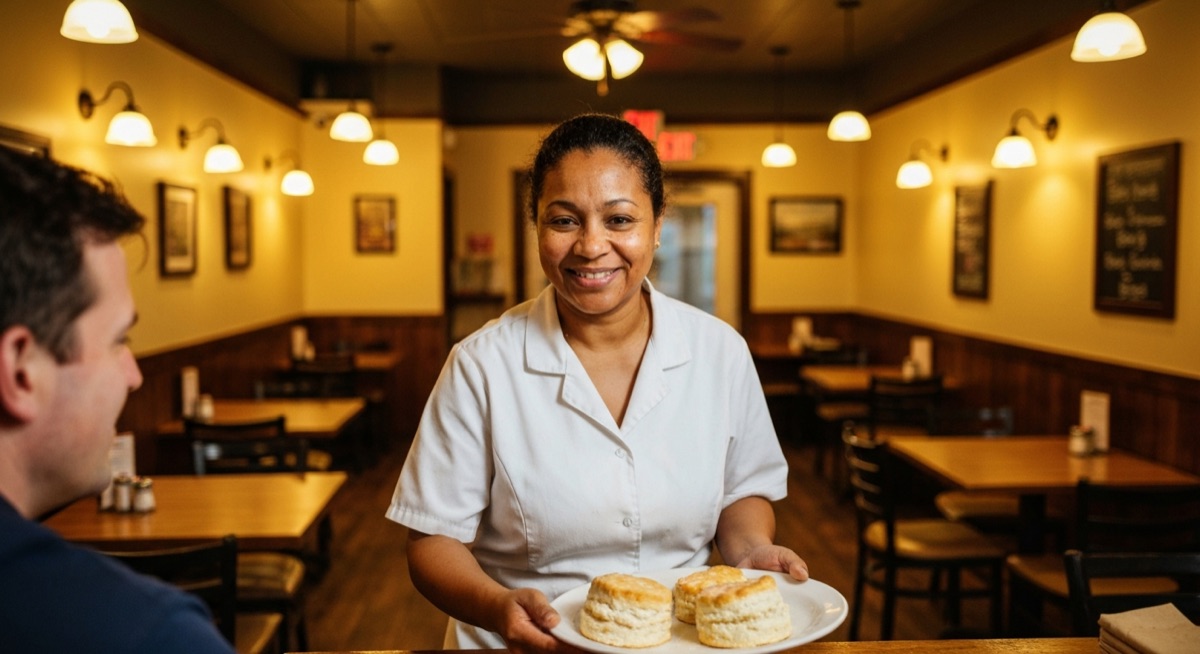
The last service at Se7en Bites in the Milk District was the kind of night that makes closures harder. Regulars who had been eating Trina Gregory-Propst’s biscuits and butter cake since 2014 showed up to say goodbye in person. Gregory-Propst posted on Instagram the next morning — not a lament exactly, but an accounting. Eleven years. Thousands of biscuits. A Milk District that looked nothing like the one she had opened into. By late spring 2025, the door was locked, and the rent math had become impossible to ignore.
That moment is the right place to start. Specific. Local. Not reducible to a national trend. What happened to Se7en Bites, to The Osprey Tavern in Baldwin Park, to Reyes Mezcaleria, to Seito Baldwin Park, and to a contracting Graffiti Junktion operation is not ordinary restaurant churn. It’s a compression event: multiple independent operators absorbing the same converging pressures at roughly the same moment and making the same hard call. Before another wave of closures gets quietly normalized, it’s worth understanding what actually happened, where the people behind these places went, and what they’re building next.
The Confirmed Closures: What Shut Down and Why
The notable closures from mid-2025 through mid-2026 cluster around a handful of well-established independent operations. Each had its own specific trigger. The underlying conditions are nearly identical.
Se7en Bites closed in spring 2025 after eleven years in the Milk District. Gregory-Propst cited a lease renegotiation that reset to current market rates, food cost inflation that compressed margins on a breakfast-and-bakery model already running thin, and the fundamental difficulty of staffing a daytime-heavy operation against wages offered by theme park resorts nearby. DBPR records confirm the license was retired in 2025.
The Osprey Tavern in Baldwin Park closed after its ownership group decided not to renew when landlord pricing reflected the neighborhood’s tightened restaurant inventory. Jason Chin, who ran the kitchen through much of the restaurant’s most prominent years, confirmed the closure was a clean end rather than a financial emergency. The full-service model couldn’t justify the reset rent. Clean doesn’t mean painless.
Reyes Mezcaleria on the Mills 50 corridor closed after building one of the city’s most serious agave-focused bars and Mexican kitchens. The closure came from a combination of ownership-level decisions and a cost structure in which spirits pricing and labor moved against the model simultaneously. Running a genuinely good mezcal program is expensive even when everything goes right.
Seito Baldwin Park, the Japanese kitchen that had built a real following for polished neighborhood sushi, closed as part of the same Baldwin Park inventory crunch that took Osprey. Its parent group retained other locations. A strategic contraction, not a systemic failure.
Graffiti Junktion reduced its footprint during the same window, closing at least two Orlando locations as the economics of running multiple casual American concepts in non-tourist corridors deteriorated under labor and cost pressure.
The Cost Equation: What Actually Drove the Closures
Anyone who tells you these closures stem primarily from post-pandemic recovery exhaustion is giving you an incomplete answer. The specific mechanics matter, because they explain why this happened now.
Florida’s minimum wage reached $13 per hour in September 2024 and stepped to $14 in September 2025, heading toward $15. For an independent full-service restaurant running 20-plus hourly employees, that progression compounds across a payroll already being stretched by competition from Walt Disney World, Universal, and the resort hotel corridor. These employers offer not just wages but benefits, scheduling stability, and advancement paths that owner-operated kitchens cannot match. A dishwasher position in a neighborhood restaurant now competes directly with a housekeeping role at a Walt Disney World resort that comes with a career ladder attached. There’s no version of that competition an independent operator wins on comp alone.
Commercial rates in Orlando’s active restaurant corridors have reset sharply as pandemic-era lease deferrals expired. According to commercial real estate brokers active in the market, restaurant space in Baldwin Park and Thornton Park now costs $40 to $75 per square foot for new or renewed leases, depending on the block and build-out condition. Milk District properties that were accessible to independent operators through the 2010s have risen alongside the neighborhood’s residential density. A space that renewed at $25 per square foot five years ago costs $50 at renegotiation. That’s not a rounding error. That’s a different business.
Marisol Vega, a commercial broker with JLL’s Orlando office who works on food-and-beverage tenant placements, put it plainly: “The operators who locked in five- or seven-year leases before 2021 had a meaningful cost advantage. When those leases came up for renewal in 2024 and 2025, the market-rate reset was a shock to their pro forma. Some of them couldn’t make the new number work no matter how they ran the model.” She added that most negotiations now include percentage-of-revenue clauses, shifting volume risk onto the tenant. More rent, more downside. Great deal.
Food cost inflation, while partially moderating nationally, hasn’t normalized for independent operators buying at non-contract prices. Protein, dairy, and cooking oils remained elevated through 2025. The Florida Restaurant and Lodging Association’s regional data showed independent operators in the Orlando MSA absorbing food cost percentages several points above their pre-2020 baselines, with limited ability to pass full increases to customers at neighborhood price points. A $1.50 increase in protein costs might support a 50-cent menu price increase, leaving a margin gap that compounds daily across dozens of items. If you’ve ever tried to keep a breakfast menu affordable while egg and butter prices move against you for 18 months straight, the math Gregory-Propst was doing isn’t hard to understand.
Neighborhood by Neighborhood: Where the Pressure Hit Unevenly
Orlando’s restaurant closures aren’t one story. They’re at least five, running simultaneously in different directions, and collapsing them misses what’s actually useful.
Baldwin Park lost Osprey Tavern and Seito within the same window — striking for a neighborhood that generates real residential demand for sit-down dining. The problem there isn’t foot traffic. It’s inventory. There are a limited number of viable restaurant spaces in the Village Center, and landlords who know they have leverage aren’t giving it away. A luxury retailer or professional services office can often justify higher rent than a restaurant with variable revenue. That tension isn’t going away, and the neighborhood has no mechanism to resolve it in operators’ favor.
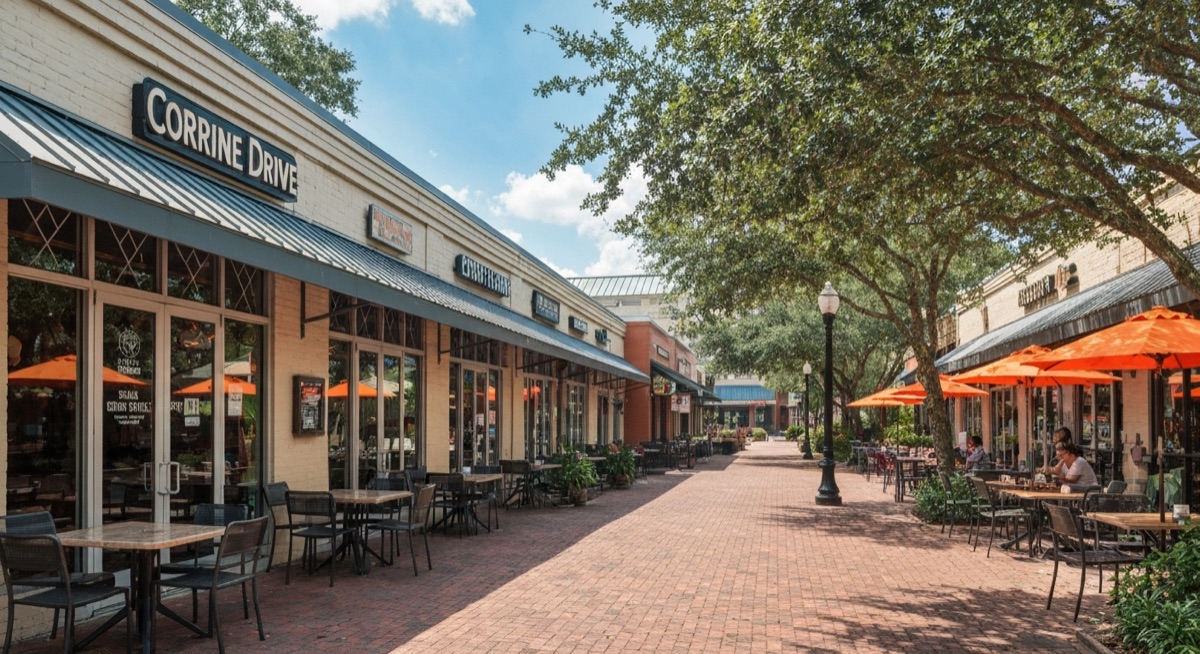
The Milk District is undergoing something more structural. The corridor that incubated a generation of independent Orlando concepts — Se7en Bites, Stardust Video & Coffee, Sideward Brewing’s original location — now has rising residential property values that raise the floor for everyone. Operators who opened when Corrine Drive was still discovering itself compete for renewal terms against landlords who have watched incomes and density climb for a decade. Se7en Bites is the most visible casualty of that shift. It’s not the only independent operator currently reckoning with whether to sign at new rates.
Thornton Park has been difficult for restaurant renewals longer than the current cycle. Small, high-income, minimal commercial inventory. Success there doesn’t give you negotiating leverage, because the landlord’s alternatives are just as attractive to the next operator willing to pay full price. You can run an excellent restaurant and still lose that conversation.
The I-Drive stretch near the Convention Center has dealt with irregular volume throughout the ongoing OCCC expansion construction. Restaurants that built their models around predictable mid-week convention traffic saw it disrupted or redirected. Fixed costs don’t adjust for construction schedules.
Mills 50 is the outlier, and the gap between it and the others is worth naming directly. The concentration of independently owned restaurants along Mills Avenue and Colonial Drive creates enough critical mass that when one place closes, the neighborhood’s foot traffic doesn’t evaporate — it flows to the next restaurant down the block. The Reyes Mezcaleria space already has commercial interest from operators who understand what that block can support. That’s what a mature independent corridor looks like — as our Mills 50 dining guide documents in detail. Orlando doesn’t have many of them, which is precisely why this one matters.
Where the Talent Went
The chefs behind the closures haven’t left the market. That’s the part worth tracking.
Trina Gregory-Propst hasn’t announced a replacement brick-and-mortar as of mid-2026. What she has confirmed, in interviews following the closure, is that she’s working on a scaled model — something that captures the bakery and comfort-food core of Se7en Bites without the overhead that made the Milk District lease unsustainable. The most specific reporting puts her in conversations about a production-kitchen or market-stall hybrid: a permanent farmers market stand, a food hall partnership, or a wholesale operation supplying existing retail accounts. The exact form remains undetermined. What isn’t undetermined is that she’s working. Anyone who thinks she’s going to quietly disappear hasn’t been paying attention for the past eleven years. I’d put money on people showing up wherever she lands.
Jason Chin’s trajectory after Osprey generates the most forward-looking interest in the local food community. He built a reputation for technically grounded American cooking that didn’t chase ambition for its own sake — a harder thing to do than it sounds. Sources in the local food industry confirm he’s been in conversations with at least one group looking to open on the East Colonial Drive corridor in 2026, a stretch that has emerged as a more accessible zone for independent operators priced out of Baldwin Park and the Milk District. If the project proceeds, it’s a direct line from a notable closure to a notable opening. Chin isn’t starting over. He’s transplanting a proven approach into a market with different economics.
The bar creative team behind Reyes Mezcaleria has a similar trajectory. At least one member has been confirmed in conversation with a concept that would bring a mezcal-and-cocktail-forward small-plates format to a space on East Colonial. This one was specifically built to avoid the cocktail-program cost architecture that became unsustainable at Reyes. They did the math differently this time, which at minimum suggests they understand what went wrong.
The pattern holds across all three: operators aren’t exiting. They’re recalibrating. Smaller footprints, simpler build-outs, lease terms with meaningful options and caps rather than flat escalators.
What’s Moving Into the Closed Spaces
The Osprey Tavern location in Baldwin Park’s Village Center is among the most commercially attractive vacated restaurant spaces in the city. Fully built out, existing kitchen infrastructure, an address the neighborhood has demonstrated it will support. As of mid-2026, the space has attracted serious interest from at least two operators, one of them a known local restaurant group rather than a first-time entrant. Orange County permit filings show activity consistent with a build-out modification rather than a ground-up renovation — an operator working with the existing kitchen rather than gutting it. That’s a capital decision that narrows the field to groups experienced enough to know what they’re inheriting.
The former Reyes location on Mills 50 has, per broker sources, received multiple letters of intent from operators drawn to its bar build-out, which suits a cocktail-forward concept more naturally than a dining-primary one. The likely incoming tenant, if current conversations close, would preserve that character while reducing the complexity of the food program. A simplification that reflects what the space’s economics can actually support.
In the Milk District and College Park, the more significant shift is toward ghost kitchen and commissary conversions. Two former small-format restaurant spaces on Corrine Drive and Edgewater Drive have been permitted for production-kitchen use in 2025–26 — operators who want to be in the market without the overhead of a dining room. The Milk District is quietly becoming more of a production zone than a service zone. Less visible than a closure, but not a smaller change.
East Colonial Drive — specifically the stretch from Mills Avenue toward Bumby — has become the most active relocation corridor in the city for independent operators. Lower base rents, more negotiable terms, a residential customer base that supports neighborhood restaurants without demanding the polished build-out that Baldwin Park or Thornton Park require. Three separate restaurant projects are in build-out stages on this stretch as of mid-2026, all of them run by chefs or ownership teams relocating from more expensive neighborhoods. It’s where experienced people go when they’ve done the math.
The Concepts Worth Watching in 2026
The openings most directly connected to the closure cycle share a characteristic: they were built by people who learned something expensive and specific about how this market works.
The project connected to Jason Chin on East Colonial ranks as the highest-profile watch item. If it opens in the second half of 2026 as currently projected, it’s the clearest example of this closure cycle producing something new rather than recycling the same model in a cheaper location. The broader picture of which Orlando chefs are building careers outside resort corridors is captured well in our food & hospitality coverage.
The agave-and-small-plates concept being assembled from the Reyes lineage is, if anything, more specifically calibrated to a gap. Orlando has developed real cocktail culture — strong beverage programs at several restaurants, genuinely good downtown bars. A dedicated mezcal-forward kitchen at neighborhood scale and pricing has been missing since Reyes closed. The incoming concept, operating under a name not yet announced, targets a late-2026 opening on a lease specifically structured to avoid the cost architecture that ended its predecessor. Worth watching because the people building it know exactly what they’re trying not to repeat.
Two other concepts aren’t direct outgrowths of closures but are reading the current lease market as an entry opportunity: a chef-driven Vietnamese kitchen targeting Mills 50, where commercial vacancy has created real negotiating leverage for incoming operators, and a wine-and-small-plates format being assembled by a group that previously operated in Thornton Park and relocated to East Colonial after their renewal conversation went nowhere. Both bet on the same dynamic: lower rent means lower margins can still be viable, and viable is what gets you to year three.
Gregory-Propst’s next project carries the most public attention, and not just among the people who ate at Se7en Bites. How she structures her return — farmers market stall, food hall partnership, wholesale accounts — will function as a template for other closed-restaurant operators navigating this environment. The demand for whatever she builds is already there. The question is what form she builds it in.
Is Orlando’s Restaurant Market Getting Harder?
The honest answer, supported by local data rather than tourism headline numbers, is: yes, for independent neighborhood operators specifically. Not uniformly across the market.
Orange County business license records show net restaurant license additions remained positive through 2025 — new licenses outpacing deletions in raw count. But that number obscures the actual shift. The additions are heavily weighted toward chain fast-casual, QSR, and food hall stalls. The deletions are concentrated in independent full-service formats. A Chick-fil-A opening counts as a new restaurant license. A Se7en Bites closing counts as a deletion. The market isn’t contracting. It’s stratifying, and the stratum getting thinner is the one that makes the city’s food scene worth writing about.
FRLA data for the Orlando MSA puts the independent full-service restaurant failure rate meaningfully above the pre-2020 baseline, with 2024–2025 showing the highest concentration of closures since the immediate pandemic period. Unlike 2020 closures, which were driven by an external shock, these are structural. A lease reset is a permanent change in an operator’s cost structure. It doesn’t reverse when conditions ease.
“The tourist corridor and chain-dominant suburban nodes are performing,” Vega said. “The independent neighborhood operators are in a genuinely difficult environment, and the lease reset cycle is not finished. There are operators right now whose pandemic-era leases don’t expire until 2026 or 2027. We will see more of this.”
Orlando’s summer seasonality makes it worse. The off-peak months — May through September — have always been hard for restaurants dependent on residents rather than tourists. Higher fixed costs from reset leases and minimum wage increases have compressed the margin window operators historically used to rebuild reserves before peak season. An operator who used to clear a few thousand dollars over the summer and recover in the fall now needs to run the summer at breakeven just to stay current. Many can’t.
The strong Visit Orlando visitation numbers — which are accurate as a description of hotel occupancy and theme park attendance — don’t translate into neighborhood restaurant performance. A tourist eating at a Universal CityWalk outlet does not generate revenue for a Milk District breakfast spot or a Baldwin Park tavern. The two economies operate more separately than the tourism headline suggests, and operators who planned their models on the assumption that rising Orlando tourism would lift all boats learned that lesson during the same period these closures occurred. It’s a point worth making directly: Orlando’s restaurant economy is not one market. It is at minimum two, they are not moving together, and the policies and press releases that celebrate one tend to have nothing useful to say about the other.
The table isn’t empty for long in a market with this many trained operators. What this window of closures makes clear is that the experienced ones aren’t leaving — they’re opening smaller, on better lease terms, in cheaper corridors, having learned exactly which mistakes they’re not going to make twice. That’s not a comfortable body of knowledge to have acquired. But the restaurants that come out of it are, at least, being built by people who know what they’re doing.