Best Gyms and Fitness Studios in Orlando by Neighborhood
A neighborhood-by-neighborhood breakdown of what things actually cost, which studios earn the premium, where LGBTQ+ residents have real reason to feel welcome, and how to work out for free. Plus th…
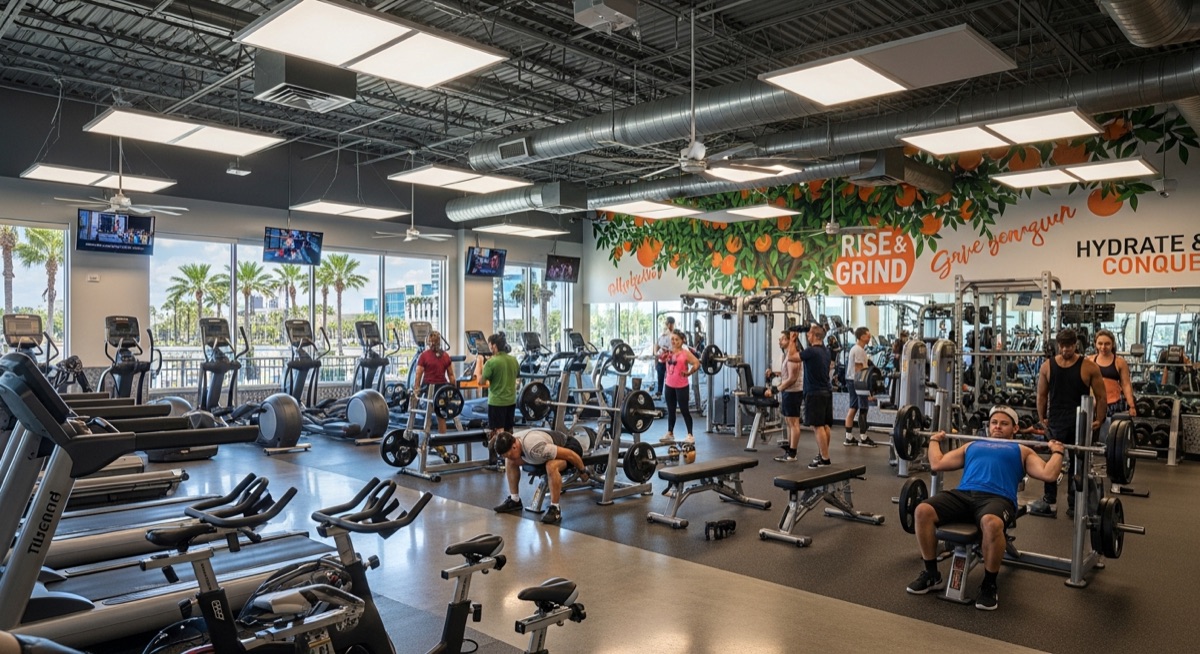
Best Gyms and Fitness Studios in Orlando by Neighborhood
A neighborhood-by-neighborhood breakdown of what things actually cost, which studios earn the premium, where LGBTQ+ residents have real reason to feel welcome, and how to work out for free. Plus the seasonal reality that shapes every fitness decision in this city.
Orlando’s Gym Calendar Runs Backwards
If you moved here from Chicago or Boston, your instincts about fitness seasonality are wrong. In most American cities, gym memberships spike in January and trail off as spring arrives. People migrate outdoors. Orlando’s market does something different.
From June through mid-September, the heat index regularly exceeds 105°F. Afternoon thunderstorms roll in with enough consistency that the outdoor fitness window narrows to early morning on most weekdays — and 6 a.m. alarm clocks have a way of losing out to air conditioning. Indoor gym usage peaks in Orlando’s summer, not winter. Park fitness classes that draw 40 people in February might draw 12 in August, starting earlier and cutting off before the heat becomes dangerous.
Between late October and early March, the population swells with seasonal residents — mostly retirees from the Northeast and Midwest who want short-term access without annual contracts. Chain gyms with month-to-month structures see noticeable upticks. The downtown YMCA has historically used this window for trial membership promotions.
Orlando’s hospitality workforce is the metro’s largest employment base, and a significant share of those workers run shifts — 3–11 p.m., overnight, rotating schedules. For them, a gym that closes at 10 p.m. is useless. Twenty-four-hour access isn’t a luxury feature here. It’s a baseline requirement for a substantial portion of the people keeping this city running — which a lot of gym guides written for this market seem to forget.
All of this shapes what comes below. The question isn’t just which gym is good. It’s which gym works for your schedule, your neighborhood, your budget, and the months when outdoor fitness in Orlando requires real planning.
The Price-Tier Framework
Budget chains run around $10–$35 per month: Planet Fitness, Crunch, LA Fitness. Volume gyms, equipment-heavy floors, minimal programming, lean staffing. LA Fitness is the most full-featured of the three. Planet Fitness is the most stripped-down. The value proposition is simple: access to functional equipment at a price that doesn’t need its own budget line.
Mid-tier full-service gyms — the YMCA of Central Florida and Anytime Fitness — land around $40–$65 monthly. Both offer meaningful steps up from the budget chains. The Y through programming depth and community infrastructure; Anytime Fitness through franchise locations in neighborhoods the big chains haven’t bothered with. Both have childcare or youth programming options that matter to families.
Boutique studios run $100–$200 or more per month, or $20–$40 per drop-in. Orangetheory, Club Pilates, Pure Barre, F45, CycleBar all fall here. This category requires the most scrutiny. The price gap relative to a chain gym is real against Orlando’s median household income — roughly $47,000 to $55,000 depending on whether you’re measuring city proper or metro. A single Orangetheory unlimited membership runs more per month than many residents’ electric bills. In Florida, that’s a real comparison, and in our home & property coverage the numbers behind summer electric bills show exactly why. This guide takes it seriously.
Free and near-free park-based options exist through City of Orlando Parks & Recreation and Orange County Parks. The trail network — West Orange Trail, Cady Way, Little Big Econ Greenway — is extensive and free. These are not consolation prizes. For the right resident in the right season, they’re the correct answer.
Budget Tier: The Chain Gyms, Priced Honestly
Planet Fitness has multiple Orlando-area locations. The Semoran Boulevard and Orange Blossom Trail outposts are the most relevant for shift workers — both run 24 hours. Classic membership is $10/month. The Black Card tier is $25/month and adds tanning and reciprocal access to any Planet Fitness nationally, which matters for hospitality workers who travel. No pools. No group fitness worth mentioning. No children’s area. For a shift worker who wants cardio machines and a weight floor at 2 a.m. for ten dollars, the math is hard to argue with.
LA Fitness has several metro Orlando locations, including the Dr. Phillips/Sand Lake corridor and Ocoee. Standard single-club membership runs approximately $30–$35/month after a one-time initiation fee — though LA Fitness runs periodic promotions that reduce or waive it. That initiation fee is the thing most new members don’t account for when comparing monthly rates, and the gym counts on that. It can run from $50 to several hundred dollars depending on timing and location. What justifies the step up: LA Fitness locations have pools (a genuine differentiator when summer outdoor swimming means fighting crowds in brutal heat), racquetball courts at select locations, group fitness schedules, and — for parents — KidKare childcare. If you have children under 12 and need to work out during daytime hours, the childcare inclusion makes the price difference between LA Fitness and Planet Fitness essentially disappear.
Crunch Fitness has a meaningful footprint in south Orlando and the Kissimmee corridor. That matters because that zone includes significant immigrant and working-class communities underserved by boutique studios. Memberships run roughly $10–$25/month depending on tier, with higher tiers including group fitness. That programming inclusion gives Crunch an edge for social exercisers who don’t want boutique prices.
One thing all three chains share: they cluster along the Dr. Phillips/Sand Lake corridor and in strip-mall commercial zones that require a car. If you live in Thornton Park, Mills 50, or Audubon Park and don’t own one, the cheap monthly rate is only cheap if you can actually get there.
Mid-Tier: Full-Service Gyms That Do More
The YMCA of Central Florida at 433 N. Mills Ave is the most community-embedded gym in the city. For sheer usefulness per dollar — especially for families — nothing else in this guide consistently beats it. Adult membership runs approximately $50–$65/month; verify the current rate directly, since the Y restructured pricing after 2020. Childcare is included during staffed hours. The downtown branch has a pool, a gymnasium, and a full group fitness schedule covering yoga, cycling, and aquatics. Youth programming is extensive: after-school, summer camp, swim lessons. For a family, the YMCA often has the best per-person value in the entire market — and that’s not a close call.
The Y of Central Florida has formally partnered with Come Out With Pride Orlando, maintains an explicit non-discrimination policy covering sexual orientation and gender identity for members and staff, and has hosted LGBTQ+ community programming consistently over multiple years. That track record matters in a city where some gym environments remain unwelcoming in practice regardless of any posted policy.
Gold’s Gym filed for Chapter 11 in 2020 and closed numerous locations nationally. The status of Gold’s locations in the Orlando metro is uncertain. Anyone navigating to a Gold’s address based on older listings should call first — franchise closures from that restructuring were not uniformly reflected in online directories, and some of those listings are still circulating. Several addresses that once housed Gold’s have been taken over by other operators or sit vacant.
Anytime Fitness fills a real niche: 24-hour access in neighborhoods where the big chains don’t exist. Franchise locations operate in several in-town neighborhoods with no Planet Fitness nearby. Monthly rates run approximately $35–$45 depending on the franchise owner, typically with an annual contract. The trade-off versus the Y is programming depth — Anytime Fitness locations are smaller, more equipment-focused, and lighter on classes. But for a neighborhood resident who wants a walkable, any-hour option without needing a pool, it solves the access problem cleanly.
Boutique Studios: Which Ones Earn the Premium
At $150–$200/month you’re making a real discretionary choice. Boutique studios earn it when the programming structure drives consistency that a chain gym floor cannot create, and when the community is something you actually use. If you’ll go three times a week and need group accountability, the per-session math on unlimited boutique access often holds up. If you’ll go twice a month, no studio justifies $160. No exceptions, and no studio will tell you that upfront.
Orangetheory Fitness operates multiple Orlando-area locations including Winter Park. The format: 60-minute heart-rate-monitored interval training, rotating through treadmill, rowing, and weight floor. Monthly tiers currently run approximately $59 for four classes, $99 for eight, and $159 for unlimited — OTF adjusts pricing regionally, so confirm at the specific location before signing. First class is free.
The thing a regular OTF member will tell you a Planet Fitness cannot replicate is the data. Your wearable tracks performance. Post-class summaries show measurable improvement over time. For members who respond to metrics, that’s real — I’ve talked to enough consistent OTF members to believe the retention argument. The Winter Park location draws a consistent roster of corporate fitness groups and competitive types, which shapes the atmosphere in ways some people love and others find a bit much.
Club Pilates operates in Winter Park, Dr. Phillips, and Lake Nona. Monthly memberships run approximately $119–$199 depending on class frequency, with intro offers common — verify current deals directly. Club Pilates works well for post-rehab clients, older adults, and anyone building foundational strength. A certified reformer class requires real instruction that a chain gym floor cannot provide. The Lake Nona location, close to the USTA National Campus, attracts a notably athletic clientele. Winter Park draws a more mixed demographic. Both locations maintain instructor consistency that actually matters when you’re working on specific movement patterns.
Pure Barre operates in Winter Park and other metro locations. Monthly unlimited runs approximately $150–$200; intro offers typically run around $99 for the first month — verify current promotions directly. The barre method is specific enough that its devotees genuinely cannot replicate it with a YouTube video and a Planet Fitness membership. That specificity is both the value argument and the limitation. If you’re not committed to the format, it’s an expensive experiment. The Winter Park studio runs a morning-heavy class schedule that fits the neighborhood’s professional population.
F45 Training runs high-intensity functional interval classes in a group circuit format, with Orlando-area locations including Lake Nona. Monthly rates run approximately $180–$220; most locations offer a one-week free trial. F45’s programming changes daily, which solves the boredom problem that kills chain gym consistency for a certain kind of person. The community aspect is deliberately cultivated — coaches know members by name, and the class format makes it structurally hard to be anonymous. Whether you find that accountability appealing or mildly claustrophobic tells you most of what you need to know about whether F45 is right for you. The retention rate among members who click with the environment is notably high.
CycleBar in the Winter Park/Orlando area offers premium indoor cycling with production-level lighting and sound. Monthly unlimited runs approximately $130–$180. First class is free. The honest case for CycleBar over a Peloton at home is the social accountability of a scheduled class with a live instructor in a room full of people. That’s real for some riders and irrelevant for others — no shame in admitting you’re someone who works harder when strangers are watching. The Winter Park location runs themed rides (80s nights, hip-hop classes) that build a social culture beyond the mechanics of stationary cycling.
Winter Park’s Park Avenue corridor is the highest-density boutique fitness zone in the metro. Within roughly a half-mile you can reach Club Pilates, Pure Barre, Orangetheory, and several independent studios — which is useful if you haven’t settled on a format yet and want to try several without driving across the city. Lake Nona’s boutique cluster is newer, tied partly to the USTA campus culture, and still building out. Options there are growing but not yet at Park Avenue density.
LGBTQ+-Welcoming Gyms and Studios: Named Spaces With Proof Points
A rainbow sticker in the window is not the standard here. Affirming, for purposes of this guide, means at least one of the following: documented partnerships with Orlando LGBTQ+ organizations, explicit non-discrimination policy publicly stated, or a track record of hosting community events. Vague goodwill doesn’t clear the bar.
The YMCA of Central Florida at 433 N. Mills Ave is the most documented case. The Y has formally partnered with Come Out With Pride Orlando, maintains an explicit non-discrimination policy covering sexual orientation and gender identity for members and staff, and has incorporated LGBTQ+-inclusive youth and family programming for multiple years running. This is institutional commitment, not a Pride Month gesture.
The Mills 50/Milk District corridor anchors Orlando’s primary independent fitness culture welcoming to LGBTQ+ residents. Several independent yoga studios and personal training operations in this zone have built client bases substantially within the LGBTQ+ community and have participated in or sponsored Stonewall Sports Orlando events. Stonewall Sports organizes LGBTQ+ recreational sports leagues across the metro. Their league coordinators can point prospective members toward specific studios and trainers with active community investment — and that information is more current than any static guide can be. If you want to know where to actually go right now, ask Stonewall Sports directly. They’re active on social media and responsive to direct inquiry.
Independent yoga studios along Corrine Drive and through the Audubon Park neighborhood deserve specific mention. The independent studio culture here skews more welcoming than the corporate boutique franchises, and several studios have hosted LGBTQ+-themed classes or community fundraisers. Names and current programming should be verified directly — independent studio ownership turns over, and a guide that’s six months old may point you to the wrong person. But the corridor has a documented track record of community engagement that the Corrine Drive regulars will confirm if you ask.
The large corporate boutique chains — Orangetheory, CycleBar, F45 — maintain generally inclusive written policies, but none has documented organizational investment in Orlando’s LGBTQ+ community the way the YMCA has. Reported member experience at all three is generally positive. But a policy statement and a decade of partnership are not the same thing, and if community visibility matters to you as a member, that distinction is worth naming plainly rather than papering over.
Free and Low-Cost Outdoor Fitness: What Orlando Parks & Rec Actually Provides
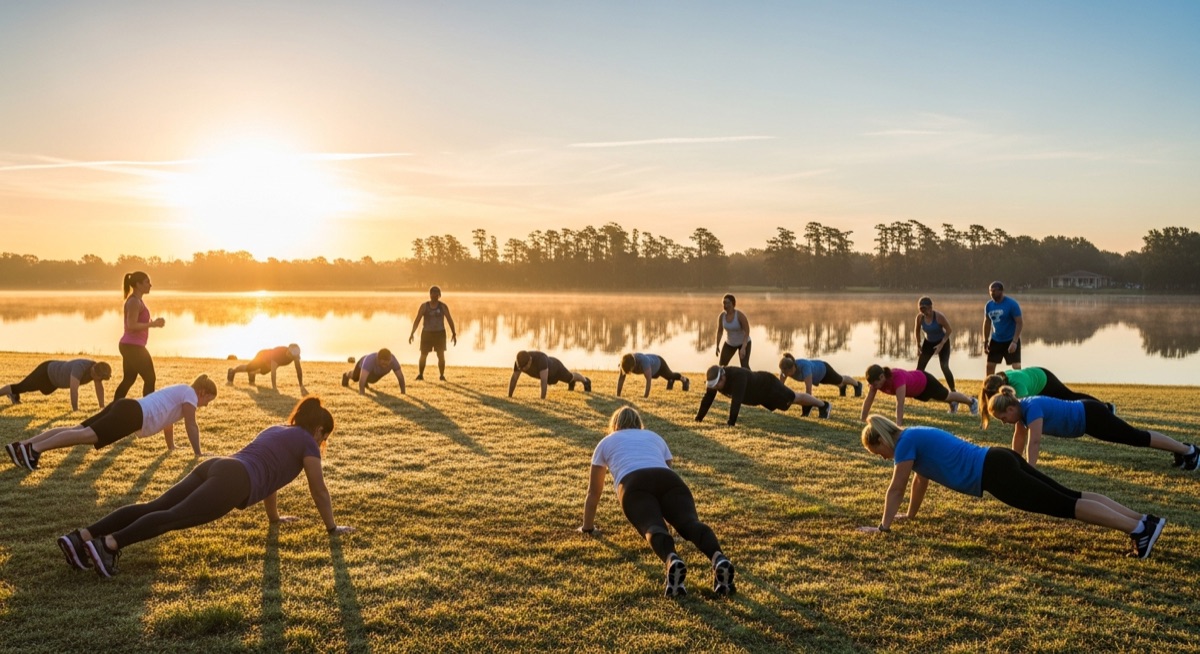
The City of Orlando’s Parks, Recreation & Neighborhood Affairs department runs a Fitness in the Park program that’s free and functional — not a twice-a-year promotional event. Classes have historically been held at Lake Eola Park and at several neighborhood locations, covering yoga, Zumba, boot camp formats, and circuit training. The 2025 schedule is at orlando.gov or directly through the Parks & Recreation office at (407) 246-2283. Summer classes start earlier — typically 7 or 7:30 a.m. rather than the later slots common in winter. The Lake Eola location typically runs year-round; some neighborhood park classes are seasonal.
Orange County Parks runs a separate program. The two agencies are distinct with distinct offerings — a point of genuine confusion for residents who assume “Orlando” and “Orange County” are one system. They’re not. Orange County Parks programming is at ocfl.net and includes fitness classes at Bill Frederick Park, Barnett Park, and other county facilities. Some locations offer aquatics classes or walking groups the City doesn’t duplicate.
The trail network is free and extensive. West Orange Trail runs 22 miles from Apopka to Clermont — paved, well-maintained, one of the better-constructed multi-use trails in Florida. Cady Way connects Winter Park to east Orlando along roughly 6 miles, making it realistic for residents in College Park, Baldwin Park, and Winter Park to run or bike without a car. Little Big Econ Greenway sits east of the metro and is the go-to for trail runners who want natural surface, shade, and technical terrain. It requires a car, but it’s worth the drive once you’ve exhausted the paved options. Gated trailhead hours typically close at dusk — 9 p.m. in summer, earlier in winter.
Here is the seasonal reality, stated without softening: from approximately June 1 through mid-September, outdoor fitness in Orlando requires real planning. The heat index regularly exceeds 105°F. Afternoon lightning storms are the default, not the exception. Dehydration and heat illness are not theoretical risks — local emergency rooms see the cases every summer. Free outdoor fitness is achievable, but the optimal window is early morning, and the optimal months are November through March. A resident who builds their entire fitness plan around outdoor activity without an indoor backup will find the plan fails for four to five months of the year. The Orange County Health Department publishes heat advisory guidelines worth reading if you’re serious about summer training. The city does not negotiate with its summers.
Neighborhood Access: Where You Can Walk to a Gym
Thornton Park and the downtown core have the highest walkable gym density in the city. The YMCA at 433 N. Mills Ave is reachable on foot from Eola Heights apartment buildings and most of the Thornton Park residential grid. Several independent yoga and fitness studios operate within walkable range. Lake Eola’s fitness loop and Fitness in the Park programming are genuinely within walking distance. If you live in this zone without a car, you’re better positioned than most Orlando residents.
Mills 50 and Milk District offer strong walkable access for the independent studio culture that concentrates here. The Mills Avenue corridor supports foot traffic without a car. LGBTQ+ fitness culture, as noted above, anchors here. The neighborhood’s street grid is more pedestrian-functional than most of the metro.
College Park/Edgewater Drive and Audubon Park/Corrine Drive both have independent studio presences within walkable or bikeable distance of the surrounding residential areas. Anytime Fitness has a franchise footprint in the broader in-town zone. These aren’t maximum-density walkable areas, but a resident without a car can reach fitness options on foot, which puts them ahead of most of the metro.
Winter Park’s Park Avenue area is Central Florida’s most functional walkable boutique fitness zone. Studios cluster along and near Park Avenue, walkable from the surrounding residential grid — particularly the streets north and south of the commercial strip. For residents in Winter Park Village apartments and around Lakemont and Morse, gym access without a car is realistic. The concentration also means you can try multiple formats without a car trip, which is useful when you’re still figuring out what you actually like.
Dr. Phillips and Sand Lake Road is the primary chain gym zone. LA Fitness, Planet Fitness, and several boutique franchises cluster in strip centers along Sand Lake and near Restaurant Row. Inaccessible without a car, full stop.
MetroWest and Windermere are primarily suburban. CrossFit boxes and chain gyms serve this corridor, all requiring a car. The options are adequate. The walkability is not.
Lake Nona has a legitimate Town Center component, but most residents still drive to the gym. The newer boutique cluster tied to USTA campus culture is real, and the area will likely develop further. The pedestrian access picture remains incomplete as of 2025.
How to Choose: A Decision Framework by Situation
The hospitality shift worker needing 24-hour access at minimal cost should go to Planet Fitness at Semoran or Orange Blossom Trail. Ten dollars a month, 24-hour access, no annual contract required. The Black Card at $25 adds guest access, worth it if a partner uses it regularly. Don’t pay more than this unless your schedule moves to normal daytime hours — at which point LA Fitness’s pool and group fitness schedule becomes worth the extra cost.
The budget-conscious resident who wants more than a chain has the YMCA at 433 N. Mills Ave as the correct answer, particularly for families. Household membership rates include childcare and children’s programming, making it exceptional value. Anyone who wants group fitness without boutique prices will find the programming depth substantially better than chain gyms offer. If the Mills Ave location is geographically inconvenient, Anytime Fitness in the nearest in-town neighborhood gives 24-hour access in a smaller footprint for $35–$45/month.
The LGBTQ+ resident wanting community-vetted options should start with the YMCA at Mills Ave for the most documented institutional commitment. For boutique and independent options, contact Stonewall Sports Orlando directly. Their network has current knowledge of which trainers and studios have active community investment — information that is more reliable and more current than this guide. The Corrine Drive/Audubon Park and Mills 50 corridors are the right geographic anchors for independent studio culture. Most studios in these zones have recent community engagement you can verify by simply asking.
The outdoor fitness enthusiast should build a primary plan around the November–March window. City of Orlando Fitness in the Park at Lake Eola is the right entry point — verify the current schedule at orlando.gov before going, don’t just show up. West Orange Trail for endurance work. Cady Way for accessible urban running. From June through September: accept that you need an indoor option, choose the cheapest one with 24-hour summer access, and plan outdoor workouts for before 8 a.m. or skip them until fall. The city does not negotiate with its summers.
Prices and schedules verified as of early 2025. Chain gym initiation fees and boutique intro offers change frequently — call or visit before budgeting. YMCA of Central Florida downtown: 433 N. Mills Ave. City of Orlando Parks & Recreation: (407) 246-2283. Orange County Parks programming: ocfl.net. Stonewall Sports Orlando is reachable via social media for current LGBTQ+ sports and fitness community referrals.