Where to Find Sober Bars and Alcohol Free Nightlife in Orlando
The sober-curious movement has reshaped nightlife in New York and Austin. Central Florida's version looks different, and the question of who it serves is overdue for a reported answer.

Where to Find Sober Bars and Alcohol Free Nightlife in Orlando
The sober-curious movement has reshaped nightlife in New York and Austin. Central Florida’s version looks different, and the question of who it serves is overdue for a reported answer.
If you moved to Orlando looking for a dedicated alcohol-free bar—a place designed around socializing without drinking, not just one that tolerates it—you haven’t found it yet. It doesn’t exist.
That’s the honest answer, and it marks a real gap. The sober bar concept moved past trend status in other American cities years ago. In Central Florida, alcohol-free nightlife infrastructure remains scattered, largely accidental, and genuinely hard to find. Several local entrepreneurs and community organizers are visibly circling the question. This is a good moment to map what actually exists, what’s missing, and why.
What “Sober Bar” Actually Means—and Why the Distinction Matters
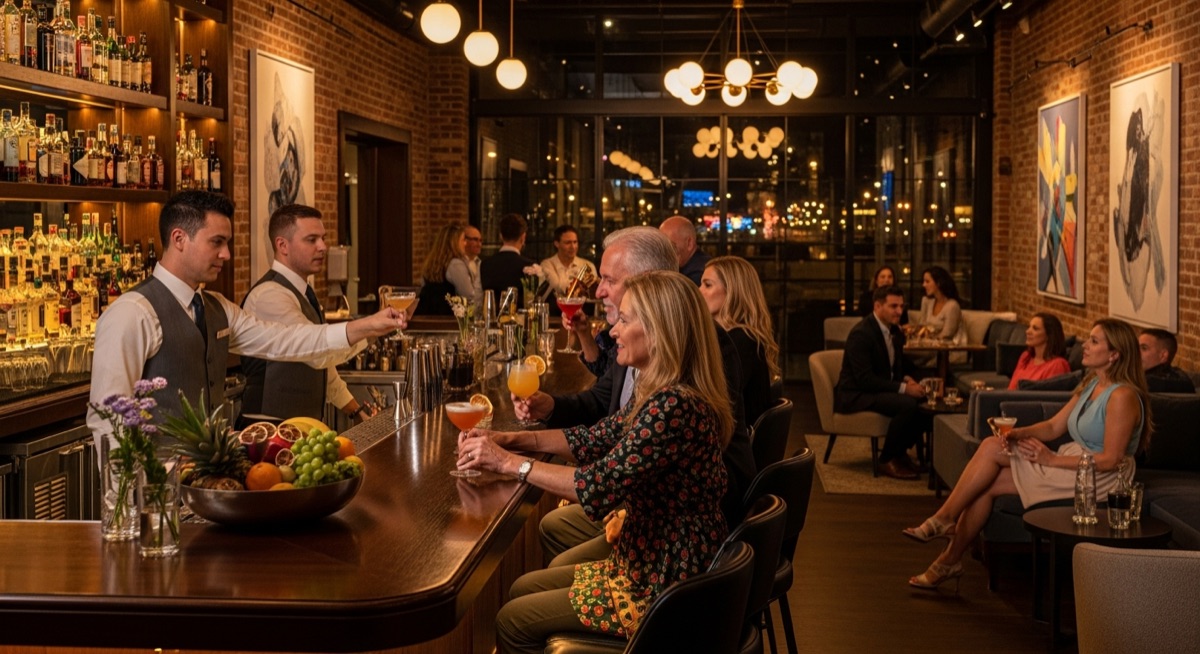
A dedicated dry venue is not a restaurant that prints a mocktail section at the bottom of the cocktail menu. It’s not a coffee shop that stays open until 9 p.m. A genuine sober bar runs on bar logic: evening hours, bar-format service, a drink menu built to be interesting and worth $14, and a social atmosphere oriented toward staying rather than eating and leaving. No alcohol on premises.
Orlando has plenty of secondary options. Restaurants with competent mocktail programs. Coffee shops with community followings. Wellness studios that host the occasional social hour. What the city almost entirely lacks is the first category—and that distinction matters practically. If you show up to a restaurant expecting a dry-bar experience and find a Shirley Temple listed as an afterthought next to the mule variations, you have not found what you were looking for. The scene here is real. It just requires knowing what you’re actually hunting for.
The Closest Thing Orlando Has: Coffee Shops as Accidental Social Infrastructure
The venue doing the most work as an unofficial sober social anchor in Orlando is Foxtail Coffee. It’s worth examining why—and what that reveals about the gap.
Foxtail launched in College Park and has grown into one of the more serious specialty coffee brands in Florida, with multiple locations across the metro. The College Park flagship on Edgewater Drive has the physical character of a community gathering place: a real room, thoughtful design, regulars who treat it as a third space. That community would likely support an alcohol-free social calendar if one existed.
What Foxtail hasn’t done—as of this reporting—is formalize an evening social calendar explicitly built for sober or sober-curious residents. (CityDesk has reached out to Foxtail’s marketing and events contacts; check directly before planning around any specific programming.) A coffee shop that closes in the early evening and hosts the occasional community event is doing something useful. It is not built for the Friday-night social need that a dry bar fills. There’s a difference, and it’s felt at 10 p.m. on a Friday when you have nowhere to go.
Two other venues deserve mention. Lineage Coffee in Mills 50 draws the kind of neighborhood regulars who’d show up to an alcohol-free social calendar without needing much convincing—the area’s density of independent businesses creates foot traffic that a dry concept would need. Stardust Video and Coffee on North Mills Avenue in Colonialtown is perhaps the most explicitly counterculture of the three: part coffee shop, part video rental archive, part neighborhood living room. It’s a genuinely strange and good place that has historically been where unconventional community organizing gets seeded. It feels like it shouldn’t still exist in 2024, and you’re glad it does.
None of these are sober bars by design. All function as sober-social infrastructure by default—which is exactly the quiet gap that tends to precede someone opening a dedicated venue.
The Events Layer: Where the Community Actually Gathers
The more active layer of Orlando’s sober-curious scene is event-based, not venue-based. You have to dig to find it.
Yoga studios in the Audubon Park neighborhood and downtown-adjacent areas—including Ember Yoga in Audubon Park—periodically host social hours that are alcohol-free by context if not by explicit policy. These aren’t billed as sober events. They’re community gatherings that happen not to involve drinking. For many people, that’s the meaningful distinction: sober-curious but not interested in a recovery-coded social identity. Those are two very different things, and collapsing them does a disservice to both communities. This distinction is one reason our health & wellness coverage has been tracking the sober-curious movement separately from recovery-focused programming.
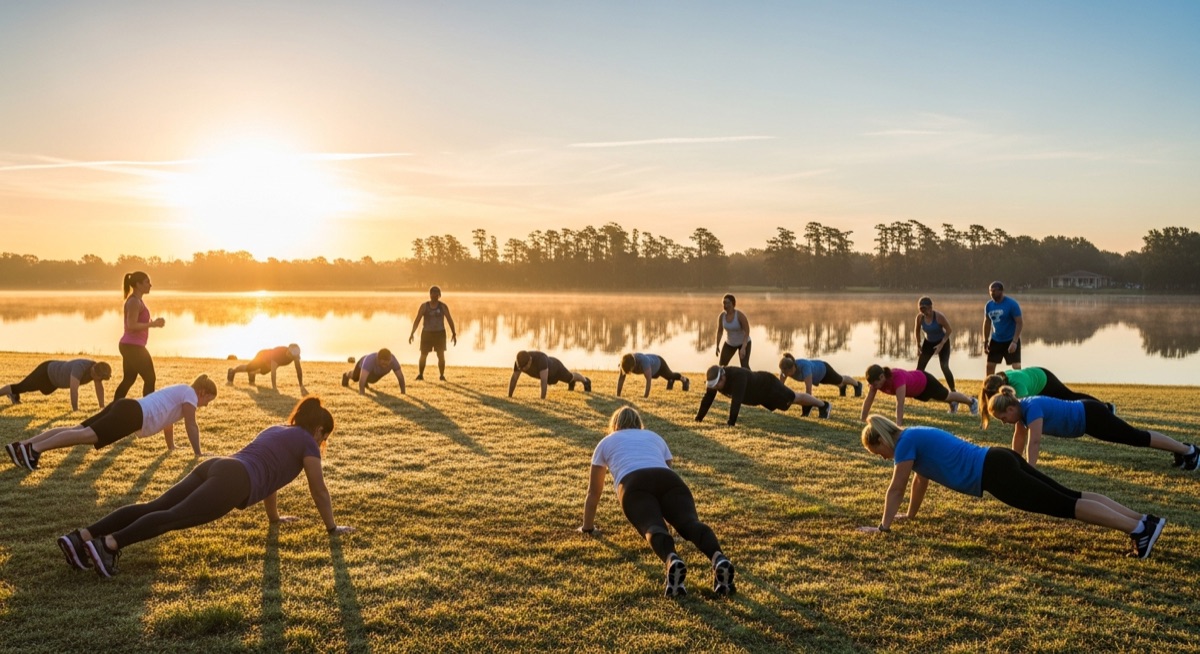
The running community has built some of the most active alcohol-free social infrastructure in the city, and it barely bills itself as such. Track Shack, the Winter Park running institution, anchors a community with genuine social breadth—group runs, training programs, events that put large numbers of people together without alcohol as the organizing principle. November Project Orlando, the free outdoor fitness network, has had a local presence with morning workouts that build social community as deliberately as they build fitness. Nobody’s making a statement about sobriety. They’re going for a run and then having coffee with people they like. That turns out to be exactly what a lot of sober-curious residents say they’re looking for.
Searches on Meetup and Facebook under “Orlando Sober Social,” “Sober Curious Orlando,” and “Alcohol Free Orlando” surface several active and semi-active groups. (Verify current activity before attending—group momentum in this space tends to be event-dependent.) The Instagram hashtags #SoberOrlando and #SoberCuriousOrlando are low-volume but active. The community following those accounts is genuinely looking for connection, not broadcasting into a void.
Dry January and Sober October have both sparked short-term event series locally, some of which recurred or left behind active group infrastructure. Whether those series have stabilized into something with a predictable calendar is worth checking directly—which is also, incidentally, the whole argument for opening a dedicated venue. Somewhere to put all of that.
The Queer Nightlife Gap
This question deserves its own space rather than a footnote.
Queer social life in Orlando—as in most American cities—has been organized historically around bars. The clubs in the downtown core and Milk District carry a structural role in queer community life that goes well beyond drinking. For a sober or sober-curious LGBTQ+ resident, this creates a particular kind of exclusion: not just the absence of a venue, but the absence of community in a community that already knows what exclusion from mainstream social infrastructure feels like. It compounds. That’s worth naming directly.
Queer sober communities in other cities have built their own social infrastructure precisely because they couldn’t wait for institutional recognition—brunch clubs, dry dance nights, online spaces that convert to in-person meetups. The Instagram infrastructure for queer sobriety in Orlando is nascent but present. What it lacks is a physical home.
A named local voice on this question would complete the story. If you’re a sober or sober-curious LGBTQ+ Orlandoan willing to speak on record—about navigating a nightlife scene built around bars, or about what you’ve built in its absence—contact CityDesk at the address below.
Why Hasn’t a Dedicated Dry Bar Opened Here?
The economics are genuinely hard, and Orlando’s particular market makes them harder.
Commercial real estate in the neighborhoods most likely to support a dry bar—Mills 50, Audubon Park, the Milk District, Winter Park’s Park Avenue corridor—has appreciated significantly over the past decade. A viable NA beverage program requires drink prices around $14–$16 to cover overhead that a traditional bar absorbs with alcohol margin. That math works in Manhattan or on South Congress in Austin, where those prices are normalized and customers accept the tab. In Orlando, where the tourism economy has shaped consumer expectations toward volume and value, it’s a harder conversation. I don’t think it’s an impossible one—but it’s harder.
The tourism-driven alcohol economy also shapes what landlords expect from food-and-beverage tenants. A bar space on the Orange Avenue corridor or in ICON Park is underwritten by the assumption that alcohol revenue is part of the model. A dry venue asking for the same real estate is asking a landlord to bet on a concept with no local proof of concept. In a market with other bidders, that’s a difficult pitch even with national precedent behind it.
There’s also a geographic mismatch. The sober-curious demographic in Orlando tends to concentrate in wellness-oriented residential neighborhoods—Audubon Park, College Park, Thornton Park, parts of Winter Park—which are not, by and large, where bar real estate clusters. Bridging that gap requires either a dry venue willing to open in a residential neighborhood without entertainment-district foot traffic, or a community large enough to generate destination traffic on its own.
The bartender-side view matters here. The Courtesy on Orange Avenue and Pharmacy on Robinson operate at the high end of local cocktail culture; their staff track customer behavior closely and would offer a realistic read on where NA demand currently sits. (CityDesk is pursuing those conversations; this coverage will be updated.) None of the constraints above are permanent. They describe the current gap. They’re not a verdict on whether it closes.
What the National Trend Actually Looks Like
Listen Bar in New York and Sans Bar in Austin have both demonstrated that the revenue model for a dedicated dry bar is viable. These aren’t obscure boutique experiments—they’ve been covered extensively and have become the reference points that entrepreneurs elsewhere use when they’re trying to convince a landlord this is a real business.
What made those markets work matters more than the fact that they worked. Both cities have density, normalized premium drink pricing, and a critical mass of sober-curious residents with enough disposable income to pay $14 for a zero-proof cocktail on a regular basis. Austin in particular shares demographic characteristics with Orlando’s growth neighborhoods—young professional transplants, a wellness-culture presence, a history of festival and outdoor social life. That comparison isn’t a stretch. It’s actually the most honest argument for why this could work here.
Florida’s regulatory environment is, if anything, friendlier to a dry venue than most states. Operating a bar-format space without a liquor license is legally simpler than operating one with it. Orange County occupancy and business licensing requirements apply to all venues regardless of whether alcohol is served, but the licensing burden drops substantially without it. A first-time operator with a strong NA program and a community following would face fewer regulatory obstacles here than in most jurisdictions. (Verify current Orange County occupancy and business licensing requirements with the county directly before acting on this for any business planning purpose.)
One thing that doesn’t get discussed enough: the climate. Orlando’s outdoor event window runs reliably from March through May and October through November. Summer doesn’t compress outdoor programming—it essentially eliminates it. Highs routinely above 90°F and heat index above 100°F from June through September make outdoor community events brutal in a way that the phrase “warm months” does not capture. Any operator thinking about outdoor programming as part of the model needs to plan around that honestly. January is climatically optimal and aligns with Dry January’s cultural moment, which suggests that any serious effort to launch recurring dry-social programming should start there. A pop-up or event series in January, if it built enough community, would have a real shot at carrying through the spring window and into the following year.
What Sober-Curious Orlandoans Are Actually Doing Right Now
People navigating Orlando’s social scene without alcohol are largely working around the gap. They meet friends at coffee shops during hours that would otherwise be bar hours, attend fitness-community events that double as social infrastructure, participate in online groups that meet irregularly in person. One person in the sober-curious community described her Friday nights as “dinner at a restaurant, then home”—not because she didn’t want to go out, but because there wasn’t a functional place to go that felt like nightlife rather than dining. For a city of 300,000 people, that’s a pretty bleak picture.
People are looking for a Friday-night option that isn’t a restaurant dinner or a recovery meeting—something with the texture of nightlife, just without the alcohol. The community exists. It’s not organized around a single venue or event series, which means it’s harder to find and easier to miss. People are building it through distributed organizing: group chats, mutual follows, word-of-mouth about which coffee shops are genuinely welcoming versus technically open.
If you’re part of Orlando’s sober-curious community and willing to speak on record—where you go, what you’ve built, what you wish existed—contact CityDesk Orlando. This coverage is ongoing.
A Practical Guide to Orlando’s Sober-Social Options Right Now
This is what’s verifiable as of publication. Check directly before planning around any of it.
Foxtail Coffee, College Park (Edgewater Drive—verify current hours): Community-oriented specialty coffee shop with regulars who treat it as a genuine third space. Check their Instagram (@foxtailcoffee) for any current event programming.
Lineage Coffee, Mills 50 (verify current hours and location): Neighborhood specialty coffee with the kind of following that would organically support alcohol-free programming. Not a sober venue by design; functions as one by default.
Stardust Video and Coffee, North Mills Avenue, Colonialtown (verify current hours): A coffee shop and video rental archive that creates a genuinely unusual social atmosphere. Consistent late hours by local coffee-shop standards. Check directly—hours change.
Track Shack, Winter Park: Running institution with group runs and social events that reliably draw people into organized community time without alcohol as the premise. Check trackshack.com for the current event calendar. Their community extends well beyond running.
November Project Orlando: Free outdoor morning workouts with deliberate community emphasis. Search “November Project Orlando” on Instagram for current status and schedule.
Ember Yoga, Audubon Park (verify current location and programming): Periodic community social events that are alcohol-free by context. Check directly for any current evening programming—their calendar changes seasonally.
Online community: Search “Sober Curious Orlando” and “Orlando Sober Social” on Meetup and Facebook. Activity varies significantly; verify before attending. Instagram hashtags #SoberOrlando and #SoberCuriousOrlando surface active accounts worth following, though volume is low.
A dedicated dry bar hasn’t opened in Orlando yet. It should. The community pressure is visible, the national precedent is real, the regulatory environment isn’t the obstacle, and the demographic that would use it is already here—just scattered across coffee shops and group runs and Friday nights that end earlier than they should. What’s missing is one operator willing to make the bet and one landlord willing to take it with them. That gap won’t close on its own, but it’s closer to closing than the current absence suggests.
CityDesk will update this coverage as the picture develops.
Have information about sober-social events or community organizing in Central Florida? Contact the newsroom.