Florida Property Insurance Rate Increases and What They Mean for You
The legislature rewrote the rules. Citizens is shrinking its rolls. And the zip code you live in determines how hard you're getting hit. A consumer action guide for Orange County homeowners.

Florida Property Insurance Rate Increases and What They Mean for You
The legislature rewrote the rules. Citizens is shrinking its rolls. And the zip code you live in determines how hard you’re getting hit. A consumer action guide for Orange County homeowners.
What You’re Actually Facing Right Now
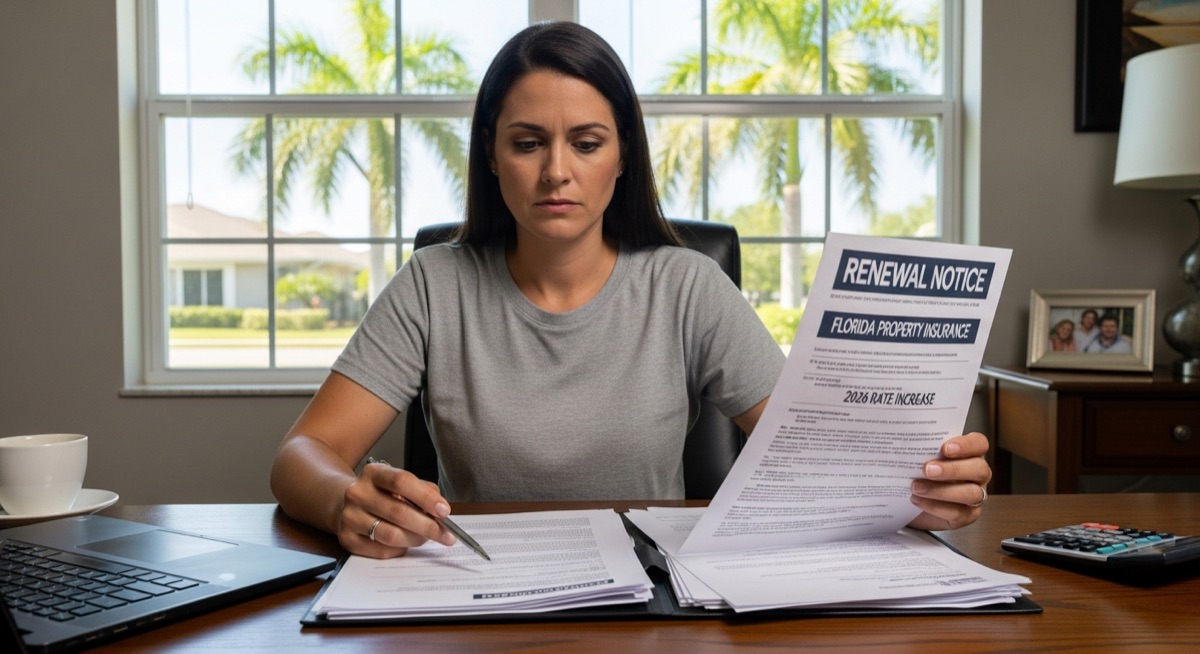
If your homeowners insurance renewal notice arrived this spring and the premium looked nothing like what you expected, you’re not misreading it. Citizens Property Insurance — Florida’s state-backed insurer of last resort — received approval for a roughly 14% statewide rate increase for 2024, and those increases are now embedded in 2025 and 2026 renewal math. Private carriers that survived the market consolidation of 2021–2023 have filed their own increases, and premiums haven’t normalized the way legislators promised when they passed back-to-back special sessions.
A homeowner in Conway or Dr. Phillips staring at a $6,000 annual bill needs to know which specific statutory changes are driving your 2026 renewal, which Orange County ZIP codes are being hit hardest, and which mitigation steps produce a measurable return before June 1, when hurricane season opens and your ability to shop, bind new coverage, or schedule inspections shrinks sharply.
This article is organized as a consumer action guide. It explains what the legislation changed in plain language, maps the local rate picture by ZIP code, walks through the Citizens depopulation mechanics that could eliminate your coverage options, and identifies the two or three things worth doing this month — not eventually.
What the Legislation Actually Changed: SB 2A, SB 2D, and What’s Still Working Through the System
Florida’s property insurance crisis produced significant legislative interventions in a compressed window. Understanding them in sequence explains why your 2026 premium looks the way it does.
SB 2A (December 2022 Special Session) was the most consequential. It eliminated Assignment of Benefits for property insurance — the contractual mechanism by which a homeowner could sign over their insurance claim to a contractor, who would then sue the carrier directly. It also ended one-way attorney fees in property insurance litigation, meaning plaintiffs’ attorneys could no longer automatically recover fees when they prevailed against a carrier. Both provisions targeted what carriers identified as a primary driver of Florida’s inflated claims litigation rate. Remove the financial incentive for manufactured claims and inflated repair invoices, the thinking went, and carriers would stop pricing for catastrophic litigation exposure.
The catch — and it’s a significant one — is that claims filed before SB 2A took effect were still in the litigation pipeline. They’re working through it slowly. Carriers didn’t instantly reset their pricing assumptions. Instead, they filed for rate increases to cover existing exposure while waiting to see whether the reform-driven claim pattern actually improved. That lag is why homeowners are paying 2022 crisis pricing in 2025, even as the underlying litigation incentives have shifted. The reforms worked; the savings just haven’t arrived yet. Whether they actually will is the central question of the next 12 months.
SB 2D (2023) refined the rules around claims handling timelines and added provisions strengthening the reinsurance assistance program. Carriers’ ability to purchase reinsurance — coverage for catastrophic losses — directly determines what they charge policyholders. Reinsurance costs spiked in 2022 and 2023 globally, partly because of Florida’s litigation climate and partly because of hurricane and severe weather losses across the country. SB 2D provided some structural relief, but it didn’t eliminate the underlying cost pressure that reinsurance markets were pricing in.
The 2025 Legislative Session ran through May 2025. CityDesk Orlando will update this piece with confirmed bill numbers and effective dates as those filings are verified through the Florida Legislature’s online record.
One provision that hasn’t gotten enough consumer attention involves the claims filing deadline under Florida Statute 627.70132. SB 2A’s reforms significantly reduced the window homeowners have to file post-loss claims. During hurricane season, if you discover wind damage after a storm and don’t report it promptly while dealing with cleanup and power restoration, you may be cutting off your own claim. Write the date of any storm-related discovery on paper immediately and contact your carrier in writing within days, not weeks. This is basic insurance hygiene — worth practicing before you ever need it.
The Reform Timeline: When It Hits Your Premium
| Reform | Passed | Effective | Actuarial Lag | Premium Impact Window |
|---|---|---|---|---|
| SB 2A — AOB elimination, attorney fees | Dec. 2022 | Jan. 2023 | 18–24 months | 2025–2026 renewals |
| SB 2D — reinsurance backstop, claims rules | May 2023 | Phased | 12–18 months | 2025 renewals |
| 2025 Session adjustments | May 2025 | TBD | 12–24 months | 2026–2027 renewals |
The reforms are working through the system, but you’re paying 2022–2023 crisis pricing while the insurance industry waits to see whether litigation claims actually decline before adjusting rates downward. Some carriers have begun filing modest rate decreases. Most haven’t. The current window — second half of 2025 — is when we’ll find out whether the AOB reforms actually produce the premium relief that their architects promised. I’ll be honest: I don’t know how that resolves. The structural incentives have changed, but carriers aren’t rushing to give money back, and reinsurance markets don’t move on goodwill.
The ZIP Code Map: Which Orange County Neighborhoods Are Taking the Hardest Hits
Statewide averages obscure what is fundamentally a hyper-local problem. A homeowner in a newer CBS construction neighborhood near Lake Nona is in a structurally different risk category than someone in a 1960s wood-frame bungalow in Pine Castle, even if they’re paying similar premiums today. The following ZIP-level picture is drawn from Citizens Property Insurance rate filing data submitted to the Florida Office of Insurance Regulation (FLOIR). Orange County homeowners should treat this as orientation, not a quote — your actual rate depends on construction type, roof age, shape, and coverage limits, all of which vary block by block.
32806 — Conway. This corridor south of the Beachline along Hoffner and Curry Ford includes a dense mix of 1950s through 1970s CBS ranch homes, many of which are now within the roof age threshold range that triggers Citizens inspection requirements. Conway’s proximity to several small lakes adds modest flood risk. Flood insurance is a separate policy, but the correlation between flood-zone designation and insurance complexity tends to concentrate higher-risk homeowners in this ZIP. Citizens policy concentration here exceeds the Orange County average. Homeowners with gable roofs — common on the block-and-stucco ranches that define the neighborhood — are leaving real money on the table if they haven’t had a wind mitigation inspection. A gable roof on a 50-year-old CBS home could easily carry $200 to $400 in unnecessary premium per year, simply because the inspection report doesn’t exist to document the actual roof-to-wall connection method.
32809 — Oak Ridge. Compressed between the Florida Turnpike and Orange Blossom Trail, Oak Ridge has some of the oldest average housing stock in the county. The combination of older roofs, older electrical systems, and a higher proportion of renters-to-owners complicates the insurance market here. Homeowners who purchased in the last three to five years may have inherited an insurance situation that needs immediate attention. Roof age documentation is critical. If you bought in Oak Ridge between 2020 and 2024, pull the permit records for your roof immediately. A surprising number of homeowners discover at renewal that their roof is older than they believed when they bought the house — sometimes years older.
32819 — Dr. Phillips. At the other end of the value spectrum, Dr. Phillips creates a different problem: high dwelling replacement values on custom or semi-custom homes that were last appraised for insurance purposes several years ago. Central Florida construction costs have risen significantly in recent years. A home whose dwelling coverage limit hasn’t been updated since before the pandemic may be meaningfully underinsured — and that’s a problem that only reveals itself after a catastrophic claim, which is the worst possible time to discover it. Private carrier concentration is higher here, but renewal increases have still been meaningful. The affluent ZIP codes of Orange County are also seeing some of the most aggressive takeout activity from private carriers, which is why Dr. Phillips homeowners with Citizens policies are likely to receive depopulation letters before their next renewal.
32789 — Winter Park. Winter Park presents the metal-roof financial calculation more clearly than almost anywhere in Orlando. The city’s older neighborhoods — along Palmer, Genius Drive, and the Park Avenue corridor — include a mix of 1940s through 1970s homes where original roofs have long been replaced. Metal re-roofing, while expensive at $20,000 to $30,000 for a typical 2,000-square-foot Orlando home, extends Citizens eligibility by decades and generates wind mitigation credits. It’s become a genuine financial instrument in this ZIP, not simply an aesthetic choice for homeowners planning to stay. Several Winter Park homeowners have run the calculation and decided that a $25,000 metal roof paying dividends in insurance credits over 15 to 20 years is mathematically rational, even before accounting for the roof’s inherent durability advantages. That used to be a niche argument. At current premium levels, it isn’t.
32825 — Union Park / East Orange County. Predominantly 1980s and 1990s tract construction with asphalt shingle roofs, many of which are now 20 to 30 years old. This ZIP is at the inflection point. Roofs installed in the 1990s are approaching or at the Citizens thresholds. Homeowners here who haven’t checked their roof’s permit date on the Orange County Property Appraiser’s website should do that today — it’s a free lookup that takes about two minutes and tells you exactly where you stand. If your roof was installed in 1995 and it’s now 2025, you have a limited runway before you hit the hard Citizens age threshold. Understanding that timeline is the whole point of checking today rather than waiting for the renewal notice.
32801 / 32803 — Downtown / Colonialtown. Condo and multi-unit ownership complicates the insurance picture here. Many Colonialtown bungalow owners navigating the private market after Citizens depopulation have found limited carrier appetite for older single-family homes on small lots without recent wind mitigation documentation. Downtown condo owners face a separate issue: association master policies are being repriced at renewal, and the share of that cost passed through to owners via assessments has increased materially since 2022. A Colonialtown homeowner with a 1970s bungalow and a Citizens policy is significantly more vulnerable to depopulation pressure than a similar homeowner in a neighborhood like Azalea Park, simply because private carriers have different appetite for different geographic markets and lot configurations. That feels arbitrary, because it largely is.
Note: ZIP-code-level Citizens rate filings are public records available through FLOIR’s rate filing database. CityDesk Orlando reviewed available Orange County filings in preparing this piece; readers can access the raw filings directly at floir.com under “Rate Filings.”
Citizens Depopulation: What to Do If You Get a Takeout Letter
Citizens has been executing an aggressive depopulation strategy under direction from the legislature and the Governor’s office, with the goal of reducing the number of Floridians on the state-backed plan. That reduces a contingent liability for every Florida taxpayer in a major storm year — which is a legitimate policy goal, even if the timing feels terrible for individual homeowners. The mechanism is the “takeout” program: private carriers identify Citizens policyholders they want to cover and make offers.
The 20% rule and what it actually obligates you to do. Under current Florida law, if a private carrier offers you coverage within 20% of your Citizens premium, you must accept the offer or lose Citizens eligibility. This is not optional. If your Citizens premium is $4,000 and a takeout carrier offers $4,750, that is within 20% — and declining means you cannot renew with Citizens. The rule is designed to force Citizens policyholders into the private market when a comparable offer exists. Understanding this distinction changes how you should evaluate the letter when it arrives.
Before accepting any takeout offer, pull both the Citizens declaration page and the private carrier’s proposed policy side by side and check four things. First: are the dwelling coverage limits identical? Second: does the private policy have a separate roof deductible that your Citizens policy doesn’t? Third: what is the carrier’s Demotech financial stability rating — anything below A is a concern, and you should treat it as one regardless of how polished the letter looks. Fourth: does the private carrier exclude any perils covered under Citizens? Takeout carriers sometimes offer seemingly identical premiums with structurally narrower coverage. You’d be paying the same price for less insurance. An independent broker can do this comparison for you in a single appointment. For a fuller picture of who is still writing policies in this market, our Orlando home insurance market coverage for 2026 tracks active carriers and their current appetite by property type.
If you’re worried about getting a takeout letter, Citizens has been clear about which policyholders are depopulation candidates — generally homeowners in higher-value homes or in markets where private carriers have shown some renewed appetite. If you live in Dr. Phillips or Winter Park and carry a Citizens policy on a home insured above $400,000, you should probably expect a takeout offer before your next renewal. Begin working with an independent broker now so that when the letter arrives, you’re evaluating options rather than making a deadline decision cold. The psychological pressure of a takeout letter arriving mid-year tends to push homeowners into quick acceptance of the first offer they receive. That’s the opposite of the decision you should be making.
The Coverage Comparison Sidebar: Stay with Citizens or Go Private? Four Honest Questions
-
Is the private carrier’s Demotech rating A or higher? Check Demotech’s ratings before signing anything. Several Florida carriers that appeared viable in 2021 were insolvent by 2023. That’s not ancient history.
-
Does the private policy have a separate roof deductible? If so, what percentage of dwelling coverage, and what does that mean in actual dollars for your home?
-
Are the replacement cost provisions identical? Some private policies shift from replacement cost to actual cash value for roofs over a certain age. That is not the same coverage — not even close.
-
What is the claims handling track record? The Florida Department of Financial Services maintains a complaint ratio database. Use it before signing.
Roof Age Thresholds: The Citizens Rules That Could Cancel Your Coverage
This is the section where many Orange County homeowners discover a deadline they didn’t know existed.
Citizens Property Insurance applies specific underwriting thresholds based on roof age and material. Readers should verify current thresholds against the Citizens Underwriting Manual at citizensfla.com, as Citizens updated its guidelines in 2023 and again in 2024. For new applications — meaning you’re trying to get onto Citizens for the first time — the verified rules are as follows:
| Roof Material | Inspection Trigger | Ineligibility Threshold |
|---|---|---|
| Asphalt shingle | 15 years | 25 years |
| Metal | ~40-year life expectancy | No hard age cutoff (verify current manual) |
For existing Citizens policyholders, the thresholds are somewhat more forgiving for renewal purposes. Citizens has been tightening inspection requirements at renewal for policyholders whose roofs are approaching or exceeding these thresholds. If your asphalt shingle roof is 14 years old this year, you’ve got one to three renewal cycles before your Citizens eligibility is under active scrutiny. That’s not a theoretical concern — it’s a specific calendar to track.
The wind mitigation credits that Citizens and private carriers apply to your premium are partly driven by roof geometry. Hip roofs — four-sided, sloping down to the eaves on all sides — are substantially more wind-resistant than gable roofs, which have two triangular exposed ends. The credit differential is significant, often running 15 to 25 percentage points on premium depending on the carrier. The 1970s and 1980s tract homes that dominate Azalea Park, Pine Castle, and Union Park are disproportionately gable-roofed. That’s not a problem you can fix easily, but it is a premium driver that a wind mitigation inspection will document accurately. And here’s the thing: accurate documentation sometimes reveals that a gable roof has bracing installed — commonly added during re-roofing projects — that the insurer doesn’t know about. A gable roof with proper bracing is closer to hip roof performance than a gable roof without it. The inspection form captures that distinction.
In older neighborhoods like parts of Winter Park, College Park, and Conway, the cost of metal re-roofing has become genuinely comparable to the insurance premium savings over a multi-year horizon. A standing-seam metal roof on a 2,000-square-foot Orlando home costs roughly $20,000 to $30,000 installed. If it shifts your Citizens eligibility from “inspection required” to “no threshold concern,” eliminates a separate roof deductible, and generates wind mitigation credits worth 15 to 20% of your annual premium, the economics can be compelling over a 10 to 15 year ownership horizon. Run the math with your broker before assuming it doesn’t pencil out. For homeowners in Winter Park or older Conway neighborhoods who know they’ll stay in the house for 15 years, metal roofing has moved from luxury item to legitimate financial instrument.
Wind Mitigation Inspections: The One Step With Measurable ROI
A wind mitigation inspection is the single highest-return consumer action available to most Orange County homeowners right now. Here’s exactly what it involves and what it costs in the local market. This is one of the most actionable topics in our home and property coverage for Orlando homeowners, and the numbers below show why.
An inspector licensed through the Florida Department of Business and Professional Regulation evaluates your home’s resistance to wind damage and documents it on a standardized state form. The form covers roof covering material, roof deck attachment, roof-to-wall connections (clips vs. wraps vs. straps vs. single wraps, each earning a different credit level), roof shape, opening protection (impact glass, shutters, or nothing), and roof age. Your insurer is required by law to apply actuarially justified credits for favorable features documented on this form. Without it, your insurer has no documented basis for offering wind mitigation discounts. No exceptions.
What it costs in Orange County: A standalone wind mitigation inspection runs approximately $75 to $150 from most licensed providers in the metro. A combined four-point and wind mitigation inspection — useful if you’re also applying for new coverage or refinancing, since lenders often require four-points on older homes — runs $150 to $250. Call ahead and confirm current pricing; some inspectors have raised rates in the last 12 months.
What it saves in concrete dollars: Wind mitigation credits in Florida typically range from 10% to 45% depending on construction features. Using a realistic Orange County annual premium of $4,200, a 20% credit is worth $840 per year. A 35% credit — achievable on a well-constructed CBS home with hip roof, double-wraps, and impact glass — is worth $1,470 annually. The inspection itself costs approximately $75 to $150. The report is valid for five years and transfers with the home at sale, functioning as a documented asset for the next owner. Subtract the $120 inspection cost from the first year’s savings ($840 to $1,470) and you’re looking at net savings of $720 to $1,350 in year one alone. There is genuinely no scenario in which an Orange County homeowner with a CBS construction home from the 1980s through 2000s should not have a current wind mitigation report on file. If you don’t have one, that’s the appointment to book this week.
Which construction types benefit most: Older CBS homes in Conway, Pine Hills, and the Azalea Park corridor typically score well on wall construction — but they vary significantly on roof-to-wall connections, depending on when the roof was replaced. Homes re-roofed under permit may have variable connections depending on when the work was done and which building code version applied. A CBS home with a roof replaced in 2005 under the 2004 Florida Building Code will have different connection standards than an identical home where the roof was replaced in 2015 under updated code. The inspection document makes that distinction visible to the insurer — and to you. For a deeper look at exactly what the inspector evaluates and how it maps to specific premium line items, see what a wind mitigation inspection actually does for your Orlando insurance bill.
Licensed Orange County wind mitigation inspectors can be verified through the Florida Department of Business and Professional Regulation at myfloridalicense.com. When scheduling, confirm the inspector holds a current Florida license and ask what specific connection types the home contains. That conversation before the inspection often reveals whether you’re going to see a significant credit or a modest one.
The Other Premium Levers: Separate Roof Deductibles, Coverage Limits, and Policy Structure
Two changes in post-reform policy structures are catching Orlando homeowners off guard. Florida law now permits carriers to apply a separate roof deductible — typically expressed as a percentage of dwelling coverage — rather than applying the standard all-peril deductible to roof claims. If your home is insured for $350,000 and your policy carries a 2% separate roof deductible, you’re responsible for the first $7,000 of any roof claim before coverage begins. Look at your declarations page under “Deductibles” or “Applicable Deductibles.” If you see a line reading “Roof: 2% of Coverage A” or similar, that $7,000 (or more, depending on your dwelling value) is your exposure on any wind-driven roof damage. A lot of homeowners don’t see that line until they’re filing a claim.
Whether raising your all-peril deductible produces meaningful premium savings depends entirely on your carrier and ZIP code. Some carriers will discount moving from a $2,500 to a $5,000 deductible by $60 per year. Others offer $300 or more. Ask your broker to run both scenarios — standard deductible and elevated deductible — before deciding. The comparison needs to include the separate roof deductible the carrier is proposing, because a 2% roof deductible on a $400,000 home is an $8,000 exposure you’re taking on in exchange for monthly savings that may not be worth it.
Central Florida construction costs have risen substantially in recent years. Labor shortages, material costs, and the rebuilding cycle after multiple storm seasons all drove prices upward. If your policy hasn’t had a replacement cost estimate updated since before the pandemic, you may be significantly underinsured — not because your insurer did anything wrong, but because construction economics moved faster than routine renewal adjustments tracked. Ask your broker to run a current replacement cost estimate at your next appointment. If the number comes back substantially above your current Coverage A (dwelling coverage), closing that gap is a priority even if it increases your premium modestly. Being underinsured on dwelling coverage is worse than paying higher premiums. That problem only reveals itself after a total loss, which is also the moment you have the least capacity to absorb the surprise.
Where to Get Help: Orange County Independent Brokers
Independent insurance brokers — as opposed to captive agents representing a single carrier — can quote Citizens and private market policies simultaneously and aren’t compensated differently based on which policy you choose. They’re the right resource for the comparison shopping this market requires.
When you call, bring your current declarations page, the permit date for your most recent roof replacement (available through the Orange County Property Appraiser’s website), and any existing wind mitigation or four-point inspection report. Arriving with those three items cuts the appointment time significantly and produces more accurate quotes. If you show up without them, expect a lot of “I’ll need to follow up on that” and a second appointment.
CityDesk Orlando is in the process of confirming named independent broker listings with Florida Department of Financial Services license verification. This section will be updated with verified names, addresses, and phone numbers upon confirmation. Readers can conduct their own search for licensed independent agents via the FLDFS agent lookup tool at myfloridacfo.com.
What to Watch for in the Second Half of 2025
The property insurance picture isn’t static. Several developments between now and your 2026 renewal are worth monitoring.
Citizens rate filings arrive in late summer. Following the 2025 legislative session, Citizens may file revised rate schedules with FLOIR. These filings are public and searchable. If you want early warning of what your 2026 renewal looks like, watching for the Citizens rate filing at floir.com in late summer or early fall gives you months to act rather than weeks.
Whether the AOB reforms actually produce premium relief. The AOB and attorney-fee reforms of SB 2A took effect in early 2023. Claims filed after that date should, in theory, be resolving faster and at lower cost. Actuarial estimates suggest the full effect on premiums can take 18 to 36 months to appear in filed rates. That window is now. If carriers don’t begin filing meaningful rate decreases in 2025 for 2026 policies, the explanation for continued elevated premiums shifts from litigation costs to something else — likely catastrophic reinsurance pricing and ongoing storm risk. That distinction matters politically and practically for what comes next. It also determines whether future legislative intervention is aimed at reinsurance reform or something else entirely. I’ll be watching those filings closely.
The June 1 deadline as a practical constraint. This isn’t about legal deadlines. It’s about market reality. After June 1, inspection companies in Central Florida book up. Carriers become more cautious about binding new policies on older homes mid-hurricane season. The window to shop, get a wind mitigation inspection, address a roof age issue, or switch carriers without friction is right now: April and May. If your roof is within two or three years of the Citizens threshold, that’s a specific action to take this month. If you’ve never had a wind mitigation inspection on a CBS home built before 2000, that’s an appointment to book this week. If you received a takeout letter and you’re uncertain about whether to accept, the broker appointment you should have scheduled in February needs to happen by mid-May. After that, the logistics of the market close around you.
The premium pain is real and not fully resolved by reforms that are still working through the pipeline. Orange County homeowners who understand the specific mechanics — roof thresholds, wind mitigation credits, the Citizens 20% rule, the separate roof deductible — are in a materially better position than those waiting for the market to correct on its own. The market will not correct on your behalf before your next renewal notice arrives.
CityDesk Orlando covers the business of living and working in the Orlando metro. This article will be updated as 2025 legislative session details are confirmed through the Florida Legislature and as broker verification is completed through the Florida Department of Financial Services. Questions or tips? Reach us at the masthead address.