Rideshare Vehicle Maintenance Tips for Orlando Drivers
Florida skips state vehicle inspections, which means Uber and Lyft set the bar. Here's what that means for your car, your wallet, and your tax return.

Rideshare Vehicle Maintenance Tips for Orlando Drivers
Florida skips state vehicle inspections, which means Uber and Lyft set the bar. Here’s what that means for your car, your wallet, and your tax return.
Orlando is one of the hardest rideshare markets in the country on a car, and not in any glamorous way. The resort corridor on International Drive and US-192 stacks short trips back to back—Disney to hotel, hotel to Universal, Universal to the Convention Center—in a pattern that grinds brake pads faster than highway miles ever would. I-4 between downtown and the attractions belt is a daily grind. From May through September, Orlando averages 92°F highs with humidity that makes it feel worse, which means your A/C compressor runs full-blast through eight-hour shifts while you idle in the MCO cell phone lot waiting for the next ping.
Most national rideshare maintenance guides treat the car as a universal problem with universal answers. This one doesn’t. It’s written for drivers operating in Orlando’s specific conditions: what Florida actually requires of your vehicle, how the local road environment accelerates particular wear, where drivers in this market get their cars serviced without getting gouged, and how to track every maintenance dollar as a legitimate business expense.
Editor’s note: Platform inspection requirements and local shop details should be confirmed directly with Uber and Lyft driver portals and individual shops before acting on them, as both change without public notice. This guide reflects information current at publication.
The Inspection Baseline: What Florida Requires (and Doesn’t)
Start with what surprises out-of-state drivers: Florida does not require periodic safety inspections for personal vehicles. No annual trip to a state-certified station, no emissions test outside select counties, no government checkpoint standing between a neglected car and the road. Under Florida Statutes § 627.748, Transportation Network Companies operating in Florida must carry minimum insurance coverage—$1 million in liability while a passenger is in the vehicle, and at least $50,000 per person/$100,000 per incident during the app-on/no-passenger period—but the statute leaves vehicle condition standards entirely to the platforms.
The practical consequence: the Uber or Lyft platform inspection is the only formal checkpoint most drivers will ever face. If your car clears that inspection and you subsequently ignore every recommended maintenance interval, nothing in Florida law will catch it until something fails catastrophically—or a passenger complains.
This freedom carries real risk. I’ve heard drivers brag about running 8,000 miles past an oil change. That’s not frugal. Drivers who treat the platform inspection as a ceiling rather than a floor are one transmission problem away from deactivation, or worse, an accident. The inspection is the entry requirement. It’s not the maintenance standard.
Clearing the Uber and Lyft Inspection: The Current Florida Checklist
Both platforms require an inspection before you go active, and periodically after. The checklist items are largely consistent between Uber and Lyft, though vehicle age cutoffs differ and get updated. Always verify the current cutoff year on your driver portal before buying a vehicle for rideshare use—don’t rely on what a friend told you six months ago.
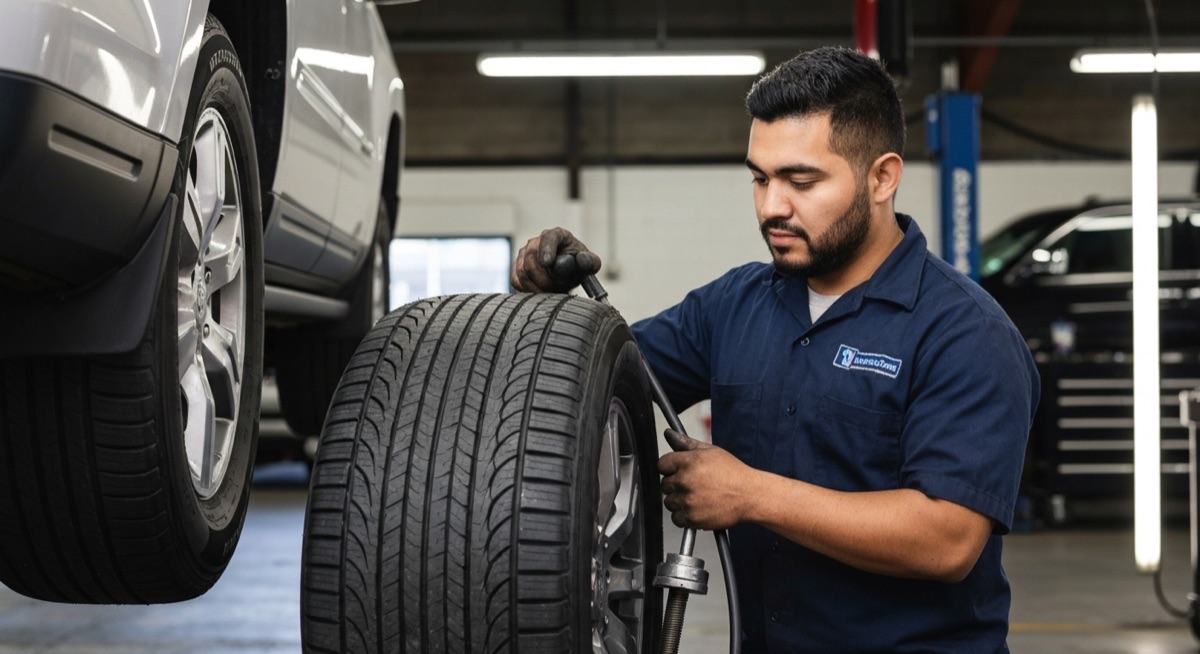
Inspectors start with exterior lights. Every headlight, taillight, brake light, turn signal, and reverse light must work. A single burned bulb is a common, easily preventable fail. Tires can’t be bald, show cord, or be mismatched in size. If yours look marginal, replace them before the appointment rather than gambling on an inspector’s leniency. Brakes must function without obvious grinding, no brake warning light active. All passenger seatbelts—rear seats included—must latch and retract.
The A/C must blow cold. In Orlando, this is non-negotiable, and inspectors know it. A driver who shows up in July with warm air coming out of the vents will not pass. The dashboard can’t show a check engine light, ABS light, or airbag/SRS light. Any active warning light fails the inspection regardless of cause. A loose gas cap triggering a check engine light has ended more than a few inspection attempts. It’s almost funny until it’s happening to you.
Interior condition matters. The car must be clean, free of visible damage, and odor-free. Ripped seats and significant staining can disqualify you. A salvage, rebuilt, or lemon law buyback title is a hard fail on both platforms—full stop.
Uber previously operated a Greenlight Hub in Orlando where drivers could complete in-person inspections and get account support. Hub availability has shifted nationally, so check the Uber driver app under Help → Greenlight Hub for current location and hours. For Lyft, third-party inspection partners including select Firestone Complete Auto Care locations have been authorized in Florida. Use the Lyft driver app’s inspection locator to find active partners near you.
The check engine light trips up first-time applicants more than anything else—usually deferred maintenance or, yes, a loose gas cap. Second is tire condition; drivers consistently underestimate wear until they’re standing in an inspection bay. Third is rear seatbelt function on older vehicles where those belts rarely get used and quietly develop retraction problems over years of sitting.
How Orlando’s Roads Destroy a Car Faster Than You Think
National maintenance guidance assumes something close to an average American driving mix: some city miles, some highway, moderate temperatures. Orlando rideshare driving matches none of that. Four local conditions drive faster-than-average wear, and if you’ve spent a sweaty August afternoon crawling through the I-Drive tourist corridor, you already know this without needing it explained. For more on what extreme heat and humidity do to the human body on long shifts, our coverage of exercising in Orlando’s summer heat offers useful context on the physical side of working in these conditions.
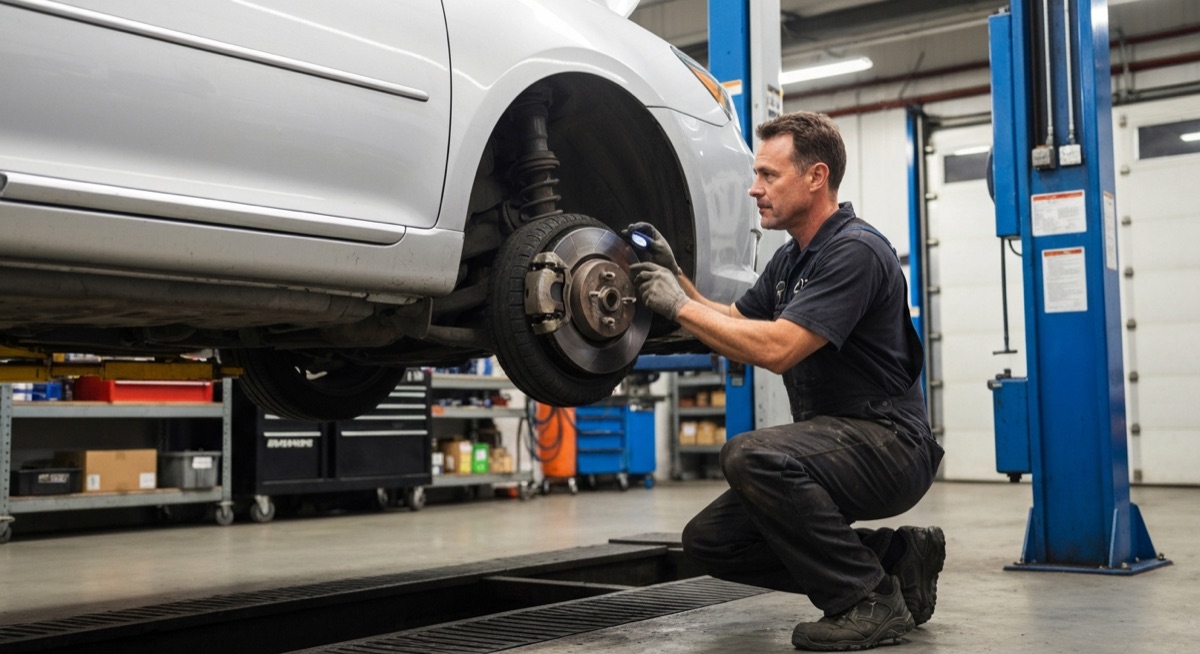
I-4 through the tourist corridor is one of the most congested stretches of highway in Florida. Repeated acceleration and braking cycles degrade brake pads faster and contaminate transmission fluid sooner. A driver doing 60,000 miles annually on I-4 is not running the same brake interval as someone doing 60,000 miles at highway speed on Florida’s Turnpike. Different road, different math.
International Drive and the resort area mean a lot of 2-to-4-mile trips, each starting with a cold or barely-warm engine. Short trips are disproportionately hard on oil. The engine doesn’t reach operating temperature long enough to burn off combustion byproducts, which speeds contamination. They’re also hard on front brakes, since each trip ends with a full stop at a hotel valet stand or park entrance.
The MCO cell phone lot is where drivers wait, engine running, A/C on full, inching forward every 20 minutes. On a busy holiday weekend, you can sit there for well over an hour. Extended idling in high heat is one of the hardest operating conditions for a cooling system—coolant circulates constantly, the electric fan runs without a break, and the A/C compressor never cycles off. Drivers who spend significant time in the lot should treat cooling system maintenance as a higher priority than almost anything else.
Florida’s summer heat speeds degradation across several systems at once. A/C compressors here log more annual hours than in almost any other U.S. market. Batteries fail faster—test annually rather than waiting for the 6 a.m. no-start before a morning airport run. Cabin air filters clog quickly because the A/C system constantly pulls humid air through them. None of this is catastrophic if you stay ahead of it. It gets expensive when you don’t.
Adjusted Maintenance Intervals for Full-Time Orlando Drivers
The table below compares standard manufacturer intervals with what full-time Orlando rideshare drivers logging 50,000-plus miles per year should realistically follow given local conditions. Confirm specific intervals and pricing with a mechanic familiar with your vehicle before use; these are general benchmarks.
| Service | Standard Interval | Orlando Rideshare Interval | Estimated Local Price Range |
|---|---|---|---|
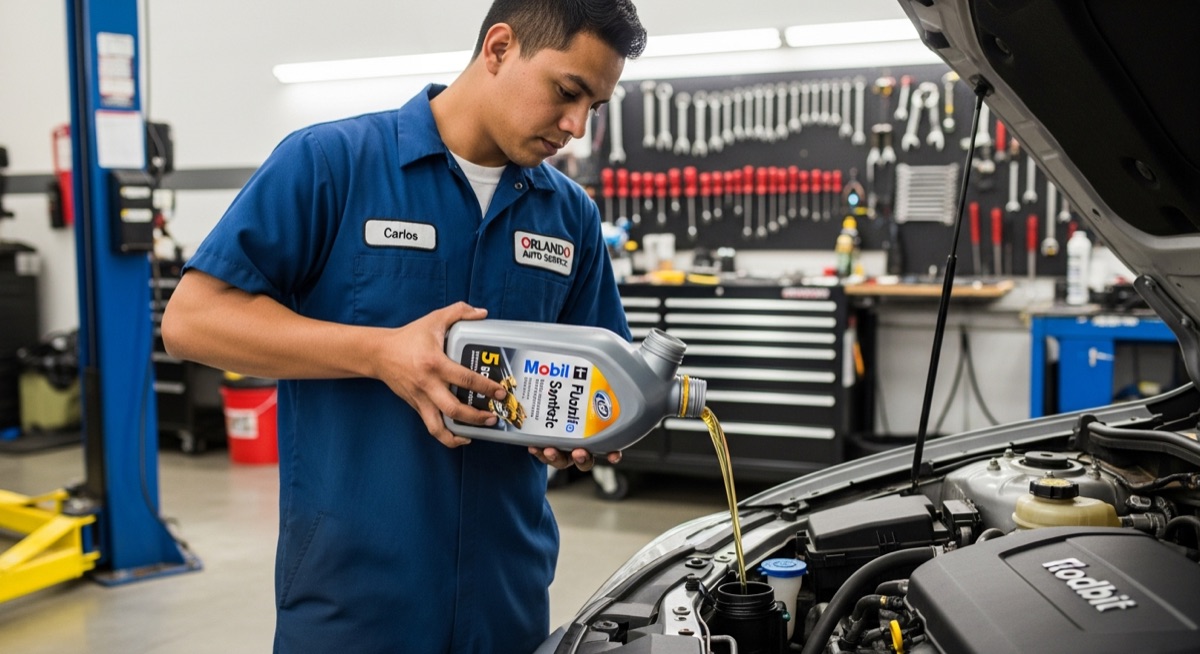
| Synthetic oil change | 7,500–10,000 miles | 5,000–6,000 miles | $65–$95 |
| Front brake pad inspection | 30,000–40,000 miles | Every 20,000 miles | $150–$250 (pads + labor per axle at independents) |
| Coolant flush | Every 30,000 miles or 2 years | Annually or every 25,000 miles | $80–$130 |
| Cabin air filter | Every 15,000–25,000 miles | Every 12,000–15,000 miles | Confirm with shop |
| Tire rotation | Every 5,000–7,500 miles | Every 5,000 miles | Confirm with shop |
| Battery test | Every 3–5 years | Annually after year two | Confirm with shop (many test free) |
The oil interval change is the most consequential adjustment. Short-trip stacking plus stop-and-go traffic plus heat contaminate oil faster than the manufacturer’s interval assumes. A full-time driver on a 5,000-mile synthetic cycle is changing oil every five to six weeks at 50,000 annual miles. That’s a real operating cost—build it into your income math before you commit to this work full-time. Quite a few drivers have discovered that what looks like solid gross earnings gets thin fast once the maintenance reality lands.
Where Orlando Drivers Actually Get Their Cars Serviced
The Orlando rideshare driver community is active and opinionated across several Facebook groups, including “Uber/Lyft Drivers Orlando FL” and similar communities where drivers share shop recommendations by neighborhood and have strong feelings about which places to avoid. The MCO cell phone lot is also a reliable informal sourcing environment—drivers waiting on pings will talk shop recommendations freely, and the collective knowledge there reflects real high-mileage experience. There’s something almost old-school about it: strangers in a parking lot, killing time, trading tips about brake jobs.
When sourcing shop recommendations, look for three qualities that matter specifically to rideshare drivers: familiarity with what passes and fails a platform inspection, competitive pricing on high-frequency services (you’ll be coming in far more often than the average retail customer), and fast turnaround. A car in the shop is a car not earning.
[Reporter’s note: This section requires three to four confirmed, named shops in specific Orlando neighborhoods before publication. Reporting framework below.]
For each shop, report:
- Name, neighborhood, and address
- Source of the recommendation (specific Facebook group, MCO lot drivers, verified repeat customers)
- Relevant specialty or capability for rideshare drivers
- Oil change price range
- A direct quote from a mechanic or regular driver customer
When using the Facebook groups yourself, search “[neighborhood] oil change” or “rideshare inspection” in the group search bar. Posts from the last 60 days are more reliable than older threads—pricing and ownership change. DM the drivers who post recommendations rather than just reading the thread. They’ll tell you more privately than they share publicly. Takes two extra minutes and it’s almost always worth it.
Tracking Maintenance as a Business Expense: The IRS Methods Compared
Every dollar you spend on maintenance is potentially deductible. The IRS gives 1099 rideshare drivers two methods, and the choice matters. For drivers who are also weighing whether to formalize their operation, the cost of starting an LLC in Orlando is a related decision that affects how business expenses are structured and reported.
The standard mileage rate for 2024 is 67 cents per mile. Multiply your total business miles by that figure—that’s your deduction. It’s simple, requires minimal recordkeeping beyond a mileage log, and rolls fuel, maintenance, and depreciation into one number. The catch: if your actual costs are high (and they will be for a full-time driver beating on a car in Orlando), the standard rate may understate what you’re actually spending.
The Actual Expense Method lets you deduct the real cost of every vehicle expense—oil changes, brake jobs, tires, fuel, insurance, registration, depreciation—multiplied by your business-use percentage. A driver using a car exclusively for rideshare deducts the full cost of every qualifying expense.
For full-time drivers with 50,000-plus miles and 80-percent-plus business use, Actual Expense typically produces a larger deduction. But it requires meticulous recordkeeping from day one of the tax year. Not February. Day one. You can’t switch methods mid-year, and switching from standard mileage on a vehicle you’ve used before requires recapturing depreciation—a complication that surprises most drivers and generally requires a tax professional to handle without error.
Three apps get consistent recommendations among Orlando gig drivers. Everlance tracks mileage via GPS, categorizes trips, and generates IRS-ready reports; the free tier covers basic mileage, the premium tier adds expense tracking. Stride is free with no premium tier, handles both mileage and expenses, and integrates with 1099 filing workflows—the pick for drivers who want simplicity and no monthly subscription. MileIQ has the cleanest interface and the easiest swipe-to-classify workflow, but it’s subscription-only and skews toward drivers who primarily need mileage logs rather than full expense tracking.
Beyond oil changes, keep receipts for car washes (the platform requires a clean interior—it’s a legitimate business expense), floor mats and seat covers, phone mounts and charging cables used for navigation, and tolls. Those receipts compound faster than you’d expect over a full year. For a broader look at gig-economy business financing in our legal and finance coverage, including SBA options available to self-employed workers, the resource base is growing.
[Reporter’s note: A quote from an Orlando CPA or enrolled agent with gig-economy clients is required before this section publishes. Look for tax preparers advertising to rideshare or gig clients in Orange County. Ask specifically what they see full-time Orlando drivers getting wrong on the standard-mileage-versus-actual-expense calculation.]
A Working Driver’s Numbers: What Full-Time Orlando Rideshare Maintenance Actually Costs
Editorial estimates are a starting point. Real driver numbers are what make this guide useful rather than theoretical—and frankly, the section most readers will go to first.
[Reporter’s note: The interview should yield the following before this section is ready to publish.]
- Weekly mileage and how it breaks down: airport runs versus tourist corridor versus downtown
- Monthly out-of-pocket maintenance spend, itemized if the driver tracks it
- Vehicle choice and the reasoning: reliability record, fuel economy, passenger space, new versus used
- The single biggest unexpected repair—what it cost, whether it was foreseeable in hindsight
- What they track for taxes and how
- What they wish they’d known before their first week driving full-time in Orlando
A well-sourced driver interview with real dollar figures and a vehicle readers can relate to is what separates this from a generic maintenance checklist. It’s also the section most likely to get shared.
Before You Go Active: A Pre-Inspection Checklist
Work through this before your Uber or Lyft inspection appointment. Fix anything that fails before you schedule. Don’t guess on borderline items. An inspection fee wasted on a preventable fail is genuinely demoralizing.
Exterior Lights
- Both headlights illuminate (low beam)
- Both headlights illuminate (high beam)
- Both taillights illuminate
- Both brake lights illuminate when pedal is pressed
- Left and right front turn signals function
- Left and right rear turn signals function
- Reverse lights illuminate when in reverse
- No cracked or missing lens covers
Tires and Brakes
- All four tires have adequate tread depth—if marginal, have a shop measure before the appointment
- No sidewall damage, bulges, or visible cord
- All four tires properly inflated (check door placard for spec)
- No audible grinding when braking
- No brake warning light active
Interior and Seatbelts
- Driver seatbelt latches, retracts, and releases smoothly
- Front passenger seatbelt latches, retracts, and releases smoothly
- All rear seatbelts latch, retract, and release smoothly
- Interior is clean—no food debris, no strong odors, no visible staining
- Seats intact, no major tears or broken mechanisms
- Passenger floor area unobstructed
Air Conditioning
- A/C blows cold within 60 seconds of activation
- All vents direct airflow
- No unusual noises when A/C is engaged
Dashboard Warning Lights
- Check engine light NOT illuminated after engine warms
- ABS warning light NOT illuminated
- Airbag/SRS warning light NOT illuminated
- Tire pressure warning light NOT illuminated
- Any other warning light: research and resolve before the appointment
Documentation
- Current vehicle registration in the car
- Proof of insurance meeting Florida TNC minimums
- Title available and NOT marked salvage, rebuilt, or lemon law buyback
- Vehicle year meets current Uber or Lyft cutoff for your market tier—verify on your driver portal, not from a friend
One last thing worth sitting with: a car that barely clears a Lyft inspection in January can be a liability by August. The A/C starts cycling warm. The tires wear another 3,000 miles. The battery starts struggling in the heat. In Orlando’s climate and traffic, “just enough to pass” is an expensive strategy—in repairs, in deactivations, and in one-star ratings that compound quietly until they’re a real problem. Treat the car like the business asset it is. The math works out better that way.
CityDesk Orlando covers local business, development, and economic life across the greater Orlando metro. Tips and corrections: [editorial contact].