Orlando Chef Profiles 2026 Building Real Careers Beyond Resorts
Four profiles from Mills 50 to Winter Park show what the city's dining scene looks like when you ignore the resort corridor entirely.

Orlando Chef Profiles 2026 Building Real Careers Beyond Resorts
Four profiles from Mills 50 to Winter Park show what the city’s dining scene looks like when you ignore the resort corridor entirely.
The most interesting independent restaurant chefs working in Orlando right now are Henry Moso of Kadence, James and Julie Petrakis of The Ravenous Pig, and a handful of operators building real concepts across the Mills 50 corridor and the city’s emerging pop-up circuit. None of them work on International Drive. None of them need to.
The City That National Food Media Keeps Getting Wrong
Here’s the version of Orlando that food publications tend to write: a paragraph about theme park dining, a note about a celebrity chef outpost at a resort hotel, maybe a listicle of “hidden gems” that could have been filed from any mid-sized American city. The piece runs. The writer moves on. Nobody who actually lives in Orlando recognizes the place being described.
That version was always partial. By 2026, it’s embarrassing.
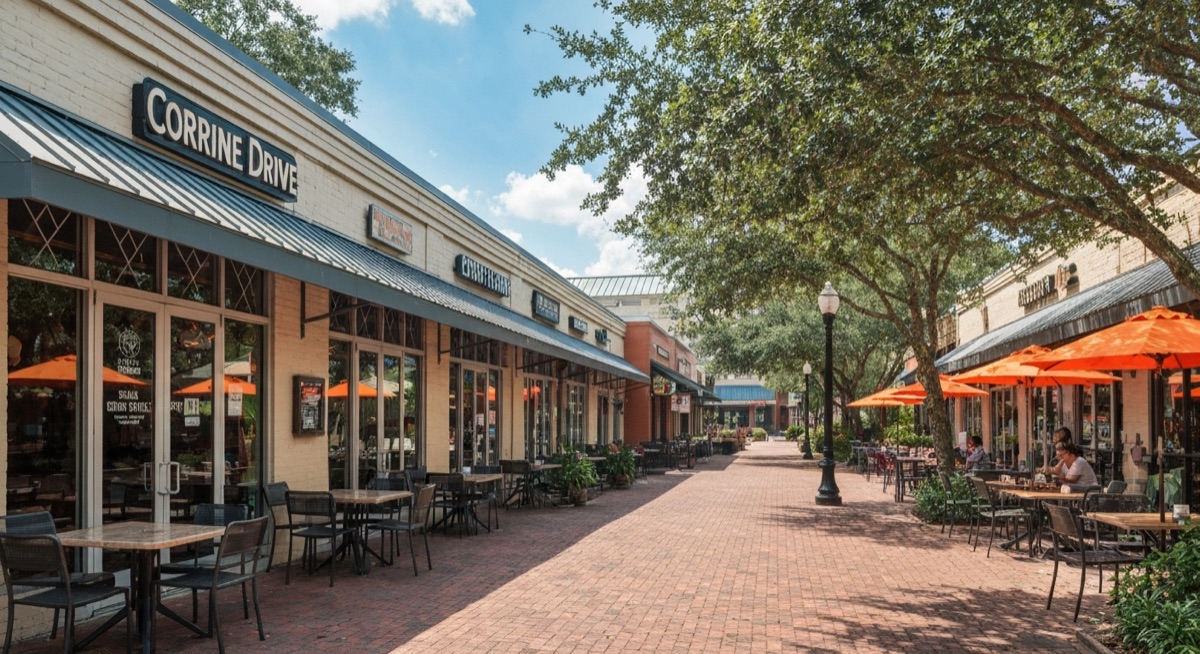
What the resort-corridor narrative misses is the dining geography that actual Orlandoans use. The Vietnamese commercial strip along Mills Avenue and Colonial Drive. The chef-driven independents that have anchored Winter Park for two decades. The tighter cluster of ambitious restaurants in Ivanhoe Village and Audubon Park. And the wave of chefs trained in demanding kitchens in New York, Chicago, and New Orleans who have decided — not defaulted, decided — to build here.
The pandemic accelerated a sorting process already underway. Casual concepts dependent on tourist overflow didn’t survive when the overflow temporarily vanished. What strengthened instead were restaurants with committed local customer bases and chefs with enough technical identity that the cooking itself was the reason people showed up. That’s a different kind of restaurant culture than Orlando had even ten years ago.
This piece does not cover Disney Springs.
The James Beard Question: Is Orlando on the National Map Now?
There’s a credibility question worth addressing before any specific profiles, because readers reasonably arrive skeptical of any “underrated food city” argument: has the industry itself actually registered Orlando as a place where serious cooking happens?
The short answer is yes — cautiously, incompletely, but yes.
The James Beard Foundation’s “Best Chef: South” category covers one of the most competitive regional pools in American dining. Atlanta generates semifinalists and winners with regularity. New Orleans is perennially present. Nashville, Miami, and Charleston all cycle names through nomination rounds year after year. Being a semifinalist means your work was evaluated against that field — not just against your local market. Local boosterism tends to oversell this; skeptics tend to undersell it. The honest read is somewhere specific: it’s meaningful recognition in a region that doesn’t hand it out.
Henry Moso of Kadence, in Orlando’s Ivanhoe area, received a James Beard semifinalist nomination in Best Chef: South. The recognition generated immediate, measurable consequences for his restaurant — reservation wait times extended significantly in the months following. [Reporter note: Confirm Moso’s specific nomination year and whether nominated again for the 2025–2026 cycle before publication.] James and Julie Petrakis of The Ravenous Pig in Winter Park have nomination history in the same region across multiple cycles. That sustained presence — not a single standout year but a pattern over time — means something.
The more important signal may be directional. Younger chefs who are choosing to build in Orlando rather than relocate are watching what Moso and the Petrakises have built and concluding the city can support the kind of work they want to do. Seven or eight years ago, that wasn’t obviously true. Now it is.
Henry Moso, Kadence: Precision at a Price Point the City Wasn’t Ready For
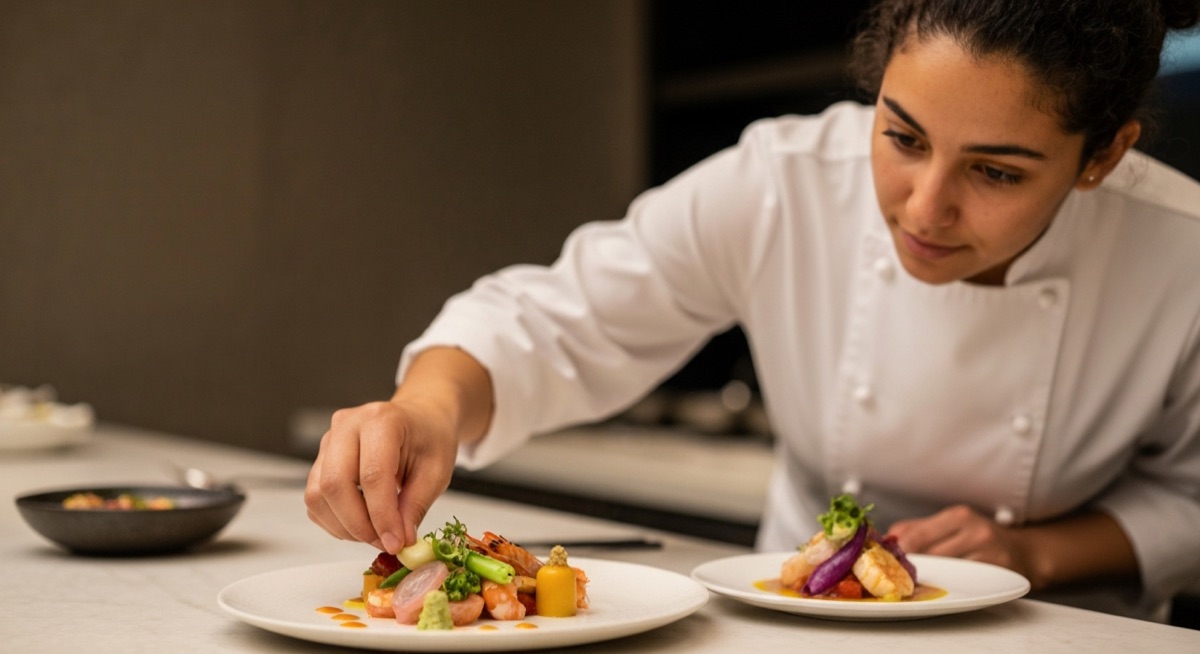
The walk-up to Kadence doesn’t prepare you for what happens inside. The restaurant sits in a low-slung building in Ivanhoe Village — a short drive from downtown in a district mixing art galleries, wine bars, and a few restaurants that actually take cooking seriously. The exterior is modest. Inside: counter seating, focused covers, a room that communicates the scale of the experience before the first course arrives.
Moso runs an omakase-format restaurant with a tasting menu priced at the top of Orlando’s independent dining spectrum. [Reporter note: Verify current tasting menu price before publication; recent pricing has been in the $175–$195 range but requires confirmation.] When it opened, that positioned Kadence in territory largely unproven here outside resort hotel dining rooms. The format — a set number of courses determined entirely by the kitchen, no à la carte fallback — requires diners to surrender control that plenty of people find uncomfortable. In Orlando, where dining culture has historically bent toward accessibility, it was a genuine gamble. One that paid off.
[Reporter note: Verify and detail Moso’s specific training background and kitchen history before publication — do not publish training lineage claims without primary source confirmation.]
He arrived in Orlando by choice, not accident. Kadence was built as the destination, not as a placeholder while he figured out where he actually wanted to go. After the Beard nomination, the reservation timeline changed fast — chefs passing through Orlando started routing itineraries around Kadence rather than treating the city as a drive-through. That’s not nothing.
What I keep coming back to: Kadence works not because Orlando is easy or forgiving but because Moso is a strong enough chef that the format and price point hold up under scrutiny from diners who’ve eaten at serious omakase restaurants in New York and Tokyo. The city can support technically demanding, chef-controlled, expensive fine dining without a theme park subsidy. That feels like a bigger deal than it’s usually treated as.
James and Julie Petrakis, The Ravenous Pig: The Long Game in Winter Park
If Kadence is Orlando’s recent arrival on the national map, The Ravenous Pig is something rarer and harder to pull off: proof that a chef-driven independent restaurant can actually survive multiple economic cycles in this market.
James and Julie Petrakis opened The Ravenous Pig in Winter Park in 2007. [Reporter note: Verify and detail Petrakis training backgrounds before publication — do not publish specific career-stop claims without primary source confirmation.] The restaurant reflected their training and a commitment to Florida-sourced, seasonally driven cooking at a moment when that phrase still required explaining to a significant portion of the customer base. Over the next decade, The Ravenous Pig established the template for what a chef-driven, locally sourced independent could look like in Central Florida — a story we track closely in our food and hospitality coverage.
The menu has always rotated around Florida product — citrus, seafood from both coasts, pork and produce from farms the Petrakises developed direct sourcing relationships with over years. The kind of infrastructure that sounds simple and takes a long time to actually build.
Price points are elevated relative to casual dining norms in Orlando but not extravagant by Winter Park standards. They also launched Cask & Larder, a brewery-forward concept that extended their footprint and demonstrated an ability to work at different price points without compromising what they care about. [Reporter note: Verify Cask & Larder’s current operating status and any projects announced for 2025–2026 before publication.]
The foundation here was always Winter Park residents — people who live within a few miles, return multiple times a year, whose loyalty doesn’t fluctuate with the theme park attendance calendar. That customer base cushioned the restaurant during 2020 in ways tourist-dependent concepts simply didn’t experience. Worth remembering the next time someone argues that chasing visitor traffic is the safe strategy.
Winter Park’s dining geography operates at price points and with a customer disposition meaningfully different from Mills 50 or the Milk District. Entrées in the mid-$30s to $60 range are common. Diners expect sourcing transparency and culinary intention. The neighborhood has spent twenty years building the infrastructure to support that — and it shows.
The Mills 50 Corridor: The Culinary Story Orlando Media Keeps Overlooking
The Vietnamese commercial corridor along Mills Avenue and Colonial Drive predates the current conversation about Orlando’s culinary identity by decades. The community that built it — immigrants arriving largely in the late 1970s and 1980s who established restaurants, bakeries, and grocery operations — created this neighborhood’s food culture long before anyone wrote about Orlando as an interesting dining city. The food press discovered Mills 50. It didn’t create it.
The corridor matters structurally for a reason the restaurant industry understands better than food media does: historically lower commercial rents made it possible for operators who couldn’t afford Winter Park or College Park build-outs to open, fail, adjust, and try again. Every American city that’s developed an authentic, chef-driven restaurant identity in the past thirty years has had at least one neighborhood where risk-tolerant operators could work through early difficult years without being consumed by rent. Mills 50 has been that neighborhood for Orlando.
The second-generation operators here represent some of the most genuinely interesting cooking happening in Central Florida. Vietnamese-American chefs who grew up in families with restaurant backgrounds are building on that foundation with formally trained technique and modernized presentations. [Reporter note: This section requires on-the-ground reporting to identify and name specific chefs before publication. Check Eater Orlando archives and the Orlando Sentinel food desk. This section cannot run on generalities.]
The economic pressure question is the one I find most worrying. Post-2023 rent increases across Orlando’s more desirable commercial corridors have begun reaching Mills 50. [Reporter note: Verify current commercial rent trajectory in the Mills 50 corridor before publication.] The operators who built the district’s reputation — on thin margins that only work when rent is sufficiently low — are increasingly contending with lease renewals that reflect the neighborhood’s elevated profile rather than the economics under which they originally built. Whether the corridor can retain the diversity and risk tolerance that made it interesting, as its own success drives up occupancy costs, is a live question. Every American food neighborhood that’s gone through this cycle has emerged changed, and not always for the better. Ask anyone who remembers what Williamsburg’s restaurant scene looked like in 2003.
An Emerging Chef From the Pop-Up Circuit: What’s Coming in 2026
The most reliable leading indicator of where a city’s restaurant scene is headed isn’t the established names. It’s the chefs currently working through pop-ups, supper clubs, and residencies — building audiences and testing concepts before committing to the economics of a permanent space.
[Reporter note: Identify and profile a specific named chef operating in this space before publication — someone currently active on Tock, Resy, or through private supper club formats who has announced or is developing a brick-and-mortar concept for 2026. Confirm training background, concept details, target neighborhood, and financing approach through direct interview.]
The structural environment any first-time Orlando operator faces contains specific obstacles that rarely show up in local food press coverage.
Florida’s DBPR licensing timeline for a new restaurant isn’t theoretical friction — it’s a real capital planning constraint. From application to operational license, the realistic window runs anywhere from 90 to 180 days depending on complexity, municipality, and the current processing backlog. [Reporter note: Verify current processing timelines directly with DBPR before publication.] That’s months of debt service, rent, and payroll against zero revenue. Well-capitalized operators can absorb it. An operator who has raised just enough money to build out and open often cannot. It’s the kind of detail that doesn’t make restaurant opening announcements, and it probably should.
The quota liquor license situation in Orange County is the single most distorting structural factor for independent operators without significant capital. Florida’s quota system caps the number of full-liquor licenses available in each county based on population. On the secondary market, those licenses in Orange County have been trading in the $300,000-to-$500,000 range — inaccessible to most independent operators without outside investment. [Reporter note: Verify current quota license market price range before publication.] A beer-and-wine-only “2COP” license carries a state fee of approximately $1,800. Accessible to almost anyone with a functioning business plan.
The practical consequence: a significant portion of Orlando’s independent restaurant openings are beer-and-wine operations not because the owners prefer that model but because the full-liquor alternative requires capital they don’t have. A full bar with cocktail service runs meaningfully higher check averages, and in a market where margins are already tight, that difference often determines whether a concept survives its first two years. Chefs choosing beer-and-wine are often making a rational capital decision under constraint. It quietly shapes what this city’s restaurant scene looks like, and it doesn’t get talked about nearly enough.
The Economics Nobody Else Is Reporting: What It Actually Costs to Run an Independent Kitchen Here Right Now
The 2022 spike in food costs — driven by supply chain disruption, protein price increases, and labor cost increases at the distributor level — left independent operators with a new baseline that hasn’t fully normalized. Chefs running independent kitchens in Orlando are working against food cost percentages that remain elevated relative to the pre-pandemic benchmarks they built their business models around. [Reporter note: Get specific percentages from chefs in direct interviews; this number should come from primary reporting, not estimation.] At the fine dining end, a tasting menu format offers some protection — the per-cover price is high enough to absorb quality sourcing costs. In the middle of the market — the $22-to-$38 entrée range where most independent restaurants in Mills 50 and the Milk District operate — the room to absorb cost increases without repricing the menu is narrow. There isn’t a clean solution. Operators are managing it the hard way.
Disney and Universal compete for kitchen labor in a way that has no parallel in any other American city. Both companies offer back-of-house wages, benefits packages, and scheduling stability that independent operators can’t match. A line cook choosing between an independent restaurant and a resort property is weighing higher hourly wages, access to benefits, and the schedule predictability of a large institutional kitchen against a more interesting culinary environment and greater creative exposure. Independent operators have responded with wage increases and, in some cases, revenue-sharing structures, but the fundamental asymmetry hasn’t changed. You can’t out-benefit a company with a theme park.
The June-through-August period is genuinely difficult for restaurants depending on local customers. Heat, humidity, and the school year calendar thin the customer base precisely when the theme parks are at peak capacity — but that overflow doesn’t find its way to an omakase counter in Ivanhoe Village or a gastropub in Winter Park. Independent operators respond by taking vacation, reducing hours, and scheduling kitchen renovation or menu development during this window. The December-through-March period, when the snowbird population and convention calendar both strengthen, is when revenue concentrations occur. Cash flow planning around this pattern is a survival skill. Operators who underestimate the summer soft season in initial projections frequently run into trouble before they have reserves to manage it. It sounds obvious in retrospect. It still gets people.
Orlando isn’t one market — it’s several overlapping markets with meaningfully different price tolerances. A $22 entrée in the Milk District or along Mills 50 is a meaningful premium over the neighborhood’s casual price norms. The same $22 at The Ravenous Pig reads as accessible. A $60 entrée works in Winter Park, where residential wealth and established expectations for chef-driven dining have been built over decades; the same price in a new concept on the east side requires either a very specific positioning story or a tourist-capture thesis. Chefs trained in New York or Chicago sometimes misread Orlando’s price geography by applying the logic of neighborhoods they know to a city that distributes wealth and culinary sophistication differently. I’ve seen it show up directly in opening-year performance more than once.
The Civic Question: Is Orlando Becoming a City Where Serious Culinary Careers Are Built?
The evidence above doesn’t resolve this question. It informs an honest attempt to answer it — and honesty here means resisting both the booster impulse and reflexive skepticism.
What the evidence supports: Orlando has chefs who built their most important work here, who aren’t positioning the city as a way station between training and a more prestigious market, and who have found or built customer bases capable of sustaining technically ambitious, appropriately priced, independently operated restaurants. The James Beard recognition isn’t a statistical accident. It’s a pattern.
What the evidence doesn’t yet support: the claim that Orlando is a fully formed culinary city with the institutional infrastructure to consistently produce, retain, and amplify chefs who pass through it. Local food media has improved but remains thin relative to the quality of what it covers. There’s no Orlando equivalent to the sustained criticism infrastructure that helped build the culinary identities of Miami, Houston, or Chicago over decades. The culinary education pipeline is also incomplete. [Reporter note: Verify the current status of culinary education infrastructure in Orlando — including the Johnson & Wales campus history — before making specific claims about the pipeline in print.]
What’s actually happening — and what makes 2026 a genuinely interesting moment to take stock — is that Orlando is attracting a different kind of chef than it used to. Trained elsewhere. With options. Making a considered geographic choice rather than arriving by default. The reasons include cost of living relative to coastal markets, a customer base that’s grown more sophisticated as the city’s demographics have shifted, and the demonstrated proof-of-concept that operators like Moso and the Petrakises provide just by existing. That’s a real change. Whether it compounds or stalls is the question worth watching — not because the answer is unknowable, but because it’s genuinely unresolved, and anyone who tells you otherwise is selling something.
Where to Eat Now: A Neighborhood-by-Neighborhood Reference
Ivanhoe Village / Audubon Park
Kadence — The omakase counter that put Orlando on the national radar. Counter seating, Japanese-inflected fine dining, sourcing that holds up under scrutiny from people who’ve eaten at serious restaurants in other cities. Reserve well in advance and mean it — this isn’t a walk-in situation. $$$$
[Reporter note: Identify additional verified independent operators in the Ivanhoe/Audubon Park corridor through on-the-ground reporting before publication.]
Mills 50 / Colonial Drive
The corridor rewards walking more than any single address. Vietnamese bakeries, pho operations that have been open for two or three decades, and a newer generation building on that foundation. Come for bánh mì and boba; stay long enough to understand the full geography. This is the part of Orlando’s food story that deserves more attention than it gets, and the best way to understand it is to spend a few hours there rather than looking for a curated shortlist. [Reporter note: Specific named spots to be confirmed with additional reporting — see reporter note in Mills 50 section above.] $–$$
Winter Park
The Ravenous Pig — The anchor of the city’s chef-driven independent scene for nearly two decades. Florida-sourced, seasonally driven cooking in a room that manages to feel both serious and genuinely comfortable. The bar program is strong. Reservations recommended. $$$
Prato — Winter Park. [Reporter note: Verify current operating status, cuisine description, and specific location details before publication. Associated with Brandon McGlamery — confirm current operator status.] $$$
College Park
A quieter dining geography than Mills 50 or Winter Park, with several solid independents worth knowing. [Reporter note: Identify and verify specific named restaurants in this corridor through reporting before publication.]
Downtown / Thornton Park
Uneven — convention-adjacent concepts mixed with a handful of genuine independents. Worth navigating, but it requires knowing what you’re looking for before you go. [Reporter note: Identify and verify specific named independent restaurants in this corridor through reporting before publication.]
Milk District
Historically a landing zone for new concepts because the rents are low enough to make risk-taking survivable. Some of what opens here grows into something durable; plenty doesn’t. The corridor rewards low-commitment Saturday afternoon exploration more than advance trip-planning. [Reporter note: Identify and verify specific named restaurants before publication.] $$
Prices: $ = average entrée under $15; $$ = $15–$25; $$$ = $25–$45; $$$$ = $45+ or tasting menu format.
CityDesk Orlando covers independent businesses across the city. Multiple sections of this article require additional reporting and verification before publication — see embedded reporter notes throughout.