Why Orlando Restaurants Struggle to Find Cooks in 2025
Epic Universe opened, the $15 minimum wage arrives in September, and tourist volume is running hot. Orlando's hospitality labor market is being pulled apart.

Why Orlando Restaurants Struggle to Find Cooks in 2025
Epic Universe opened, the $15 minimum wage arrives in September, and tourist volume is running hot. Orlando’s hospitality labor market is being pulled apart.
Walk the back-of-house hallway at almost any full-service restaurant on Sand Lake Road this summer and you’ll find the same thing: a whiteboard with open shifts, a manager texting applicants who haven’t shown up, and a line cook who was supposed to be off today but came in anyway. Orlando restaurants are posting wages they never posted before, dangling perks they’d have laughed at five years ago, and still running shorthanded through the busiest travel season the city has seen in years.
Three forces hit Orlando’s hospitality labor market at roughly the same moment. Epic Universe opened in May 2025 and absorbed thousands of workers — many of them already in the restaurant industry — into Universal’s orbit. Florida’s statewide minimum wage reaches $15 an hour in September 2026, forcing every operator with tipped workers and prep cooks to recalculate labor costs whether they’re ready or not. And tourist volume this summer is running ahead of projections, with the new theme park drawing international visitors who fill restaurants on I-Drive and Lake Buena Vista six nights a week instead of four.
The result: restaurant workers with back-of-house skills have more bargaining power than at any point in recent memory. Whether they’re using it — or whether the parks and hotels are capturing all the gains — depends entirely on who you talk to and where they work.
What Orlando Restaurants Are Actually Paying Right Now
The most useful thing this article can tell a job-seeker or a competing operator is what’s actually on offer. Here’s what current postings and operator interviews show for summer 2026.
Line cooks are being advertised at $16 to $22 an hour at full-service independents, with the higher end concentrated at white-tablecloth and chef-driven restaurants around Sand Lake Road and Thornton Park. A cook with genuine experience on a sauté station — someone who can run a section on a 300-cover Friday night — commands $20 or above. The spread matters. A restaurant posting $16 for a line cook is effectively offering less than a Universal food-service position once you factor in scheduling stability and benefits.
Servers are trickier to report honestly, because base wage and take-home are completely different figures. Florida’s tipped minimum is calculated as a fixed $3.02 below the state standard minimum, and most Orlando restaurants pay servers at or near that tipped floor. Actual hourly earnings run $18 to $28 at a casual full-service restaurant doing solid business. Those numbers are real on a Saturday night in August. They are not real on a Tuesday in January. Any job-seeker treating tip income as guaranteed is making a budgeting mistake that Orlando’s housing market will not forgive.
Dishwashers are being posted at $14 to $16 — a position most operators concede they fill last, if they fill it at all. Several restaurants in the Mills 50 district are cross-training kitchen staff to cover dish when needed rather than carrying a dedicated dishwasher on the schedule.
Bartenders show the same tip-volatility problem as servers. Actual hourly with tips runs $20 to $35 at a busy bar program, higher at cocktail-forward concepts on Church Street or in Thornton Park on weekend nights.
Sous chefs are the position operators most consistently say is hardest to hire and hardest to keep. They’re being offered $52,000 to $68,000 annually at independents, with the upper range reserved for high-volume or multi-station kitchens. The salary has moved meaningfully upward in recent years — that’s real — but experienced cooks will point out that the top of that range, in a city where rents have risen sharply since 2021, is not the windfall it might appear on paper.
One methodological note: these figures come from active Indeed and direct-hire postings as of early summer 2026, cross-referenced with operator interviews. Advertised wages and actual starting offers can differ. Confirm the specific rate in writing before accepting a position.
Where the Hiring Is
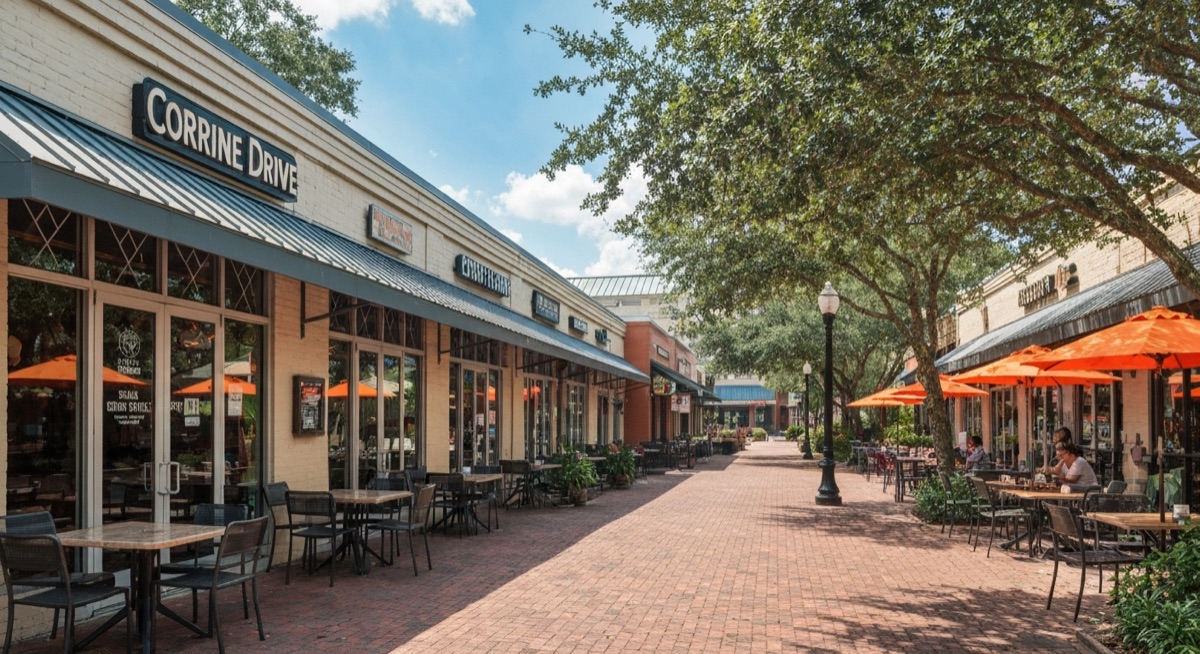
Restaurant Row and Sand Lake Road remain the highest-volume hiring corridor for full-service dining. The cluster of independent and semi-independent concepts between I-4 and Turkey Lake Road is competing for back-of-house staff against each other, against the convention-center hotels, and increasingly against Epic Universe’s food-and-beverage operation. Wages have moved fastest here, partly because the volume and margins support it, and partly because these operators are losing cooks to Universal at a rate they can actually count. Several confirmed they’re actively hiring line cooks and sous chefs heading into peak season, with positions open for six to ten weeks. One operator described it plainly: “I’ve got three line cooks on the schedule but I’m planning for two showing up.”
Mills 50 is different. The independents along Mills Avenue and Colonial Drive — many of them running 40- to 80-seat concepts on margins that can’t support Sand Lake wages — are competing on culture and flexibility rather than dollars. Scheduling autonomy, family-meal quality, and a real relationship with ownership carry weight when the wage gap can’t be closed. A few have added small perks: a LYNX bus pass subsidy, an extra paid day. Several Mills 50 operators report stronger retention than their counterparts in higher-volume corridors. One chef-owner mentioned that three of her cooks have worked for her for five-plus years — well above industry average — and credited it to the autonomy they have over their stations and the fact that they know her family by name. That’s not nothing, but it’s also not a model that scales or one that survives if wages at the parks keep climbing. For a closer look at the corridor’s dining scene, our guide to Mills 50 restaurants covers the independents shaping that stretch of Colonial Drive.
International Drive is chain-heavy and convention-cycle dependent. Hiring spikes when a major convention lands at the Orange County Convention Center and slackens in the gaps between. Independent operators on I-Drive can’t offer corporate benefits a Marriott restaurant or Universal CityWalk concept can, but they’re fishing from the same pool. The pattern one operator described — hire someone away from a chain, lose them back to a hotel within 90 days — is almost universal on that corridor. Everyone running an I-Drive independent knows it and mostly has no answer for it.
Lake Nona, the Packing District, and Creative Village are the new-opening pipeline. Lake Nona has seen a wave of restaurants tracking the neighborhood’s residential and medical-corridor growth. The Packing District in West Orlando has several concepts that opened in the past 18 months and are still building their teams. Creative Village draws a younger workforce from UCF’s downtown campus — but a transient one that cycles out every semester. Operators there are essentially always hiring even when they don’t think of themselves as short-staffed.
The Parks Are Winning the Wage War
Epic Universe required years of hiring before its May 2025 opening and has kept drawing since — pulling from the same labor pool that Sand Lake Road independents depend on. Universal’s food-and-beverage operation, running everything from quick-service windows to full-service restaurants inside the park, is a direct competitor for the same line cooks, prep cooks, and dishwashers the independents are chasing. One sous chef at a Restaurant Row concept put it plainly: “I had a cook for three years, solid worker, nothing wrong with the job. Universal posted $17.50 with benefits and a guaranteed 40 hours a week. I can’t match that — even at $20, he’d still be finding his own health insurance.”
Hard to argue with that math. Disney’s advertised starting wage for hourly roles runs in the $17 to $18 range depending on role and collective bargaining classification. For a cook weighing their options, those numbers are competitive with what many independents offer — and the parks add something restaurants structurally cannot: predictable scheduling, consistent hours, a retirement contribution, and health insurance from day one of eligibility. Multiple operators interviewed for this piece said they could identify specific positions they’d lost to the parks in the past 18 months, and in almost every case the worker cited not the hourly rate but benefits and schedule predictability as the reason for leaving.
This is structural, not cyclical. It won’t resolve when the tourism surge levels off.
The $15 Floor Is Coming
Florida’s minimum wage reaches $15 an hour in September 2026, the culmination of the Amendment 2 schedule that moved from $13.00 in September 2024 to $14.00 in September 2025. For a restaurant running eight to twelve hourly workers on a 4 to 6 percent net margin, this is not an abstraction.
Multi-unit operators on Restaurant Row — those running two or three concepts with combined annual revenue in the millions — are mostly absorbing the increase through menu price adjustments and efficiency gains. They’ve had time to plan. Several confirmed they’ve already raised prices ahead of the September wage floor and expect to adjust again later in the summer. One operator running three concepts raised menu prices 3 percent in June and is prepared to add another 1 to 2 percent in August. That’s not panic. That’s a well-run business managing a known cost.
Independent operators in Ivanhoe Village and Mills 50 are in a harder position. Some are cutting one position from their minimum-crew floor — a three-person BOH crew becomes two on slow weeknights — and leaning on whoever’s left to cover. That trades labor cost savings for cook burnout, and several operators acknowledged, without being asked, that it isn’t sustainable through a full year. One Mills 50 chef put it bluntly: “I can’t raise prices another 5 percent or my customers stop coming. I can’t find more cooks at any price. So I’m working more shifts than I want to, my chef is stressed, and we’re all hoping nothing breaks in the next six months.”
I don’t know how you read that and feel optimistic about independent dining in this city. The operators who are surviving are grinding through it. The ones who aren’t are already gone — quietly, without a press release, just a closed Instagram account.
The tipped wage structure adds a complication that caught some operators off guard. Florida’s tipped minimum is calculated as a fixed $3.02 below the state standard minimum, so the September increase affects what restaurants must pay tipped servers as a base too. Several operators who assumed the tipped credit would buffer them from the full impact are finding the math more complicated than they planned for.
BOH vs. FOH: The Pain Isn’t Shared Equally
The labor shortage is real, but it’s not symmetrical. Front-of-house positions — servers, hosts, bartenders — are genuinely easier to fill. Less technical training required, higher actual hourly earnings thanks to tips, and more visibility to job-seekers who don’t have kitchen backgrounds.
Back-of-house is where the pain concentrates. The National Restaurant Association found roughly 60 percent of operators nationally report difficulty filling BOH positions. Orlando operators consistently describe the local market as at least that bad, sometimes worse. Several have simplified their menus in the past year, stripping dishes that require specialist technique or long prep time. The practical effect is visible across the city if you’re paying attention to menus you’ve known for a while.
One chef-owner in Thornton Park cut his menu substantially and called it one of the better decisions he’d made — reduced food cost, reduced prep burden, let a leaner crew run a service that had previously required more hands. He didn’t present it as retreat. It was a structural adaptation. Worth noting: if you’ve eaten somewhere in Orlando in the past year and thought the menu felt shorter than you remembered, this is probably why.
The most acute shortage, the one operators return to consistently, is experienced prep cooks — workers who show up, work consistently, and have foundational knife skills and mise en place discipline. “I can advertise $18 an hour for a prep position and get applications,” one kitchen manager on Sand Lake said. “I can hire someone. What I can’t do is hire someone with actual skills who will still be here in six weeks.” The same complaint circulates in Tampa, Jacksonville, and every other Florida market right now. Orlando isn’t special here. It’s just bigger.
Are Independent Restaurants Actually Offering Benefits?
Some are. Most aren’t. The ones that are offering something have generally started small and should probably admit that to themselves when they describe it as a “benefits package.”
The clearest movement is on paid time off. Several independents in Mills 50 and Thornton Park now offer three to five days annually — genuinely unusual for hourly restaurant workers in Orlando four years ago. It’s not generous by any standard. But it signals the employer considers the worker’s time to have value outside the building, which is a shift in posture even if the dollar value is modest.
Shift meals — the structured version, not “whatever’s left in the steam table” — have become a retention tool at several independents. The owner of a 50-seat Thornton Park concept said that after she formalized her family meal and moved it to a dedicated half-hour window before service, post-shift turnover dropped noticeably. “People stay and actually talk to each other now instead of leaving the minute they’re done.” Operators who have cut family meals report feeling the absence. The ones who kept them are not cutting them.
LYNX bus pass subsidies are appearing at a handful of operations near transit corridors. At least two operators described it as one of the more cost-effective retention investments they’d made. The monthly cost runs roughly $50 per employee. Fifty dollars a month to keep someone on your schedule is a genuine bargain by any hospitality metric, and the fact that more operators haven’t done it is hard to explain.
Health insurance remains the hard gap. Formal employer-contributed health coverage at Orlando independents is rare. Small-group health plan premiums for hourly restaurant workers simply don’t fit inside the margins most independents operate on. This is where the gap between an independent and a Darden-owned concept — Olive Garden, LongHorn, and others, all operating under a company headquartered here in Orlando — becomes most visible. Darden can offer benefits and retirement options at scale that no independent in this city can match. Workers who prioritize benefits know that, and some of them make their decisions accordingly. It’s hard to fault them.
Housing stipends are essentially nonexistent. No documented, formal housing stipend program exists at any independent Orlando restaurant reviewed for this piece — despite the fact that the city’s rental market has moved sharply upward since 2021. This is arguably the most consequential thing restaurants can’t offer versus what parks and hotels provide, particularly for workers relocating to take a position. It doesn’t show up as a line item in anyone’s budget. It shows up as the person you just spent six weeks training, gone.
Where the Workers Went
The restaurant workers who left the industry during and after the pandemic didn’t all come back. The ones who didn’t return went somewhere specific.
The largest documented flow has been into hotel and resort employment — a sector that takes the same customer-service skills and offers more predictable scheduling, benefit access, and in many cases a union structure with wage floors and a grievance process. The concentration of major hotel properties around I-Drive, Lake Buena Vista, and the convention center means this alternative is geographically convenient for workers who were already commuting to that corridor. One line cook who moved to housekeeping at a Marriott said it plainly: “Same hours, less heat, and I get actual time off.”
Construction has absorbed others — tied to the development activity in Lake Nona, the Packing District, and the ongoing tourism-infrastructure buildout across Orange and Osceola counties. The pay for skilled trades has risen alongside restaurant wages, and several operators described losing workers not because construction paid dramatically more but because the schedule was more predictable and the cumulative physical wear over a full year is, arguably, less than kitchen work. If you’ve spent a summer on a sauté station in a poorly ventilated kitchen off Sand Lake Road, that calculation makes obvious sense.
Workers who left for hotels and resorts consistently describe their decisions the same way. It wasn’t a bad employer or a bad experience that pushed them out. It was a calculation about scheduling stability, benefit access, and the ability to plan a life around their work. They’ve rebuilt around different employment. They are not coming back for a dollar more an hour.
What This Means for Job Seekers
If you’re looking for restaurant work in Orlando this summer, the market is active and your leverage is real — but only if you know where to look and what to ask.
Back-of-house positions are most concentrated on Sand Lake Road, in the Lake Nona corridor, and at newer concepts in the Packing District. Front-of-house openings spread more broadly across Mills 50, Thornton Park, and downtown. Direct applications still yield results at independents where hiring decisions are made by the owner or chef rather than routed through HR. Walk in during non-peak hours and ask for a manager. Indeed is the primary aggregator for Orlando hospitality postings; Craigslist still surfaces some direct-hire dishwasher and prep cook postings that don’t appear elsewhere.
When you interview, ask for the base hourly rate in writing. Ask what average tip income for the position has been over the past three months, and whether that figure is based on reported receipts or what servers told them. Ask how much notice the restaurant gives for schedule changes. Ask if there’s a shift meal, and if there’s health insurance or paid time off. A manager who can’t answer these questions clearly is running an operation with other structural problems — useful to know before you commit.
A “we’re like a family here” answer to a question about overtime or scheduling flexibility is a deflection, without exception. Vague tip-pool structures that aren’t explained clearly in writing can cost you hundreds of dollars a month. No shift meal at a restaurant where you’re expected to work a full dinner service is worth factoring into the real compensation picture.
A line cook with solid experience can find work quickly and negotiate starting wages that would have been unusual two years ago. Dishwashers and prep cooks are in genuine demand and should not take the first offer if the posting range suggests room to move. Servers and bartenders can find openings easily but need to be clear-eyed about the difference between what a job pays on a strong Saturday in October and what it pays across a full month including slow Tuesdays and the dead stretch after New Year’s. The operators worth working for are, in almost every case, the ones being transparent about all of that before you even ask.
What’s Actually Happening Here
Orlando’s restaurant labor market in summer 2026 isn’t a market that has returned to normal. It’s a market that has reconfigured itself around a new set of pressures — and “normal” stopped being a useful frame sometime around 2022.
Wages are up. That’s real. A line cook in Orlando is earning meaningfully more than four years ago, and the operators not paying at or above current market are the ones with the longest-running vacancies. But wage increases alone haven’t closed the gap. The workers who stayed in restaurant kitchens are, largely, the ones who genuinely want to be there — for the craft, for a specific chef they believe in, or because working in a restaurant is simply who they are. That’s not a bad foundation for an industry. But it’s a smaller pool than the industry needs, and the parks, hotels, and construction sector will keep drawing from it as long as they can offer what independent restaurants structurally cannot. For a broader look at this in our food and hospitality coverage, including how Orlando’s chefs and independent operators are navigating the moment, the pattern here is part of a wider picture.
The independents that make it through the next 18 months will be the ones that figured out something to offer beyond a wage — schedule respect, real food, an ownership that knows their name — because that’s the ground where they can still compete. The ones still treating labor as a variable cost to be minimized are in for a hard fall. That’s not a prediction. At this point, it’s just arithmetic.
CityDesk Orlando covers the local business and labor market across Orange County. If you’re an operator or worker with information about wages, openings, or hiring conditions in the Orlando market, contact our newsroom.