Where to Find Tasting Menus Under $100 in Orlando
Kadence, Soseki, and a handful of serious neighborhood kitchens offer chef-driven, multi-course experiences for a fraction of what the resort dining rooms charge. Here's what to book, what it actua…

Where to Find Tasting Menus Under $100 in Orlando
Kadence, Soseki, and a handful of serious neighborhood kitchens offer chef-driven, multi-course experiences for a fraction of what the resort dining rooms charge. Here’s what to book, what it actually costs all-in, and how far out you need to plan.
Orlando has a tasting-menu scene that doesn’t require a theme-park hotel budget. Kadence in the Milk District and Soseki nearby are the anchors. Both offer multi-course, chef-driven experiences in roughly the $95-per-person range (verify current pricing before booking), both run through Tock, and neither has anything to do with the resort corridor. A few neighborhood restaurants round out the category. Here’s the full picture.
The Price Gap Worth Knowing About
Victoria & Albert’s at Disney’s Grand Floridian runs $350 per person for the base menu. Add optional wine pairings and a two-person dinner pushes past $1,000. Capa at the Four Seasons lands around $150 for its tasting formats. Neither price is outrageous for what’s delivered — both restaurants do serious, high-production work. But together they create a perception problem: for most diners, Orlando fine dining looks like either resort-priced luxury or casual chains, with nothing credible in between.
That’s wrong. There’s a functioning middle tier: independent restaurants run by chefs with real credentials, offering multi-course tasting menus around $75–$95 per person before beverages. These places don’t advertise. They fill seats through word of mouth and reservation platforms. Most visitors have never heard of them. A fair number of locals haven’t either, which is genuinely frustrating if you care about this city’s food & hospitality coverage.
This piece covers that tier specifically — independent restaurants, not hotel dining rooms or tourist-corridor chains. “Under $100” means the food portion of the check before beverage pairings, tax, and tip. Those additions are real and addressed below. But the baseline experience at these restaurants is accessible in a way that Victoria & Albert’s simply isn’t.
What “Tasting Menu” Actually Means Here
The terminology is loose in Orlando, and that looseness creates real booking confusion. A true tasting menu is a multi-course, chef-driven progression — typically six to ten courses. The kitchen sets the menu, the pacing, and the sequence. You don’t choose; the chef does. A prix fixe is fixed-price but lets you pick from options at each course, which gives you control but puts you back in the driver’s seat rather than the kitchen. Omakase is a Japanese term meaning “I’ll leave it to you” — it implies the chef-driven model, but in Orlando it gets applied to everything from genuine counter-service Japanese omakase to sushi platters that happen to be pre-set.
When you’re booking, ask one question: does the kitchen decide what you eat, or do you? If it’s the former, you have a tasting menu. If substitutions are encouraged at every course, you probably have a prix fixe wearing tasting-menu language. Both formats are worth doing — they’re just different, and knowing which one you’re booking saves a dinner’s worth of confusion.
The Two Anchors: Kadence and Soseki
These are the restaurants that define the category in Orlando. Both are built around counter seating. Both book through Tock. Both require advance planning for weekends. No exceptions.
Kadence (Milk District, 1809 E. Winter Park Rd.) is run by Lordfer Lalicon, a self-taught Filipino-American chef and James Beard Award semifinalist. The menu draws on Southeast Asian pantry ingredients, Japanese technique, and classical French structure without feeling like any of those things in isolation — which sounds like a press release description but is actually just accurate. Dinner at Kadence moves fast enough that you’re never bored and slow enough that you actually taste what’s in front of you, which is rarer than it should be. Lalicon and his team present and explain courses as they come out from across the counter; the format is interactive without being performative. Pricing has run around $85–$110 per person; confirm directly before booking, since it shifts with menu seasons.
Beverage pairings add roughly $35–$65 per person. Non-alcoholic pairings are increasingly available at around $25–$40 — ask when booking, because they’re not always listed prominently. Kadence books through Tock. Weekend seats need three to six weeks of lead time. Weeknights open much faster. Checking Tock on a Thursday for the following Tuesday is often productive. Tock collects the full food cost as a deposit at booking; beverages are settled the night of.
Soseki (Downtown/Milk District area) is Chef Michael Collantes’s restaurant. Collantes trained in Spain, and his menu shows it — fermentation, acid, and cured elements run through dishes that change with the season. The space is deliberately small and the counter is the whole point: this is not a restaurant where the kitchen is hidden or where you’re expected to politely ignore what’s happening eight feet in front of you. Pricing has been in the $95–$115 range per person for the full tasting; verify before booking, as course count and pricing shift seasonally.
Soseki books through Tock. Plan two to four weeks out for weekend seats; weeknights are more accessible. As with Kadence, Tock’s deposit structure means the food cost is charged when you book.
Between these two restaurants you have two meaningfully different culinary perspectives on the same format, in the same price range, within a few miles of each other. Start with whichever one has availability.
More Options Worth Knowing: Kabooki, Osprey Tavern, and Sushi Pop
Kabooki Sushi (E. Colonial Dr., Mills 50) is Chef Henry Moso’s restaurant — a neighborhood sushi spot that also runs an omakase-style progression for diners who want to go that route. Mills 50 is already the most interesting dining corridor in the city, and Kabooki is one of the better reasons to spend an evening on that stretch of Colonial. The omakase moves through chef-selected courses in the Japanese tradition; pricing has run around $85–$120 depending on the current format. Confirm directly when booking.
The Osprey Tavern (Baldwin Park) runs seasonal prix fixe formats, particularly around the holidays and for special events — pricing when available has been in the $65–$85 range. The kitchen and front-of-house both execute at a high level, and the Baldwin Park location makes it the most convenient option for east-side and Winter Park residents. It also occasionally runs weekday prix fixe lunch formats, which are among the better deals in that part of the city. Check current availability directly; Osprey operates à la carte most nights.
Sushi Pop (Oviedo) is the outlier. Chef Chau Trinh’s omakase leans into presentation and surprise more aggressively than the counter-first restaurants above — more theatrical, more visually constructed, and longer on entertainment value than the austere approach at Kadence or Soseki. You’re also driving to Oviedo, which sits northeast of the city and is a real commitment on a weeknight, so factor that in. Pricing has been in the $95–$130 range for the omakase; verify before booking. Reservations through Tock.
The Lunch Angle
This gets the least coverage and offers the most value. Several of Orlando’s better-cooking neighborhoods have weekday lunch formats — prix fixe or abbreviated tasting-style menus — running $35–$55 per person. If you’ve never done a long weekday lunch at one of these places, it’s worth rearranging your schedule once to find out what it feels like.
The Osprey Tavern periodically runs weekday lunch prix fixe formats around $40–$55. Availability is seasonal, so call ahead.
Reyes Mezcaleria (Mills 50 area) doesn’t run a formal prix fixe at lunch, but the kitchen is serious and the price point runs noticeably lower than dinner. For anyone already spending time in Mills 50, it’s a strong anchor for a full neighborhood afternoon.
Prato (Winter Park, Park Ave.) quietly keeps delivering without making much noise about it — the kind of restaurant that doesn’t need to. The lunch menu isn’t a formal prix fixe, but the technical level is high enough that a multi-course lunch built from the regular menu comes in well under $55 per person. Park Avenue is also the most walkable serious-dining corridor in the metro area, which makes it a legitimate full-afternoon destination rather than just a meal stop.
If the dinner tasting-menu price point is a stretch, weekday lunch at Mills 50 or Park Avenue gets you into comparable kitchens for significantly less. That’s not a consolation prize.
Chef’s Counter Seats
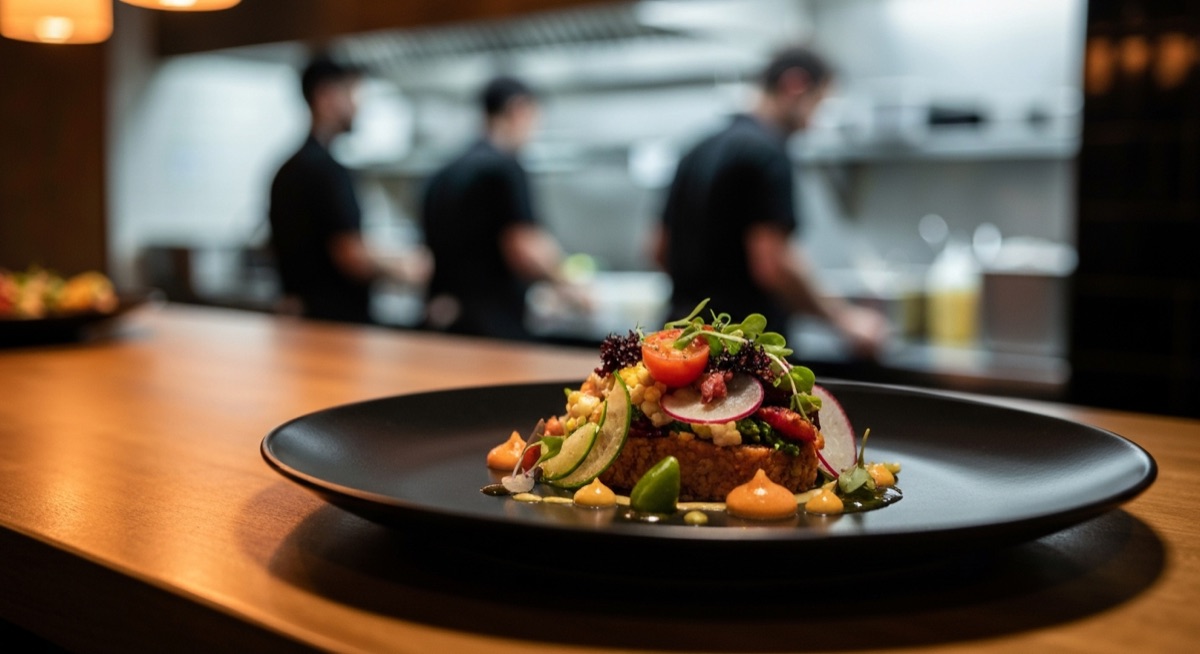
The chef’s counter deserves its own explanation because it’s a materially different experience from table dining, even when the menu is identical. At a counter seat, you have a direct sightline into the kitchen. You watch the courses being assembled. You hear kitchen communication. You interact with the cooks presenting your food rather than through a server relay. The pace changes. The conversation changes. The first time is a little disorienting in the best possible way.
Kadence and Soseki are built around this format. The counter isn’t a backup option for parties who couldn’t get a table — it’s the whole point. The way courses are presented, the way the kitchen talks to guests, the architecture of the space: all of it is designed around counter logic.
Kabooki has a sushi bar that functions comparably for the omakase format. You’re across from the chef, the progression is presented directly to you, and the dynamic is more traditional Japanese sushi-bar than the modernist counter approach at Kadence or Soseki — but the fundamental interaction is the same. At Sushi Pop, bar seating offers a version of this, though the theatrical format means the presentation is more outward-facing than the close-in sightline at the anchor restaurants.
One practical note: at Kadence and Soseki, counter seats aren’t always bookable separately from the general reservation pool on Tock. If you have a strong preference either way, contact the restaurant directly after booking. Both are small operations and a direct message through Tock or email gets a real answer.
What It Actually Costs: The Full-Check Math
The food price is not what you’ll spend. Three scenarios, using Orange County’s 6.5% sales tax and a 20% gratuity on the pre-tax food-and-beverage total:
Scenario A: $95 tasting menu with $50 wine pairing Food: $95 / Pairing: $50 / Pre-tax total: $145 / Tax: $9.43 / Tip (20% on $145): $29 Out the door: approximately $183 per person
Scenario B: $95 tasting menu, no pairing Food: $95 / Pre-tax total: $95 / Tax: $6.18 / Tip (20% on $95): $19 Out the door: approximately $120 per person
Scenario C: $75 tasting menu with $30 non-alcoholic pairing Food: $75 / Pairing: $30 / Pre-tax total: $105 / Tax: $6.83 / Tip (20% on $105): $21 Out the door: approximately $133 per person
For two people at one of the anchor restaurants with pairings, budget $360–$370 total. Without pairings, budget $235–$245.
Tock charges the full food cost as a deposit when you book — not when you arrive. Your card is charged per person at the time of reservation. Beverages, beverage tax, and gratuity are settled at the restaurant after the meal. This isn’t unusual for tasting-menu restaurants, but it surprises first-time Tock users. If you’re booking for four people at $95 a head, $380 hits your card before you’ve left the house. Budget for it. Non-alcoholic pairings, where available, typically run $25–$40 and are worth asking about when you book; they’re often not listed prominently on the reservation page.
How and When to Book
Tock is the dominant reservation platform for this category in Orlando. Kadence, Soseki, and Sushi Pop all use it. Resy handles some mid-tier independent restaurants; OpenTable is less common here. The main difference from OpenTable is the deposit structure — you pay when you book, not when you show up.
For Friday and Saturday seats at Kadence, plan three to six weeks out. For Soseki, two to four weeks. These aren’t guarantees — both restaurants release cancellations regularly, and checking Tock on a Thursday morning for the following Tuesday dinner is often productive. Enable the notification feature; it works. Weeknights open significantly faster than weekends.
On seasonal timing: Orlando’s independent tasting-menu restaurants don’t run on a Disney calendar, but they’re affected by it. Spring break and summer drive dining foot traffic even at restaurants with no theme-park connection. Late August through September and January through early February are when reservations come easiest. January in particular tends to be a good month for value — post-holiday, low tourist volume, and chefs are often working out new dishes for the year. It’s one of the better times to be eating seriously in this city.
Don’t assume a restaurant is fully booked because the first three dates you checked showed no availability. Check Tock’s full calendar view two to three weeks out. The deposit structure means some percentage of reservations gets released every week. Cancellations are real and regular.
What to Skip
On International Drive and in the Disney Springs cluster, several venues advertise “tasting menus,” “chef’s progressions,” or “multi-course experiences” that are, in practice, bundled appetizer sequences running through a kitchen doing 200-plus covers a night. The tells are consistent: substitutions allowed or encouraged at every course (which means the kitchen isn’t driving the progression), fewer than five courses marketed as a “tasting,” and prix fixe options that function primarily as upsell vehicles for the main à la carte menu. None of that is inherently bad dining, but it’s not a tasting menu in any meaningful sense.
What makes it worth flagging: the per-person prices in those settings often match what Kadence or Soseki charge for the real thing. If a “tasting menu” at a tourist-corridor restaurant is $65 for four courses with modifications allowed, you’re mostly paying for location convenience. Apply that filter and the category sorts itself out quickly.
Serious multi-course, chef-driven meals exist in Orlando in the sub-$100 food range, and Kadence and Soseki are where to start. Both are small. Both require planning. Both deliver the kind of meal that Orlando’s resort pricing would suggest requires a $300 check. Budget $120–$185 per person all-in depending on whether you do a beverage pairing. Book through Tock, get well ahead of your target weekend, and treat the counter seat as the feature it is.