First Time Homebuyer Down Payment Programs in Orlando Florida
A qualifying Orange County buyer in 2026 who layers every available program can walk into closing with combined down payment and closing cost assistance drawn from three separate government sources…

First Time Homebuyer Down Payment Programs in Orlando Florida
A qualifying Orange County buyer in 2026 who layers every available program can walk into closing with combined down payment and closing cost assistance drawn from three separate government sources: a Florida Housing Finance Corporation bond loan, FL Assist, and Orange County SHIP. The exact amount shifts with household income, which SHIP tier applies, and whether funding is still available when you need it. None of that is promotional framing. It’s the arithmetic of stacking three programs that explicitly allow it — provided the buyer’s income, the property address, and the lender all line up.
Most coverage of these programs is either too vague to act on or wrong on the key distinctions. City of Orlando SHIP and Orange County SHIP are administered by entirely separate offices, with separate funding pools and separate geographic boundaries. The confusion persists even in local real estate marketing, which, honestly, should embarrass some of those agents. This guide works through each program individually, then explains how to combine them — with honest math on what they actually deliver in a market where mortgage rates remain elevated.
What’s Available Right Now
Three programs are relevant for most Orange County first-time buyers in 2026.
The Florida Housing Finance Corporation (FHFC) Homebuyer Loan Program is the state-level base. It provides a below-market 30-year first mortgage paired with a second mortgage for down payment and closing cost help.
City of Orlando SHIP is a city-funded subordinate loan covering properties within Orlando city limits only, administered by the City of Orlando Housing and Community Development Division at 400 S. Orange Ave.
Orange County SHIP covers unincorporated Orange County — administered through Orange County Housing and Community Development at 525 E. South St., reachable at 407-836-5150.
“First-time buyer” carries the same federal definition across all three: you have not owned a primary residence at any point during the prior three years. You may have owned a home before; as long as three years have passed since you sold or transferred it, you qualify. Divorced individuals who relinquished ownership in a settlement, and people who have owned only a mobile home not permanently affixed to a foundation, often qualify under specific provisions. Confirm with a HUD counselor. These edge cases trip people up more than you’d expect.
Florida Housing Finance Corporation: Where You Start
The FHFC Homebuyer Loan Program does two things at once: it provides a 30-year fixed first mortgage at a rate below prevailing market, and it pairs that mortgage with a second mortgage for assistance funds. Bond loan rates are set periodically and have historically run 0.25 to 0.75 points below conventional retail. That margin matters more than it sounds on a 30-year commitment.
FL Assist is a deferred second mortgage. Zero percent interest. No monthly payment. Current assistance amounts should be confirmed directly with FHFC or a participating lender — they’ve changed in recent years, and amounts have been up to $10,000 for FHA, VA, or USDA loans and up to $7,500 for conventional. Verify current 2026 figures at floridahousing.org or by calling FHFC at 800-814-HOME before relying on those numbers.
“Deferred” means no payment until the first mortgage is paid off, the home is sold, refinanced, or the buyer stops occupying it as a primary residence. At that point, the full balance comes due. It does not forgive over time. Buyers who plan to stay a decade or more will likely never feel the repayment until they sell. Buyers who think they might refinance in three years need to account for that balance in their exit math. A surprising number don’t, until it’s almost too late.
FL HLP is a different animal — an amortizing second at 3% interest with a 15-year term, providing up to $10,000. It adds a monthly payment, which affects debt-to-income ratios and thus maximum purchase prices. For buyers near the DTI ceiling, FL HLP can actually reduce what they qualify to borrow. Run both scenarios with your lender before assuming FL HLP is the better option.
Income limits for Orange County are set at percentages of Area Median Income and updated annually by HUD. The 2025 AMI for a family of four in the Orange-Osceola-Seminole MSA was approximately $91,300; confirm the 2026 figure directly with FHFC, since HUD typically releases updated numbers in spring.
The purchase price cap under FHFC’s program has been roughly in the $420,000–$450,000 range in recent periods — and Florida Housing adjusts it periodically as home values rise. Get the current 2026 cap directly from FHFC before assuming any figure holds. In practice, the neighborhoods where inventory still exists below that ceiling in Orange County include Pine Hills, Azalea Park, Taft/Meadow Woods, Lockhart/Oak Ridge, and Eatonville. The sub-$400,000 single-family market has tightened considerably, but those corridors still produce qualifying inventory with some regularity. Anyone telling you there’s nothing left to buy at these price points hasn’t looked hard enough.
City of Orlando SHIP vs. Orange County SHIP: Two Programs, One Common Confusion
The single most repeated error in coverage of these programs — including on real estate agent websites that really ought to know better — is treating City of Orlando SHIP and Orange County SHIP as interchangeable. They are not. Separate funding from the State Housing Initiatives Partnership Act. Separate administrators. Separate application processes. They apply to different geographic areas.
City of Orlando SHIP is administered at 400 S. Orange Ave. It covers properties within the incorporated boundaries of the City of Orlando — Parramore, College Park, Audubon Park, downtown-adjacent neighborhoods. The program provides a deferred, forgivable loan with a compliance period of up to 5–15 years. Stay through the compliance period and the loan is forgiven. Sell or refinance early and you owe back a prorated portion.
Income tiers follow SHIP’s standard federal structure: Very Low Income (at or below 50% AMI), Low Income (51%–80%), and Moderate Income (81%–120%). Current amounts and funding availability must be confirmed directly with the City of Orlando Housing Division. SHIP funding moves in cycles, and there are periods where the application window is open but no commitments are actually being made. That reality blindsides buyers who assumed “the program exists” means “the program has money right now.” Call or visit the Housing Division to confirm whether funds are active before proceeding.
Orange County SHIP is administered at 525 E. South St. in downtown Orlando (407-836-5150). It covers unincorporated Orange County — Pine Hills (most of it), portions of Azalea Park, Taft, Meadow Woods, and most of the suburban grid between municipalities. Same AMI tiers, same deferred forgivable structure, same compliance period range. Same funding uncertainty. SHIP is funded through documentary stamp tax revenues, and how much is available fluctuates year to year.
Determining which program covers your address is not as simple as it sounds. The City of Orlando boundary does not follow zip codes or neighborhood names. A house on one block in Pine Hills may be in unincorporated Orange County; the next block over may fall inside city limits. Call either housing office with the specific property address to confirm. Don’t rely on a zip code, a neighborhood name, or what a real estate agent says without verification. Parramore sits within city limits and is eligible for City of Orlando SHIP — worth noting because it’s one of the few urban neighborhoods where prices remain accessible to low-income buyers. For a broader view of what different price points get you across the county, our home & property coverage works through those tradeoffs in detail.
How to Stack All Three
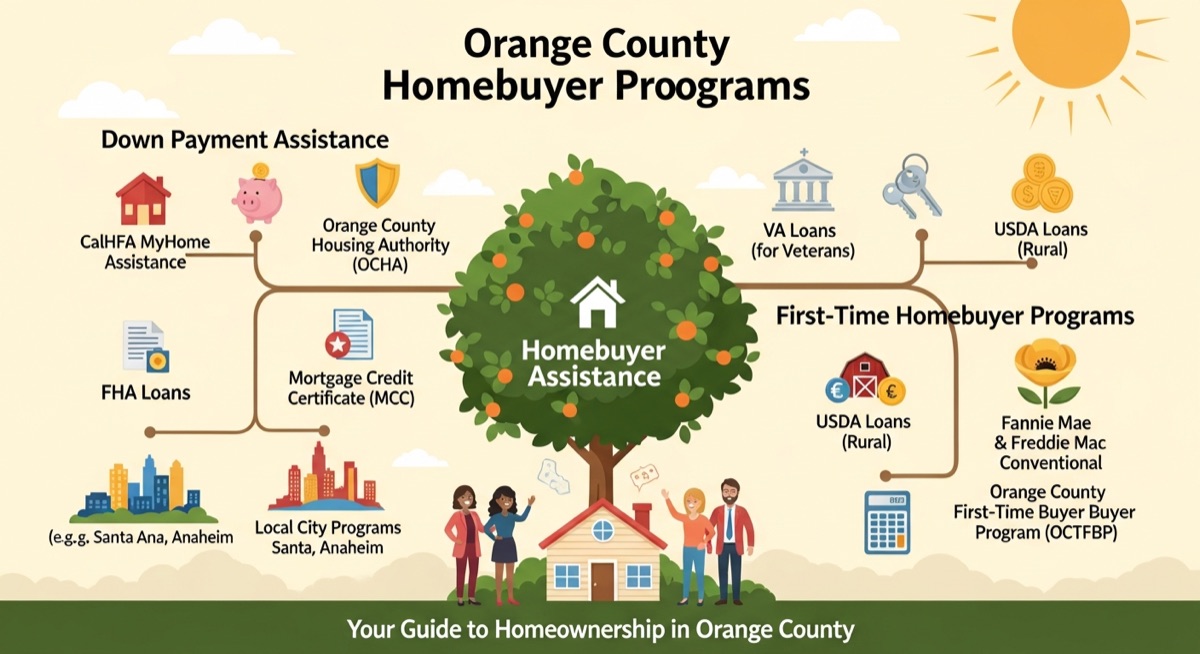
FHFC guidelines explicitly permit combining a Florida Housing first mortgage and FL Assist with an additional subordinate loan from a government entity — City of Orlando SHIP or Orange County SHIP. Here’s how it works in practice.
A single earner buying a $310,000 single-family home in Pine Hills (unincorporated Orange County), with modest savings and solid credit, who hasn’t owned a primary residence in four years: the FHFC bond loan provides a 30-year fixed first mortgage at the current FHFC rate, historically 0.25 to 0.75 points below the prevailing retail rate. FL Assist covers a portion of the down payment — deferred, zero interest, no monthly payment. Orange County SHIP layers in a forgivable second, amount dependent on which income tier applies.
The stacked total is real. What specific dollar figure lands at closing depends on current program amounts, the buyer’s income tier, and whether SHIP funds are still available when the deal closes. That last point is where stacked deals fall apart most often.
Every subordinate loan requires the first mortgage lender to review and approve the full combination structure. Not all FHFC-participating lenders are fluent with Orange County SHIP terms. A lender who hasn’t recently closed a triple-stack deal creates delays — and sometimes misunderstandings serious enough to cost a buyer the contract. FHA allows the first mortgage plus subordinate assistance to cover up to the full appraised value in certain configurations, but the appraisal has to support the purchase price. A low appraisal can blow up a deal entirely.
SHIP funds can deplete between pre-approval and closing. This is not a hypothetical risk. Pre-approval for a SHIP commitment does not guarantee funding will be there at closing if the cycle exhausts. Get a written commitment letter from the SHIP office — not a verbal confirmation. Any buyer considering a triple-stack should review the full structure with a HUD-approved housing counselor before committing to a lender. The counselor will catch conflicts between program terms that neither the buyer nor a busy loan officer catches in time.
The Rate Environment: Honest Math for 2026
Rates remain elevated relative to the 2020–2021 lows, with prevailing rates in the 6.5–7%+ range. Some buyers — and plenty of real estate agents — have suggested that elevated rates neutralize the benefit of these programs. The math doesn’t support that.
The FHFC bond rate has historically run 0.25 to 0.5 points below the prevailing retail FHA rate. On a $300,000 loan, a 0.5% rate reduction saves roughly $90–$100 a month. The spread is narrower than it was in 2020, but it’s still real money compounded over years of payments.
FL Assist’s 0% deferred structure actually becomes more valuable in a high-rate environment. It gives you financing at zero percent interest at a moment when market money costs 6.5–7%. The higher market rates climb, the more valuable the deferred structure becomes — because the borrower pays no interest on the assistance amount at all, while equivalent conventional financing would carry significant interest cost. That point gets lost in a lot of coverage of these programs, where elevated rates get framed as a reason to wait. The deferred second works in your favor precisely because rates are high.
These programs don’t make a $450,000 home affordable on a modest income. They don’t eliminate the fundamental math of housing costs versus income. What they do — and do well — is close the gap for buyers who are already close to qualifying. A family that can afford the monthly payment on a $300,000 home but can’t accumulate a down payment while paying rent in a tight rental market. That’s the buyer these programs actually serve. For someone who needs the programs to make the monthly payment workable in the first place, no amount of down payment help solves the problem. That’s not cynicism; it’s arithmetic. The broader question of whether buying pencils out at all — versus continuing to rent — is worth working through; the costs that don’t show up in the calculator cover that ground for the Orlando market specifically.
Lenders and Counselors: Who to Actually Call
Not all FHFC-participating lenders are equally useful for bond loan deals in Orange County. The FHFC maintains an approved lender list at floridahousing.org, but participation status doesn’t reflect volume. A lender who closes three bond loans a year will be slower and less fluent than one who closes thirty. That difference shows up at the worst possible moment — usually right before your contract deadline.
Among documented Orange County participants — verify current participation status against the FHFC lender list before proceeding, since participation can change — are Regions Bank, Truist, Fairway Independent Mortgage, CrossCountry Mortgage, Movement Mortgage, and Guild Mortgage. Fairwinds Credit Union and CFE Federal Credit Union have historically served Orange County members through FHFC programs. Credit union originators sometimes provide more attentive service for first-time buyers, though turnaround times vary by branch and by how busy the pipeline is.
Ask any lender directly: “How many Florida Housing bond loans did you close in Orange County in the past 12 months?” If the answer is below five, ask more questions before proceeding. A loan officer who hedges or can’t answer that off the top of their head is telling you something.
HUD-approved housing counselors serving Orange County — verify current status and contact information directly, as program offerings change — include:
- NeighborWorks Central Florida, headquartered in the Eatonville area, offering pre-purchase counseling, homebuyer education workshops, and direct program navigation
- Pathways to HomeOwnership, offered through Orange County’s Neighborhood Service Centers and closely connected to the SHIP application process
- Housing and Education Alliance, which has served the Orlando metro with both individual counseling sessions and group homebuyer education courses
A HUD counseling certificate is required before closing on any FHFC program loan. It’s a program condition, not optional. The certificate comes after completing an approved pre-purchase education course. Schedule it early — counselors are busy, and course availability varies. Buyers who treat this as a box to check at the end are the ones scrambling to reschedule around a closing date.
How to Apply: The Actual Sequence
Pull your credit and verify the three-year clock first. Know your score and know your ownership history. If you owned a home in the past three years, confirm the sale or transfer date with documentation before anything else.
Complete HUD counseling and get your certificate. Contact NeighborWorks Central Florida, Housing and Education Alliance, or Pathways to HomeOwnership and schedule the homebuyer education course immediately. This is the step most buyers delay and then regret when it holds up closing.
Call the relevant SHIP office before you start pre-approval. City of Orlando SHIP is at 400 S. Orange Ave. Orange County SHIP is at 525 E. South St., 407-836-5150. Ask directly: “Is your SHIP program currently accepting applications for [your income tier]?” Get a name and a date. A verbal “yeah, we should have funds” is not a commitment.
Find a participating lender with active bond loan volume. Use the FHFC lender list, ask the volume question, and tell the lender upfront you intend to layer FL Assist and SHIP. Verify immediately that they’re set up to work all three layers. If they seem uncertain about the structure, find another lender.
Get pre-approved with all assistance layers verified before going under contract. This means a written pre-approval from the lender (including all second mortgages) and a written commitment or reservation from the SHIP office. Do not make an offer assuming funds will be there without something on paper.
Understand the compliance periods before you close. FL Assist is deferred but not forgivable — full balance due at sale or refinance. City and County SHIP forgivable loans carry compliance periods up to 5–15 years, with prorated repayment if you exit early. Map out your likely hold period. If there’s any real chance you’ll need to move in five years, run the repayment math before you sign.
What Kills Deals
Loan officers and housing counselors who work these programs describe failure patterns that come up again and again.
Income exceeds the cap at underwriting. Gross income for FHFC purposes includes everything an underwriter counts: base salary, overtime, part-time work, 1099 income, alimony received, rental income. A buyer who earns a base salary plus consistent secondary income may be underwritten above the program ceiling. Know your full underwritten income figure before applying — not just your W-2.
Purchase price above the program ceiling. In a rising market, a house that’s priced right in March can get bid up above the FHFC cap by April. The program won’t close on a property above the ceiling. Period.
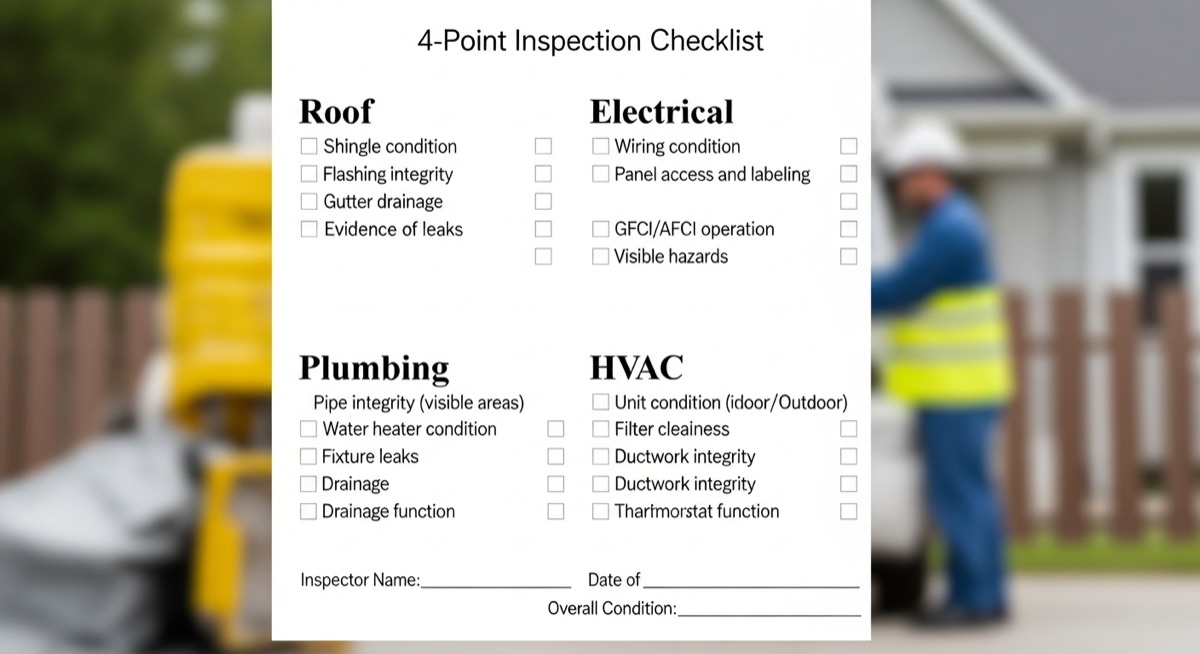
FHA inspection failures on aging inventory. Many homes in the lower price ranges in Pine Hills and Parramore are older construction with deferred maintenance. FHA appraisals flag health-and-safety issues: failing roofs, unpermitted additions, peeling paint in pre-1978 homes, HVAC failures. SHIP funds generally can’t be used to repair a property before closing. If the seller won’t make repairs — not a given in distressed or competitive sales — the deal is dead.
SHIP funds depleted between pre-approval and closing. A reservation made in June may be void by September if the cycle exhausted. Get a written commitment letter with a clear expiration date, and move the transaction forward as quickly as possible once SHIP funds are reserved.
The federal recapture provision. Some SHIP configurations include a federal recapture clause that, in rare circumstances where the borrower’s income has significantly increased, can trigger a federal tax obligation even after the local forgiveness clock has run. It’s uncommon and capped, but it exists. A HUD counselor will explain it. Buyers who find out about it late — say, at the point of selling — are unpleasantly surprised in a way that’s entirely avoidable.
Orange County Public Schools employees and county government workers should ask HR directly about any employer-assisted housing programs. Don’t assume something exists because someone mentioned it; verify it. The same goes for programs created under Florida’s Live Local Act, passed in 2023 and amended since. The availability of employer-assisted homebuying benefits varies and changes.
First-time buyers in Orange County have real tools available — more than most markets offer, and more than most buyers know about going in. The obstacle isn’t the programs themselves. It’s the navigation: figuring out which office covers which address, finding a lender who can actually execute the stacked structure, and understanding which program terms create repayment obligations that outlast the excitement of closing day. Get the HUD counselor involved before you’re deep in the process. Call the SHIP offices before assuming funding exists. Find a lender who has closed this combination recently and can prove it. The path is specific, but it’s walkable.
Program amounts, income limits, and funding availability are subject to change. Confirm current figures directly with Florida Housing Finance Corporation (floridahousing.org, 800-814-HOME), Orange County Housing and Community Development (407-836-5150), and the City of Orlando Housing and Community Development Division before applying.