What Orlando Homeowners Are Actually Paying for a Whole-Home Generator in 2026
Orange County permit requirements, fuel source availability, and HOA rules each add to the final bill. Here's what licensed local dealers and the county building division confirm for 2026.

Orange County permit requirements, fuel source availability, and HOA rules each add to the final bill. Here’s what licensed local dealers and the county building division confirm for 2026.
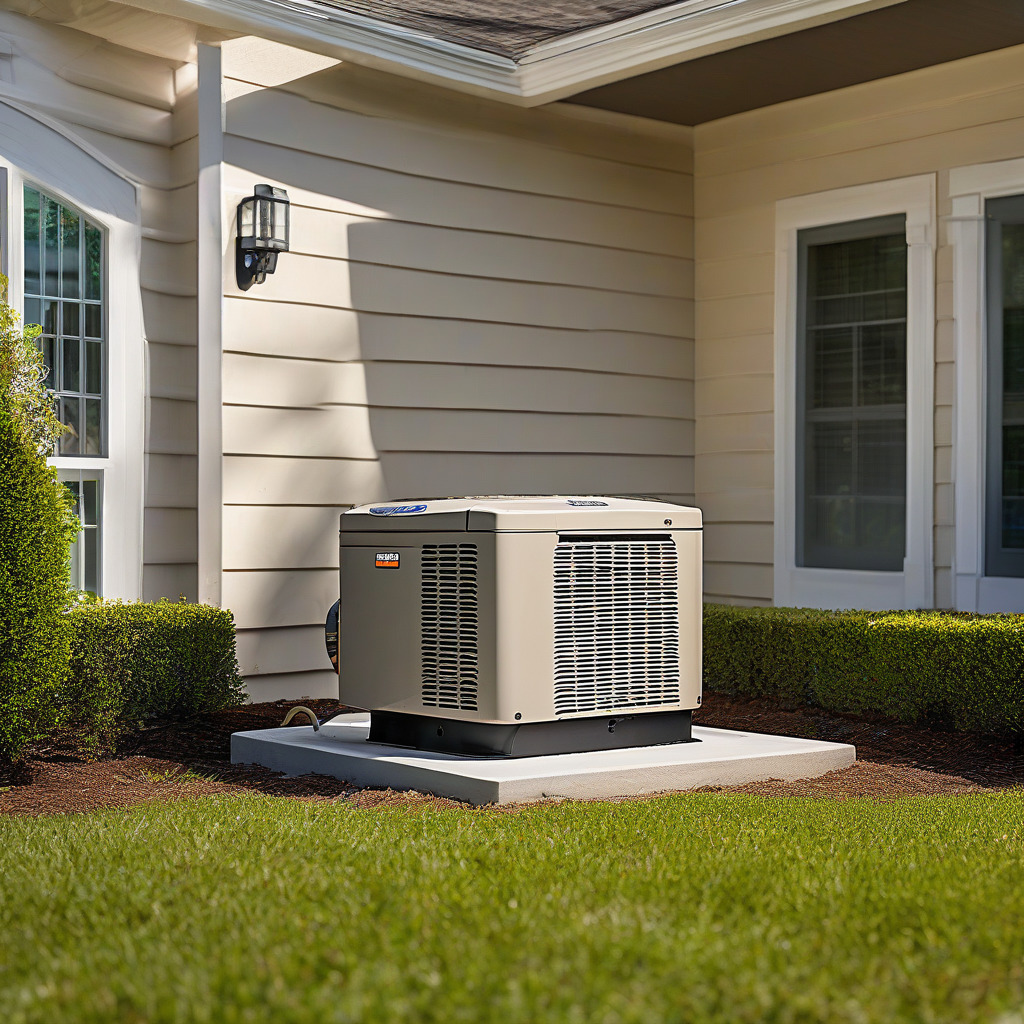
The short answer: a whole-home standby generator installed in Orange County in 2026 runs between $8,500 and $24,000 fully installed, depending on wattage, fuel source, electrical complexity, and whether your HOA requires an enclosure. You’ll need a permit. The Orange County Building Division is currently processing generator permit applications in one to three weeks under normal conditions. Natural gas isn’t available on every street in this county — and if yours is one of them, your costs go up. Propane setup adds $2,700 to $4,400 for a purchased tank with installation. Everything below explains what drives those numbers.
Why Orlando Homeowners Are Moving on This Right Now
Hurricane Ian in September 2022 left parts of Orange County without power for days. The Orange County Building Division saw a significant post-storm permit surge, and homeowners who sat through multi-day outages have been calling for quotes ever since.
The heat is what non-Floridians consistently underestimate — and what some longtime locals underestimate until it’s their own house without power. On a typical summer afternoon in Orange County, when the heat index regularly exceeds 100°F, an unventilated interior reaches 90°F within four to six hours of losing air conditioning. Faster in homes with west-facing windows or dark roofing. For elderly residents, infants, or anyone with a medical condition, that’s not a comfort problem. It’s a health emergency.
July is when every generator company in the metro gets buried. Installation slots are already committed to customers who placed orders earlier in the year. The off-season window — roughly November through February — is when dealers have the most scheduling flexibility and when the permitting office moves fastest. If you can commit to an off-season install, you’ll avoid the August scramble entirely.
What You’ll Actually Pay — Installed Cost Ranges by Wattage Tier, Orange County 2026
The figures below reflect installed costs gathered from licensed dealers operating in the Orlando metro, consistent with sizing guidance from Generac and Kohler for Central Florida homes. Quotes assume natural gas at the meter, no HOA enclosure required, and standard electrical panel access.
Tier 1: 14 to 18 kW (Smaller Homes, Essential Loads)
Typically recommended for homes under approximately 1,800 square feet with a single-zone HVAC system running a 2-ton or 2.5-ton unit.
| Line Item | Range |
|---|---|
| Generator unit (14–18 kW) | $3,200–$4,400 |
| Labor (installation, commissioning) | $1,200–$1,800 |
| Automatic transfer switch (200A) | $900–$1,200 |
| Concrete or composite pad | $350–$550 |
| Total installed (gas at meter) | $8,500–$13,000 |
Tier 2: 20 to 22 kW (The Most Common Sale in the Orlando Market)
Dealers consistently report this as the volume tier in Central Florida. It handles a 3-to-4-ton A/C system plus full household circuits — which maps to most Orange County homes built after 1995 in the 2,000 to 2,500 square foot range. If you’re trying to guess where you land before calling for a quote, it’s probably here.
| Line Item | Range |
|---|---|
| Generator unit (20–22 kW) | $4,200–$5,600 |
| Labor | $1,400–$2,000 |
| Automatic transfer switch (200A) | $900–$1,300 |
| Concrete or composite pad | $350–$550 |
| Total installed (gas at meter) | $12,000–$17,000 |
Tier 3: 26 to 36 kW (Larger Homes, Two-Zone HVAC, Home Offices)
For homes above 2,500 square feet, two-story construction with multiple A/C zones, or households running high-draw medical equipment, EV charging, or home-office server infrastructure.
| Line Item | Range |
|---|---|
| Generator unit (26–36 kW) | $6,500–$10,500 |
| Labor | $1,800–$2,800 |
| Automatic transfer switch (200A–400A) | $1,100–$2,000 |
| Concrete pad (larger footprint) | $450–$700 |
| Total installed (gas at meter) | $16,000–$24,000 |
What these quotes don’t include: a new gas service lateral from the street to the meter (see the fuel section below for Peoples Gas costs), propane tank setup if natural gas is unavailable (add $2,700–$4,400 for a purchased tank with installation), HOA-required enclosure or decorative screening ($800–$3,000), and Orange County permit fees ($150–$400, detailed in the permit section below).
Sizing for Florida — Why Your A/C Tonnage Drives Everything
National generator sizing guides lead with square footage. That framework fails in Central Florida because the dominant load in an Orlando home during an outage isn’t the refrigerator or the lights. It’s the air conditioner, running nearly continuously from May through October. A generator that can’t sustain the A/C compressor under full summer load isn’t a backup power system — it’s an expensive noise maker.
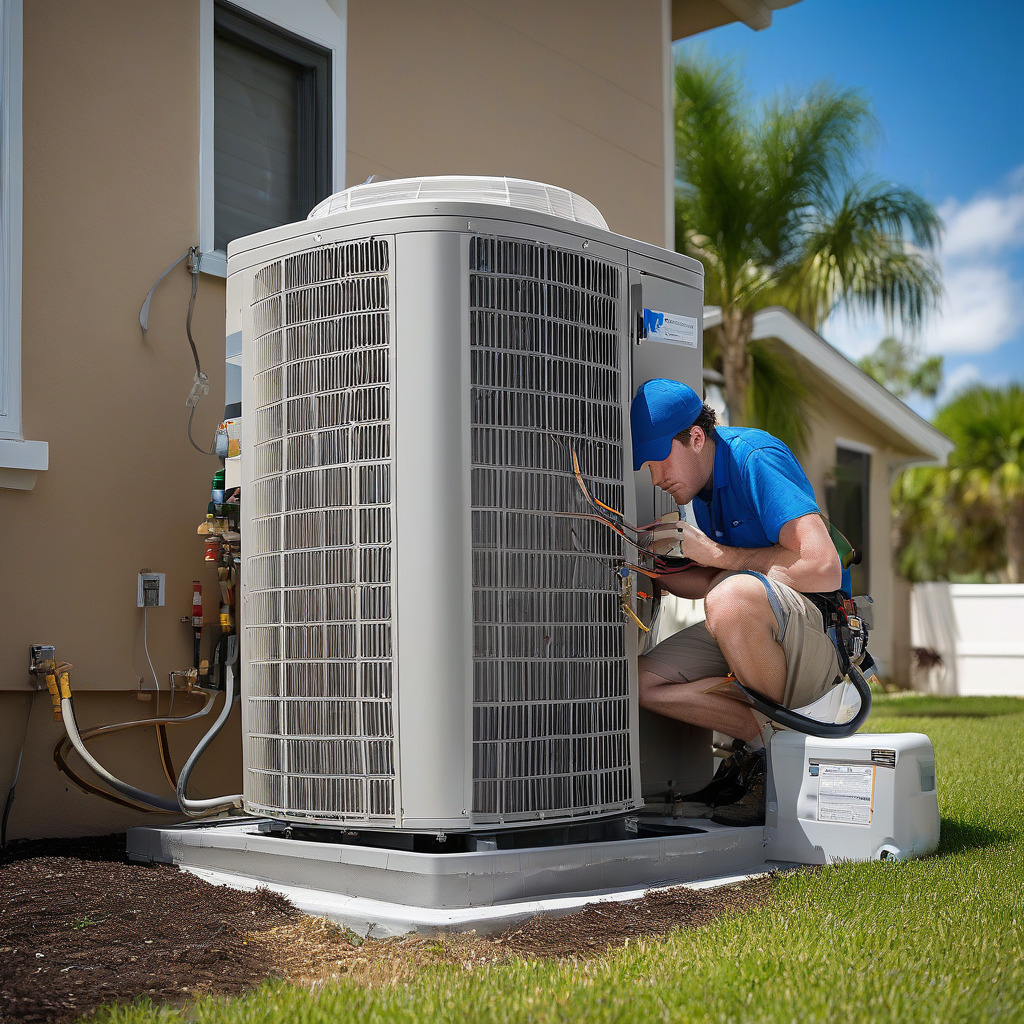
Start any sizing conversation with your A/C tonnage, which you’ll find on the data plate of your outdoor condenser unit.
| A/C Tonnage | Recommended Generator Minimum | Typical Home Size (Central FL) |
|---|---|---|
| 2–2.5 ton | 14–18 kW | Under 1,800 sq ft |
| 3–3.5 ton | 18–20 kW | 1,800–2,400 sq ft |
| 4 ton | 22–24 kW | 2,400–3,000 sq ft |
| 5 ton | 26–30 kW | 3,000+ sq ft |
Two-zone systems and variable-speed inverter units have lower surge demands, so you may be able to size one tier down if your HVAC is recent and variable-speed. Ask your HVAC contractor to confirm before you commit to a unit size.
Here’s what trips people up most often: your A/C compressor draws significantly more power the moment it kicks on than it does while running. A generator that meets running wattage but not surge wattage will trip every time the compressor cycles. In an Orlando August, that’s every few minutes. Both Generac and Kohler publish surge wattage ratings for all residential units — verify that number, not just the rated running wattage, before you sign a contract.
Before you call for a quote, pull your most recent OUC bill (it shows monthly kWh consumption, which gives dealers a usage baseline), find your A/C tonnage from the condenser data plate, know your home’s square footage, and identify any high-draw loads beyond HVAC — pool pump, well pump, electric vehicle charger, or medical equipment.
Natural Gas or Propane — What the Orlando Utility Map Means for Your Decision
This is the question that derails more Orlando homeowners than any other, because the answer varies dramatically by neighborhood. People get deep into the quote process before discovering their street doesn’t have a gas main. Don’t be that person.
OUC is an electric utility. It does not provide natural gas. Gas service in Orange County comes from Peoples Gas, a subsidiary of TECO Energy/Emera, which operates the residential distribution network for the county. The catch: Peoples Gas doesn’t serve every street in Orange County, and the gaps are significant in several of the county’s fastest-growing areas.
Newer master-planned communities in Lake Nona, most of Horizon West, and substantial portions of East Orange County were built without gas mains. Developers in those areas went all-electric or propane-optional. If you’re in one of them, natural gas isn’t available — and bringing a new main to your street isn’t something a homeowner initiates or funds. Call Peoples Gas at 877-832-6747. Give them your address and they can tell you within minutes whether a gas main exists at your street and whether your meter is active. Two minutes on the phone can save you a lot of confusion later.
If Peoples Gas serves your street but your home doesn’t have a meter, you’ll need a new service lateral — a connection from the street main to your meter location. Peoples Gas installs the lateral; a licensed plumber runs the line from the meter to the generator pad. The lateral alone runs approximately $500–$2,500 depending on distance from the main and whether pavement or landscaping is disturbed. Peoples Gas has a line extension policy that may cover the first portion of the run at no charge. Ask about current terms when you call.
Propane setups cost more upfront but are completely viable — in fact, they’re standard in much of Horizon West and Lake Nona. A 500-gallon tank is the practical choice for a whole-home generator; dealers in this market consistently steer homeowners away from 250-gallon tanks, which lack the capacity for extended outages. Tank rental runs approximately $75–$150 per year; propane in Central Florida is currently priced around $2.50–$4.00 per gallon. Installation of the tank pad and associated lines adds $500–$1,500 to the project. Ask your generator dealer which suppliers they work with for new tank setups — that relationship matters when you need a delivery during storm recovery and every supplier in the county is slammed.
Natural gas is cheaper to operate and eliminates refueling concerns during a prolonged emergency. Propane works in any neighborhood and keeps you off the utility network entirely. If you have a confirmed gas main at the street, natural gas is the better long-term choice on operating costs. If you don’t, propane is a fully functional alternative — not a fallback, just a different setup.
The Orange County Permit Process — Fees, Forms, Inspections, and Real Wait Times
You need at minimum a mechanical permit and an electrical permit for a whole-home standby generator in Orange County. If you’re extending a new gas line, a separate gas mechanical permit is also required. Most licensed contractors pull all permits simultaneously through the Orange County Permitting Services portal. Confirm with the Building Division which permit types apply to your specific installation.
Orange County calculates generator permit fees based on job valuation. For a typical residential installation, combined permit fees run $150 to $400. The online portal provides a fee calculator at submission.
Under normal conditions — non-storm years — Orange County Building processes residential mechanical and electrical permits in one to three weeks. After a major storm, based on the post-Ian surge in late 2022, that window stretched to six to eight weeks, creating a bottleneck that pushed installations out by months. This is one of the stronger arguments for moving before storm season peaks.
The inspection sequence for a standard residential installation follows three stages. First, a rough electrical inspection covers transfer switch wiring, panel connections, and conduit before any walls are closed. Second, the gas line from the meter to the generator is pressure-tested with the inspector present. Third, the final inspection covers the complete installation, generator operation, auto-transfer test, and code compliance sign-off.
Orange County Building Division: (407) 836-5550. Most licensed dealers will handle permit submission as part of the installation contract. Confirm this explicitly before signing — don’t assume it.
Florida Building Code setback requirements apply to generator placement. Current standards require a minimum of 18 inches from combustible materials, a minimum of 5 feet from any window or door opening, manufacturer-specified clearances from walls and structures, and no placement that blocks egress pathways. Orange County may have local amendments to state minimums. Confirm current requirements with the Building Division before finalizing your pad location.
On skipping the permit: if a generator was installed without permits and your home sustains damage in a storm — whether from the generator or something unrelated — your homeowners insurer has grounds to complicate or deny claims based on the unpermitted work. An unpermitted installation is also a disclosure obligation when you sell, and buyers’ inspectors in this market know what to look for. The permit costs a few hundred dollars. Skip it and you’ll pay far more.
What Florida Homeowners Insurers Actually Do With a Generator
Homeowners who install a standby generator expecting a meaningful premium discount will be disappointed. The value is real, but it comes through claims prevention, not rate reduction. As part of our home & property coverage, we’ve tracked how insurers handle permanently installed home systems across multiple policy types.
Citizens Property Insurance Corporation, which insures a significant share of Orange County homeowners, carries no generator premium discount. Citizens doesn’t classify whole-home standby generators as a protective device eligible for a rate credit under its current underwriting guidelines.
Among private carriers active in Orange County, the picture is mixed. Universal Property & Casualty offers a protective-device credit that can include whole-home generators, typically 1% to 5%, requiring documentation of a permitted installation. Heritage Insurance Holdings and HCI Group (Homeowners Choice) offer similar credits on select policy types — also 1% to 5% — requiring permit documentation and, in some cases, a third-party inspection. Several other active carriers treat generator installations as actuarially neutral and apply no credit either way.
The actual financial argument for a generator is what it prevents. Keep your home operational, your refrigerator cold, and your sump running through an extended outage. A standby generator that heads off a significant spoilage or equipment-failure claim delivers real value that no 2% premium credit touches over the life of the installation. For a fuller picture of what Orange County homeowners are paying across all policy types, see what Orlando homeowners are actually paying for property insurance in 2026.
Several carriers now include questions on policy applications and renewal questionnaires asking whether permanently installed home systems were installed under permit. An affirmative answer supports the protective-device credit. A “no,” an “unknown,” or a discrepancy between your answer and what a post-loss inspection turns up creates complications. Permit the installation.
What Fuel, HOA Rules, and Add-Ons Do to the Final Bill
The base quotes above represent a best-case scenario: natural gas at the meter, no HOA enclosure, standard panel access, flat lot, no extraordinary run distances. Real Orange County installations frequently involve at least one cost-adding variable. Often more.
HOA enclosure and screening requirements are the most variable and most expensive add-on in this market. Several communities require that generators be visually screened from the street and adjacent lots, either with a constructed enclosure or with landscaping that meets specific height and species requirements. Enclosure construction adds $800 to $3,000 depending on HOA specifications and construction complexity. Communities with documented requirements include:
- Laureate Park (Lake Nona): HOA architectural review required; screening or low-profile enclosure standard enforced.
- Baldwin Park: Specific side-yard placement and screening requirements; architectural review board approval required before installation.
- Celebration: Detailed placement requirements enforced by the HOA architectural review board. Confirm current standards before ordering a unit.
- Windermere (town jurisdictions and adjacent HOA communities): Requirements vary by sub-association. Some Windermere HOAs have noise and placement rules that affect which generator models are eligible — check with your specific HOA before ordering.
If your HOA requires architectural review, build in additional lead time. Review board meeting schedules don’t accommodate rush requests, and finding that out after you’ve ordered a unit is an expensive surprise.
Orange County noise ordinance limits apply to generator operation. Get the specific dBA rating for any unit you’re considering and the manufacturer’s stated measurement distance, then compare that to your lot’s actual setbacks before you buy. If you’re in a dense neighborhood or a community with active noise enforcement, this matters.
A 26 kW propane-fueled generator in a community like Celebration — unit, labor, propane tank and lines, Orange County permits, HOA-compliant enclosure — can reach $24,000 or more all-in. If you’re in a community with strict HOA requirements, don’t sign a base quote without getting an itemized add-on estimate. The base number and the real number can be far apart.
When to Buy — Lead Times, Dealer Backlog, and How to Get a Quote
The annual demand cycle for generator dealers in Central Florida is predictable. Inquiries spike in June when storm forecasts come out, peak in July and August, drop sharply in October, and hit their seasonal low from November through February. Off-season installs get better scheduling access, faster permits, and — in many cases — more negotiating room on price. Homeowners who call in August after watching a storm track toward the Gulf are competing with everyone else who waited.
Any named storm approaching Florida immediately extends installation timelines as emergency and existing-customer work takes priority. If you’re reading this during peak season without a contract in place, your realistic installation date is probably fall at the earliest. That makes now the time to get quotes and get on a contractor’s schedule.
When you call for a quote, have this ready: your most recent OUC bill (monthly kWh usage), your home’s square footage, your A/C tonnage (from the condenser data plate), confirmation of whether natural gas is at your street (Peoples Gas: 877-832-6747), your HOA name if applicable, and any special loads beyond HVAC — pool pump, well pump, EV charger, medical equipment. Contractors give more accurate quotes to homeowners who show up prepared.
Verify current license status at the Florida Department of Business and Professional Regulation before signing any contract. Cross-reference against Orange County’s contractor license search as well. Authorized Generac, Kohler, and Cummins dealers for the Orlando metro can be found through the respective manufacturer dealer locators at generac.com, kohlerpower.com, and cummins.com, filtering for Orange County zip codes.
When you receive quotes, ask each contractor to break out unit cost, labor, transfer switch, pad, and permit separately. A single bundled number is nearly impossible to compare across contractors, especially when you’re weighing a natural gas installation against a propane setup with tank costs baked in.
Confirm that the contractor will pull both the mechanical and electrical permits through Orange County, that you’ll receive copies of the approved permit and all inspection sign-offs, and that the final inspection is included in the contract price. Any licensed contractor operating in this county should answer yes to all three without hesitation. If they don’t, pay attention to that.
CityDesk Orlando does not accept payment from contractors or manufacturers for editorial coverage. Installed cost ranges reflect figures gathered from licensed Orange County dealers and are consistent with manufacturer guidance for Central Florida residential applications; individual quotes will vary based on site conditions, fuel source, and HOA requirements. License numbers for any contractor you hire are available through the Florida Department of Business and Professional Regulation at myfloridalicense.com. Orange County permit fee schedules and inspection procedures are confirmed through the Orange County Building Division as of the date of publication; fees are subject to change. Contact Orange County Building Division at (407) 836-5550 or Peoples Gas at 877-832-6747 for current service and permitting information.