Summer Fitness Programs for Orlando Kids in 2026
From YMCA day camps to public pools to free county programming — here's what Central Florida parents need to know before registration opens
Summer Fitness Programs for Orlando Kids in 2026
From YMCA day camps to public pools to free county programming — here’s what Central Florida parents need to know before registration opens
Editor’s note: Pricing, registration dates, and program availability throughout this guide reflect historical data current at time of reporting. Verify 2026-specific details directly with program operators before registering.
The short answer: more summer fitness programs exist for Orlando kids than most parents realize, and some are free.
The longer answer requires knowing which agency runs what, where registration opens first, and how to get financial help before slots disappear. That’s what this guide is for.
It moves quickly — free and low-cost first, then full-price; toddlers before teens; west side before suburbs. Start with the section that fits your family.
Register Early or Miss Out — The Timeline That Decides Everything
Here’s the structural fact about Orlando summer programming that parents tend to learn the hard way: Orange County Parks registration for summer programs has historically opened in April and filled within days. Sometimes within a single business day at the most popular community centers. Demand reliably outpaces supply for anything free or heavily subsidized. If you’ve ever refreshed a registration page and watched slots disappear in real time, you already know.
The YMCA of Central Florida operates on a different but equally compressed timeline. Branch-level summer day camp registration has typically opened in February or March for programs beginning in early June. Families who wait until April to check ymcacf.org often find the lowest-cost time slots already gone — or find themselves on waitlists for financial assistance review while seats fill at full price.
Work backward from these windows. If you need income documentation for the YMCA’s Open Doors scholarship program, gather it now. If you’re targeting Orange County Parks’ free programming at neighborhood community centers, check ocfl.net/parks in late March for the exact date registration goes live.
For City of Orlando swim lesson sessions — a separate agency from Orange County Parks, which confuses plenty of parents every year — bookmark cityoforlando.net/parks and watch for session announcements in April. Summer swim lessons run in two-week blocks. The first block fills fast.
Short version: YMCA opens first, February or March. OC Parks follows in April. City of Orlando pool sessions run April through May for a June start. Plan around that.
Free and Subsidized First — What Orange County and the City Offer at No Cost
For families where cost is the primary constraint, the county and city systems offer multiple entry points with no barrier. Most people skip this section because they assume “free” means “not much.” That assumption is wrong.
Orange County Parks operates a network of neighborhood community centers, and several run summer youth programming that’s either free or priced well below what private providers charge. The Engelwood Neighborhood Center (6123 La Costa Dr.) in southwest Orange County has offered structured summer activities for school-age kids under the county’s “Summer Break” initiative — supervised recreation, fitness activities, and structured enrichment during core summer weeks, designed for families who can’t afford private camp tuition.
The county has also maintained partnerships with Title I schools and federally funded youth programs that can extend free programming to qualifying families. These aren’t always listed prominently on the main OC Parks website. A direct phone call is worth more than any amount of website browsing here. Ask specifically about community center summer programming in your ZIP code and whether any Title I or subsidized enrollment slots are available.
The City of Orlando Parks and Recreation Department — separate from Orange County Parks despite the overlapping names — operates its own rec centers and offers youth summer programming at facilities including the Ragan Park complex. City programming has historically run at low daily or weekly rates for Orlando residents, with reduced-fee enrollment available through the city’s recreation assistance programs. Check cityoforlando.net/parks for current rates.
The distinction that matters: if you live inside Orlando city limits, you may be eligible for City of Orlando resident pricing. If you live in unincorporated Orange County — Pine Hills, Meadow Woods, Tangelo Park, and much of southwest Orange County — you fall under OC Parks. Some families straddle these boundaries and can access both. Worth checking before you assume.
YMCA of Central Florida — Branch by Branch, Cost by Cost
The YMCA of Central Florida operates more than 20 branches across the metro. For Orlando-proper families, the most relevant locations for summer day camp are the Downtown Orlando YMCA (433 N. Mills Ave.), the Hunters Creek Family YMCA (4000 Hunter’s Park Lane) in the growing south Orange County corridor, and the Southeast YMCA (1901 S. Semoran Blvd.), where Open Doors financial assistance utilization tends to run higher than at other branches.
At member rates, YMCA summer day camp has historically run $175 to $225 per week depending on branch and session. Non-member rates are higher. For a full eight-week summer, that’s $1,400 to $1,800 for members. Real money — and I mean that literally, not as a throwaway phrase. It’s why the Open Doors section below matters, and why you should read it even if you’re not sure you qualify.
One thing that consistently gets lost: “summer day camp” at the Y is a supervised program with structured activities, swimming, and field trips. It is not the same as Youth Sports programming, which runs sport-specific clinics and leagues on a per-session basis, and it’s different again from the Healthy Kids initiative, a fitness-and-nutrition-focused program with its own enrollment structure and, at some branches, its own age cutoffs. Different price points. Different schedules.
A parent who calls asking about “summer programs for my child” may be quoted day camp pricing when their kid would actually be better served — and served cheaper — by a specific sport clinic or fitness session. Ask directly about each category. Don’t let the first number you hear be the only one you consider.
For teens specifically: the YMCA offers a teen membership structure that gives kids 13-17 access to fitness facilities, group fitness classes, and structured programming without the full-day camp model. Pricing has historically run $25 to $35 per month in add-on or standalone formats, varying by branch. It’s an underused option for families with older kids who don’t need a counselor watching them all day but do need somewhere to actually work out.
The YMCA Open Doors Program — How the Sliding-Scale Scholarship Actually Works
The YMCA of Central Florida’s Open Doors financial assistance program provides income-based subsidies that can cover a meaningful percentage of — or in qualifying cases, essentially all of — the cost of day camp, memberships, and youth programming. A lot of families who would qualify don’t know it exists.
Applications are handled at the branch level, not through a centralized online form. You go to the branch where your child will participate, ask for the Open Doors financial assistance application, and work with the branch’s membership or program staff directly. The Y typically requires documentation of household income — recent pay stubs, a current tax return, or benefit enrollment letters (SNAP, Medicaid, TANF). If you’re self-employed or have variable income, be prepared to document that clearly. Branch staff have seen every variation. In my experience covering this beat, the Y’s assistance staff tend to be among the more straightforwardly helpful people you’ll encounter in this entire process. They’re not looking for reasons to say no.
Open Doors uses a sliding scale tied to federal poverty guidelines. Families at or near 100 percent of the federal poverty level have received substantial assistance. Families in the 200 to 300 percent range may receive a partial subsidy that brings weekly costs down to something manageable. The Y doesn’t publish a fixed income-to-subsidy table publicly — you need to call or walk in to get a current answer.
Open Doors funding is finite. Branches process applications first-come, first-served within the available pool. Families who show up in late May with income paperwork often find that assistance funds for the summer are already committed. This is not hypothetical. It happens every year.
Call your nearest YMCA branch and ask two questions: When does Open Doors application processing open for summer 2026, and what documents do I need? That phone call is worth more than any amount of website browsing.
Orlando-Area Public Pools — Specific Locations, Fees, and What’s Actually Available for Kids
For families who want structured aquatic programming without the YMCA price tag, Orange County and City of Orlando public pools are the answer. Again: you need to know which agency runs which facility, because the jurisdictional split trips people up constantly.
Barnett Park Aquatic Center (4801 W. Colonial Dr., unincorporated Orange County) is one of the county’s primary aquatic facilities. Daily admission has historically run $2 to $5 for youth — one of the more accessible active-summer options in the county on a per-visit basis. The City of Orlando operates several neighborhood pool facilities with swim lessons structured in two-week sessions at modest per-session rates for residents. Group lessons, not private instruction, and they fill early. The City’s aquatics program focuses on water safety and basic swimming development rather than fitness in the adult sense — which for most parents of school-age kids is exactly what they’re after.
The jurisdictional confusion is real. Barnett Park is an Orange County Parks facility at ocfl.net/parks. Neighborhood pools such as those at Ragan Park are at cityoforlando.net/parks. The fees, schedules, and enrollment processes are entirely separate. Parents searching for “Orlando public pools” may not realize they’re missing half the picture.
The Heat Factor — Why Indoor vs. Outdoor Programming Isn’t Just a Preference
Orlando’s summer climate is a material program-selection variable. Average highs from June through August run 91 to 93 degrees, but heat index readings routinely hit 100 to 108 during afternoon hours. For children, this is a health consideration, not an inconvenience. Our Orlando summer workout safety coverage addresses this in detail for adults and older teens, but the underlying physiology applies equally to younger kids.
Nearly all structured outdoor youth programming in Central Florida runs from 8 a.m. to noon. After that, organized outdoor activity is largely discontinued by competent program operators. Afternoon thunderstorm season, peaking June through September, adds another constraint. Lightning protocols at outdoor pools and fields aren’t optional — a typical afternoon storm will clear a pool or field until the threat passes, and that’s just how July works here.
It’s entirely normal for an outdoor afternoon program to lose meaningful activity time on any given day. An outdoor pool session scheduled for 2 p.m. in July will be interrupted regularly, not occasionally. A morning session is far more likely to complete on schedule. Air-conditioned YMCA and rec center facilities don’t have this problem. For families choosing between a lower-cost outdoor option and a higher-cost indoor program, the actual delivered programming hours may be closer than the schedule suggests. Worth running that math before you commit.
Teens vs. Toddlers — How Age Range Shapes Your Options
Programs that look right on first glance often serve a different age bracket than your child.
For the youngest kids, the City’s aquatics program — which offers parent-and-child and beginner swim lesson formats — is the most reliable entry point. Confirm minimum ages directly; they vary by location.
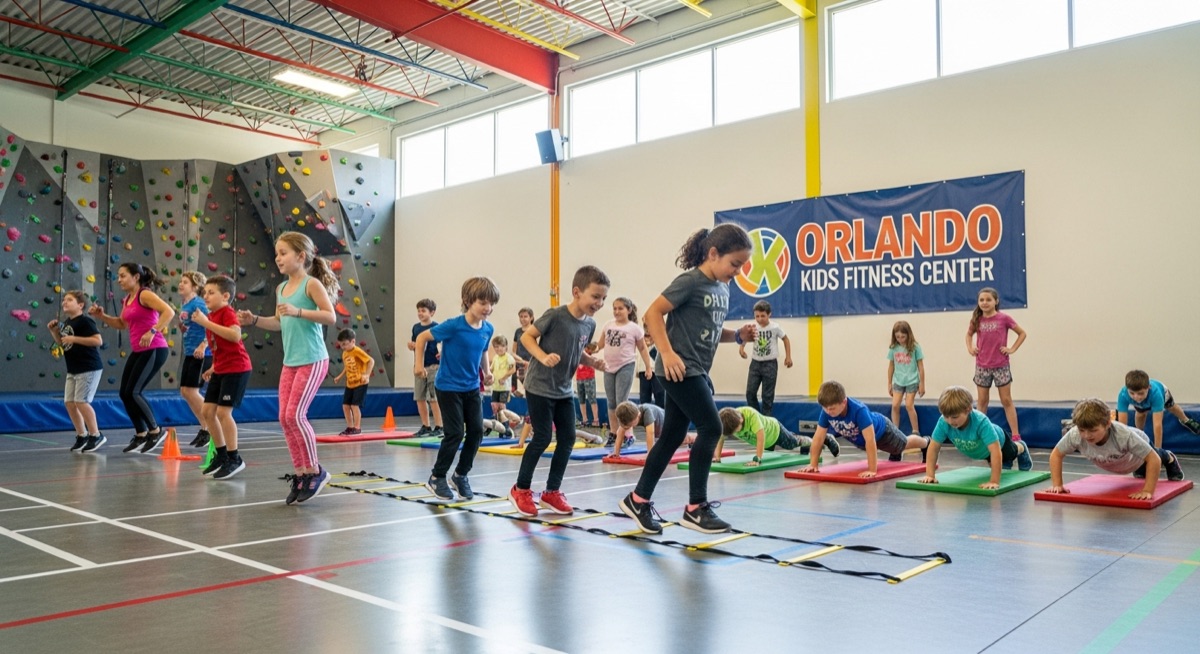
The elementary-age bracket (roughly 6-12) has the widest range of options. YMCA day camp, OC Parks community center programs, city swim lessons, and youth sports all target this group. Most summer programming essentially assumes this is the kid you have.
Teens are where parents need to look specifically rather than assume “youth” covers them. A 16-year-old who wants to work out doesn’t need a counselor watching him do arts and crafts, and honestly, most day camp programs aren’t designed for that age anyway. Teens are better served by the YMCA’s teen membership — facility access, group fitness, structured sports — and by specific teen fitness or sports clinics at individual branches.
OC Parks programming at community centers has historically skewed younger and may have limited structured programming for high school-age kids beyond open gym. City pool lap swim is appropriate for teens who are strong swimmers and want independent workout access during summer. But they have to be able to get there.
Neighborhood Access — Which Facilities Serve Pine Hills, Parramore, and Other Westside ZIP Codes
For families in 32808 (Pine Hills) and 32805 (Parramore and the near west side), the combination of need and access barriers is sharpest in the county. These are ZIP codes with high concentrations of families who qualify for free and subsidized programming and who are least likely to have a vehicle available to reach a YMCA branch or a county aquatic center. That tension is worth naming plainly.
Pine Hills is served most directly by Orange County community center programming in the Engelwood corridor and at nearby county facilities. Parramore is close to downtown Orlando and within range of both City of Orlando rec center programming and the downtown YMCA branch on N. Mills Ave. “Within range” is not the same as easily accessible without a car.
LYNX bus access is a real-world constraint, not a theoretical one. Before committing to enrollment anywhere, families without vehicles should map the specific transit route to that facility. A program that costs nothing but requires multiple bus transfers and significant travel time with a child in July heat is, for many families, not actually usable.
The OC Parks community center programs that serve the local neighborhood are the most realistic option for these ZIP codes. The Engelwood Neighborhood Center exists specifically because county planners recognized that a facility at Barnett Park doesn’t serve families without transportation. That is the design intent — proximity was the whole point — and it’s worth knowing when you’re deciding where to look first. For families navigating tight budgets across multiple fronts, our reporting on free and sliding-scale healthcare in Orlando covers additional low-cost resources available in these same communities.
Your 2026 Checklist — What to Do This Week
Call your nearest YMCA branch now. Ask two questions: When does Open Doors financial assistance application processing open for summer 2026? What documents do I need to bring? Don’t wait for a web form. Branch numbers are listed at ymcacf.org under the branch locator.
Set a calendar reminder for late March. That’s when ocfl.net/parks typically posts the exact date OC Parks summer community center registration opens. If you’re targeting Engelwood or another neighborhood center, plan to register the morning it goes live.
Bookmark cityoforlando.net/parks and check it in April for swim lesson session windows. Confirm that the beginner or intermediate session your child needs is offered at a pool near you and when registration opens.
Figure out which agency serves your address. If you’re not sure whether you live inside Orlando city limits or in unincorporated Orange County, check your property record at the Orange County Property Appraiser’s office. The answer determines which agency’s programming you can access at resident rates.
Gather income documentation before you walk into the YMCA. Recent pay stubs, your most recent tax return, or benefit enrollment letters. Have them in a folder. Families who arrive without documentation lose time and sometimes lose their spot in the assistance queue.
Factor the heat into any outdoor program. Confirm what time of day it runs, what the rain and lightning policy is, and whether days lost to weather are rescheduled or just gone. Morning sessions are more reliable. Ask directly.
Check age eligibility before you invest time in an application. Call or email before driving anywhere. The age brackets in this guide reflect historical norms — individual programs may have shifted.
The summer fitness options available to Orlando kids in 2026 span free community center programming in neighborhood rec centers all the way up to full-service YMCA day camps. For most families, the difference in outcome isn’t really about income. It’s about information and timing.
The programs that serve lower-income families best fill fastest. The financial assistance that makes YMCA programming affordable gets committed early. The families who end up with nothing available are almost always the ones who started looking in May.
Don’t be those families. The programs are there. Start now.