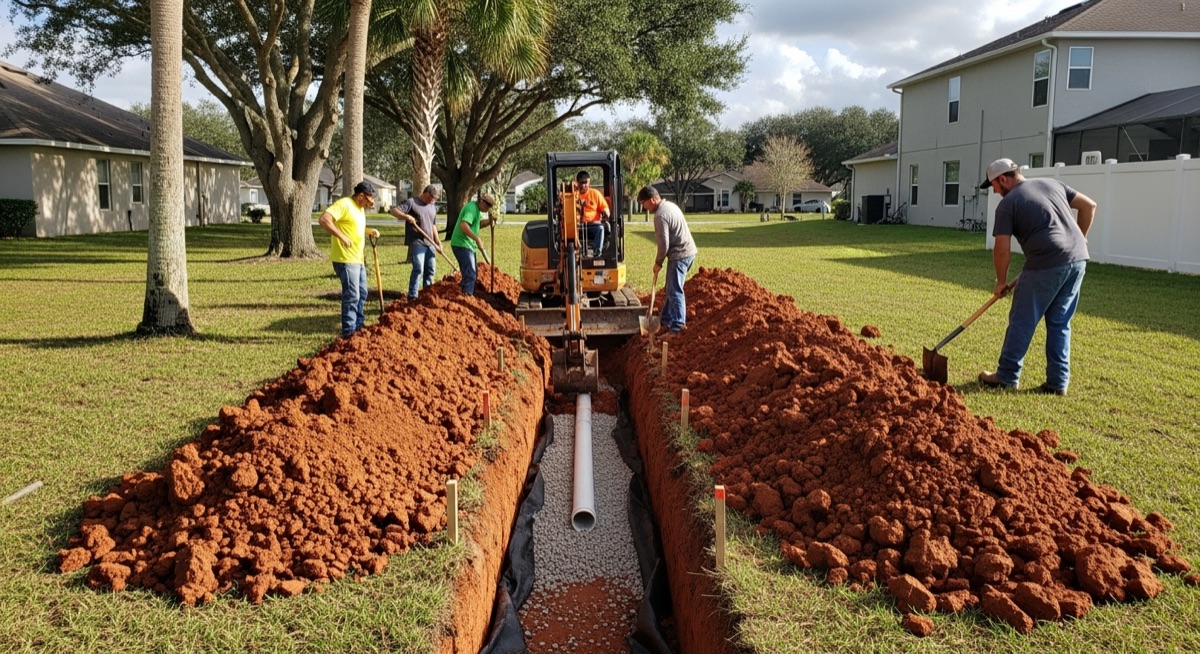
What Orlando Homeowners Actually Need to Know Before Hiring a Plumber
Florida's licensing rules, Orange County permit requirements, local pricing, and the red flags that trip up even careful residents


What Orlando Homeowners Actually Need to Know Before Hiring a Plumber
Florida’s licensing rules, Orange County permit requirements, local pricing, and the red flags that trip up even careful residents
Hiring a plumber should be straightforward. In practice, it’s one of the more legally complicated home service decisions you’ll make as a Central Florida homeowner — not because plumbing is unusually mysterious, but because the rules governing it in Florida differ significantly from what national consumer guides describe. Those guides can get you into real trouble here. The local conditions that stress your pipes are different too. Atlanta or Phoenix homeowners face problems Orlando residents simply don’t encounter, and vice versa.
This piece covers the specifics: the state licensing structure and how to verify it, which permits are legally required and which office issues them depending on where you live, what work actually costs right now in Greater Orlando, and how your neighborhood’s age, construction type, and geology shape what can go wrong and what it’ll cost to fix.
Florida’s Two-Tier Licensing System and Why It Matters Which One Your Plumber Holds
Florida regulates plumbing contractors at the state level through the Department of Business and Professional Regulation. The system uses two distinct license categories that are not interchangeable.
A state-certified plumbing contractor holds a CFC license issued by the Construction Industry Licensing Board, tested at the state level, valid anywhere in Florida. Most established commercial and residential plumbing companies operating across Central Florida carry CFC licenses.
A state-registered contractor has met the licensing requirements of a specific local jurisdiction — Orange County or the City of Orlando, for example — and the state has recorded that registration. Valid only within that issuing jurisdiction. A plumber registered with Orange County cannot legally perform work in Seminole County or Osceola County under that same credential.
That matters more than it might seem. If you live in Lake Nona, which falls in Orange County, and you hire a plumber registered with a different county, that contractor is operating outside their licensed jurisdiction. You may not discover this until a permit inspection surfaces the problem — or until something goes wrong and you try to file an insurance claim and discover that “I didn’t know” isn’t much of a defense.
Verification takes ninety seconds. Go to myfloridalicense.com. Under “Verify a License,” select “Certified Contractor” or “Registered Contractor” under the Construction Industry Licensing Board category. Search by name or license number. The result shows the license type, issuing jurisdiction for registered licenses, current status, and expiration date. Any legitimate contractor will give you their CFC number without hesitation. Hesitation itself is informative.
Permits: Who Pulls Them, When You Need One, and Which Office to Call
This is where Orlando-area homeowners most frequently get into trouble — and where a contractor’s competence becomes clearest fastest.
Permitted work includes: water heater replacement (yes, even a straightforward swap), any pipe rerouting or repiping, sewer line repair or replacement, water service line replacement, gas line work, and new fixtures requiring new supply or drain rough-in. Clearing a drain clog, replacing a faucet, or swapping a toilet generally does not require a permit.
The contractor pulls the permit. Not you. If a plumber suggests that you pull the permit as the homeowner — sometimes called “owner-builder” permitting — understand what that means: you’re assuming legal liability for the work, and your homeowner’s insurance may not cover a subsequent claim. An experienced licensed contractor handles permitting as routine. Walk away if someone asks you to pull your own permit for their job.
Jurisdiction is not uniform across Greater Orlando, and this trips people up constantly. In the City of Orlando, permits go through City of Orlando Permitting Services at orlando.gov. But the city’s boundaries are more compact than most residents assume. Large portions of what people casually call “Orlando” are actually unincorporated Orange County, which falls under the Orange County Building Division at ocfl.net — covering most of Horizon West, the Dr. Phillips area, much of the Lake Nona corridor outside city limits, and residential areas around the theme park corridor.
Winter Park maintains its own Building Division. Maitland, Kissimmee, and Sanford each have separate municipal departments. Osceola County’s Building Division covers unincorporated areas including parts of the St. Cloud and Poinciana corridors.
A contractor who works regularly across Greater Orlando will know which office to contact for your address. This should feel like muscle memory for them, not a puzzle. Brightwater Plumbing, for instance, operates as a plumber in Orlando with service across the metro, which means navigating exactly this kind of jurisdictional variation as a matter of routine. If a contractor seems uncertain about which office governs your address, or suggests permits “probably aren’t required” for work that clearly involves a water heater replacement or pipe alteration, that’s your answer. For a broader look at what to expect when vetting home service professionals, the same permitting principles apply across trades.
What Plumbing Work Actually Costs in Greater Orlando Right Now
National pricing averages don’t capture what Central Florida homeowners are paying. The construction boom across Osceola County, Horizon West, Lake Nona, and the Clermont corridor has pulled licensed plumbers onto new-construction schedules, reducing their availability for service calls and putting real upward pressure on residential repair pricing. You won’t read that in a generic cost article written for a national audience.
Service calls typically run $75 to $150, often applied toward the repair if you proceed with the same contractor. Larger companies charge $150 and up. Smaller owner-operators may be lower — and often worth calling for that reason alone.
Hourly labor for licensed journeyman and master plumbers runs $100 to $175 in the Orlando metro. After-hours and weekend calls carry a premium; many Orlando companies add a flat dispatch fee of $150 to $250 on top of labor, and holiday rates go higher still.
Water heater replacement for a standard 40- or 50-gallon tank unit runs $900 to $1,500 installed, permit and disposal included. Attic installations push that higher — more labor, no exceptions — and code upgrades required at time of replacement can add hundreds. Always ask specifically whether the permit fee is included in the quote or billed separately.
Tankless water heater installation is harder to price without a site visit. The unit itself is one cost. Whether your gas line or electrical service can support it is another question entirely. Some installations require a new dedicated circuit or a larger gas meter — costs that can exceed the appliance. Get the full scope in writing before you commit, not after.
Sewer line work is the most variable. Length, access, method (open trench costs less than pipe-bursting in some cases and more in others), and permit jurisdiction all affect the final number. The range is genuinely wide — a short repair might run $3,000; a full replacement with difficult access can hit $12,000 or beyond. For any job over $500, get at least two itemized written estimates. For sewer work, get three. It’s worth the time.
Orlando’s Hard Water, Freeze Risk, and Storm Season All Age Your Plumbing Faster
Central Florida’s environmental conditions accelerate plumbing wear in ways that homeowners relocating from other states consistently underestimate.
Orange County’s drinking water comes primarily from the Floridan Aquifer System, which produces water high in calcium and magnesium — concentrations the Florida Department of Health classifies as “very hard” across much of the metro. That mineral load deposits scale inside pipes, on water heater heating elements, and inside fixtures. A standard tank heater in Orange County may develop significant sediment buildup years before the eight-to-twelve-year lifespan common in soft-water regions. Efficiency drops before the unit visibly fails, meaning you’re paying more on your utility bill before you ever notice a problem. A whole-home water softener is a meaningful investment here, not a luxury. A plumber who discusses long-term maintenance without mentioning your water quality is missing something important.
Orlando rarely freezes — fewer than five nights below freezing per year, on average. When it does, the damage can be severe precisely because local construction doesn’t call for the pipe insulation standards used in northern climates. During the hard freeze in December 2022, when temperatures in Orange County dipped into the mid-twenties for an extended period, plumbing companies reported backlogs of two to three weeks. Burst outdoor lines, exposed supply lines in attics, and damaged irrigation components created a surge that the market simply couldn’t absorb. If your home has supply lines running through an uninsulated attic or exterior walls with minimal insulation, those are real vulnerabilities. A Florida winter that would be considered moderate in Georgia can exploit them.
Summer thunderstorms produce flash flooding that overwhelms municipal stormwater systems, causes sewer lines to back up through floor drains, and exposes grading problems around foundations. Homeowners in lower-lying areas near lakes — common throughout Orange and Osceola Counties — should know that their sewer system’s performance depends partly on how hard the regional infrastructure is being stressed at any given moment.
Your Neighborhood Changes the Job
The plumbing concerns for a 1940s College Park bungalow are not the same as those for a 2022 DR Horton home in Horizon West. Obvious in principle, easy to forget when you’re stressed about a leak.
In older neighborhoods like College Park, Delaney Park, and Colonialtown — housing stock built from the 1920s through the 1960s — galvanized steel supply lines were standard. They’re now sixty-plus years old, well past serviceable life. Cast-iron drain lines from this period are common too. Neither is necessarily failing today, but both are approaching end-of-life, and a diagnostic visit for one problem may turn up adjacent work that’s realistically due. Get an honest assessment. If a plumber inspecting one issue tells you the galvanized lines throughout the house are fine without actually scoping them, ask how they know. You deserve a real answer, not reassurance.
New construction in Lake Nona, Horizon West, and Osceola County’s growth corridors is dominated by Lennar, DR Horton, and Pulte. These homes come with builder warranties — typically one year on workmanship, two years on systems including plumbing — but those warranties require you to work through the builder’s service process to preserve coverage. Call an outside contractor during the warranty period and you may void the coverage. Know this before you reach for your phone. After the warranty expires, these homes use PEX supply lines and PVC drain lines that are generally durable, though builder-grade fixtures can wear faster than premium alternatives.
Master-planned communities like Celebration in Osceola County impose HOA pre-approval requirements for exterior work — outdoor plumbing fixtures, irrigation heads, meter access. Check your HOA documents before any exterior work begins. Skipping this can mean removing completed work. Expensive completed work.
Short-term rental operators near International Drive, the Kissimmee Disney corridor, and throughout the metro run their properties at occupancy intensities that standard residential plumbing wasn’t designed to sustain. High-traffic fixtures fail faster. If you’re running a Vrbo near the theme parks, your plumbing is working significantly harder than a typical residence, and your maintenance schedule should reflect that.
Sinkhole Country and What to Ask About Slab Leaks
Orange, Osceola, and Hillsborough Counties sit within Florida’s primary sinkhole zone. The karst limestone underlying Central Florida dissolves over time, creating depressions that appear in yards, under roadways, and in severe cases beneath foundations. This context matters when a slab leak gets diagnosed — and it’s context a plumber from outside the region may not have.
A slab leak in Central Florida isn’t just a pipe problem. Ask the right question: Is the leak related to soil movement? A plumber without slab-leak experience in this region may repair the pipe without asking whether the break was caused partly by subtle subsidence. The repaired pipe ends up under stress that produces another failure. Ask before the work starts, not after.
Before authorizing any slab leak repair, confirm the contractor uses electronic leak detection equipment — acoustic or electromagnetic sensors that locate a leak without excavation — and ask whether they offer hydrostatic pressure testing to verify the integrity of the full slab plumbing system before and after repair. Then ask directly: Does this leak show any signs consistent with soil movement, and do you recommend a geotechnical consultation?
A plumber who’s worked Central Florida for any real length of time has encountered this and should engage the question seriously. Dismissiveness tells you something specific about their actual local experience.
Florida Contractor Fraud: The Red Flags Specific to This Market
Florida has some of the highest rates of contractor fraud in the country. Central Florida’s volume of new residents — people who haven’t built a local professional network and don’t yet know what’s normal here — makes this a persistent target. Worth being clear about.
Large upfront cash demands are the most obvious warning sign. Legitimate plumbing contractors may request a deposit on large jobs or specialty materials, but a demand for cash covering more than half the job before work begins removes your recourse entirely. For anything above a minor repair, scrutinize any deposit that exceeds that threshold.
No verifiable physical business address is another. A P.O. box is not a business address. A company that exists only as a cell phone number and a magnetic sign on a pickup truck isn’t automatically fraudulent, but the absence of a physical address removes one layer of accountability — and in this market, you want every layer available.
Any contractor who tells you a permit isn’t necessary for work that clearly requires one — or implies permits are optional, that you won’t get caught, that they slow things down — is telling you they plan to perform unlicensed work on your home. Unpermitted work creates problems at resale, voids some insurance coverage, and leaves you with no inspection protection.
Require a written contract regardless of job size. It should specify scope, price, materials, timeline, and payment schedule. A single lump-sum number makes it impossible to evaluate what you’re paying for or dispute it later.
To report unlicensed activity or license violations: DBPR at myfloridalicense.com. The Orlando BBB tracks complaint patterns and is worth checking before you hire. Criminal contractor fraud goes to the Orange County Consumer Fraud Unit.
Questions to Ask Any Plumber Before You Sign
What is your DBPR license number, and are you state-certified or state-registered? If registered, which jurisdiction? Verify it at myfloridalicense.com before the conversation ends. Ninety seconds, no good reason to skip it.
Can you provide proof of general liability insurance and workers’ compensation coverage? If a worker is injured on your property and the contractor carries no workers’ comp, the liability can fall on you. Verify both documents.
Will you pull the permit for this job? Who schedules the inspection, and is the permit fee included in your quote? If they say the work doesn’t require a permit, ask them to explain specifically why — then verify with the relevant building department yourself.
Will you provide a written estimate that breaks out labor, materials, permit fees, and anticipated additional costs separately?
What’s the realistic completion date, and what could push it? Are there parts that need to be ordered? Is the permit office running delays on inspections right now?
What warranty do you offer on parts, and separately, what warranty on labor? Fixture manufacturer warranties and contractor labor warranties are different things. Get both in writing.
What’s your after-hours rate, and how do I reach you if something goes wrong after the job is complete?
A contractor who’s impatient with these questions hasn’t given you a sound basis for trust. Most experienced plumbers in this market are used to working with informed customers. The ones who aren’t — that’s useful information, and you’re better off with it before the work starts than after.
CityDesk Orlando covers local business, development, and consumer issues across Orange, Osceola, and Seminole Counties. Tips and corrections to the editorial desk.