What Orlando Homeowners Are Actually Paying for a New Roof in 2026
With Citizens Insurance non-renewing aging roofs across Orange County and hurricane season open, here's what drives roof replacement costs in this market — and what you need to do after the job is …

With Citizens Insurance non-renewing aging roofs across Orange County and hurricane season open, here’s what drives roof replacement costs in this market — and what you need to do after the job is done so your insurer actually updates your policy.
If you’re comparing quotes right now, understand that the price you pay for a compliant roof replacement in Orange County is materially higher than what national pricing guides publish. Not because local contractors are overcharging, but because Florida law requires more than national standards do. The sections below explain what drives those costs, what the permit process looks like, what your insurer requires after replacement, and how to verify your contractor before you sign anything.
Why National Pricing Guides Will Get You Burned in Orlando
HomeAdvisor and Angi publish a $5,000–$25,000 national range for roof replacement. That spread is so wide it’s useless, but the deeper problem isn’t the width — it’s the baseline. Those guides don’t account for any of the structural cost factors that are legally mandatory in Florida. Walk into a contractor conversation anchored to those numbers and you’re going to have a bad time.
They don’t price in the full tear-off requirement. They don’t reflect Orange County’s 150 mph design wind speed minimum. They don’t include Florida Product Approval compliance costs. And they assume a competitive national labor market, not a Central Florida contractor pool that’s been under sustained pressure since Hurricane Ian’s 2022 landfall, currently being squeezed further by new construction demand in Lake Nona, Horizon West, and Apopka.
Timing makes it worse. June 1 opens hurricane season and triggers the single highest-intent moment of the year for roof replacement decisions in Orlando. Citizens Insurance has been sending non-renewal notices to Orange County policyholders with roofs 15 years and older — a structural shift in the insurance market that’s forcing replacement decisions homeowners might otherwise defer another season or two. As part of our [home & property coverage]((/home-property/), we’ve tracked how rising insurance costs are reshaping homeowner decisions across Central Florida. Add the insurance-renewal crunch, post-Idalia repair backlogs still moving through the system, and spring storm damage assessments hitting mailboxes in May, and you have a lot of homeowners requesting quotes right now against the wrong benchmark.
The Florida Cost Drivers That Exist Nowhere Else
Before a single shingle is purchased, every legitimate Orlando roofing quote carries cost obligations that simply don’t exist in most other states. These aren’t padding. They’re code requirements a compliant contractor cannot skip without creating a documentation and liability problem that becomes your burden after the check is cashed.
Orange County falls within Florida’s high-velocity wind zone, and the Florida Building Code mandates a minimum 150 mph design wind speed for all roofing products. Every product your contractor specifies must carry a Florida Product Approval number — either a Notice of Acceptance (NOA) issued by Miami-Dade County, or an FL# issued through the Florida Building Commission’s product approval system. This limits your material selection to products that have been tested to that standard, and tested products cost more than commodity alternatives available in other markets. Ask your contractor for the FL# or NOA for every product line item in your quote: shingles, underlayment, and metal panels. If they can’t produce it, that’s a compliance problem, not a paperwork issue.
The Florida Building Code also prohibits overlay re-roofing on residential structures. The entire existing roofing system must come off before new material goes on. Not negotiable, not subject to contractor interpretation. If a quote comes back unusually low and doesn’t include a tear-off and disposal line item, the contractor is either planning an illegal overlay or hiding a cost they’ll add back later. Both scenarios surface during your insurance inspection, not before.
Underlayment is where a lot of low bids cut corners homeowners don’t notice until an adjuster does. It carries its own Florida Product Approval requirement. Ask for the specific FL# for the underlayment system in your quote and verify it independently at floridabuilding.org before signing.
What Orange County Contractors Are Quoting in 2026
The figures below are current market estimates for a standard 2,000 square foot single-story hip-roof home in Orange County with a 4:12 to 6:12 pitch. Get at least three itemized quotes from DBPR-verified CCC-licensed contractors.
A 2,000 square foot floor plan translates to roughly 22 to 28 roofing squares depending on pitch and overhang — figure 25 squares as a working estimate, knowing your contractor’s measurement may come in higher or lower.
One important caveat on all pricing here: asphalt shingles have tariff exposure through Canadian-sourced component inputs, and steel and aluminum prices for metal roofing have moved with import tariff changes throughout 2025 and into 2026. Get your quote in writing with a clear expiration date.
Architectural Shingle (30-Year, FBC-Compliant, 150 mph Rated)
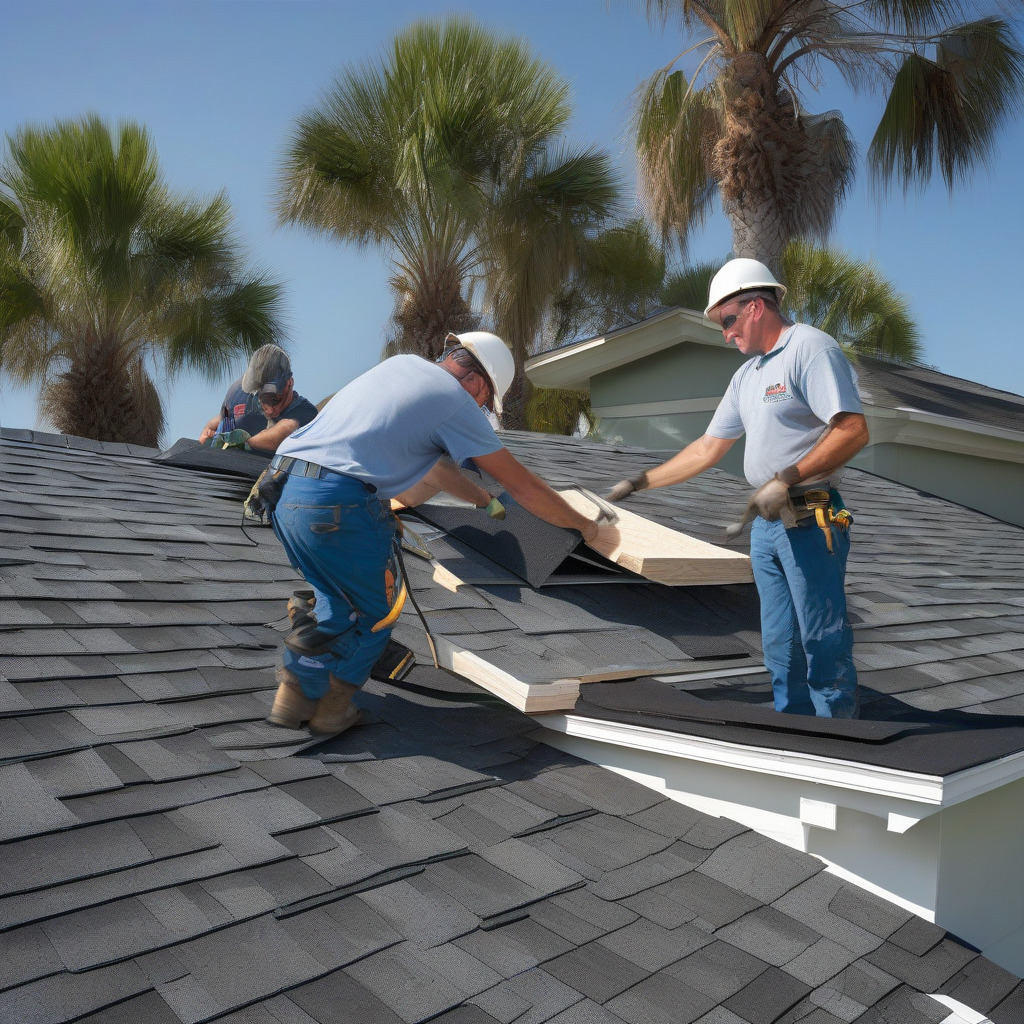
Current market rates for a fully installed, fully permitted architectural shingle re-roof on a standard Orange County home run roughly $350–$500 per square installed. On a home whose actual roof surface measures around 20 squares, you’re looking at $7,000–$10,000 at the low end; larger or steeper roofs go higher. These are benchmarks from recent Orange County projects — verify all pricing with local contractors before committing.
When you request quotes, insist on line-item breakdowns: tear-off and disposal, underlayment with FL#, shingles with FL#, labor, drip edge and flashing, and the Orange County permit as a separate line. A contractor who bundles everything into one number is giving you less information than you need to evaluate the bid. It also makes it impossible to catch padding in a category they know you won’t scrutinize.
Impact-resistant (Class 4) shingles perform better on UV degradation and wind events, and some carriers apply a premium discount for them. Ask your insurer before specifying the upgrade — not all carriers offer it, and it’s a two-minute conversation that can easily be worth several hundred dollars a year.
Metal Roofing
Two metal options dominate the Central Florida market and they’re worth distinguishing.
5V-Crimp is a screw-applied corrugated metal panel system widely used on residential and light commercial buildings here. It costs less than standing seam, is more widely installed by local crews, and has ready availability through regional distributors. Current market rates run roughly $450–$750 per square installed. 5V-crimp can qualify for wind mitigation credits under the OIR-B1-1802 depending on fastener pattern and attachment method — but confirm that with your inspector, not your contractor. Those are two different conversations.
Standing Seam is a concealed-fastener floating panel system. It outperforms 5V on wind resistance tests, typically qualifies for the highest metal roof wind mitigation credits, and carries a 40- to 70-year functional lifespan in Central Florida conditions. Current market rates run roughly $700–$1,200 per square installed. The premium over 5V-crimp is real, but so is the lifespan differential. Whether it pencils out depends entirely on how long you’re staying in the house.
For either metal option, the attachment method and fastener pattern matter as much as the panel type for wind mitigation credit purposes under the OIR-B1-1802. Confirm the specific qualifying language with the inspector completing your post-replacement form.
The Permit Line Item — What Orange County Charges and How Long It Takes
Orange County Building Division calculates re-roof permit fees on a valuation-based schedule. Confirm the current fee schedule directly at (407) 836-5550 or orangecountyfl.net/BuildingDevelopmentServices before accepting a contractor’s permit line item. Some contractors include permit pulling at cost; others add an administrative service fee. Both are acceptable. What is not acceptable is a contractor who asks you, the homeowner, to pull your own permit. More on that below.
The permit must be obtained by the contractor before any work begins. The county conducts a final inspection before the job is legally complete. Under normal conditions, inspection scheduling runs one to five business days after the request is submitted. After Ian in 2022 and Idalia in 2023, Orange County inspection queues stretched to two to four weeks. If you’re replacing during or immediately after a named storm event, that timeline matters for your insurer’s submission window.
You can verify that your contractor has pulled an active permit and check inspection status at the Orange County Building Division’s online portal at orangecountyfl.net. Look up the permit before any crew sets foot on your roof. If the contractor says the permit is “in process” but hasn’t given you a permit number, that is not the same as an active permit. A crew working without one creates a compliance and insurance documentation problem that is entirely your burden afterward.
What Your Insurer Requires After Replacement
Here’s the step that trips up homeowners who assumed the hard part was writing the check. Replacing your roof does not automatically update your policy or trigger the wind mitigation discount your new roof may qualify for. You have to file a specific documentation package — and missing it can result in policy non-renewal or loss of the premium credit you just spent five figures to earn.
Citizens Insurance requires the OIR-B1-1802 Uniform Mitigation Verification Inspection form after a re-roof. This is the central document, and it must be completed by a licensed inspector — a licensed general contractor, building inspector, home inspector, professional engineer, or architect licensed in Florida. Your roofing contractor cannot complete it. The form evaluates your roof’s wind resistance across several categories: roof covering type, roof deck attachment, roof-to-wall connection, roof shape, and opening protection. Your new roof’s performance on this form determines whether you receive a wind mitigation premium discount and how large it is.
You’ll also need the county permit with final inspection sign-off — not an open permit, but one showing the final has been passed. The contractor invoice must document the specific products installed, including FL# or NOA numbers for shingles and underlayment. If your contractor didn’t include these, request a corrected invoice before they leave the job site. Getting this documentation after the fact is harder than it sounds. Crews move on, project managers stop returning calls, and you’re suddenly chasing paperwork on a job that wrapped up three weeks ago.
Date-stamped photos of the completed roof are also required, including close-ups of flashing, drip edge, and ridge treatment. Your inspector will take these during the OIR-B1-1802 inspection; confirm they’re included in the documentation package.
Citizens’ submission window after replacement has historically been 90 days from the date of the final inspection. Confirm the current deadline directly at citizensfla.com or (888) 685-1555. Private carriers including Universal Property and Casualty, Heritage, and Security First largely mirror Citizens’ OIR-B1-1802 requirement but vary on processing timelines. Contact your agent immediately after the final inspection to confirm what they need and when.
Missing this window or submitting incomplete documentation can result in Citizens declining to renew the policy on the grounds that the roof condition can’t be verified — putting you right back in the non-renewal situation you replaced the roof to escape. For a broader look at how [property insurance rate increases]((/legal-finance/florida-property-insurance-law-2026-orlando-homeowner-guide/) are shaping the choices Orlando homeowners face, the pressures driving Citizens’ non-renewal wave don’t start or end with the roof.
Hip vs. Gable — Does the Insurance Math Justify the Upgrade at Replacement Time?
If your home has gable ends — the triangular wall sections under a peaked roofline — run the numbers before you sign a contract. The OIR-B1-1802 includes a roof shape category, and it makes a meaningful financial difference.
A hip roof where 90 percent or more of the perimeter terminates in a sloped section receives the highest wind mitigation credit. Gable ends, dormers, and flat sections reduce or eliminate that credit. The premium differential between a qualifying hip and a gable roof on a typical Orange County single-family home runs $300–$800 per year depending on carrier and coverage amount. Over 10 years, that’s real money — and it belongs in your decision-making before you finalize the scope of work.
The counterweight is equally real. Converting a gable end to a hip requires structural framing changes: new rafters, ridge board modifications, fascia work. Depending on the number of gable ends and roof complexity, that adds $3,000–$8,000 or more to the project.
The break-even math is simple. If the conversion adds $5,000 to your cost and saves $500 per year in premium, you break even at year 10. Planning to stay long-term, the conversion likely makes financial sense. Within five years of selling, it probably doesn’t recover what it costs — and the buyer’s insurer will run their own wind mitigation inspection anyway.
One variable that often gets skipped: not all gable-to-hip conversions produce a clean qualifying hip. Dormers, intersecting shed sections, or a flat porch section can leave the resulting shape scoring below the full hip credit threshold on the OIR-B1-1802 even after the conversion. Have an independent wind mitigation inspector — not your contractor — assess the likely post-conversion score before you commit to the framing change.
Architectural Shingle vs. Metal in Central Florida’s Climate
The standard talking point on this choice is lifespan: roughly 30 years for architectural shingles, 40 to 70 for metal. In Central Florida’s specific climate, that framing undersells how much the local conditions matter — and I’d argue the climate factors here are underweighted in most of the generic advice floating around on this topic.
Orlando’s UV index accelerates shingle granule loss faster than in northern markets. The thermal cycling from daily temperature swings — particularly the rapid afternoon heating and cooling that comes with the summer storm pattern — stresses adhesive tabs more aggressively than most national lifespan estimates account for. This is why the installed base of metal roofing in Central Florida runs higher than national averages suggest. The climate genuinely favors it.
Metal’s advantage on wind resistance is also real, but it matters which type. Standing seam, with its concealed fastener design, outperforms 5V-crimp in sustained high-wind events because there are no exposed fastener penetrations to fail. If you’ve watched what high-sustained winds do to screw patterns on aging 5V roofs, that’s not a minor distinction.
Whether the metal premium makes financial sense depends on your timeline in the house, what wind mitigation discounts your insurer applies to each material type, and whether the extended lifespan converts to resale value at sale. Get a before-and-after premium estimate from your insurer for each material option before finalizing your choice. That number belongs in the decision, not just the contractor’s per-square price.
Neither choice is obviously wrong. Standing seam on a house you’re staying in for 20 years makes straightforward sense. A Class 4 architectural shingle on a house you’re selling in five might be the smarter spend. Make the choice deliberately, with your insurer’s discount schedule in hand.
How to Verify Your Contractor Is Licensed Before You Sign Anything
A licensed Florida roofing contractor holds a CCC (Certified Roofing Contractor) license issued by the Florida DBPR. Some contractors hold a CBC (Certified Building Contractor) license that also authorizes roofing work, but CCC is the specific credential. Don’t accept a general contractor’s license as equivalent without verifying the specific license type covers roofing.
Go to myfloridalicense.com/wl11.asp and search by license number if the contractor has provided one, and independently by name. Searching by name alone isn’t enough. Fraud operators in the post-Ian market worked under names nearly identical to legitimate licensed companies — sometimes one transposed letter. If that sounds paranoid, talk to anyone who got burned by a storm-chaser outfit in fall 2022. Search both the business name and the qualifier’s individual name. Verify the license shows “Current, Active” and the type matches CCC or CBC.
Contractors registered at the state level rather than certified — a different DBPR category — must also hold an Orange County local competency card. Certified contractors (CCC, CBC) don’t need a local card but must register with the county before pulling permits. No state certification and no local competency card means no legal permit. No permit means no final inspection, no documentation for your insurer, and no recourse if the work fails.
The specific red flags worth knowing in this market: a contractor who asks you to pull your own permit is not doing you a paperwork favor. They’re shifting all code compliance liability to you, stripping you of consumer protection under Florida’s contractor licensing statute, and making it impossible to file a license complaint if the work fails. Don’t do it, no exceptions.
A quote with no permit line item means either the contractor doesn’t intend to pull one, or they’re hiding the cost to look competitive. A business with no verifiable physical address — not a P.O. box, not a virtual office suite — is another warning sign. Post-storm contractors who arrive after a named storm and leave before inspections are completed are a documented pattern in Central Florida. The DBPR lookup will show a registered address; verify it independently.
Timing, Scheduling, and What the Orlando Market Looks Like Right Now
The Orlando roofing market has two distinct seasons, and the timing of your replacement has real financial consequences.
October through May is historically lower demand. February through April specifically offers the best combination of dry weather, contractor availability, and modest pricing flexibility. Contractors who’ve worked through the post-storm backlog are more willing to negotiate on large jobs, and a four- to six-week lead time is generally achievable. If you’re reading this in March and you know your roof needs to go, the time to move is now, not after the June crunch starts.
June through September is the highest-risk scheduling window. Daily afternoon thunderstorms — a reliable feature of Central Florida summers — complicate staging and create real exposure for an uncovered deck mid-installation. Contractor backlogs spike after any named storm: four to eight weeks from event to available crew is typical for a mid-market hit, longer for a direct strike. Labor availability tightens further as contractors prioritize emergency tarping, which typically carries higher margins than planned replacements.
The new construction pipeline in Lake Nona, Horizon West, and Apopka is an underappreciated pressure on residential re-roofing capacity. The licensed CCC contractor pool in Central Florida is finite, and sustained permitting volume in those corridors is competing for the same crews. This is part of why Orange County lead times run longer than national supply data suggests — the national numbers don’t capture this dynamic.
Homeowners in older-stock neighborhoods — Winter Park, College Park, Dr. Phillips, Windermere — are hitting the 25- to 30-year replacement window on 1980s and 1990s roofs in volume right now. That concentration of demand in specific zip codes means contractors finishing a job in one of these neighborhoods often have another one queued nearby. Homeowners who are ready to move quickly can sometimes secure better scheduling than those who defer.
One more thing if you’re in a deed-restricted community: verify your HOA’s material and color approval requirements before signing a contractor agreement. Some Orange County HOAs require specific shingle product lines, color palette approvals, or pre-construction photo documentation. An HOA rejection of your material choice after the contract is signed is an expensive situation that is entirely avoidable. Confirm HOA requirements first.
The Bottom Line for Homeowners Getting Quotes Right Now
A compliant, fully permitted roof replacement on a standard Orange County home costs more than national guides say. The 150 mph wind rating, the full tear-off requirement, and Florida Product Approval compliance are not optional line items. A quote that comes in dramatically below market should be examined closely before it’s celebrated.
Get at least three quotes from DBPR-verified CCC-licensed contractors. Verify each license at myfloridalicense.com before you meet with them. Ask for FL# documentation on every material. Confirm the permit is a separate line item. Don’t sign anything in a deed-restricted community before you have HOA material approval in hand.
Once the job is done, file the OIR-B1-1802, the final permit, the contractor invoice with product approval numbers, and the date-stamped photos with your insurer within the submission window. The wind mitigation discount your new roof qualifies for won’t apply until you do. You’ve already spent the money — don’t leave the savings sitting there.