What to Know About Orlando New Construction Homes in 2026
A CityDesk Orlando Guide to Change Orders, Delivery Delays, and Walkthrough Reality

What to Know About Orlando New Construction Homes in 2026
A CityDesk Orlando Guide to Change Orders, Delivery Delays, and Walkthrough Reality
The model home on Avalon Road looks perfect. Kitchen quartz gleams. The barn-door pantry hardware catches light like jewelry. That freestanding soaker tub you picked in the design center sits in the primary bath, waiting for you. The sales agent tells you the home will be ready in six to eight months. You sign.
Fourteen months later, you’re driving to final walkthrough and the soaker tub is not there.
This is not an edge case. A significant number of buyers in Horizon West, Lake Nona, and the Wekiva/Kelly Park corridor reported this experience to CityDesk Orlando when we spent several months in 2025 and early 2026 talking to buyers, buyer’s agents, and a Florida-licensed construction attorney about what new construction in Central Florida actually delivers versus what the sales process describes. The picture is not a story of rampant fraud or bad-faith builders. It’s a story of a production-volume construction market running at speed, with contract language almost entirely written to protect the builder, and buyers who sign without understanding what protections they have — and don’t have — under Florida law.
This guide covers who is building what and where in 2026, what’s actually happening to delivery timelines in each corridor, the three change order conflicts buyers keep describing, what Florida law provides and fails to provide, four buyer accounts from 2025–2026 closings, a walkthrough checklist written for Central Florida’s specific construction type and climate, deposit protection rules most buyers never read before signing, and concrete steps for buyers who are in contract today or approaching one.
Section 1: The Gap Between the Model Home and the Move-In Date
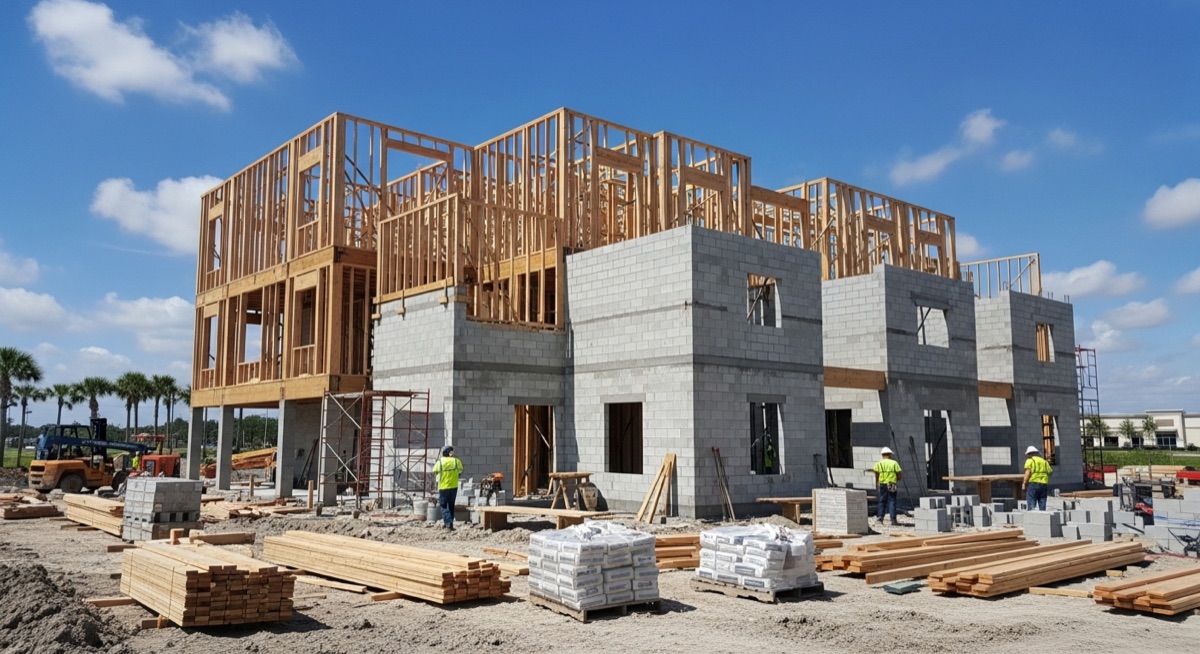
D.R. Horton’s marketing materials for Horizon West communities like Solterra and Briar Oak consistently advertise a six-to-eight-month build window for production-spec homes. It’s a number buyers hear from on-site sales agents and see in promotional copy. It’s not fabricated: under ideal conditions — cleared lot, fully permitted plans, smooth framing and finish-trade schedule — the structural work on a production home can get done in that range.
“Under ideal conditions.” That’s the phrase that matters.
Buyers who closed in the Horizon West and Randal Park corridors between mid-2024 and early 2026 consistently report an actual timeline from contract signing to close of ten to fourteen months. That gap traces to three recurring problems: builds started during the concrete block supply crunch that continued through 2024, builds requiring lot clearing and utility rough-in on newer pod sections, and — specifically in Horizon West — builds where site access was complicated by the SR-429/Avalon Road expansion work that ran through late 2024 and into 2025.
Lake Nona and Sunbridge buyers reported similar spreads. The Tavistock-master-planned core of Lake Nona, where Pulte and a handful of semi-custom builders operate, runs on its own permitting and covenant-review timeline. That timeline adds weeks at the plan-approval stage before the Orange County building department ever stamps a permit. Buyers in the newer Sunbridge sections — which straddle an Orange/Osceola County line — encountered additional complexity: their parcel’s jurisdiction determined which building division handled permits and inspections. Some buyers only learned their parcel was under Osceola County jurisdiction after signing. That’s not a small thing to discover after the fact.
The Wekiva/Kelly Park corridor involves a third permit jurisdiction: the City of Apopka. Buyers building there in 2025 reported that permit timelines through Apopka ran longer than Orange County during portions of that year, contributing to start delays on some lots.
Understanding that gap — between the sales narrative and the contractual and logistical reality — is the first thing any buyer needs to grasp before signing a new construction contract in these corridors. None of it appears in the marketing materials, and most of it isn’t in the purchase contract either.
Section 2: Who’s Building Where — A 2026 Community and Builder Snapshot
Horizon West (West Orange County)
The Horizon West corridor — loosely defined as the area west of SR-429 in the Hamlin, Waterleigh, and Solterra/Briar Oak communities — remains one of the most active new construction markets in Central Florida. D.R. Horton is the dominant volume builder, active in Solterra and Briar Oak with production homes in the mid-$300s to low $500s. Meritage Homes operates in Waterleigh, where spray foam insulation standard and tankless water heaters have attracted buyers doing the math on utility costs; prices run higher, roughly $420,000 into the mid-$500s for single-family. Pulte has an active presence in the Hamlin area.
Several active subdivisions are still in early-phase lot delivery, meaning buyers in later pods are starting from raw lots, not pre-cleared pads. That distinction carries real timeline implications — more in Section 3.
Lake Nona / Sunbridge (Southeast Orange and Osceola Counties)
Lake Nona is two markets wearing one name. The Tavistock-master-planned core — Laureate Park and surrounding communities — is subject to Tavistock’s architectural review process on top of standard Orange County permitting. This review adds time but maintains the visual cohesion that commands price premiums; production homes in Laureate Park run from the low $400s into the $700s, and Toll Brothers product in Sunbridge can reach $900,000. Pulte and Taylor Morrison are active in core Lake Nona.
Sunbridge — the master plan building out southeast of Lake Nona along Narcoossee Road into Osceola County — operates on a different framework. Meritage and D.R. Horton are both active there, and price points are more accessible, generally $380,000 into the low $500s for production builds. The Osceola/Orange county split is not theoretical. Several Sunbridge buyers CityDesk spoke with had parcels under Osceola County jurisdiction and didn’t know until permit questions came up. The practical effect: Osceola County’s building inspection timeline and inspector availability differ from Orange County’s. Confirm your parcel’s jurisdiction before signing.
Wekiva / Kelly Park Corridor (Apopka / Northwest Orange County)
The Kelly Park Road corridor running north from SR-429 toward Apopka has become one of Central Florida’s fastest-growing new construction zones. D.R. Horton, Century Communities, and Landsea Homes are all active, with production homes in the $340,000–$470,000 range — some of the most accessible new construction price points in the metro. Rock Springs Ridge, farther north into Apopka, adds a slightly older subdivision context with some infill lots.
The permit jurisdiction here is the City of Apopka, not Orange County. This matters for inspection scheduling, certificate of occupancy timing, and for any attorney or agent trying to pull permit history. Apopka’s building division has run slower during high-volume phases — a fact worth accounting for before you commit to a timeline.
Section 3: Are Builders Delivering on Schedule in 2026?
The honest answer is: sometimes, and not reliably in any of the corridors covered here.
The national supply chain narrative of 2021–2023 — windows backordered, appliances sitting on ships, lumber prices tripling — has substantially normalized. Two constraints remain persistently acute in Central Florida and directly affect build timelines right now.
The first is concrete block. Florida’s production-home construction depends on concrete masonry unit (CMU) block framing in a way most other U.S. markets don’t. Wood-frame is the exception here. CMU block supply in Central Florida was constrained through much of 2024 and into early 2025 as demand from the region’s new-home pipeline outpaced local manufacturing capacity. Several buyers in Horizon West reported watching their lots sit cleared and permitted for weeks before framing materials arrived — time that doesn’t appear anywhere in the “build window” the sales agent quoted.
The second constraint is skilled finish trades: drywall hangers, tile setters, trim carpenters, painters. The Central Florida market absorbed a significant volume of starts in 2022–2024, and the finish-trade labor pool hasn’t caught up. Builder project managers in Horizon West and Lake Nona describe routine gaps between rough-in completion and drywall start, and again between drywall and trim, because crews are spread thin across multiple projects simultaneously. Nobody is being negligent. There just aren’t enough experienced hands.
Infrastructure added a third, site-specific variable in two of the three corridors. The FDOT Kelly Park Road widening project — a long-overdue four-laning of the primary artery serving the Wekiva corridor — was in active construction through 2024 and into 2025, creating truck-routing complications for some lots. The SR-429/Avalon Road interchange work similarly complicated site access during peak framing periods in 2024.
Buyers in Horizon West report consistent accounts of 11–14 months from contract to close on production builds. Shorter timelines are being achieved on spec homes that were already framed at contract signing. For a true to-be-built home on a new-pod lot, 12 months should be the planning baseline. Not the floor — the baseline.
Lake Nona production builds involving Tavistock architectural review routinely take 12–16 months from contract to close on semi-custom and upgraded product. The review layer adds weeks at the plan-approval stage. Fully spec homes move faster, but inventory is limited. One buyer’s agent who works exclusively in Lake Nona told CityDesk she advises every client to assume 14 months and be relieved if it comes in shorter. That’s probably the most honest planning advice I heard in this entire reporting process.
Sunbridge timelines have run 10–13 months, with Osceola County permit timing as the primary variable. Buyers whose parcels fell under Orange County jurisdiction have reported slightly faster inspection scheduling.
Wekiva and Kelly Park corridor builds ran similarly — roughly 10–13 months on production bases, with the City of Apopka permit process the primary variable.
CityDesk reached out to D.R. Horton’s Central Florida division for comment on timeline performance in Horizon West and the Wekiva corridor. A spokesperson declined to provide community-specific data but stated in writing that “D.R. Horton works to meet the estimated closing timeframes provided to buyers and communicates proactively when timelines are affected by conditions outside the company’s control.” Pulte Group did not respond to requests for comment. Meritage Homes provided a statement noting that its “construction process is designed to minimize delays” and directing buyers to their purchase agreements for timeline terms.
That last response, in particular, is worth sitting with. Meritage’s answer to questions about delivery performance is: read the contract. Which is, in fact, the correct answer — just not in the way they intended it.
Section 4: The Three Change Order Conflicts Central Florida Buyers Keep Describing
This is where the practical damage tends to happen. Not in dramatic fraud. In the cumulative, hard-to-remedy gap between what a buyer paid for in the design center and what they find at final walkthrough.
Material Substitution Without Notice
Production builder purchase contracts almost universally contain language reserving the right to substitute “materials of equal or greater value” at the builder’s discretion. This is standard language and it is legal under Florida law. Florida Building Code §553.84 sets minimum construction standards but does not require builders to use specified brands — meaning a builder is legally protected on most substitutions if the contract language permits it. The problem is how broadly builders interpret “equal or greater value.”
The specific Moen plumbing fixture in the design center gets replaced by a different line. The LVP flooring product specified in the addendum — a specific color chosen by the buyer to match furniture they were already buying — is swapped for a similar product when that SKU goes on allocation. The window manufacturer changes mid-build. Each time, the builder’s position is that the substitution clause covers the change and no notice was required.
Jennifer, a buyer in D.R. Horton’s Solterra community, described her experience: “The flooring I chose was a specific grayish-beige I had matched to furniture I was buying. What was installed was noticeably warmer — a different undertone entirely. When I raised it, I was told the product had been discontinued and this was the replacement. The contract says they can substitute. I wasn’t told until I was standing there at walkthrough.”
Before signing, look for any clause allowing “equivalent substitution” or “materials of equal value” at builder discretion without a notice requirement. This clause can’t be fully removed from production builder contracts — it’s structural to volume building. But some buyers have successfully negotiated an addendum requiring written notice of any specification change above a dollar threshold and a buyer approval window. Most large builders won’t accept it. Worth asking anyway.
Upgrade Reversal — Paid Options Not Installed
This is the most financially significant pattern and the one with the clearest paper-trail remedy. A buyer visits the off-site design center and selects upgrades: extended tile in the main living area, a gourmet kitchen package, pre-wiring for ceiling fans, a specific cabinet pull. These selections get documented in a design center addendum. The problem is that the addendum travels through a separate document chain from the main purchase agreement to the build site.
When the rough-in crew frames walls and runs conduit, they work from build documents that may or may not fully reflect a design center addendum finalized weeks after the contract was signed. Paid upgrades disappear at that document break.
Upgrade addendum values in Horizon West and Lake Nona design center transactions commonly run from $15,000 to $65,000 or more. High enough to warrant legal attention. Buyers who discover upgrade reversals at final walkthrough face a much harder correction path — correcting a missing tile extension or ceiling-fan pre-wire at that point requires opening walls. The builder’s typical response is a credit or a post-close correction schedule that buyers frequently describe as slow to materialize.
Marcus, a buyer in Laureate Park, paid $14,800 in design center upgrades on a Pulte home, including an extended-tile pattern through the great room and kitchen. At rough-in inspection — he had hired an independent inspector, which turned out to matter enormously — the inspector noted that the tile substrate preparation in the kitchen didn’t reflect the extended pattern layout. Marcus raised it immediately with the builder’s project manager. “They had the design center addendum,” he said. “The issue was the field super hadn’t been briefed on it. They corrected it before drywall. If I hadn’t had the independent inspector in there, I would have found out at walkthrough, which is too late.”
The legal position here is clear: an upgrade addendum properly incorporated by reference into the main purchase agreement is a binding contract term. Failure to deliver a paid, specified upgrade is breach. That gives a buyer real leverage before close, because withholding closing on that basis is defensible. After close, the leverage drops. Not a little — substantially.
Cost Escalation After Contract
This pattern is more common in semi-custom and longer-timeline builds, but it surfaces regularly in the Lake Nona semi-custom segment. The scenario: a buyer contracts for a home with a specified finish package, and months into the build, the builder issues a change order citing materials cost increases and requests additional payment at or before closing.
Florida courts have generally upheld fixed-price new construction contract terms against builder-initiated cost increases. But many production builder contracts include specific escalation carve-outs for materials above a defined threshold, or contain language about “unforeseen cost increases.” Read that language before you sign. Florida Statute §501.1375 provides buyers with cancellation and deposit-refund rights when a builder fails to deliver within the contracted timeframe, but it doesn’t prohibit escalation clauses that were in the original contract and agreed to.
Tony, a buyer in the Wekiva corridor, received a closing disclosure showing $4,200 in “materials adjustment” charges not in his original contract. “There was a clause in the contract that allowed for it if costs increased over a certain percentage,” he told CityDesk. “I didn’t catch it when I signed. My attorney looked at it and said the clause was valid. I ended up paying it.”
Escalation clauses aren’t illegal. The point is that buyers need to read those specific clauses before signing and understand the conditions under which they trigger. If you’ve ever skipped to the signature page because the sales agent is standing there waiting — that is exactly the moment this comes back.
Section 5: What Florida Law Says — and What It Doesn’t Protect You From
Florida has more statutory protection for new construction buyers than many states. It also has significant gaps that production builder contracts are specifically written to work around.
§501.1375 — Deposit Refund and Cancellation Rights
This statute applies when a buyer has paid a deposit on a home that hasn’t yet been completed and the builder fails to deliver within the contracted timeframe. If the builder misses the delivery date and the buyer exercises cancellation rights under this statute, the buyer is entitled to a full refund of all deposits. The critical nuance: the contracted timeframe in most production builder agreements is defined broadly, with multiple automatic extension windows. By the time a delivery is genuinely “late” under the contract’s own terms, the builder may have legally pushed the closing date several times. The protection is narrower in practice than the statute suggests on its face.
§489.126 — Contractor Obligation to Apply Deposits to the Project
This statute requires contractors who receive deposits to either apply those funds to the project or maintain them in a designated escrow account. It protects buyers against a builder pocketing deposits without applying them to the contracted work. Violations carry criminal penalties. Verify in your contract that your deposit is held in an escrow account and ask specifically which institution holds it.
§553.84 — Florida Building Code Private Right of Action
This statute gives buyers a private right of action against a builder for violations of the Florida Building Code. It applies to structural, safety, and habitability defects found at walkthrough or discovered post-close. Its limit for the disputes described in this guide: it doesn’t reach brand substitutions or design-center upgrade failures. Those are contract disputes, not building code violations. §553.84 is most useful when a buyer has a defect — a structural crack, a non-compliant HVAC installation, improper hurricane strapping — that can be tied to a specific code requirement.
§558 — Pre-Suit Notice Requirement for Construction Defect Claims
Before a buyer can file a lawsuit over construction defects in Florida, they must complete the §558 pre-suit notice process: written notice to the contractor identifying the defect, followed by a mandatory inspection period during which the contractor can inspect, make a settlement offer, or dispute the claim. This process is not optional. Skipping it before filing suit can result in dismissal.
The §558 process cuts both ways. It slows things down, which can help the buyer if the defect is serious and the builder wants to avoid litigation, or frustrate buyers with smaller disputes because the process drags for months. Florida construction attorney Rachel Mays, who practices in Orlando and handles residential construction disputes, put it plainly: “The §558 process is most useful when the defect is well-documented, photographed, and specific. Vague complaints about workmanship quality are hard to resolve through §558. Specific defects tied to a code violation or a clearly missed contract term are much more tractable.”
On whether a buyer can withhold closing because an upgrade wasn’t installed, Mays was direct: “If the upgrade is in the contract — properly incorporated — and it’s not there, the buyer arguably has grounds to withhold. But most production builder contracts have dispute resolution language requiring arbitration, not court action, and the arbitration clauses often specify a process that heavily favors the builder in small-dollar disputes. The practical answer is: document everything, raise it before close, and push hard at that moment. Your leverage drops sharply after keys are handed over.”
The arbitration point matters more than most buyers realize. D.R. Horton, Pulte, and Meritage all use binding arbitration clauses in their standard Florida purchase agreements. A buyer with a post-close dispute against these builders cannot file a civil lawsuit in the normal sense. They must go to arbitration. This is not a technicality. It fundamentally changes what your options look like if something goes wrong.
Section 6: Buyer Accounts — What Happened After Signing in Horizon West, Lake Nona, and Wekiva
Jennifer, Horizon West (D.R. Horton, Solterra) — Flooring Substitution
Jennifer contracted for a D.R. Horton home in Solterra in August 2023 with an expected close in “early 2024.” She closed in October 2024 — 14 months after signing. The delay was communicated in two-to-three-month increments via email from the builder’s customer care team, always citing “construction sequencing.” The flooring substitution described earlier was the primary dispute at closing.
Her attempt at leverage involved contacting the builder’s customer care manager directly — not the on-site sales agent, who had no authority over anything — and asking for written documentation of when the substitution was made and why. She received a response confirming the substitution and offering a $750 credit. She accepted it. “I didn’t feel like I had much choice. The movers were scheduled. I wasn’t going to delay close over flooring I could eventually replace.” She estimates the difference between the product installed and what she selected was roughly $2,000 in retail value.
A $750 credit on a $2,000 discrepancy, take it or leave it, with a moving truck en route. That math tells you everything about where the leverage sits at closing.
Marcus, Laureate Park / Lake Nona (Pulte) — Upgrade Reversal Caught at Rough-In
Marcus’s experience had the outcome most buyers don’t achieve: he caught the missed upgrade before drywall because he had an independent inspector on site. The $14,800 in design center upgrades was fully delivered after he pushed for correction before walls went up. His total additional cost was $650 for the independent inspection. “That $650 was the best money I spent in the entire process,” he said.
His broader Pulte experience involved 13 months from contract to close on a build quoted as taking “nine to eleven months.” He described the Tavistock architectural review process as adding roughly five weeks he hadn’t planned for. Worth knowing before you sign in that community.
Priya, Wekiva/Kelly Park Corridor (Landsea Homes) — Material Substitution and a Hard Relocation Deadline
Priya, a traveling nurse who accepted a position at a local medical facility, contracted for a Landsea home on Kelly Park Road in November 2023 specifically because the projected close date — May 2024 — aligned with the end of her existing lease. Her close date was pushed to August 2024, then to October 2024. She closed in early November 2024, having spent six months in a short-term rental at roughly $2,800 per month.
The material substitution involved her contracted kitchen faucet and bath fixtures being swapped to a different line without notification. At walkthrough, she documented the discrepancies and submitted a written notice before signing the completion form. Landsea’s regional customer care manager responded with a commitment to swap the bath fixtures and a $500 credit toward the kitchen faucet. Priya accepted both. Her total relocation cost overrun from the delay — short-term rental, double storage unit fees — was approximately $14,000. None of it compensable under her purchase agreement. “The contract is airtight for them,” she said. “I knew that when I signed. I just didn’t think a six-month delay was actually possible.”
That last line. She understood the risk in the abstract. She just didn’t believe it would happen to her. That may be the most common mistake in this entire process.
Tony, Wekiva/Kelly Park Corridor (Century Communities) — Successful Pushback on Closing Costs
Tony’s situation involved the escalation clause dispute. When his attorney examined the specific clause language and the threshold required to trigger the escalation, they found that the builder’s documentation of the cost increase didn’t clearly meet the contractual standard. Tony’s attorney sent a formal response disputing the charge on those specific grounds.
Century Communities ultimately reduced the materials adjustment from $4,200 to $2,100, attributing a portion to documented cost increases and withdrawing the portion it couldn’t substantiate. “If I hadn’t had an attorney read the contract language and push back on the math, I’d have paid the full thing,” Tony said. He closed 11 months after signing.
Tony’s outcome illustrates something that gets lost in buyer frustration with these contracts: the language cuts both ways. Builders can’t always collect what they put in front of you if they can’t document the underlying claim.
Section 7: The Central Florida New Construction Walkthrough — What to Check That National Lists Miss
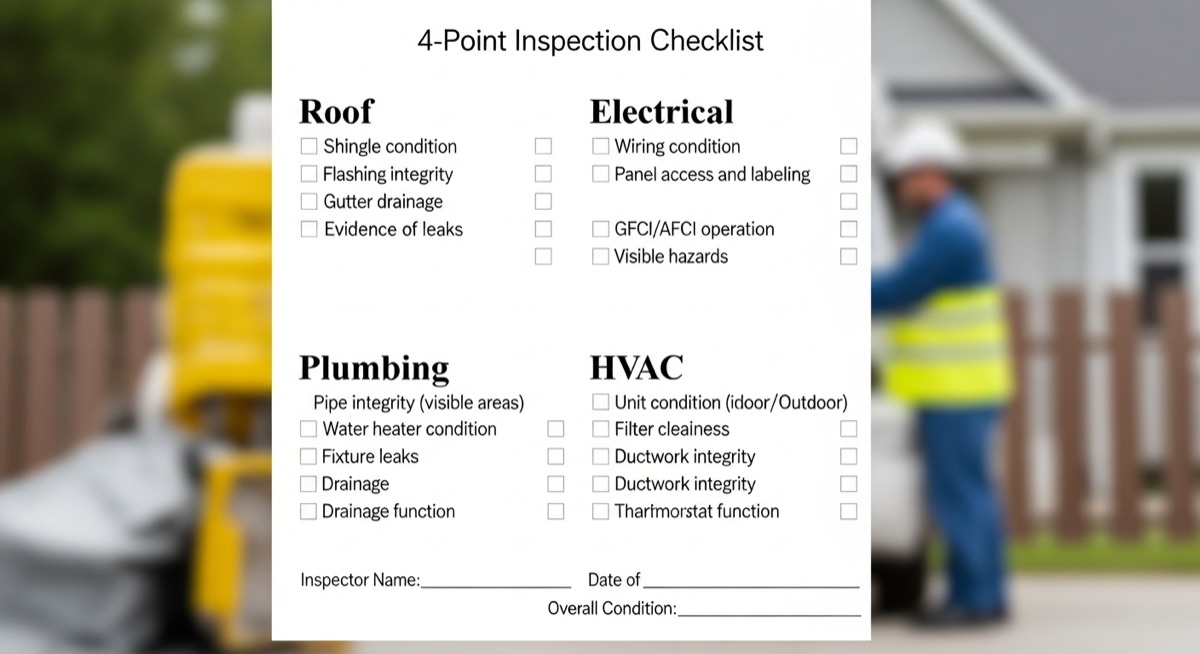
National walkthrough checklists tell you to check for scratches on appliances and confirm every light switch works. Fine. But in Central Florida’s block construction, hot climate, and hurricane-zone environment, specific inspection concerns get systematically overlooked. Here’s what actually matters — and it’s the kind of detail we emphasize across our home & property coverage.
Stucco Cracking at Block Joints
Florida production homes are CMU block construction with a stucco exterior finish. Hairline cracking at block joint locations is extremely common and begins appearing within weeks to months of completion. Builders universally categorize these as “cosmetic settling cracks” not covered under structural warranty. Florida Building Code §R703 requires the stucco system to resist water infiltration but allows for minor cracking that doesn’t penetrate to the block.
At walkthrough, document every stucco crack, photograph it, and specifically ask the builder’s project manager to note each one in the punch list. Ask directly: “Is this crack within tolerance, and if it widens, at what point does it become a warranty item?” Get that answer in writing. Stucco cracks noted at close that subsequently grow can become legitimate warranty claims. Cracks not documented before close are much harder to trace back to original construction.
HVAC Sizing and the Manual J Report
Florida’s humid subtropical climate is brutal on undersized HVAC systems. A common complaint from buyers one to two years post-close is that their system runs constantly in summer, can’t maintain temperature during peak August heat, or produces high indoor humidity even while cooling. This frequently traces back to a system not properly sized for that specific home’s orientation, window area, and insulation spec. Buyers who want to understand what a correctly sized system should cost to operate can find useful benchmarks in what Orlando homeowners actually pay on summer electric bills.
Florida Building Code requires a Manual J load calculation for new construction HVAC installations. Before or at final walkthrough, ask for a copy of the Manual J report for your home. Most buyers don’t know to ask — and sales agents won’t volunteer it. The report almost always exists; it was submitted with the mechanical permit. Request it from your builder in writing. If the system consistently fails to maintain temperature within 18 months, the Manual J report is the document that establishes whether the original design was correct.
Hurricane Strapping in the Garage
Florida Building Code requires specific hurricane-resistant connections between the roof structure and wall framing. In the garage — where these connections are most visible because there’s no drywall covering the framing — buyers can physically see the metal strapping hardware tying roof trusses to the CMU bond beam. At walkthrough, look at the garage ceiling framing. Every truss should have a metal strap connector on each side, visible and fully fastened. Missing or improperly installed hurricane straps are a code violation under §R802.11. Photograph what you see in the garage. Takes five minutes. Most buyers never do it.
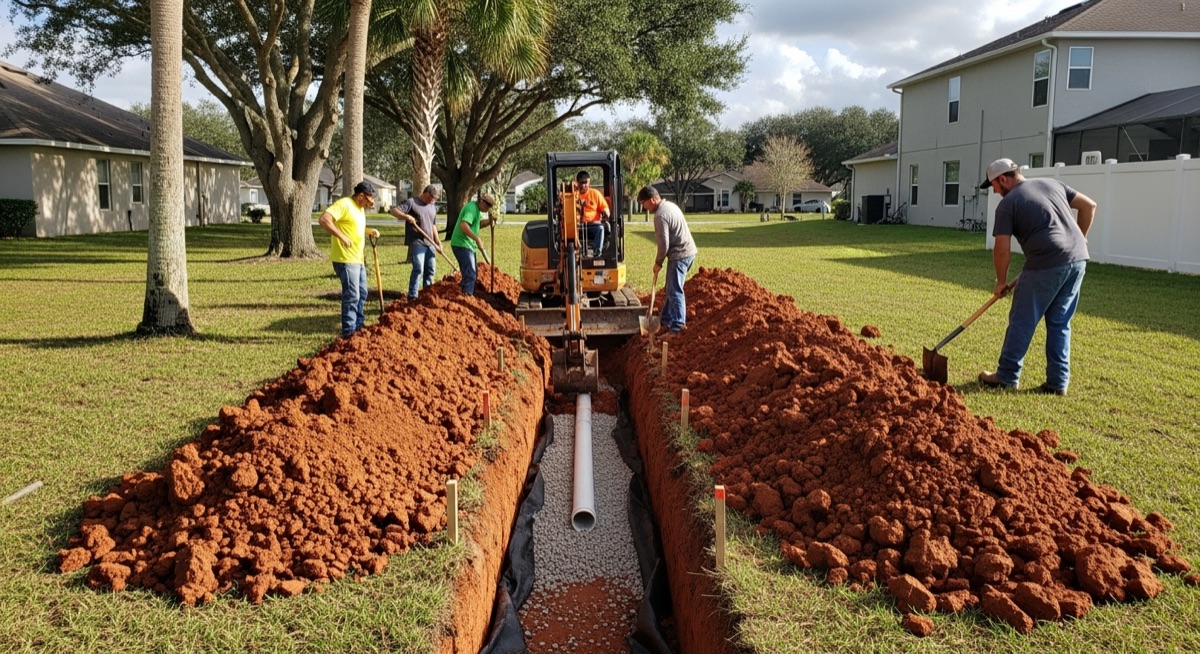
Lanai and Patio Drainage
Screened lanais and paver patios are nearly universal on production builds here. They’re also a recurring source of post-close complaints, specifically drainage slope that directs water toward the home’s foundation or back-door threshold rather than away from it. A slope that looks fine during a dry-season walkthrough may create standing water against your back wall every afternoon in rainy season. And rainy season here is not a gentle suggestion — it rains hard, it rains fast, and it rains every day for months.
At walkthrough, ask the builder to pour a bucket of water on the lanai slab and watch where it flows. This takes three minutes. It is never done at standard walkthroughs unless you ask.
Sod Warranty and Rainy-Season Documentation
Most production builders provide a 30-day sod warranty. Most Central Florida closings happen in the October–April dry season, when new sod is visibly stressed and buyers can’t easily distinguish installation failure from drought stress. The sod struggle shows up in rainy season, after the warranty has already expired, when summer rains reveal drainage or grading problems. At that point there’s no warranty recourse.
Buyers closing October through April should photograph the lawn at closing, at 30 days, and again at first significant rainfall. If grading issues redirect storm runoff toward your foundation, this becomes a drainage defect — not a sod warranty issue — and carries a longer claims window. Ask your builder for any grading and drainage inspection records before final walkthrough. If the home was under construction during the previous summer, the builder was working the site during rainy season. If drainage or grading problems appeared then, those records should exist and should be disclosed. Ask for them directly.
Section 8: Your Deposit, Your Leverage — Understanding Florida’s Escrow Rules Before You Sign
The deposit conversation is where buyers lose more money than they realize, because the structure of deposit risk in new construction is counterintuitive.
A reservation deposit — the initial amount paid to hold a lot or a build slot — is typically refundable if the buyer doesn’t proceed to contract. Once the buyer signs the purchase agreement, the deposit converts to a hard contract deposit and the refundability rules change entirely. For production builder contracts in Florida, the hard contract deposit is typically non-refundable if the buyer cancels for reasons not specified in the contract.
§489.126 requires that contractor deposits be applied to the project or held in a designated escrow account. Before signing, ask the builder: “Where is my deposit held, and who is the escrow agent?” Get the answer in writing. The escrow agent should be a title company or attorney’s office — not the builder’s own account. If the builder can’t produce a clear answer, that’s a red flag. No exceptions.
§501.1375 provides refund rights when the builder fails to deliver within the contracted period. But again: the contracted period in most production builder agreements includes multiple automatic extension windows. The effective protection is narrower in practice than the statute implies.
A separate problem compounds this: buyers carrying a rate lock from a mortgage lender face overlapping pressure. Rate locks run 60–90 days. A builder pushing a closing date by several months forces the buyer to pay for multiple rate-lock extensions or let the lock expire and re-lock at current market rates. Neither option is protected by statute. This cost — which Priya absorbed in the account above — is entirely the buyer’s under standard production builder contract terms.
Before any funds are committed, verify four specific things in your contract: the exact escrow terms and who holds the deposit; the precise delivery window language and how many automatic extensions the builder can take; the conditions under which the deposit is refundable and the process for demanding that refund; and whether the contract includes any rate-lock extension cost provision. Some builders have shared rate-lock extension costs during periods of significant delay, but this is a negotiated term, not a default. You won’t get it unless you ask before signing.
Section 9: What Buyers Signing Today Should Do Differently
Get the upgrade addendum explicitly incorporated into the main contract. Not attached as an exhibit. Not referenced in a footnote. Incorporated — by explicit language in the purchase agreement making clear that the design center addendum forms part of the contract and binds the builder’s field team. Ask your attorney or buyer’s agent to request this language before signing. Some builders will accept it; most large production builders won’t. If the builder declines, treat the addendum as a high-risk document and plan to verify every item independently at rough-in.
Schedule an independent rough-in inspection before drywall. This is the single most important thing a buyer in production new construction can do. Once drywall goes up, the opportunity to verify paid upgrades, correct framing issues, and document installation quality is gone. A licensed home inspector with new construction experience — ask